• KGS/USD = 0.01144 0%
  • KZT/USD = 0.00209 0%
  • TJS/USD = 0.10864 0%
  • UZS/USD = 0.00008 0%
  • TMT/USD = 0.28571 0%
  • KGS/USD = 0.01144 0%
  • KZT/USD = 0.00209 0%
  • TJS/USD = 0.10864 0%
  • UZS/USD = 0.00008 0%
  • TMT/USD = 0.28571 0%
  • KGS/USD = 0.01144 0%
  • KZT/USD = 0.00209 0%
  • TJS/USD = 0.10864 0%
  • UZS/USD = 0.00008 0%
  • TMT/USD = 0.28571 0%
  • KGS/USD = 0.01144 0%
  • KZT/USD = 0.00209 0%
  • TJS/USD = 0.10864 0%
  • UZS/USD = 0.00008 0%
  • TMT/USD = 0.28571 0%
  • KGS/USD = 0.01144 0%
  • KZT/USD = 0.00209 0%
  • TJS/USD = 0.10864 0%
  • UZS/USD = 0.00008 0%
  • TMT/USD = 0.28571 0%
  • KGS/USD = 0.01144 0%
  • KZT/USD = 0.00209 0%
  • TJS/USD = 0.10864 0%
  • UZS/USD = 0.00008 0%
  • TMT/USD = 0.28571 0%
  • KGS/USD = 0.01144 0%
  • KZT/USD = 0.00209 0%
  • TJS/USD = 0.10864 0%
  • UZS/USD = 0.00008 0%
  • TMT/USD = 0.28571 0%
  • KGS/USD = 0.01144 0%
  • KZT/USD = 0.00209 0%
  • TJS/USD = 0.10864 0%
  • UZS/USD = 0.00008 0%
  • TMT/USD = 0.28571 0%

Viewing results 1 - 6 of 9

Kazakhstan Plans to Build at Least Three Nuclear Power Plants by 2050

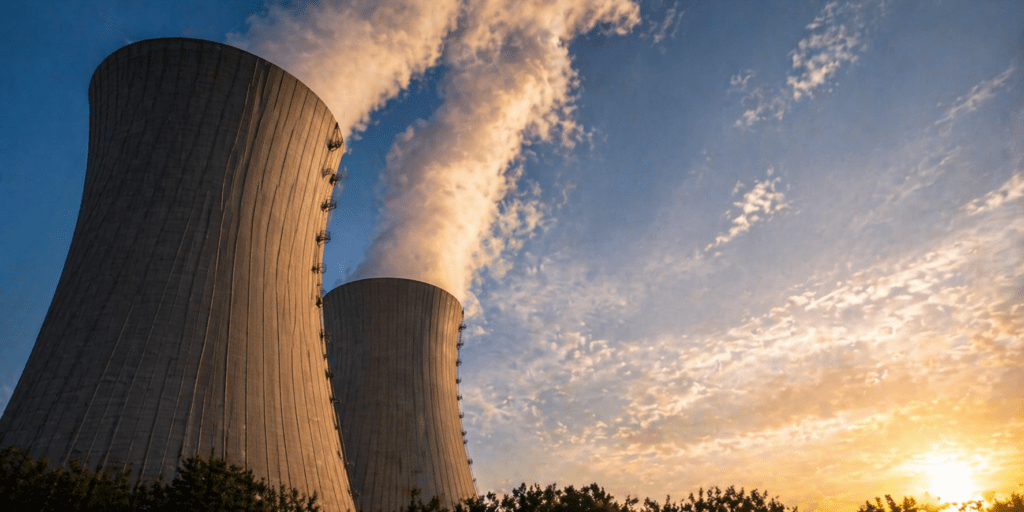
Kazakhstan plans to build at least three nuclear power plants (NPPs) by 2050, with implementation of the first project already underway, the country’s Atomic Energy Agency has said. The nuclear energy development strategy aims to ensure energy security, support sustainable economic growth, and meet international climate commitments, while fostering high-tech industries and strengthening Kazakhstan’s position in the global nuclear sector. “According to the Strategy, by 2050, at least three nuclear power plants will be operating in the Republic of Kazakhstan. The first NPP project is already being implemented, construction of the second is under consideration, and for the third NPP, the potential use of small modular reactor technologies is being explored,” the agency said. In addition to plant construction, the strategy provides for the rational use of uranium resources, localization of equipment and nuclear fuel production, and the development of national industrial capacity. Particular attention is being given to advancing nuclear science and applied technologies, creating a modern scientific and technological base, and establishing a system for training qualified personnel. The document also outlines measures for the safe management of radioactive waste and spent nuclear fuel to minimize environmental risks. Plans include the introduction of digital solutions and ensuring a high level of information security at nuclear facilities. “The implementation of the Strategy will enable the creation of a modern and sustainable nuclear cluster in Kazakhstan, integrated into the global nuclear ecosystem,” the agency said. A Center of Competence for NPP construction will be established on the basis of Kazakhstan Nuclear Power Plants. This entity will serve as a project office, general contractor, and holder of state equity stakes in future plants. In the longer term, the country plans to create a specialized nuclear energy holding company that will unite project and operating organizations in the sector. According to expert estimates, construction of a single nuclear power plant will require up to 10,000 workers, including more than 3,000 technical specialists. “In this regard, active work is underway to update technical and vocational education programs,” the agency said. “Particular attention is being paid to training specialists such as turbine equipment operators, electricians, NPP equipment installers, and technicians responsible for plant operation and safety.” Programs for applied bachelor’s degrees in nuclear energy are also being developed, along with new specialties, including reactor equipment operators. The first plant will use Generation III+ reactors, which feature enhanced reliability and modern safety systems, including passive protection mechanisms capable of operating without human intervention or external power supply. According to the agency, the project incorporates international experience, including lessons learned from the Fukushima Daiichi nuclear accident in Japan, and includes measures to prevent radioactive releases even in severe emergencies. Contracts for the construction of the second and third NPPs have been awarded to China National Nuclear Corporation, while the first plant will be built by Russia’s state corporation Rosatom. The site for the first plant is located in the village of Ulken in the Almaty region, on the shores of Lake Balkhash, approximately 400 km northwest...

Tokayev Calls Nuclear Power a Correction of Kazakhstan’s “Historical Absurdity”

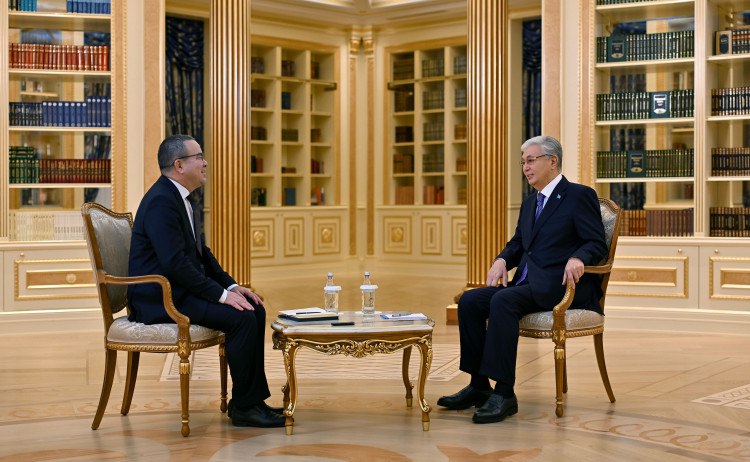
President Kassym-Jomart Tokayev has described Kazakhstan’s push to build nuclear power plants as a correction of a “historical absurdity”, namely, that a nation which ranks among the world’s top producers and exporters of uranium has yet to harness this resource for domestic electricity generation. In October 2024, a nationwide referendum showed broad public support for the development of nuclear energy. Following the vote, Tokayev announced plans to construct at least two nuclear power plants, with a third to follow. In June 2025, Russian state corporation Rosatom was selected to build the country’s first nuclear power plant near the village of Ulken, on the western shore of Lake Balkhash, about 400 kilometers northwest of Almaty. Contracts for the second and third plants were later signed with the China National Nuclear Corporation (CNNC). “The construction of several nuclear power plants is, on the one hand, a correction of the historical absurdity – to be a world leader in the production of uranium and not to build any nuclear power plants, on the other, it is the prestige of Kazakhstan,” Tokayev said in an interview with Turkistan newspaper, published on the official Akorda website. According to Tokayev, reliable electricity generation is essential for Kazakhstan’s transition to a new technological model of the economy. He emphasized that the development of supercomputers, data centers, and automated industrial systems requires substantial energy resources. “This is the reality of the new global technological order,” he stated. Tokayev has consistently argued that Kazakhstan must become a digital power, framing digitalization as a matter of national survival. He believes society is mentally prepared for innovation, citing the success of fintech companies and the expansion of digital government services. “We have good starting conditions and have made progress in the digitalization of public services, fintech, and several sectors of the economy. The ecosystem supporting IT startups is functioning effectively,” the president noted. He added that for continued progress, Kazakhstan requires stable, environmentally friendly, and high-capacity energy sources, needs best met by nuclear power. Tokayev also highlighted the importance of personnel in building a nuclear energy sector. He said the development of nuclear power will contribute to the emergence of a new class of technical intelligentsia, which could ultimately influence state policy. “Qualified specialists are needed to create modern energy sources. The head of NVIDIA, the world's largest company by market capitalization, predicts that in the near future, multimillionaires will include representatives of technical professions, the so-called ‘blue-collar workers’,” Tokayev said. As previously reported by The Times of Central Asia, Kazakhstan plans to train nuclear energy specialists abroad through the Bolashak state program.

China’s CNNC to Build Third Nuclear Power Plant in Kazakhstan

China National Nuclear Corporation (CNNC), which previously secured the contract for Kazakhstan’s second nuclear power plant, will now lead the construction of a third facility, according to First Deputy Prime Minister Roman Sklyar. In October 2024, Kazakh citizens voted in a national referendum in favor of nuclear energy development. Following the vote, President Kassym-Jomart Tokayev announced the need to construct at least two, and ideally three, nuclear power plants. In June 2025, Russia’s Rosatom was selected to build the first plant near the village of Ulken, on the western shore of Lake Balkhash, approximately 400 kilometers northwest of Almaty. Simultaneously, CNNC was announced as the builder for the second facility. Potential locations for this project include Kurchatov, near the former Semipalatinsk nuclear test site in eastern Kazakhstan, and Aktau, the former site of the Soviet-era BN-350 fast neutron reactor in the west. The identity of the third project’s contractor remained unclear until now. Alongside Rosatom and CNNC, South Korea’s KHNP and France’s EDF had been shortlisted. “The third nuclear power plant will also be built by China,” Sklyar confirmed during a press briefing. When asked whether this referred to CNNC specifically, he replied in the affirmative. Kazakhstan’s Atomic Energy Agency and Kazakhstan Atomic Power Plants LLP are currently evaluating potential sites for the second and third nuclear plants. “Work is underway, and I believe the locations will be announced later this year,” Sklyar said. “Each plant requires a permanent source of water and electricity, and the exact districts must be carefully selected.” Meanwhile, negotiations on the intergovernmental agreement for the first nuclear plant, being developed by Rosatom, are ongoing with Russian officials. “Once finalized, the agreement will be submitted to parliament for ratification,” Sklyar added. The first nuclear power plant is planned to have two units with a combined capacity of 2.4 gigawatts and is expected to be operational by 2035. The project is intended to help offset Kazakhstan’s growing electricity deficit, which reached 5.7 billion kWh in January 2025, up from 2.4 billion kWh a year earlier. To meet its current energy needs, Kazakhstan imports electricity primarily from Russia and recently signed an agreement with Tajikistan to purchase additional power from the Rogun Hydroelectric Power Plant.

Nuclear Energy Project in Uzbekistan Enters Construction Phase

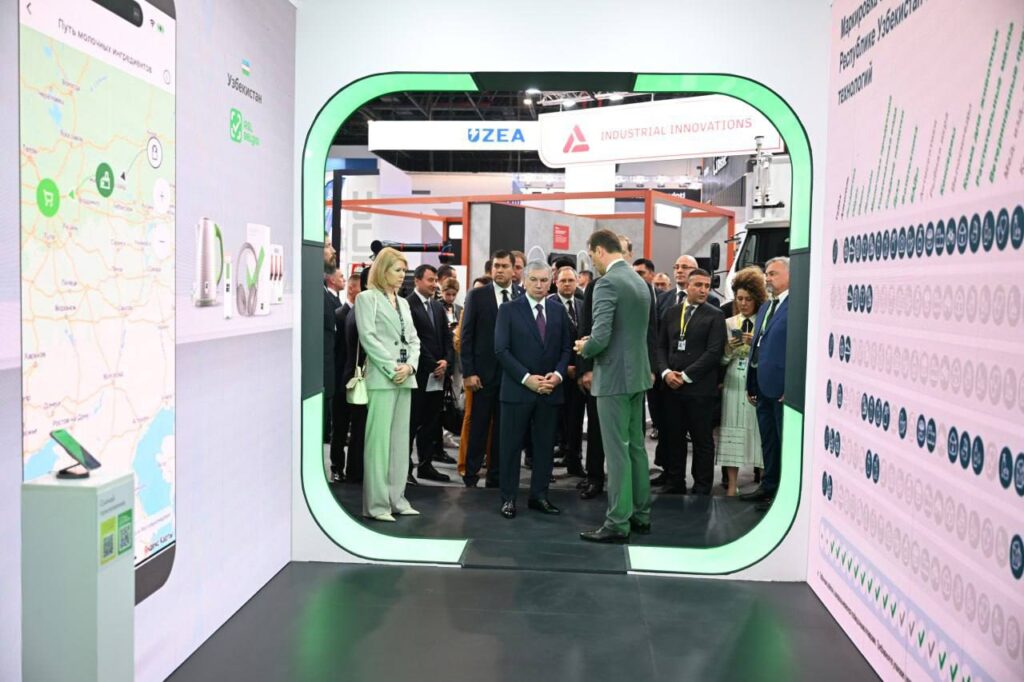
Uzbekistan has entered a new phase in its energy strategy as construction begins on the country’s first small-capacity nuclear power plant. The announcement was made during the INNOPROM. Central Asia industrial exhibition, held on April 28 in Tashkent, according to the presidential press service. The event, hosted at the Central Asian Expo Uzbekistan center, spans more than 18,000 square meters and has attracted over 10,000 delegates from Russia, neighboring Central Asian countries, China, India, and other nations. President Shavkat Mirziyoyev toured the exhibition pavilions and emphasized the importance of innovative business ideas and economic cooperation. He noted that the forum serves as a platform to advance new projects and strengthen long-term partnerships. Nuclear Power in Focus On the sidelines of the event, President Mirziyoyev met with a Russian delegation led by First Deputy Prime Minister Denis Manturov. The sides reviewed progress on bilateral agreements made during Putin’s visit to Uzbekistan in May 2024 and reaffirmed their commitment to expanding cooperation across multiple sectors. A central topic of discussion was Uzbekistan’s nuclear energy project. Rosatom Director General Alexey Likhachev confirmed that all legal formalities have been completed and that construction could officially begin within the year. “Not if, but when the leadership of Uzbekistan returns to the topic of a large nuclear power plant, we will already have proposals ready, not only on the design of future facilities but also on financing and local manufacturing,” Likhachev told TASS. “This project will be carried out through international cooperation, drawing on global best practices in electrical and mechanical engineering. However, the core nuclear technologies, the reactor island, will be Russian,” he added. Project Overview The plant is located in Uzbekistan’s Jizzakh Region and will consist of six reactors, each with a capacity of 55 megawatts, for a total output of 330 MW. While Rosatom serves as the main contractor, local Uzbek companies are also involved in the construction process. Officials say the project is a strategic step toward Uzbekistan’s long-term energy security. Azim Akhmadkhodjaev, head of Uzbekistan’s Atomic Energy Agency, recently called nuclear energy the most viable alternative to imported fossil fuels. He noted that Uzbekistan aims to increase the share of renewable energy in its national mix from 16% today to 54% by 2030. China is also playing a significant role in Uzbekistan's nuclear energy project. Shanghai Electric, a leading Chinese manufacturer, is being considered for providing turbine equipment for the non-nuclear island of the plant. Additionally, the Export-Import Bank of China (Eximbank) is in discussions to provide financial support. Energy analysts agree that a combined strategy of nuclear and renewable sources will allow Uzbekistan to meet rising domestic demand while reducing its environmental footprint.

Kazakhstan Finalizes Sites for Second and Third Nuclear Power Plants

Kazakhstan’s Energy Ministry has identified the regions of Balkhash, Kurchatov, and Mangistau as potential sites for the country’s second and third nuclear power plants, Energy Minister Almasadam Satkaliyev has announced. The first plant is set to be built in Almaty region. New Construction Sites Initially, Kazakhstan planned to build a single nuclear power plant by 2035 to address potential energy shortages. However, President Kassym-Jomart Tokayev later instructed the government to explore the construction of at least two additional plants. Following an Energy Ministry board meeting on Wednesday, Satkaliyev told reporters that three locations are under consideration for the second and third nuclear plants: Balkhash - a city in southeastern Kazakhstan. Kurchatov - a city in the Abai region that previously served the Semipalatinsk nuclear test site during the Soviet era. Aktau - the regional center of Mangistau, where an experimental nuclear reactor operated during the Soviet era. “We plan to build at least three nuclear power plants in Kazakhstan in the medium term. The government has identified promising sites for the second and third plants based on regional development needs, electricity demand, and diversification of the national power grid. The Balkhash site is highly promising, with the capacity for up to four 1,200 MW units. Kurchatov is suitable for two 1,200 MW units. The Mangistau site also offers significant advantages, including the potential for a medium-capacity plant,” Satkaliyev stated. Timeline and Contractors for the First Plant The government has approved the Zhambyl district of Almaty region, near the village of Ulken, as the site for the first nuclear power plant. However, the final decision will depend on engineering surveys in the region. Four companies are in contention to construct Kazakhstan’s first nuclear plant: Rosatom (Russia) KHNP (South Korea) CNNC (China) EDF (France) “In the first half of 2025, we plan to announce the configuration for the first nuclear power plant,” Satkaliyev said. The Energy Ministry has sent a list of 207 questions covering 19 key aspects of construction and operation to all four bidders. Responses were received last week and are now under review by an interdepartmental commission. “It is too early to determine a frontrunner. The final decision on the contractor will be made after a thorough review, possibly even earlier than expected,” Satkaliyev noted. A referendum held on October 6, 2024, showed that 71.12% of voters approved the construction of a nuclear power plant in Almaty region.