Central Asia Makes Progress on Uranium Cleanup, but Major Risks Remain
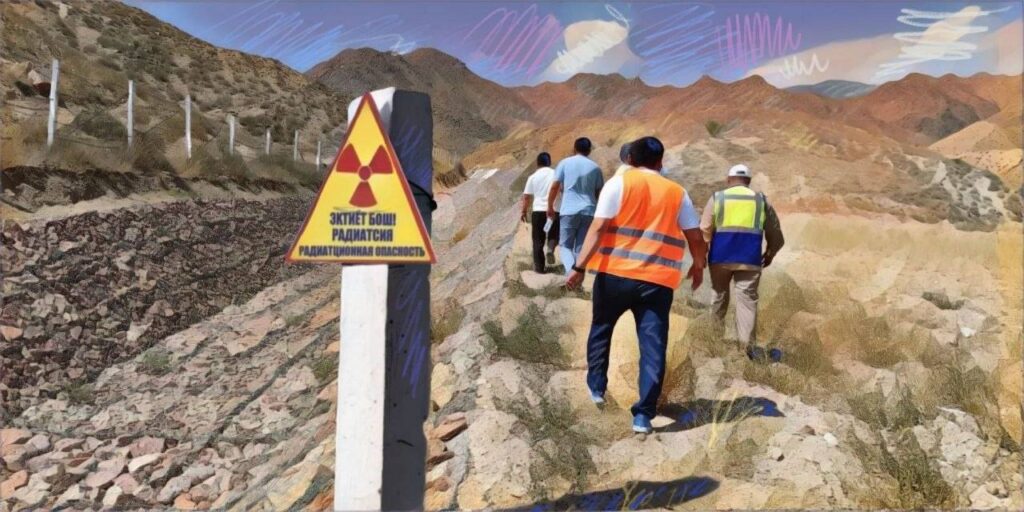
Radioactive waste lies beside the river in Mailuu-Suu, a former uranium town in Kyrgyzstan’s picturesque mountain landscape. Engineers preparing to secure it found a problem inside one of its dams. Additional drilling revealed tailings within the dam structure itself. Two subsequent studies concluded that waste from two connected ponds would have to be moved to a safer location. The discovery changed the cleanup design and increased its cost, according to the International Atomic Energy Agency’s revised master plan. Material that planners had intended to secure in place could no longer safely remain there. Once known as Mailbox 200, the town was founded in 1946 for a secret Soviet uranium program. Its workforce included Germans treated as politically suspect and former Red Army soldiers punished for surrendering during World War II. Uranium mining and processing at Mailuu-Suu ended in the late 1960s, leaving waste buried along the river. Cleanup is expected to continue until 2032. Even then, the authorities will need to maintain the restored sites and check that contamination remains contained. Mailuu-Suu illustrates why Central Asia’s uranium cleanup has stretched across decades. The waste sits in places where rivers and unstable slopes can carry it beyond the original industrial sites. Making those places safer requires extensive engineering, followed by public oversight that must outlast the contractors. [caption id="attachment_56370" align="aligncenter" width="1774"] Archival photograph of Mailuu-Suu’s old mill and uranium tailings; image: Peter Waggit/IAEA[/caption] The International Atomic Energy Agency’s latest assessment, published in January 2026, records substantial progress. Four out of seven priority sites have been remediated since the original regional plan was adopted in 2017. But Mailuu-Suu remains one of the largest and most complex projects, with work expected to extend beyond the updated regional plan’s 2030 horizon. Across the region, former uranium operations left radioactive residue after mining and processing ended. The IAEA describes facilities abandoned without adequate plans for safe closure. National governments inherited responsibility for sites where no private owner remained to pay for the work. The geography compounds the situation. The IAEA’s original planning framework identifies tailings ponds near major rivers in seismically active areas. Flooding or a landslide can undermine containment and lead to contaminated materials traveling downstream. The location of a deposit therefore helps determine the urgency and design of its cleanup. At Mailuu-Suu, the European Bank for Reconstruction and Development (EBRD) announced a €23 million grant in 2023. The original design included soil covers two meters thick to reduce water entering the waste and prevent access to it. The project concerned more than two million cubic meters of tailings along the river and its tributaries. Following the devastating 2023 earthquake in Turkey and Syria, Kyrgyzstan’s Ministry of Construction required further checks on the dams’ stability. Drilling revealed tailings inside the dam at pond seven. Subsequent studies found that the waste in ponds five and seven could not safely remain in place. The IAEA plan warns that a strong earthquake could cause the dam to collapse, allowing water-saturated waste to liquefy and enter the river....