• KZT/USD = 0.00220
  • TJS/USD = 0.10860
  • UZS/USD = 0.00008
  • TMT/USD = 0.29850
  • KZT/USD = 0.00220
  • TJS/USD = 0.10860
  • UZS/USD = 0.00008
  • TMT/USD = 0.29850
  • KZT/USD = 0.00220
  • TJS/USD = 0.10860
  • UZS/USD = 0.00008
  • TMT/USD = 0.29850
  • KZT/USD = 0.00220
  • TJS/USD = 0.10860
  • UZS/USD = 0.00008
  • TMT/USD = 0.29850
  • KZT/USD = 0.00220
  • TJS/USD = 0.10860
  • UZS/USD = 0.00008
  • TMT/USD = 0.29850
  • KZT/USD = 0.00220
  • TJS/USD = 0.10860
  • UZS/USD = 0.00008
  • TMT/USD = 0.29850
  • KZT/USD = 0.00220
  • TJS/USD = 0.10860
  • UZS/USD = 0.00008
  • TMT/USD = 0.29850
  • KZT/USD = 0.00220
  • TJS/USD = 0.10860
  • UZS/USD = 0.00008
  • TMT/USD = 0.29850
03 November 2026

Viewing results 1 - 6 of 13

How The New York Times Came to Publish an Obituary for Kazakh writer Mukhtar Auezov

While browsing old issues of The New York Times, we wondered: “Is there anything here about the Kazakhs or Kazakhstan?” One edition stood out, the June 28, 1961 issue. On page 35, alongside obituaries for several prominent figures, was one for our great writer, Mukhtar Auezov. [caption id="attachment_33412" align="aligncenter" width="378"] “Winner of Lenin Prize in 1959 for 2-Volume Work Dies Mukhtar O. Auezov, the Kazakh poet and philosopher whose two-novel work, ‘Abai’ and ‘The Road of Abai,’ earned a Lenin Prize two years ago, died yesterday in Alma-Ata.”[/caption] The article went on to note that Mukhtar Auezov was born and raised in the Shyngystau region (known today as the Abai District), and later wrote a major work about the life of Abai. It also mentioned that he studied at Leningrad University and authored numerous literary works. In 1960, Auezov visited several U.S. states as part of a Soviet writers’ delegation. Upon returning home, he expressed in interviews his admiration for the towering skyscrapers of New York City. What pleased us even more was that The New York Times included a photograph of Auezov alongside the obituary. This shows that even in the 1960s, American literary circles recognized and took notice of a Kazakh writer. In other words, Auezov left a lasting impression on the American public. Other articles about him may have appeared in the U.S. press, but so far this obituary is the only one we have been able to find. Mukhtar Omarkhanuli Auezov holds the distinction of being the first known Kazakh writer to set foot on American soil. His official visit was well covered by the U.S. press and known to the American public at the time. This likely explains why such a major publication honored him with a dedicated obituary, informing readers around the world of his passing. The gesture reflects a significant level of respect and recognition. Mukhtar Auezov indeed visited the United States from February 17 to March 17, 1960, as part of a delegation of Soviet writers. This trip was part of the “Agreement Between the United States of America and the Union of Soviet Socialist Republics on Exchanges in the Cultural, Technical, and Educational Fields.” According to the agreement, four American writers visited the USSR in 1959, and in return, a Soviet delegation traveled to the U.S. in February/March 1960. To give readers a closer look at his journey, we are sharing excerpts from Mukhtar Auezov’s diary, where he reflects on the trip. The entries were later published in a bilingual edition, Mukhtar Auezov: Impressions of America, in 2021, in both Kazakh and English. Below are a few details from Auezov’s impressions of the U.S.: That day we toured Washington, D.C. It’s a very beautiful city. No two houses look alike. Even the cars are all different, though there are many, they never repeat. We visited the old part of the city, the area known as ‘Georgetown.’ All the houses here are old, yet highly stylish, elegant two-story homes. There is one...
Kazakhstan: Alexander Mashkevich, Business and Jewish Community Leader, Dies

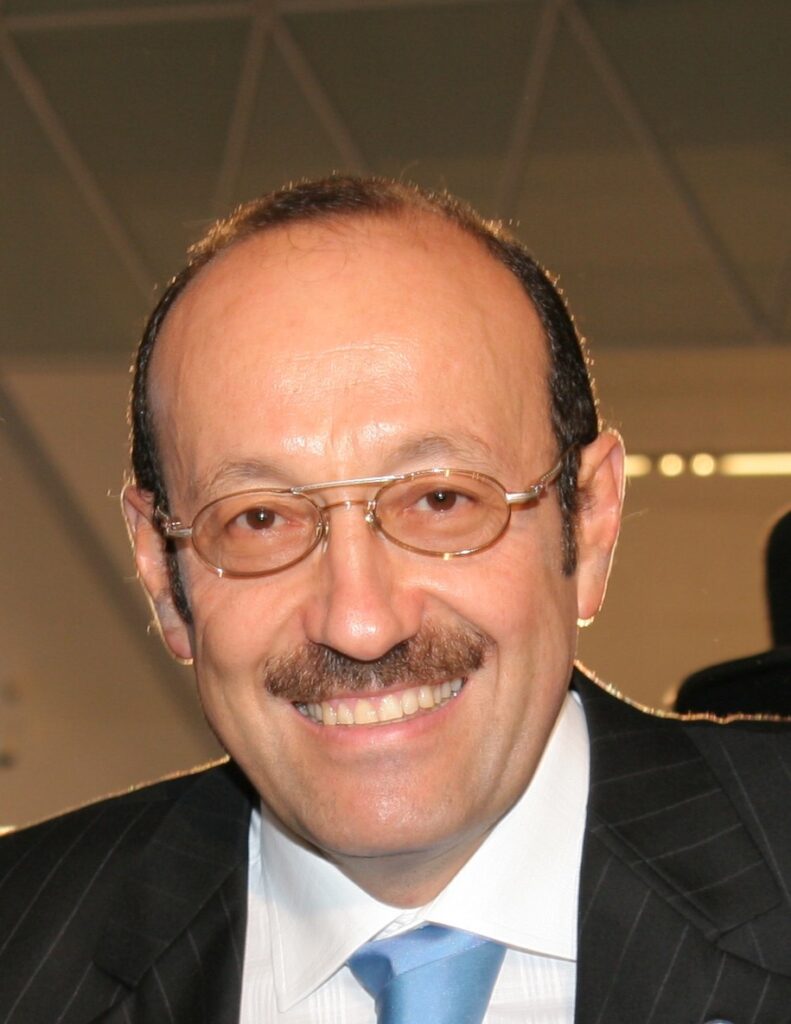
Alexander Mashkevich was a prominent figure in Central Asian business for many years: a founder of Eurasian Resources Group, a major mining company that is partly owned by Kazakhstan’s government and has operations in Africa and Brazil, and chairman of the board of directors of the Almaty-based Eurasian Bank. He also founded the Jewish Congress of Kazakhstan and became its first president. Mashkevich, who moved from Kyrgyzstan to Kazakhstan in the 1990s and later obtained Israeli citizenship, died on March 22 after an illness. He was 71 years old and leaves a wife, Larissa, and two daughters, Anna and Alla. Mashkevich “made an enormous contribution to the development of Kazakhstan’s metals and mining sector and the country’s economy,” said Eurasian Resources Group, or ERG. Between 2014 and 2024, Mashkeviich was chairman of the board of directors of Luxembourg-based ERG, which says it is one of the world’s largest producers of ferrochrome, an alloy that can be used to make stainless steel, and cobalt, which is used in batteries and other technologies. The company also says it is also a major producer of copper, the only producer of high-grade aluminum in Kazakhstan, and a big supplier of alumina and iron ore in the Eurasia region. It provides electricity and is a major railway operator in the region. Mashkevich received awards from the Kazakh state for contributions to the country’s development. His operations also came under scrutiny from Britain’s Serious Fraud Office, which for many years investigated suspected bribes that were paid to access mining contracts in Africa. In 2023, the office closed its case without bringing charges. The Eurasian Natural Resources Corporation, a subsidiary of ERG, had meanwhile sued the fraud office for alleged wrongdoing. The two sides settled last year. Separately, Belgian prosecutors alleged that Mashkevich and two partners were involved in a money-laundering scheme. In 2011, the matter was dropped after the three businessmen paid a fine without admitting guilt. Mashkevich, who had a Lithuanian Jewish background, built a reputation as a philanthropist. He was active in the Jewish community in Central Asia, leading the Euro-Asian Jewish Congress, or EAJC, for more than a decade after it was founded in 2002. He supported Jewish schools and other institutions, and one of his last projects was the establishment of a museum about Albanian citizens who saved Jews during World War II, according to the EAJC. In addition to synagogues, he also provided funds for the construction of mosques and churches in Kazakhstan. Mashkevich’s parents met in Kyrgyzstan after being evacuated during World War II. At a conference in Israel in 2011, Mashkevich said Jews had to excel in order to survive. “We have to find – every day – new, creative ways to respond to challenges, which we get every, every, every day the last few thousand years,” Mashkevich said in English. “And I suppose we will get these challenges another few thousand years.”

Obituary – Young Uzbek Reporter Loved Journalism, but Grew Frustrated: “There’s No Point Anymore.”

Alisher Ruziokhunov, an Uzbek journalist who had worked for Kun.uz and other online news organizations in Uzbekistan, has died of an illness in his early 30s, according to several outlets that used to employ him. In a tribute, a former colleague said Ruziokhunov drifted away from journalism in recent years because he found it difficult to report freely despite government commitments to loosen restrictions on the media. Kun.uz described Ruziokhunov as a talented journalist who wrote hundreds of articles about “the development of the state and society” and started big projects such as the Munozara Club, which “brought together representatives of government institutions for discussions.” Ruziokhunov traveled widely, attending events as a journalist and conference participant. He visited Armenia, Ukraine and Kenya, as well as the U.S.-Mexico border and the Moody College of Communication at The University of Texas at Austin. “Why does journalism mean a lot to me? I believe media and true journalism make our world a better place to live in,” Ruziokhunov said on social media. “Don’t be afraid to stand out among everyone with your thoughts, appearance, or goals,” he said in another post. Despite his talent, passion and growing experience, Ruziokhunov had doubts. Ilyos Safarov, an Uzbek journalist who reported Ruziokhunov’s death in an emotional social media post on Wednesday, said in a later message that his close friend had dropped out of Uzbekistan’s media scene in recent years because he was disillusioned. Safarov said Ruziokhunov preferred to go into education, believing that Uzbek journalism had reached “the limit” because a journalist who published critical commentary could easily face retaliation from people in power. “There’s no point anymore,” Safarov remembered his friend saying. “I often argued against him, challenging his views,” Safarov said. “At times, just to push his buttons, I even accused him of cowardice. But deep down, I knew he was right. And the truth is, today, we really are powerless. Forget about defending others—journalists can’t even protect themselves.” “By now, everyone has realized that the brief period of relative freedom over the past 3-4 years was merely a façade, designed to allow people to criticize the past era more openly,” said Safarov, who works for Vatandosh TV. By past era, he appeared to be referring to the more authoritarian era of Uzbek leader Islam Karimov, who died in 2016. Uzbek President Shavkat Mirziyoyev, who took over after Karimov’s death, has periodically spoken in support of freedom of speech, though some journalists and bloggers say they have faced prosecution and intimidation because of their work. The law in Uzbekistan says the spread of false information that leads to the denigration of “a person´s dignity” or threatens “public order or security” can lead to prison sentences; advocates of freedom of expression say such regulations are overly broad and are used to muzzle criticism of the government.

Obituary – Kristopher White: The Gentle Giant Who Inspired a Generation of Central Asian Scholars

Kristopher Dodge White, known to his friends simply as “Kris”, was a distinguished scholar, mentor, and friend, who dedicated two decades of his life to academia in Kazakhstan. Kris was a gentle giant, someone people naturally gravitated toward. Respected and loved by friends, colleagues and students alike, his personality left an indelible mark on everyone he met. In terms of professional discipline, Kris was a geographer, having conducted undergraduate studies at Clark University and an MA and a PhD at the University of Connecticut. He established himself as a leading interdisciplinary scholar of Central Asia, advancing our understanding of post-Soviet transitions, environmental crises, and the interplay between human societies and their landscapes. Kris’s life work is a testament to the power of geography as a lens for understanding complex regional challenges. Future scholarship will undoubtedly build upon his illuminating insights into the interdependencies of nature, economy, and identity. [caption id="attachment_28957" align="aligncenter" width="2560"] Kristopher White in his office at KIMEP, 2023[/caption] Kris was a prolific writer and researcher, devoting much of his work to the study of the Aral Sea and highlighting the ecological and social challenges of the region. His work excelled in weaving environmental and economic themes with cultural analysis. For example, he explored how the endangered snow leopard has become a symbolic linchpin for Kazakhstan’s national identity, ecotourism marketing, and international conservation agendas. As an educator at KIMEP University since 2004, Kris helped shape a generation of Central Asian scholars through courses like Oil Geopolitics and The Aral Sea Crisis: A Geographical Perspective. His pedagogical approach—rooted in regional case studies —exemplified his commitment to place-based learning. [caption id="attachment_28958" align="aligncenter" width="2560"] Back in Almaty[/caption] Beyond his professional work, Kris had an adventurous spirit. His love for travel took him across the globe, capturing the beauty of the world through his keen eye for photography. Whether exploring the vast Kazakh steppe, documenting the remnants of the Aral Sea, or wandering through historic cities, he found joy in sharing stories through his lens. He later developed and taught a course on photojournalism at KIMEP. Kris and I overlapped at KIMEP for four years (2004-08). I always appreciated that irrespective of the challenges of any given day, he was an oasis of calm and fun, liking nothing better than to unwind over a glass of Kazakh beer or Georgian wine. Kris was the epitome of a true friend who would never let you down, someone who always had your back and you had his ear. We made several unforgettable road trips throughout Central Asia, particularly in Uzbekistan and Turkmenistan. [caption id="attachment_28959" align="aligncenter" width="2560"] Kristopher White with Donnacha Ó Beacháin, 2023 [/caption] Kris passed away while visiting his family in Florida. Today, the 21st February, would have been his 56th birthday. He had so many plans for the future, and it’s heartbreaking that he won’t see them come to fruition. Those who knew him will forever remember his kindness and wisdom. His legacy lives on in the minds he inspired, the friendships he nurtured, and the body of...

Former Uzbek Diplomat, Jailed In Case Criticized by UN, Dies at 73

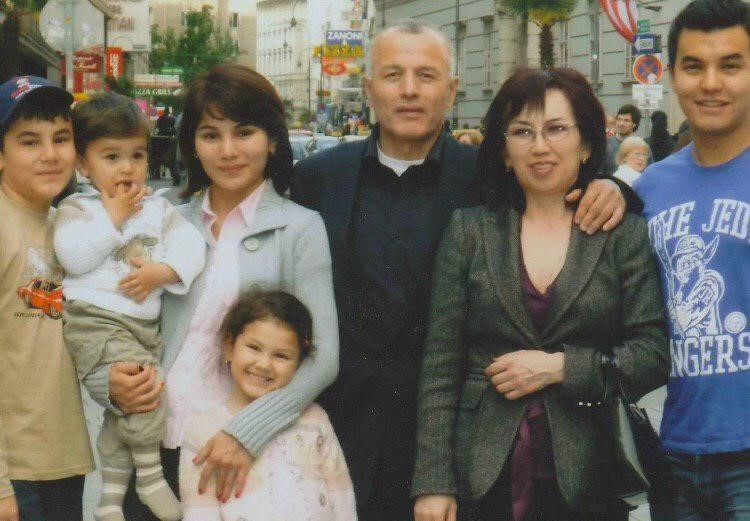
Kadyr Yusupov, a former Uzbek diplomat with a distinguished career who was convicted of treason and jailed in a case that the United Nations said had violated his rights, has died at the age of 73, an international human rights group said on Thursday. Yusupov, who died on Nov. 14, was released from jail on June 10 after being imprisoned for five and a half years and suffering alleged torture and “deplorable” conditions during some of that time, according to the Norwegian Helsinki Committee. While Uzbek officials denied the torture allegations, the U.N. Working Group on Arbitrary Detention concluded in a 2021 report that Yusupov had been arbitrarily detained, he should be released immediately and that the government should take action against those responsible for violating his rights. The group said that the violations included the denial of “medication and treatment for the very serious health conditions from which he suffers.” Rights groups have said that Yusupov was suffering from a mental illness. “In December 2018 he was arrested on charges of treason which appear to have been based on a statement he made during a psychotic episode, when he was undergoing medical treatment,” the Norwegian Helsinki Committee said. “Whilst in hospital, suffering from brain trauma and clearly confused, Yusupov reportedly said that he had been a spy for the West.” It said there were “credible allegations” that state security officers coerced Yusupov into a confession. The former diplomat said he was treated better after being transferred from a prison in the city of Navoi to a jail in the Tashkent region. Yusupov had worked in a series of high-profile jobs for Uzbekistan’s Ministry of Foreign Affairs. The posts included head of the ministry’s Asia and Africa department, head of the European department and, from 2006 to 2009, chargé d’affaires in Austria and permanent representative to the Organization for Security and Cooperation in Europe and United Nations organizations in Vienna.

Top Nuclear Expert in Uzbekistan Dies at Age 79

Behzod Yo'ldoshev, a prominent Uzbek scientist who was deeply involved in international efforts to ensure the safe use of nuclear power and was a key player in Uzbekistan’s ongoing drive to build a nuclear power plant for energy generation, has died. Yo’ldoshev, president of the Academy of Sciences of Uzbekistan, worked as a scientific adviser at the Vienna-based International Atomic Energy Agency and “received wide international recognition in the field of high-energy physics,” the office of President Shavkat Mirziyoyev said in a statement. After Yo’ldoshev died at the age of 79 on Wednesday, Mirziyoyev visited his family at their home, where mourners prayed and recited verses of the Quran. The Uzbek scientist collaborated with the Joint Institute for Nuclear Research, an international center in the Moscow region where he earned his PhD in physics and mathematics, and also had teaching jobs at Stanford University and the University of Washington. Yo’ldoshev published several hundred scientific papers on particle and nuclear physics and other topics, and held more than 20 patents on nuclear applications, according to Stanford. “Uzbek science has suffered a heavy loss,” the Uzbek sciences academy said on social media. Others paying tribute to Yo’ldoshev included the Department of Astronomy and Astrophysics of the National University of Uzbekistan, as well as Gennady Krasnikov, president of the Russian Academy of Sciences. Uzbekistan has been planning to build a nuclear power plant with Russian help for years, but the project has encountered delays. The project got a boost in May when Russian President Vladimir Putin visited Tashkent and signed a new deal to build a smaller plant than previously envisioned. Yo’ldoshev was involved in the fitful efforts to deliver nuclear power in Uzbekistan. In 2019, he was in Vienna to inform the International Atomic Energy Agency that the plant would be built in line with the U.N. watchdog’s requirements. In 2020, Rosatom, Russia’s nuclear energy agency, gave Yo’ldoshev a medal for his contributions to the use of atomic energy. Over his decorated career, Yo’ldoshev contributed to international non-proliferation work, such as upgrading research reactors, developing ways to stop illicit trafficking of nuclear material, as well as the transport and securing of highly enriched spent fuel. His other roles included director of the Institute of Nuclear Physics of the Academy of Sciences of Uzbekistan and as a member of parliament.