


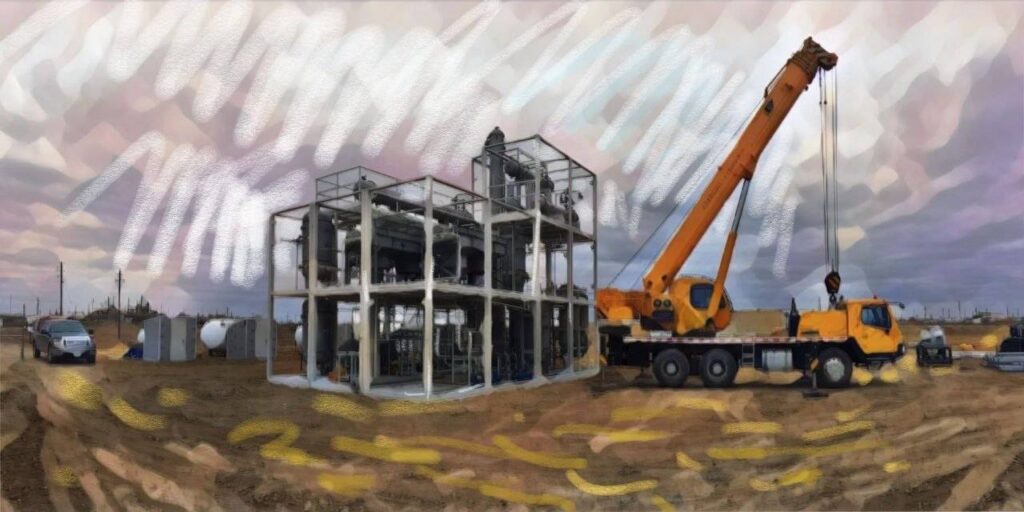
Kazakhstan Mini-Refineries Eye Russia After Rail Export Restriction Lifted
Kazakhstan has lifted a railway export restriction on petroleum products from mini-refineries. For small plants, many of which operate well below capacity, the decision restores an opportunity to sell their products outside the country. Kazakhstan Temir Zholy (KTZ), the national railway company, revoked the restriction following an August 7 decision by the country’s Chief Transport Prosecutor’s Office. The timing is notable: after a series of strikes on its refineries, Russia is facing fuel shortages and has already begun importing gasoline from abroad, including Kazakhstan. Other restrictions on fuel exports from Kazakhstan remain in force, so the KTZ decision does not fully reopen gasoline and diesel exports. Some fuels remain subject to separate bans, and exports to Russia are treated differently from shipments outside the Eurasian Economic Union. What Mini-Refineries Produce The number of mini-refineries actually operating in Kazakhstan depends on how such facilities are defined. Official documents have referred to roughly 30 small petroleum-product producers. More recent industry data provide a clearer picture: more than 30 mini-refineries are registered, with declared crude-processing capacity of about 4.5 million metric tons a year. Of these, 22 are considered operational, with a combined capacity of about 2 million tons. Actual processing is considerably lower, having increased from roughly 400,000 to 800,000 tons annually over the past five years. These are not smaller versions of Kazakhstan’s major refineries in Atyrau, Pavlodar, and Shymkent. Most mini-refineries lack equipment for deep refining, so their output is simpler. Their main products include fuel oil, heating and marine fuels, naphtha, and other distillates. In 2023, mini-refineries processed 895,000 tons of feedstock and produced 346,000 tons of fuel oil, 145,000 tons of diesel fuel, and 171,000 tons of bitumen. Much of this output was not intended for Kazakhstan’s motorists. Mini-refineries produce semi-finished products, including straight-run fuel oil with a relatively high share of light fractions that can be processed further. Their opportunities on the domestic market are also limited by product quality: Kazakhstan has required K4 and K5 motor-fuel standards since 2018, while official assessments say mini-refineries generally lack the equipment to produce fuel above the K3 standard. Restoring export opportunities could therefore have a tangible economic effect for these businesses. The plants have spare capacity but insufficient domestic demand for much of their current product range. Rail exports once again give them a way to look for buyers outside Kazakhstan. And that inevitably raises the question of Russia. Russia Is Looking Abroad for Fuel There is no direct evidence that KTZ lifted the restriction specifically because of the Russian market. Neither the Kazakh authorities nor the railway company has made such a connection. But the decision comes at a convenient time for potential Russian buyers. Ukrainian drone strikes and unplanned refinery outages have reduced Russian gasoline production and contributed to domestic shortages. Moscow has responded by restricting fuel exports and increasing imports from abroad. Russia has already turned to several suppliers. In July, Belarus shipped a record 212,000 tons of gasoline to Russia, while Moscow has also begun...
