• KZT/USD = 0.00223
  • TJS/USD = 0.10830
  • UZS/USD = 0.00009
  • TMT/USD = 0.29850
  • KZT/USD = 0.00223
  • TJS/USD = 0.10830
  • UZS/USD = 0.00009
  • TMT/USD = 0.29850
  • KZT/USD = 0.00223
  • TJS/USD = 0.10830
  • UZS/USD = 0.00009
  • TMT/USD = 0.29850
  • KZT/USD = 0.00223
  • TJS/USD = 0.10830
  • UZS/USD = 0.00009
  • TMT/USD = 0.29850
  • KZT/USD = 0.00223
  • TJS/USD = 0.10830
  • UZS/USD = 0.00009
  • TMT/USD = 0.29850
  • KZT/USD = 0.00223
  • TJS/USD = 0.10830
  • UZS/USD = 0.00009
  • TMT/USD = 0.29850
  • KZT/USD = 0.00223
  • TJS/USD = 0.10830
  • UZS/USD = 0.00009
  • TMT/USD = 0.29850
  • KZT/USD = 0.00223
  • TJS/USD = 0.10830
  • UZS/USD = 0.00009
  • TMT/USD = 0.29850
03 October 2026

Viewing results 1 - 6 of 5

Kazakh National University of Sports Joins Olympic Studies Network

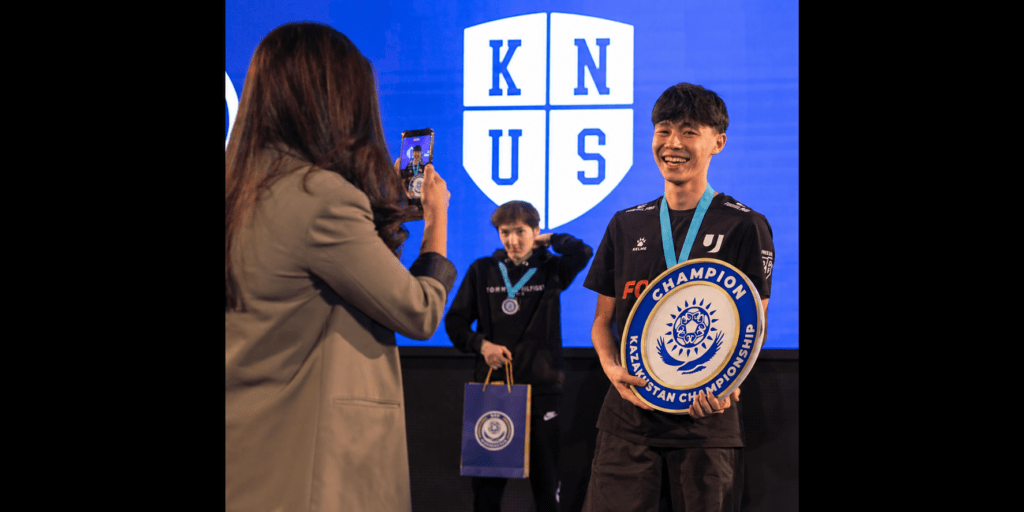
The Kazakh National University of Sports in Astana says it has become the first university in Central Asia to join a global network of academic Olympic studies centers. It announced the recognition on September 17. The Academic Olympic Studies and Research Centres network connects institutions researching the Olympic Games and the Olympic Movement. The university says around 80 such centers operate worldwide. Their work includes teaching, scientific events, and the publication of research. The network is coordinated by the International Olympic Committee’s Olympic Studies Centre in Lausanne and provides a forum for cooperation between academics in different countries. The university trains coaches, physical education teachers, sports managers, and other specialists. Its training also extends to staff for rehabilitation centers and organizers of mass sporting events. It is now developing a Center for Olympic Studies, Education and Legacy, which will focus on research into the history, values, and long-term impact of the Olympic Movement. Membership in the international network will allow the Astana center to work with universities and research centers overseas and exchange research and teaching practices, the university said. The university said support from the National Olympic Committee was an important condition for recognition. It is already working with Kazakhstan’s committee on projects involving Olympic education and research. The new center is intended to bring students and lecturers into discussion with researchers and sports professionals, making Olympic studies part of the university’s sports science and education work.
Kazakhstan Olympic Delegations Capped After Spending Audit

Kazakhstan has limited the number of sports officials who can be included in official Olympic delegations. The new rules follow an audit of spending on the Tokyo Olympics, where Kazakhstan’s delegation included more support staff than athletes, and auditors found there were no uniform rules for determining how many accompanying personnel were actually necessary. Kazakhstan sent 95 athletes and 101 accompanying personnel to the Tokyo Games. They included 62 coaches, 20 medical staff, nine administrative staff, and other personnel. The Supreme Audit Chamber examined the delegation as part of its audit of spending on preparations for the Games. Auditors found that the country had no uniform rules governing the composition of sports delegations. The number of coaches, doctors, administrative staff and government officials was determined separately for each trip, making it difficult to assess whether travel expenses were justified. The Audit Chamber said the new rules were intended to prevent “extra” accompanying personnel from being included in delegations and reduce the risk of unjustified spending. Following the audit, the Ministry of Tourism and Sports introduced limits for different categories of accompanying personnel. The rules will apply to the Olympic, Paralympic, and Deaflympic Games, and other major international competitions. Officials face the tightest restrictions. At the Summer Olympics, Ministry of Tourism and Sports employees may account for no more than 3% of the number of athletes, while representatives of its Committee for Sports and Physical Culture are limited to 2%. For a team of 100 athletes, that would mean a maximum of three ministry employees and two committee representatives. The limits are substantially higher for personnel who work directly with athletes. At the Summer Olympics, coaches may number up to 86% of the athlete delegation, while doctors, massage therapists, and other medical staff may account for up to 28%. The significance of the new rules is less the precise size of each quota than the fact that Kazakhstan now has a benchmark for judging whether the number of people accompanying athletes – including government officials – is reasonable. Previously, delegation sizes were determined on a case-by-case basis. The new restrictions are part of a broader review of Kazakhstan’s spending on sports. Since the summer of 2025, public funds have been barred from being used to pay foreign athletes playing for Kazakhstani teams. As The Times of Central Asia previously reported, that measure, together with wider limits on professional sports spending, has saved more than $17 million, with the money redirected to youth sports. Ultimately, the audit of Kazakhstan’s Tokyo Olympic spending exposed less a problem with the size of one particular delegation than the absence of clear rules for forming such delegations. The new quotas give auditors a benchmark for the first time: delegations will now have to remain within defined limits.

Kazakhstan Begins First Public-Private Partnership Sports Facility Project

Construction has begun in the Atyrau region on Kazakhstan’s first sports boarding school for athletically gifted children, to be implemented under a public-private partnership (PPP) model. According to the Ministry of Tourism and Sports, the private partner will be responsible for the full project cycle from design and construction to technical maintenance of the facility for five years after its completion, which is scheduled for May 2027. The new school will feature modern academic buildings and residential facilities. The 3.2-hectare site will include an academic block for 400 students, a 300-bed dormitory, 13 gyms, a swimming pool, a cafeteria, a library, a stadium, running tracks, and basketball and volleyball courts. The project in Atyrau is intended as a pilot, with plans to replicate similar facilities in other regions of the country. The school is expected to train 400 young athletes across 13 Olympic sports. Officials say the project will create improved conditions for developing the country’s sports reserve by integrating academic education with professional training. In recent years, the development of sports in Kazakhstan has received increased state support, contributing to stronger performances by Kazakh athletes in international competitions. In the first quarter of 2026, Kazakhstani athletes won 200 medals at international events: 79 gold, 57 silver, and 64 bronze. At the 2026 Winter Olympic Games in Milan, Italy, in February, Kazakhstan won one gold medal and finished 19th in the overall medal standings. This marks the country’s best result since 1994, when it placed 12th at the Lillehammer Olympics, where skier Vladimir Smirnov won gold. In 2026, Kazakhstan’s only medal was secured by figure skater Mikhail Shaidorov, who became the country’s first Olympic champion in figure skating. At the Paralympic Games in Italy in March 2026, Kazakhstan placed 18th out of 55 countries in the medal standings. Yerbol Khamitov won two medals, gold in the biathlon pursuit and bronze in cross-country sprint, becoming the first Kazakhstani athlete to win two medals at a Winter Paralympics.

Central Asian Boxers Poised for Olympic Medals This Week

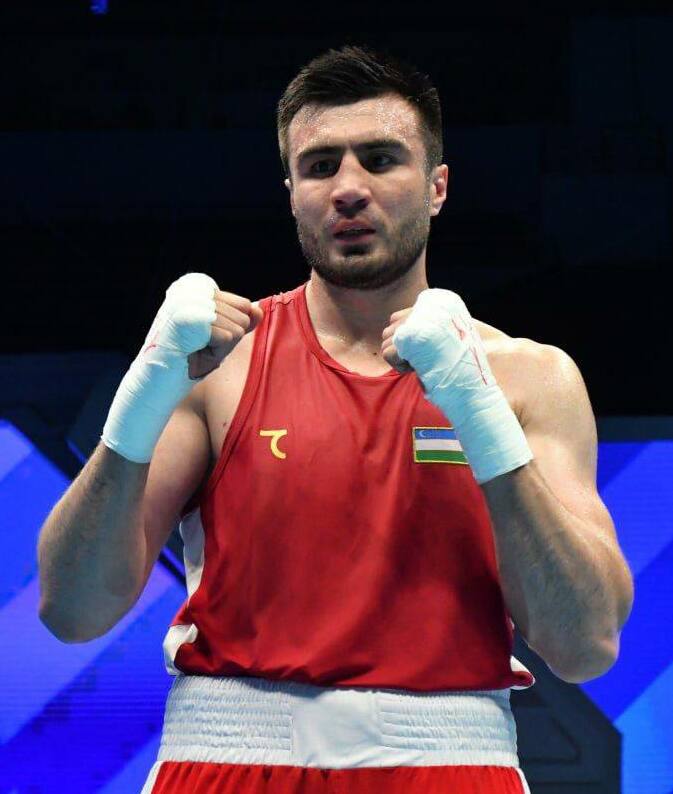
Mark your calendars: boxers from Central Asia are going for gold in Paris. On Wednesday, Kazakh boxer Nurbek Oralbay will fight for Olympic gold in the 80-kilogram class final. Then, on Friday, Lazizbek Mullojonov of Uzbekistan will do the same in the 92-kilogram final. Kazakhstan’s Oralbay, 24, defeated Dominican boxer Christian Pinales in a 3-2 decision on Sunday and will face Oleksandr Khyzhniak of Ukraine in the middleweight final on Aug. 7. Oralbay’s twin brother, Aibek, is also a boxer. He competed in the 92-kilogram class at this year’s Olympics but lost in the quarterfinals. “Their father, a former freestyle wrestler, wanted Nurbek and his brother to follow in his footsteps,” olympics.com reported. “But money was tight at home and boxing coach Askar Yerkebayev (KAZ) offered to train the boys in boxing for free, saying he had a dream to take twins to the world championships - and their father agreed.” The Olympics Games website also reported that Nurbek once pretended to be Aibek in a bout because Aibek was ill. It didn’t offer more details on that subterfuge. Meanwhile, Uzbekistan’s Mullojonov is up against Loren Alfonso of Azerbaijan in the Aug. 9 heavyweight final. Mullojonov, 25, defeated Tajikistan’s Davlat Boltaev in the semifinal on Sunday, and the Tajik boxer gets a bronze medal. Mullojonov, who comes from Uzbekistan’s Ferghana region, was a super heavyweight gold medalist at the 2022 Asian Championships. -- They call him “The Big Uzbek.” Another Central Asian boxer to watch in Paris this week is Uzbekistan’s Bakhodir Jalolov, who competes against Nelvie Raman Tiafack of Germany in a semifinal of the 92-kilogram-plus class on Aug. 7. Jalolov, 30, is a defending champion. He was the super heavyweight champion at the Tokyo games in 2021. He has said he wants to become a professional boxer. -- Nariman Kurbanov of Kazakhstan brought home silver in the men’s pommel horse, the first Olympic medal in gymnastics for the Central Asian country. “20 years of hard work, 35 seconds on the Olympic podium. And now - History!” Kurbanov, 26, said on Instagram. Kurbanov scored 15.433 on Saturday, just falling short of Ireland’s Rhys McClenaghan, whose score of 15.533 propelled him to gold. The road to Olympic success has indeed been arduous for Kurbanov, whose father got him into the sport when he was a young boy. "I had no other choice. My father is a gymnastics coach. He brought me into the gym literally from the cradle. At first, I just ran there, jumped, fooled around. But at the age of five my dad began to train me professionally," Kurbanov said, according to the International Gymnastics Federation. Kurbanov had failed to qualify as an apparatus specialist for the last Olympic Games in Tokyo. -- Veteran sprinter Valentina Meredova of Turkmenistan has competed in Paris, 16 years after making her Olympic debut in Beijing. The 39-year-old ran a 12:01 in the preliminary round of the 100 meters on Friday, finishing fourth in her group and advancing to the next round....

Central Asia Picks Up Golds as Olympics Near Second Week

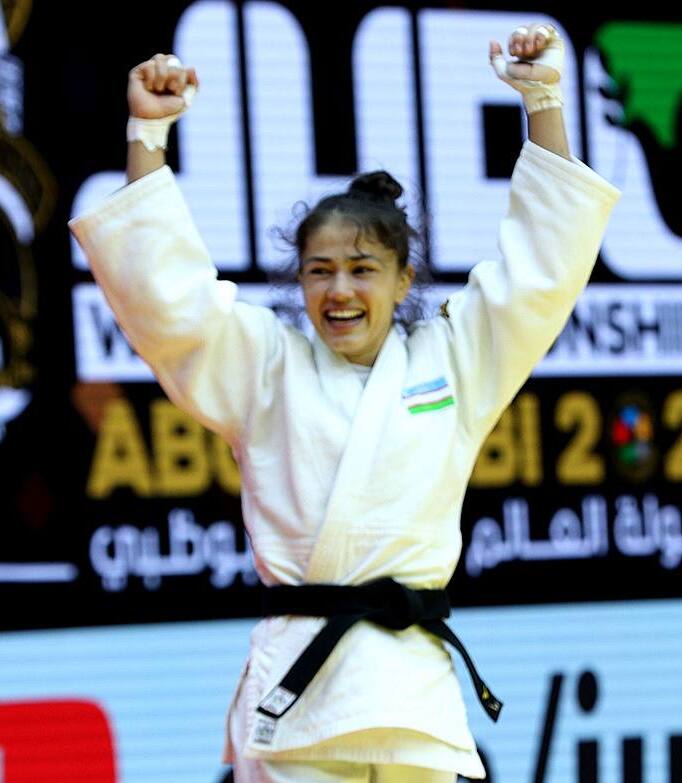
Diyora Keldiyorova, who became Uzbekistan’s first Olympic champion in judo, says she has an even bigger goal. “To change the life of women in Uzbekistan is my mission,” Keldiyorova said, according to the International Judo Federation. The Uzbek sensation spoke after her victory in the 52-kilogram class at the Paris Olympics on July 28. It was an extraordinary achievement for an athlete from a country without much of a tradition in women’s judo. On her way to gold, Keldiyorova defeated Uta Abe, the gold medalist at the last Olympics in Tokyo and a four-time world champion. The Uzbek’s win over Abe “may very well be remembered as one of the biggest upsets of these Olympic Games,” olympics.com reported. Abe was distraught after the defeat. Among those congratulating Keldiyorova was Timothy Smart, Britain’s ambassador to Uzbekistan. He said “it is a medal which shows all girls in Uzbekistan, that they can achieve anything they want!” “Olgʻa, Oʻzbekiston!” Smart said - Let´s go, Uzbekistan. -- Another gold medalist in judo from Central Asia was Kazakhstan’s Yeldos Smetov, who defeated home favorite Luka Mkheidze of France in the 60-kilogram class final. Smetov, 31, won silver at the Olympic Games in Rio de Janeiro in 2016, and Kazakhstan put him on a postage stamp to celebrate. Then he won bronze in 2021 at the Tokyo games, which were delayed from the previous year because of the pandemic. [caption id="attachment_21130" align="aligncenter" width="221"] Yeldos Smetov; image: Post of Kazakhstan[/caption] “Nothing is impossible,” Smetov said after winning gold in Paris, according to Kazakhstan’s Olympic committee. “I achieved this goal on the third attempt.” Smetov, who has been performing at a world-class level for many years, attributed the longevity of his career to family and knowing the limits of his body. “After each competition, I spend all my time with my family, not thinking about sport. I am also careful with the bigger injuries; I never go back to competition until fully recovered. A lot of rest is necessary especially when a career is this long," Smetov, who has five children, told the International Judo Federation. “The first day of this Olympic Games brought my gold for Kazakhstan and the second brought Diyora’s gold for Uzbekistan, so this is already an incredible games for Central Asia," Smetov said. -- The Paris games were a disappointment for one of the world’s top tennis players, Alexander Bublik of Kazakhstan, though. Russia-born Bublik lost 4-6, 4-6 to Taylor Fritz of the United States in the first round of the singles. He and his partner, Aleksandr Nedovyesov, fell by the same score in the first round of the doubles to the Brazilians, Thiago Monteiro and Thiago Seyboth Wild. “It was an honor to represent Kazakhstan at the Olympics once again,” Bublik said on Instagram. He is currently ranked 25th in the world. Another Kazakh tennis star, world No. 4 Elena Rybakina, had said just before the games that she was sick and would not participate. “After the Wimbledon tournament, I fell ill...