• KGS/USD = 0.01144 0%
  • KZT/USD = 0.00213 0%
  • TJS/USD = 0.10714 0.09%
  • UZS/USD = 0.00008 0%
  • TMT/USD = 0.28571 0%
  • KGS/USD = 0.01144 0%
  • KZT/USD = 0.00213 0%
  • TJS/USD = 0.10714 0.09%
  • UZS/USD = 0.00008 0%
  • TMT/USD = 0.28571 0%
  • KGS/USD = 0.01144 0%
  • KZT/USD = 0.00213 0%
  • TJS/USD = 0.10714 0.09%
  • UZS/USD = 0.00008 0%
  • TMT/USD = 0.28571 0%
  • KGS/USD = 0.01144 0%
  • KZT/USD = 0.00213 0%
  • TJS/USD = 0.10714 0.09%
  • UZS/USD = 0.00008 0%
  • TMT/USD = 0.28571 0%
  • KGS/USD = 0.01144 0%
  • KZT/USD = 0.00213 0%
  • TJS/USD = 0.10714 0.09%
  • UZS/USD = 0.00008 0%
  • TMT/USD = 0.28571 0%
  • KGS/USD = 0.01144 0%
  • KZT/USD = 0.00213 0%
  • TJS/USD = 0.10714 0.09%
  • UZS/USD = 0.00008 0%
  • TMT/USD = 0.28571 0%
  • KGS/USD = 0.01144 0%
  • KZT/USD = 0.00213 0%
  • TJS/USD = 0.10714 0.09%
  • UZS/USD = 0.00008 0%
  • TMT/USD = 0.28571 0%
  • KGS/USD = 0.01144 0%
  • KZT/USD = 0.00213 0%
  • TJS/USD = 0.10714 0.09%
  • UZS/USD = 0.00008 0%
  • TMT/USD = 0.28571 0%

Viewing results 1 - 6 of 6

Kazakhstan Aims to Increase Non-Commodity Exports by More Than a Quarter by 2030

Kazakhstan plans to increase non-commodity exports to $52 billion by 2030, Prime Minister Olzhas Bektenov said during a plenary session of the Berne Union, the world’s largest international association of export credit and investment insurers. The forum, held in Central Asia for the first time, brought together representatives of international financial institutions, export credit agencies, and investors. According to Bektenov, the export target is outlined in Kazakhstan’s Trade Policy Concept. By the end of 2025, the country’s non-commodity exports totaled approximately $41 billion. The prime minister said Kazakhstan continues to expand its network of free trade agreements within the framework of the Eurasian Economic Union (EAEU). In addition to existing agreements with Vietnam and Serbia, new arrangements with the United Arab Emirates (UAE), Mongolia, and Indonesia have been concluded over the past two years.  Authorities are also placing particular emphasis on the development of the Trans-Caspian International Transport Route, which Kazakhstan views as one of the key trade corridors connecting Asia and Europe. “Our head of state consistently places special emphasis on improving the business climate. Today, Kazakhstan, as the largest economy in the Central Asian region, continues the structural transformation of its national economy,” Bektenov said. According to him, foreign direct investment into Kazakhstan increased by 14.4% to reach $20.5 billion, while investment in fixed capital rose by 13% to a record $43.5 billion. Kazakhstan’s foreign trade turnover reached $144 billion in 2025. “Today, our goods are exported to 127 countries around the world, and the list of active export product categories has approached 4,000 items,” the prime minister said. Bektenov stressed that the development of international trade, transport and logistics infrastructure, and export capacity is directly linked to improving the country’s investment attractiveness. He invited forum participants to expand cooperation with Kazakhstan in trade, investment, and infrastructure projects. Berne Union President Yuichiro Akita said Kazakhstan continues to serve as a key link in global trade routes dating back to the era of the Silk Road. “Today, the global community once again finds itself at a historical crossroads. A fundamentally different architecture of interaction is emerging, where export credit agencies are moving toward a more strategic and selective approach,” Akita said. According to him, discussions in Astana should help develop new mechanisms for international cooperation amid changes in the global economy. The Times of Central Asia previously reported that Kazakhstan also aims to increase exports of IT services to $5 billion by 2030. The government also plans to produce five or six Earth observation satellites in the coming years, some of which are intended for export.

Kazakhstan to Improve Investor Protections and Accelerate Digital Reforms

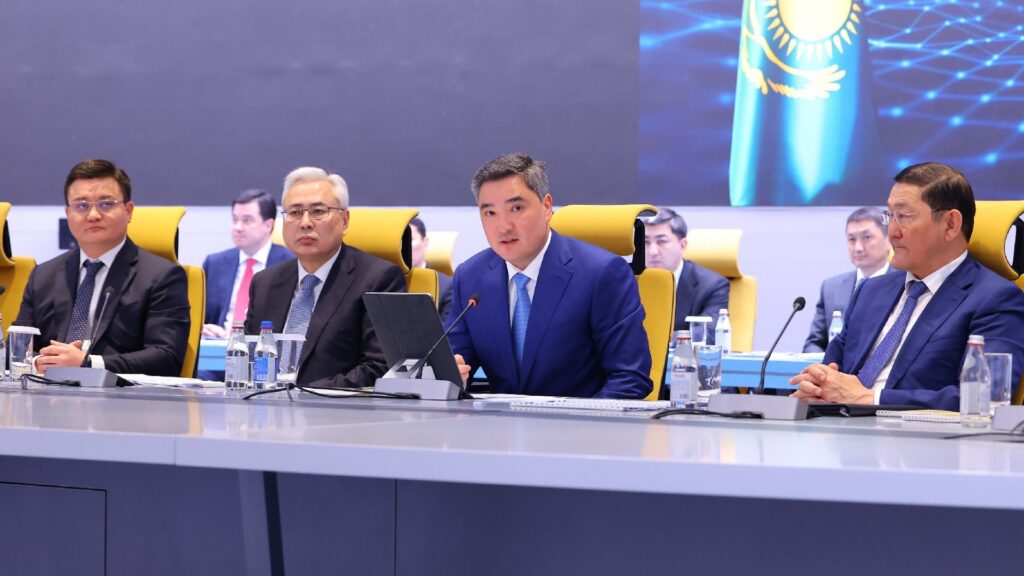
Kazakhstan Prime Minister Olzhas Bektenov has instructed government agencies to accelerate the removal of administrative barriers for investors and expand the digitalization of investment procedures amid intensifying global competition for capital. Speaking at a meeting on investor rights protection attended by government officials, prosecutors, business representatives, and the Atameken National Chamber of Entrepreneurs, Bektenov said improving the investment climate remains a government priority. “Just last week, a presidential decree was signed on improving migration policy, aimed at creating a better environment for attracting investors, entrepreneurs, and highly qualified specialists,” Bektenov said. According to the government, Kazakhstan’s Investment Headquarters reviewed 44 projects worth approximately $25.5 billion during the first quarter of 2026. Prosecutor General Berik Asylov said the number of criminal cases against businesses has fallen fourfold over the past three years. “We are overseeing more than 3,000 investment projects. We maintain direct communication and continuous monitoring with investors and the business community,” he said. According to the Foreign Ministry, investors submitted 273 appeals during the first quarter of the year, with around half resolved positively. The main concerns related to tax administration, customs procedures, and land issues. Baurzhan Yeraly, chairman of the Committee for the Protection of Investors’ Rights under the General Prosecutor’s Office, said the rights of around 600 investors had already been protected this year, with complaints handled directly rather than transferred between agencies. Officials cited several successful cases, including the connection of a major energy project in the Atyrau region to engineering infrastructure and the inclusion of a paper products manufacturer in the national registry of domestic producers. Bektenov criticized what he described as a formalistic approach by some state bodies in dealing with businesses. “Every request from an investor is a signal behind which stand decisions on capital allocation, the launch of new production facilities, and the creation of jobs,” he said. The prime minister warned that officials and managers in the quasi-state sector responsible for bureaucratic delays would face “the strictest measures.” He also pointed to systemic problems, including weak coordination between agencies, delays in public service delivery, and insufficient oversight at the regional level. Particular attention was given to the role of local administrations, which were instructed to supervise key investment projects directly and accelerate the allocation of land, infrastructure, and permits. The government also plans to speed up development of the National Digital Investment Platform. More than 3,000 projects worth around $200 billion have already been integrated into the system, though more than 400 projects have yet to be uploaded. “In the context of global competition for investment, we must ensure a stable and favorable investment climate,” Bektenov said. Asset Irgaliyev, chairman of the Agency for Strategic Planning and Reforms, said the agency is developing a “regulatory intelligence” platform using artificial intelligence to identify excessive requirements and administrative barriers. Authorities also plan to expand the overseas network of Kazakh Invest. According to company head Sultangali Kinzhakulov, representative offices in the United States, Germany, China, Russia, Turkey, Malaysia, and Qatar will operate as “one-stop...