• KGS/USD = 0.01143 0%
  • KZT/USD = 0.00206 0%
  • TJS/USD = 0.10684 -1.11%
  • UZS/USD = 0.00008 0%
  • TMT/USD = 0.28571 0%
  • KGS/USD = 0.01143 0%
  • KZT/USD = 0.00206 0%
  • TJS/USD = 0.10684 -1.11%
  • UZS/USD = 0.00008 0%
  • TMT/USD = 0.28571 0%
  • KGS/USD = 0.01143 0%
  • KZT/USD = 0.00206 0%
  • TJS/USD = 0.10684 -1.11%
  • UZS/USD = 0.00008 0%
  • TMT/USD = 0.28571 0%
  • KGS/USD = 0.01143 0%
  • KZT/USD = 0.00206 0%
  • TJS/USD = 0.10684 -1.11%
  • UZS/USD = 0.00008 0%
  • TMT/USD = 0.28571 0%
  • KGS/USD = 0.01143 0%
  • KZT/USD = 0.00206 0%
  • TJS/USD = 0.10684 -1.11%
  • UZS/USD = 0.00008 0%
  • TMT/USD = 0.28571 0%
  • KGS/USD = 0.01143 0%
  • KZT/USD = 0.00206 0%
  • TJS/USD = 0.10684 -1.11%
  • UZS/USD = 0.00008 0%
  • TMT/USD = 0.28571 0%
  • KGS/USD = 0.01143 0%
  • KZT/USD = 0.00206 0%
  • TJS/USD = 0.10684 -1.11%
  • UZS/USD = 0.00008 0%
  • TMT/USD = 0.28571 0%
  • KGS/USD = 0.01143 0%
  • KZT/USD = 0.00206 0%
  • TJS/USD = 0.10684 -1.11%
  • UZS/USD = 0.00008 0%
  • TMT/USD = 0.28571 0%

Viewing results 1 - 6 of 10

Kazakhstan’s Population Is Aging Rapidly as Demographic Pressures Mount

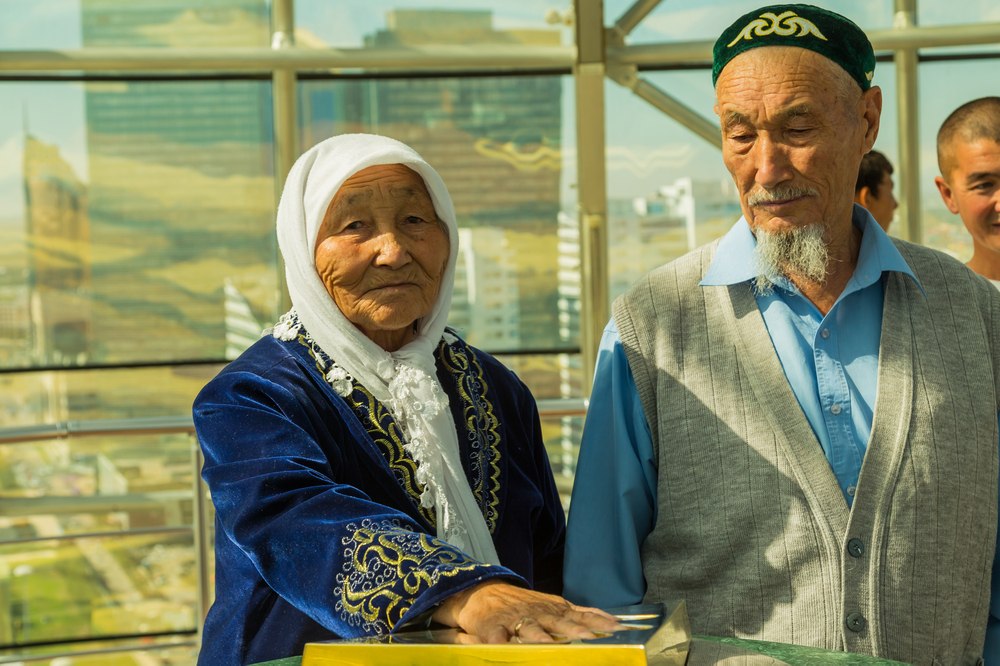
Kazakhstan’s population is aging rapidly, with the number of elderly citizens growing significantly faster than the child population as birth rates continue to decline. According to a study by analysts at Energyprom.kz, the country’s aging index has been steadily rising. In 2021, Kazakhstan had 26.7 elderly people for every 100 children under the age of 15. By 2025, that figure had increased to 32.9. The data suggests Kazakhstan is gradually entering a demographic phase in which the proportion of elderly citizens is growing much faster than the younger population. The trend is particularly pronounced in urban areas, where the aging index rose from 28.8 to 34.9 over four years. Rural areas remain relatively younger, though the index there also increased from 23.9 to 29.6. Researchers say the most difficult demographic situation is emerging in the country’s northern and eastern regions. The highest aging index was recorded in the North Kazakhstan Region at 84.1, followed by the East Kazakhstan Region at 80.7 and the Kostanay Region at 71.3. In practical terms, the number of elderly residents in these areas is approaching the number of children. High aging rates were also recorded in the Pavlodar, Karaganda, and Akmola regions. By contrast, Kazakhstan’s youngest demographic profiles remain concentrated in the southern and oil-producing regions. The lowest aging indexes were recorded in the Mangystau Region at 16.2, the Turkestan Region at 17.2, and the city of Shymkent at 17. Nevertheless, even these regions are showing gradual aging trends. Analysts say the primary driver of the shift is the changing balance between declining birth rates and the growing elderly population. Although Kazakhstan’s total population continues to increase, its demographic structure is becoming noticeably older. The number of children under the age of 14, after years of growth, has begun to decline. At the beginning of 2024 and 2025, the figure stood at around 5.9 million, but by early 2026 it had fallen to 5.8 million. At the same time, the number of Kazakhstanis aged over 65 continues to rise rapidly. Over the past decade, the elderly population increased from 1.2 million to 2 million people, an increase of nearly 60%. Additional pressure comes from falling birth rates. Kazakhstan’s total fertility rate dropped to 16.4 births per 1,000 people in 2025, compared to 23.5 in 2021, a decline of almost one-third in just a few years. The lowest birth rates are being recorded in the North Kazakhstan, Kostanay, and East Kazakhstan regions. However, even traditionally younger regions such as Turkestan and Mangystau are seeing fertility rates gradually decline. Experts warn that overall population growth is no longer compensating for changes in the country’s age structure. While the population is still increasing in absolute terms, the share of elderly citizens is rising much more rapidly. According to analysts, the trend is likely to place increasing pressure on Kazakhstan’s healthcare system, labor market, pension system, and social welfare infrastructure in the coming years.

Turkmen Pensioners Endure Long Queues to Prove They Are Alive

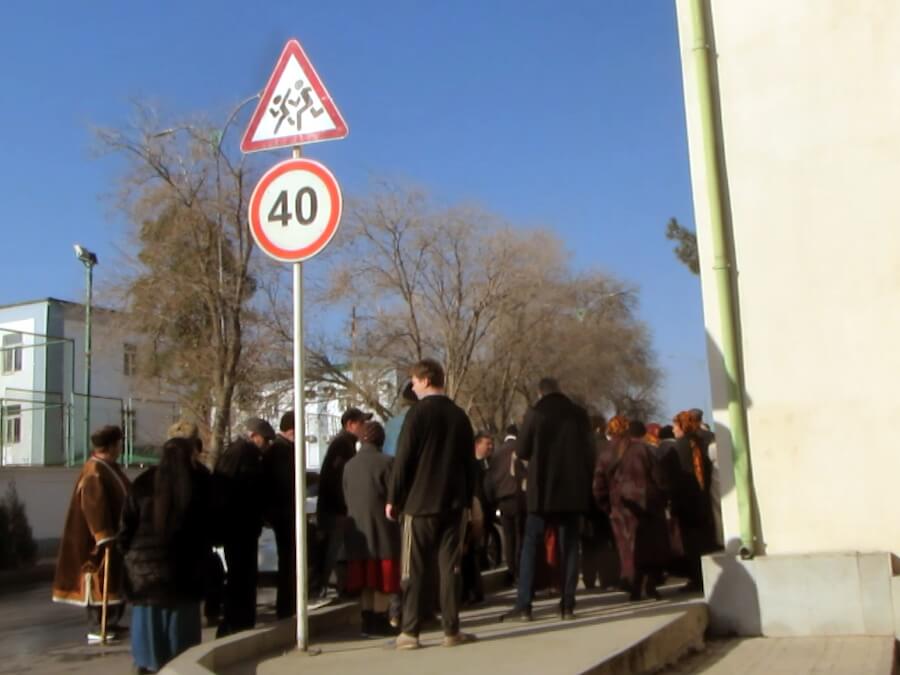
At the start of each year, elderly citizens and benefit recipients across Turkmenistan are forced to endure long hours in line at social security offices, as part of a biannual process requiring them to prove they are still alive. This routine formality has become a grueling ordeal, especially amid growing discontent over the government’s refusal to adjust payments as it had in previous years. Twice annually, in January and July, pensioners and beneficiaries must appear in person at local offices to receive a stamp in their pension books, confirming eligibility and the amount of payment for the next six months. Failure to do so results in an immediate suspension of payments. While retroactive disbursements are promised upon eventual reappearance, surviving without income for six months is an impossible burden for many. Reports of queues have emerged from across the country. Beneficiaries point out that the process could be easily streamlined with scheduled appointments or structured lists. However, no such measures are being implemented. Instead, in freezing cold or scorching heat, elderly people, women with young children, and individuals with disabilities must wait for hours. In the city of Turkmenbashi, residents expressed particular frustration. Many pensioners reportedly held out hope until the last moment for the traditional 10% increase in payments and were shocked to find it canceled this year. For those in rural areas, even an extra $2.50 to $3 per month can make a significant difference. The Times of Central Asia previously reported that the cancellation of the 2026 pension and benefit indexation triggered sharp discontent among older residents. Many only learned of the decision during their January visits and openly expressed their anger. The move stems from a position voiced in the fall of 2025 at a parliamentary session. Honorary elder Yazmyrat Atamyradov proposed a complete freeze on wage, pension, benefit, and scholarship growth, claiming the standard of living for Turkmenistan’s “happy people” was rising sufficiently. 

The Dental Mafia in Kazakhstan: How Pension Funds Were Siphoned Off

Kazakhstan’s Financial Monitoring Agency (FMA) is continuing its investigation into one of the country’s most high-profile financial crimes in recent years: the large-scale embezzlement of pension savings through fictitious dental services. Authorities allege that millions of dollars were siphoned from the Unified Accumulative Pension Fund (UAPF) via a sprawling criminal scheme involving dozens of dental clinics. According to the FMA, the investigation is ongoing and centers on clinic managers and their accomplices. The alleged scheme involved the withdrawal of pension savings from the UAPF through formal contracts for dental procedures, backed by forged medical documents. “For such ‘assistance,’ the organizers of the scheme received illegal remuneration amounting to 10% to 20% of the withdrawn funds,” the agency said. In total, 42 dental clinics are implicated. Investigators estimate that more than $390 million was illicitly funneled through these entities. The funds were reportedly used to acquire luxury real estate and other high-value assets, as well as to open new dental clinics registered under front persons to obscure the identities of the real beneficiaries. Some of the fabricated diagnoses were blatantly implausible. In one instance, a 21-year-old was diagnosed with “complete edentulism” (total tooth loss) and simultaneously prescribed both teeth cleaning and braces. In response to the violations uncovered, Kazakhstan suspended the use of pension savings to pay for dental services as of September 15, 2025. The measure, though temporary, signals a tightening of regulatory oversight amid public outcry. The program allowing partial use of pension savings for medical services was first introduced in 2021. It enabled citizens to access funds exceeding the so-called “sufficiency threshold” to pay for treatments, including expensive dental procedures such as prosthetics and implants.

Kazakhstan Among Top 30 Countries for Pension System Quality

Kazakhstan has made significant strides in the latest Global Pension Report by international insurance group Allianz, climbing eight positions to rank 26th out of 71 countries. The country now places ahead of China, Turkey, Singapore, Spain, and Indonesia. According to analysts at Ranking.kz, Kazakhstan's rise reflects improvements across several dimensions of its pension system, which is the only one in Central Asia and among the Eurasian Economic Union (EAEU) states to be included in the Allianz ranking. Strong Performance on Global Pension Index The Allianz Pension Index (API), which underpins the ranking, assesses 40 indicators across three sub-indices: sustainability, adequacy, and integrity of pension systems. These include factors such as demographic trends, public debt, living standards, and the financial soundness of pension institutions. Scores range from 1 (best) to 7 (worst). Kazakhstan achieved an overall average score of 3.5, outperforming the global average of 3.7. It received particularly strong marks for sustainability (3.6) and adequacy of payments (3.2), signaling resilience and fairness in pension distribution. By comparison, top-ranked countries include Denmark (2.3), the Netherlands and Sweden (2.6 each), and Japan (2.7). Other leading performers are New Zealand, Israel, Australia, the United Kingdom, Norway, and the United States. At the bottom were Laos, Malaysia, and Sri Lanka, all with scores above 4.6. The Evolution of Kazakhstan’s Pension Model Kazakhstan transitioned from the Soviet-era pay-as-you-go system to a multi-tiered pension model in 1998. The current system combines distributive and accumulative components, with payments derived from three main sources: State budget: Covers solidarity and basic pensions. Mandatory savings: Contributions to the Unified Accumulative Pension Fund (UAPF), including 10% of employees’ salaries and 5% employer contributions for hazardous jobs. Voluntary contributions: Optional payments by individuals or employers. As of January 1, 2024, a new tier, mandatory employer pension contributions (MEP), was introduced. These contributions will gradually increase to 5% of wages by 2028 and apply to citizens born in 1975 or later. Long-Term Trends and Global Context Globally, pension systems are shifting toward accumulation-based models. In 2000, distributive pensions made up more than 65% of total payouts. By 2024, this figure is projected to fall below 50%. Kazakhstan was the first among CIS countries to adopt an accumulative system and is now seen as a regional leader in pension reform. Allianz experts highlight the growing importance of such systems in the face of demographic change. The United Nations projects that by 2050, the global population aged 65 and over will nearly double, from 857 million to 1.58 billion. The dependency ratio is expected to rise to 26 pensioners for every 100 working-age individuals, up from 16 today. To ensure long-term viability, experts argue for a balanced approach that combines state-funded and private accumulative elements. In Kazakhstan, approximately 2.5 million people currently receive pensions.