• KZT/USD = 0.00225
  • TJS/USD = 0.10860
  • UZS/USD = 0.00008
  • TMT/USD = 0.29760
  • KZT/USD = 0.00225
  • TJS/USD = 0.10860
  • UZS/USD = 0.00008
  • TMT/USD = 0.29760
  • KZT/USD = 0.00225
  • TJS/USD = 0.10860
  • UZS/USD = 0.00008
  • TMT/USD = 0.29760
  • KZT/USD = 0.00225
  • TJS/USD = 0.10860
  • UZS/USD = 0.00008
  • TMT/USD = 0.29760
  • KZT/USD = 0.00225
  • TJS/USD = 0.10860
  • UZS/USD = 0.00008
  • TMT/USD = 0.29760
  • KZT/USD = 0.00225
  • TJS/USD = 0.10860
  • UZS/USD = 0.00008
  • TMT/USD = 0.29760
  • KZT/USD = 0.00225
  • TJS/USD = 0.10860
  • UZS/USD = 0.00008
  • TMT/USD = 0.29760
  • KZT/USD = 0.00225
  • TJS/USD = 0.10860
  • UZS/USD = 0.00008
  • TMT/USD = 0.29760
17 November 2026

Viewing results 1 - 6 of 2

Iran Says Samarkand Heritage Posts Targeted U.S.

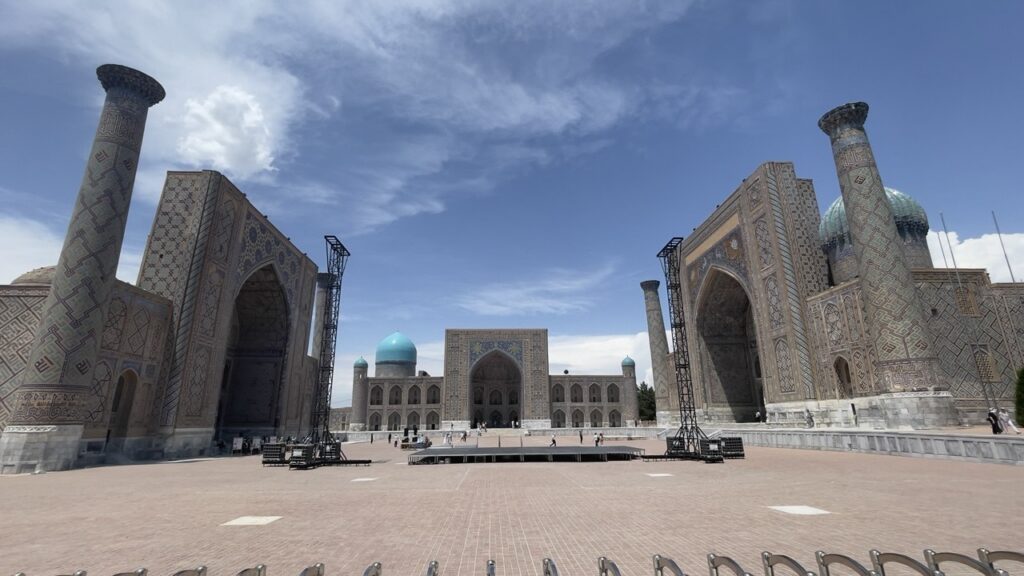
Iran has said that posts by its embassies about Samarkand’s Persian heritage were directed at the United States. The explanation followed a diplomatic protest from Uzbekistan, which demanded the removal of posts describing the city’s architecture as part of Persian civilization. Esmaeil Baghaei, spokesperson for Iran’s Ministry of Foreign Affairs, said on October 26 that Tehran attaches great importance to its relations with Uzbekistan and views their shared cultural heritage as a foundation of friendship between the two countries. "Some of our colleagues at certain embassies published their messages as an address to the American side," Baghaei explained. In the reported remarks, Baghaei did not specifically address the architectural claims made in the embassy posts. The dispute followed U.S. Secretary of State Marco Rubio’s visit to Samarkand on October 19. Accompanied by Saida Mirziyoyeva, head of Uzbekistan’s Presidential Administration, he visited Registan Square, one of Central Asia’s best-known landmarks. Rubio spoke about Samarkand’s historical role in international trade and the region’s importance to relations with Washington. The posts appeared to be a response to a speech Rubio gave in Athens on October 7, in which he recalled the Persian destruction of the Acropolis in 480 BC and sharply criticized Iran’s current leadership. Following Rubio’s visit to Samarkand, Iranian embassies in several countries posted photographs and videos on X showing him in front of the city’s historic monuments, arguing that he was surrounded by the Persian cultural heritage he had attacked earlier that month. Iran’s embassy in Armenia wrote that the site visited by the U.S. secretary of state was part of Persian civilization and architecture. The Iranian diplomatic mission in Zimbabwe described Registan’s arches as a characteristic feature of Iranian-Islamic civilization. On October 23, Uzbekistan’s Ministry of Foreign Affairs summoned Iranian Ambassador Mohammad Ali Eskandari and delivered a diplomatic note of protest. Tashkent regarded the posts as one-sided and politicized, saying the heritage of Samarkand and other historic Uzbek cities reflected centuries of cultural development and formed part of Uzbekistan’s history. By October 26, Iranian embassies in Armenia, Bulgaria, Zimbabwe, Finland, and China had removed the posts, according to Uzbek Foreign Ministry spokesperson Omonulla Fayziev. The dispute touched on the sensitive issue of competing claims to Central Asia’s cultural heritage. Samarkand was one of the centers of ancient Sogdiana and later belonged to states ruled by different dynasties. Persian language and culture played an important role in the city’s life for centuries. Samarkand also remains home to a substantial Tajik population, and Tajik, a variety of Persian, is still widely spoken, particularly in the historic center. The monuments around Registan Square, built between the 15th and 17th centuries, reflect the city’s history under different rulers and the influence of several cultural traditions. Since Uzbekistan’s independence in 1991, they have also become national symbols.

Iranian Embassy Posts on Samarkand’s Persian Heritage Spark Uzbek Protest

Uzbekistan has lodged a diplomatic protest with Iran over social media posts describing Samarkand's architecture as part of Persian civilization. The posts targeted United States Secretary of State Marco Rubio. On October 23, Uzbekistan's First Deputy Foreign Minister Bakhromjon Aloyev met with Iranian Ambassador Mohammad Ali Eskandari, who was handed a diplomatic note of protest. Uzbekistan's Foreign Ministry described posts published by Iranian diplomatic missions on X as a one-sided and politicized interpretation of Samarkand's history. Tashkent demanded that the posts be removed and that similar incidents be avoided in the future. The dispute followed Rubio's visit to Samarkand on October 19, when he recorded a video in Registan Square highlighting the city's historical role in international trade. Iran's embassy in Armenia described the site where Rubio stood as part of Persian civilization. The embassy in Zimbabwe called Registan's arches a "hallmark of Iranian-Islamic civilization," accusing Rubio of seeking to destroy that heritage. Iran's embassy in Bulgaria also criticized Rubio for disparaging Persian civilization while standing in front of monuments bearing its influence. Earlier, during an October 7 speech in Athens, Rubio recalled the destruction of the Acropolis by the forces of Persian King Xerxes in 480 BCE. He also attacked Iran's current clerical rulers, accusing them of promoting a "cult of death." Uzbekistan's Foreign Ministry said that the heritage of Samarkand, Bukhara, Khiva, and other historic cities reflects centuries of statehood and cultural development among the Uzbek people. Tashkent objected to the use of the country's history in political disputes between other states. Samarkand has deep ties to the Persian-speaking world. Before the Arab conquest, it was one of the centers of Sogdiana, whose inhabitants spoke a language belonging to the Iranian language family. Persian later became widely used in Central Asian cities, including in literature and scholarship. In the late 14th and early 15th centuries, Samarkand was the capital of Timur's empire. Craftsmen from various regions, including Iran and the historic region of Khorasan, participated in the construction of its monumental buildings. The Registan architectural ensemble was built between the 15th and 17th centuries, combining local artistic traditions with those of the wider Islamic world. The concept of Persian civilization encompasses a cultural area much larger than modern Iran. UNESCO describes Samarkand as a crossroads of cultures, reflecting influences from successive civilizations. The Iranian embassies did not make territorial claims against Uzbekistan; their posts concerned cultural and architectural history. Samarkand's heritage has also been a subject of debate within Central Asia. During the Soviet redrawing of Central Asia's internal borders in 1924, Samarkand and Bukhara became part of the Uzbek Soviet Socialist Republic. Both cities historically had substantial Persian-speaking populations, and Tajik continues to be spoken there today. Historians have also documented Soviet-era pressure on Tajik residents to register as Uzbeks, contributing to longstanding disputes over the cities' ethnic composition. The dispute occurred amid increased U.S. diplomatic engagement in Central Asia. During his visit, Rubio attended a C5+1 meeting with the foreign ministers of the five Central Asian countries. The talks focused on expanding economic...