• KZT/USD = 0.00222
  • TJS/USD = 0.10830
  • UZS/USD = 0.00008
  • TMT/USD = 0.29850
  • KZT/USD = 0.00222
  • TJS/USD = 0.10830
  • UZS/USD = 0.00008
  • TMT/USD = 0.29850
  • KZT/USD = 0.00222
  • TJS/USD = 0.10830
  • UZS/USD = 0.00008
  • TMT/USD = 0.29850
  • KZT/USD = 0.00222
  • TJS/USD = 0.10830
  • UZS/USD = 0.00008
  • TMT/USD = 0.29850
  • KZT/USD = 0.00222
  • TJS/USD = 0.10830
  • UZS/USD = 0.00008
  • TMT/USD = 0.29850
  • KZT/USD = 0.00222
  • TJS/USD = 0.10830
  • UZS/USD = 0.00008
  • TMT/USD = 0.29850
  • KZT/USD = 0.00222
  • TJS/USD = 0.10830
  • UZS/USD = 0.00008
  • TMT/USD = 0.29850
  • KZT/USD = 0.00222
  • TJS/USD = 0.10830
  • UZS/USD = 0.00008
  • TMT/USD = 0.29850
20 October 2026

Viewing results 1 - 6 of 2

How the Shrinking Caspian Sea Affects the Middle Corridor’s Potential

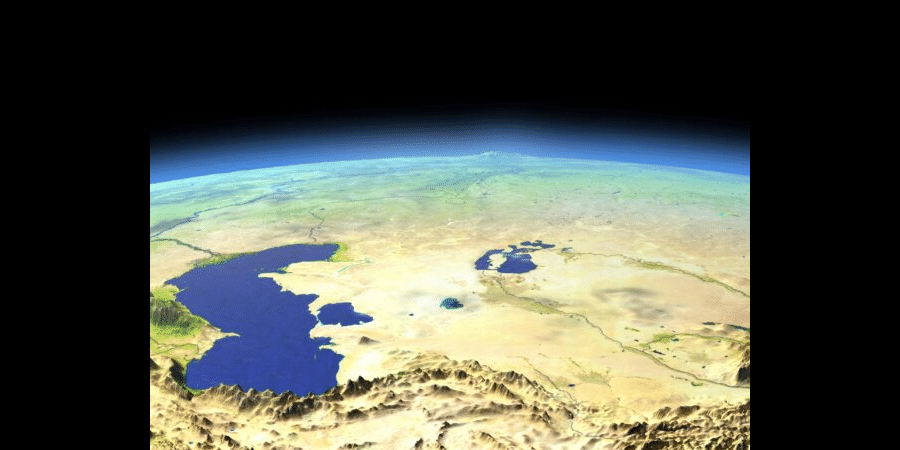
Paradoxically, the Caspian Sea is becoming one of Eurasia’s most important transport hubs at a time when its falling water level is creating growing constraints on navigation. As sanctions disrupt traditional trade routes through Russia, countries are investing in the Middle Corridor as an alternative link between Asia and Europe. Yet the continuing decline in sea level is limiting shipping capacity and increasing the risks and costs associated with long-term infrastructure projects. The first Caspian Environmental Summit, held in Turkmenistan on October 9, 2026, drew attention to the scale of these changes. Between 2000 and 2025, the Caspian Sea shrank by more than 16,000 square kilometers, while in some areas the shoreline receded by tens of kilometers. How the Caspian’s Falling Water Level Affects Freight The Middle Corridor, linking China, Central Asia, the Caspian Sea, the South Caucasus, Turkey, and Europe, is seen as a promising route for diversifying international trade. Its development can reduce shippers’ dependence on individual transport routes and improve economic ties among countries in the region. According to the World Bank’s latest study, more than $25 billion in investment in the corridor’s core physical infrastructure will be needed through 2040. An additional $30 billion could be required for enabling infrastructure and services. The bank estimates that if infrastructure investment is combined with institutional reforms, freight volumes along the corridor could quadruple and travel times could fall by about two-thirds by 2040. A study by the Organisation for Economic Co-operation and Development (OECD) notes that insufficient depths are already preventing vessels from being fully loaded, reducing transport efficiency and increasing costs. Large-scale dredging was carried out at the Port of Kuryk in 2024. Over four months, around one million cubic meters of material were removed, and the depth of the operational port area was increased to 7–8 meters, according to the port operator. This made it possible to load vessels to full capacity. Meanwhile, major dredging work is underway at Aktau, where 1.3 million cubic meters of material are to be removed to increase water depths to 6–7 meters. The work is expected to be completed by the end of 2026. Dredging, however, can only maintain the operation of individual port facilities, while further declines in the sea level may require repeated work or the reconstruction of berths. Where draft restrictions prevent full loading, transport companies may need to make more voyages to carry the same volume of cargo, increasing spending on fuel, crews, maintenance, and port operations. Constraints on the maritime section can also lead to delays for railcars and containers and disrupt transshipment schedules. These disruptions reduce the predictability of deliveries along the entire route. Similar problems are emerging on the western coast of the Caspian. Falling water levels are reducing vessel cargo capacity at Azerbaijani ports and oil terminals and requiring additional dredging. Infrastructure for Decades Ahead According to the OECD study, which cites World Bank climate projections, under a high-emissions scenario in which the Caspian water level falls by about five meters between...

Kazakhstan and Iran Expand Port Access to Boost Cargo Transit

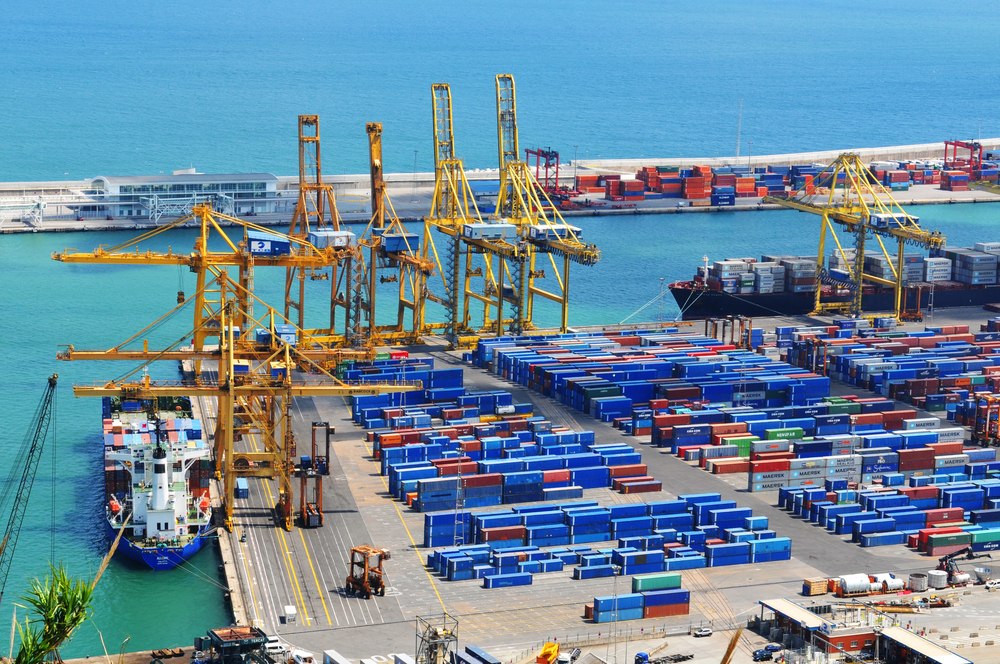
Iran is ready to provide Kazakhstan with access to its port infrastructure to support cargo shipments to international markets, Iranian Minister of Roads and Urban Development Farzaneh Sadegh said during talks with Kazakhstan’s Deputy Prime Minister and Minister of National Economy Serik Zhumangarin. The meeting took place in Astana, where transport and logistics cooperation topped the agenda. The two sides discussed the development of the International North-South Transport Corridor, port infrastructure, bilateral trade, and transport links between Kazakhstan and Iran. Iranian officials said procedures had been finalized to allocate a land plot to Kazakhstan at Shahid Rajaee Port in Bandar Abbas, Iran’s main southern port on the Persian Gulf. According to Sadegh, the site will be transferred to Kazakhstan once the remaining legal procedures are completed. Tehran also offered Kazakhstan the opportunity to operate at Chabahar Port, Iran’s strategic deep-water hub on the Gulf of Oman, which provides direct access to markets in South and Southeast Asia. Chabahar is one of the key nodes of the International North-South Transport Corridor, which links Russia, Iran, India, and other countries. According to Sadegh, construction of the Chabahar-Zahedan railway, which would connect Chabahar to wider rail networks used for regional cargo transport, is more than 90% complete and is expected to be launched in the coming months. Once operational, the railway is expected to integrate Chabahar into an international rail network linking the Indian Ocean, Central Asia, and Europe. Kazakhstan, in turn, said it was ready to consider offering Iran port facilities, berths, and terminals at the Caspian ports of Aktau and Kuryk to support Iranian logistics operations. The two sides also highlighted the recently signed five-party railway agreement between China, Kazakhstan, Turkmenistan, Iran, and Turkey, as well as an upcoming four-party tariff agreement between Kazakhstan, Russia, Turkmenistan, and Iran, aimed at boosting regional trade and transit. “Strengthening cooperation is a strategic task set by our heads of state,” Zhumangarin said. “In 2025, trade turnover between Kazakhstan and Iran grew by 26.4% to $430.2 million. This confirms significant potential for further expansion, including within the framework of the roadmap to increase mutual trade to $3 billion and thanks to the free trade agreement signed between Iran and the Eurasian Economic Union.” Sadegh said her visit was focused on implementing previously reached agreements and expanding transport and logistics cooperation, which she said had gained importance amid current geopolitical changes. Officials also noted that cargo volumes along the North-South corridor rose by 12% in 2025 to reach 3.5 million tons, while railway freight traffic between Kazakhstan and Iran increased by 69%. To increase the corridor’s potential, Zhumangarin proposed developing a joint roadmap for transport infrastructure modernization, which he said could increase the route’s capacity to 20 million tons annually. As previously reported by The Times of Central Asia, Kazakhstan and Iran have continued expanding economic ties despite recent tensions involving Iran. Iranian investors are moving forward with industrial projects in Kazakhstan, including Solico Group’s planned cheese production plant in the Almaty region, while Kazakh vegetable...