
• KZT/USD = 0.00222
  • TJS/USD = 0.10850
  • UZS/USD = 0.00008
  • TMT/USD = 0.29850
  • KZT/USD = 0.00222
  • TJS/USD = 0.10850
  • UZS/USD = 0.00008
  • TMT/USD = 0.29850
  • KZT/USD = 0.00222
  • TJS/USD = 0.10850
  • UZS/USD = 0.00008
  • TMT/USD = 0.29850
  • KZT/USD = 0.00222
  • TJS/USD = 0.10850
  • UZS/USD = 0.00008
  • TMT/USD = 0.29850
  • KZT/USD = 0.00222
  • TJS/USD = 0.10850
  • UZS/USD = 0.00008
  • TMT/USD = 0.29850
  • KZT/USD = 0.00222
  • TJS/USD = 0.10850
  • UZS/USD = 0.00008
  • TMT/USD = 0.29850
  • KZT/USD = 0.00222
  • TJS/USD = 0.10850
  • UZS/USD = 0.00008
  • TMT/USD = 0.29850
  • KZT/USD = 0.00222
  • TJS/USD = 0.10850
  • UZS/USD = 0.00008
  • TMT/USD = 0.29850
19 November 2026

Viewing results 1 - 6 of 2

Kazakhstan Poverty Reduction Stalls Despite Economic Growth

Kazakhstan has made little progress in reducing poverty in recent years despite continued economic growth, according to the World Bank’s October 2026 Poverty & Equity Brief. The Bureau of National Statistics puts the national poverty rate at 5% in 2025, unchanged from 2024. The World Bank’s brief gives a slightly lower figure of 4.9%, equivalent to approximately 1.02 million people living below the national poverty line. The national rate fell from 18.2% in 2006 to 2.9% in 2013. However, a 2018 change to the calculation of the subsistence minimum, which defines the national poverty line, limits direct comparisons with earlier figures. Much of Kazakhstan’s earlier success in reducing poverty was driven by higher earnings from employment. In 2025, however, gross domestic product per person grew by 5.2%, while wages fell by 1.4% and incomes by 2.3% after adjusting for inflation, according to the brief. The bank’s 2024 assessment linked slower poverty reduction to weaker economic growth and sluggish productivity gains. Kazakhstan’s economy remains heavily dependent on commodity exports, leaving household incomes vulnerable to economic shocks. The bank also uses a separate international poverty threshold of $8.30 per person per day for upper-middle-income countries, expressed in 2021 purchasing power terms to account for price differences between countries. Under this measure, 13.8% of Kazakhstan’s population was living in poverty in 2024. That represents a substantial improvement from 55.7% in 2006, although the share remained at roughly 14% between 2022 and 2024. Inflation has added to the pressure on household budgets, particularly among poorer families, which spend a larger proportion of their income on essentials. Although annual inflation has eased, prices continue to rise. The statistics bureau reported inflation of 9.2% in October 2026, with food prices 7.6% higher than a year earlier. The brief also highlights inequalities obscured by national averages. Citing estimates from the World Inequality Database, it notes that Kazakhstan’s highest-income 1% of adults received 14.9% of total income in 2024, almost as much as the 16.4% received by the lowest-income half. The bank’s projections put poverty under its international measure at 11.2% in 2025, 9.9% in 2026, and 8.7% in 2027. These projections are based on growth in economic output per person and remain highly uncertain pending household survey data, the bank warns.

Uzbekistan Aims to Cut Poverty Rate to 6% by End of 2025

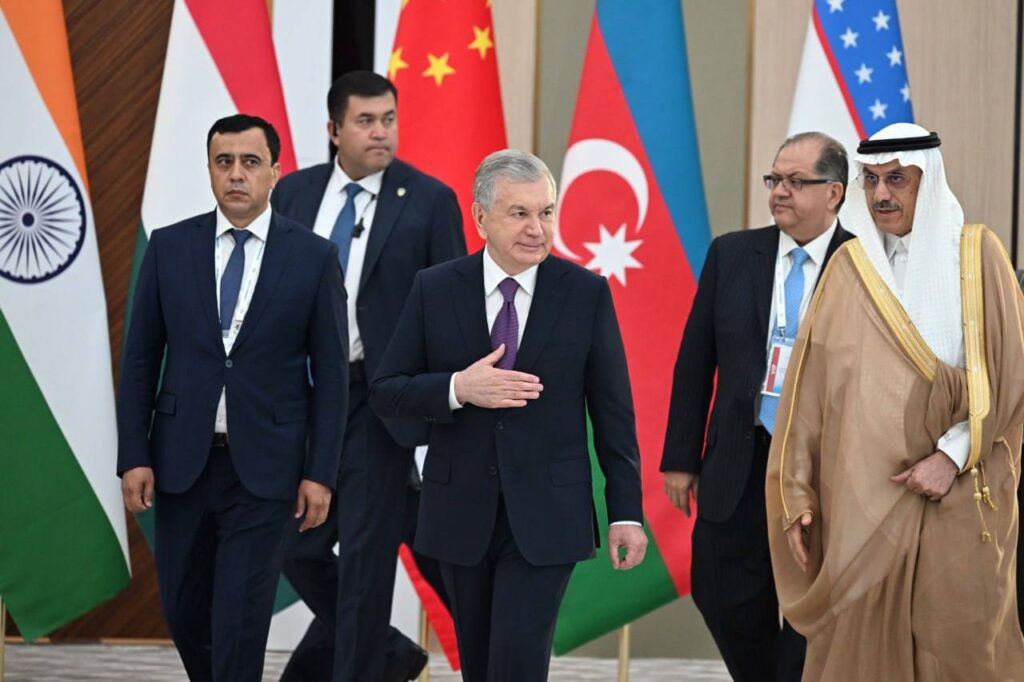
Uzbekistan aims to cut its national poverty rate to 6 percent by the end of 2025, President Shavkat Mirziyoyev announced at the opening of the third international forum From Poverty to Prosperity in Namangan on September 17. The forum brought together representatives from more than 30 organizations and approximately 200 experts, including Islamic Development Bank President Muhammad Al-Jasser, Asian Development Bank Vice President Yingming Yang, Japan International Cooperation Agency Senior Vice President Sachiko Imoto, United Nations Special Representative for Central Asia Kaha Imnadze, and World Bank Global Director for Poverty Reduction Luis Felipe López-Calva. Mirziyoyev warned that the world is entering a period of increasing instability, citing climate change, water scarcity, pandemics, and slowing economic growth. Since 2015, global economic growth has averaged just 3 percent annually, while the number of people living in poverty has risen from 650 million to over 800 million. In Uzbekistan, poverty reduction has become a national priority. Over the past eight years, government reforms have focused on human rights, employment, and income generation, supported by international institutions such as the World Bank and the United Nations. According to official data, 7.5 million people have been lifted out of poverty, bringing the national poverty rate down to 8.9 percent in 2024. “By the end of this year, we aim to reduce it further to 6 percent,” Mirziyoyev said. Uzbekistan’s economy has doubled in size in recent years, with per capita income projected to reach $3,500 by the end of 2025. Growth has been driven by targeted social programs, mahalla-based community initiatives, and land reforms. During the COVID-19 pandemic, more than 2 million families received social assistance, while the redistribution of 235,000 hectares of farmland provided an additional source of income for 800,000 families. “Every neighborhood is becoming a hub for business, and every family is seeing the benefits of prosperity,” Mirziyoyev said. He added that Uzbekistan is on track to halve poverty by 2030, in line with the UN Sustainable Development Goals, and could eradicate absolute poverty by the end of the decade. The president also called for a “new financial architecture” to mobilize global resources for sustainable development. He proposed hosting an international conference in Khiva in 2026, with the participation of donor organizations, financial institutions, and partner governments. “Uplifting human dignity through decent living conditions and poverty reduction lies at the heart of all our reforms,” he concluded.