
• KGS/USD = 0.01144 0%
  • KZT/USD = 0.00200 0%
  • TJS/USD = 0.10475 -0.19%
  • UZS/USD = 0.00008 0%
  • TMT/USD = 0.28490 0%
  • KGS/USD = 0.01144 0%
  • KZT/USD = 0.00200 0%
  • TJS/USD = 0.10475 -0.19%
  • UZS/USD = 0.00008 0%
  • TMT/USD = 0.28490 0%
  • KGS/USD = 0.01144 0%
  • KZT/USD = 0.00200 0%
  • TJS/USD = 0.10475 -0.19%
  • UZS/USD = 0.00008 0%
  • TMT/USD = 0.28490 0%
  • KGS/USD = 0.01144 0%
  • KZT/USD = 0.00200 0%
  • TJS/USD = 0.10475 -0.19%
  • UZS/USD = 0.00008 0%
  • TMT/USD = 0.28490 0%
  • KGS/USD = 0.01144 0%
  • KZT/USD = 0.00200 0%
  • TJS/USD = 0.10475 -0.19%
  • UZS/USD = 0.00008 0%
  • TMT/USD = 0.28490 0%
  • KGS/USD = 0.01144 0%
  • KZT/USD = 0.00200 0%
  • TJS/USD = 0.10475 -0.19%
  • UZS/USD = 0.00008 0%
  • TMT/USD = 0.28490 0%
  • KGS/USD = 0.01144 0%
  • KZT/USD = 0.00200 0%
  • TJS/USD = 0.10475 -0.19%
  • UZS/USD = 0.00008 0%
  • TMT/USD = 0.28490 0%
  • KGS/USD = 0.01144 0%
  • KZT/USD = 0.00200 0%
  • TJS/USD = 0.10475 -0.19%
  • UZS/USD = 0.00008 0%
  • TMT/USD = 0.28490 0%

Viewing results 1 - 6 of 4

Why Workers Are Leaving the Çalık Enerji Power Plant Construction Site in Turkmenistan

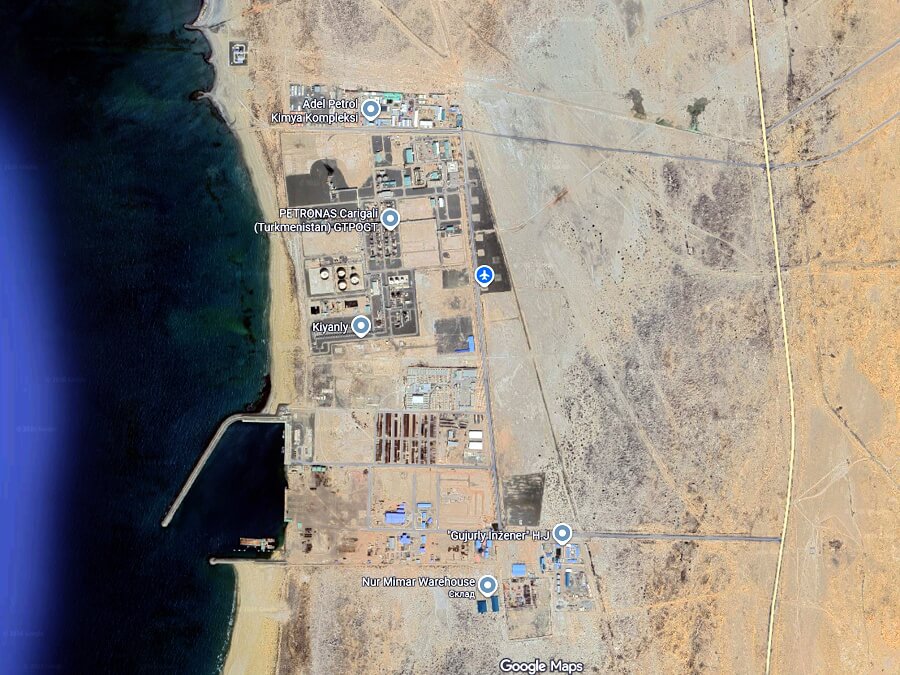
One of Turkmenistan’s largest combined-cycle power plants is currently under construction on the Caspian coast. Despite offering record-high wages by local standards, the site is experiencing persistent staff turnover. The project is being led by the Turkish company Çalık Enerji, which is building a 1,574 MW combined-cycle gas turbine (CCGT) power plant in the village of Kiyanly in Turkmenistan’s Balkan region. While the workforce is largely made up of local residents, retaining staff has proven difficult. According to former workers, even unskilled laborers can earn up to $2,856 per month, an exceptionally high salary for the region. This has attracted a steady stream of job seekers. However, many employees say the pay does not adequately compensate for the harsh realities of working on-site. The primary reason cited for resignations is the extreme natural environment. The construction site lies between the Caspian Sea and an open expanse of steppe, where strong winds are a near-constant presence. Conditions worsen in winter, when workers endure eight-hour shifts outdoors in cold and windy weather, conditions that many find intolerable beyond a few months. In addition to environmental challenges, workers point to strained relations with site management and internal conflicts among staff. They describe a lack of mutual trust between workers and middle managers, as well as growing tensions within crews. Some have also reported interethnic clashes, particularly between Turkmen and Azerbaijani workers, despite both groups being Turkmenistani citizens residing in the same region. These disputes have occasionally escalated into physical altercations, further contributing to resignations. Çalık Enerji signed a contract with the state-owned utility Turkmenenergo to carry out the Kiyanly project. The power plant will feature two units equipped with 9F.04 gas turbines, each with a capacity of 288 MW, and a D12 steam turbine produced by GE Vernova.

Kazakhstan Faces Record Power Deficit as Electricity Shortfall Hits 2.4 Billion kWh

Kazakhstan has experienced its most significant electricity imbalance in recent years. According to data from Energyprom.kz, the gap between electricity production and consumption reached 2.4 billion kilowatt-hours (kWh) in 2024, an increase of 200 million kWh from 2023, when the shortfall stood at 2.2 billion kWh. While the country’s total generation amounted to 117.9 billion kWh, domestic consumption exceeded 120.4 billion kWh. Imports Offset Domestic Shortfalls To address this growing energy deficit, Kazakhstan primarily imports electricity from Russia. Smaller volumes are supplied by Kyrgyzstan, although these are typically part of Russian transit deliveries to Kyrgyz consumers. Despite these imports, domestic electricity generation continues to grow at a modest pace. In 2024, total generation rose by 4.2%, with a 3% year-on-year increase recorded in the first two months of 2025. Nevertheless, the production boost has not been sufficient to meet demand, necessitating continued reliance on external suppliers. Decline in Coal Dependence One notable trend is the gradual reduction in Kazakhstan’s dependence on coal-fired thermal power plants (TPPs), traditionally among the most polluting energy sources. In 2024, the share of coal-fired generation declined from 77.4% to 74.9%, equivalent to approximately 88.4 billion kWh of total output. In contrast, the share of alternative power sources increased. Hydroelectric power plants (HPPs) contributed 9.5% of total generation, up 1.8 percentage points year-on-year, while gas turbine power plants (GTPPs) accounted for 10.1%, a 0.3-point increase. Renewable energy sources, including wind, solar, and biogas, produced 6.4 billion kWh, representing 5.4% of total electricity output. Revised Forecasts and Growing Challenges The Ministry of Energy of the Republic of Kazakhstan has updated its projections to reflect the sector’s challenges. As of early 2025, officials estimate the country’s electricity deficit could grow to 5.7 billion kWh by year-end. This revision stems from downgraded forecasts for generation volumes, which are now projected at 117.1 billion kWh, down from an earlier estimate of 121.8 billion kWh. Expectations for the commissioning of new generation capacity have also been lowered, further exacerbating the shortfall. Nonetheless, government planners remain cautiously optimistic. If several large-scale energy projects move forward on schedule, the deficit could shrink to 2.6 billion kWh by the end of 2026. A full build-out of planned capacity could even lead to a surplus. New Capacity and Long-Term Plans The government has outlined plans to construct 59 new energy facilities with a combined capacity of 26.4 gigawatts (GW). These include both new builds and upgrades to existing plants. Major initiatives involve constructing a nuclear power plant (2.4 GW) and a third state district power station (GRES-3) with 2.6 GW of capacity. Additionally, 11 regional centers are set to receive combined-cycle gas turbines with a total capacity of 4.5 GW. Renewable energy is also a key focus. By 2029, Kazakhstan aims to commission four large wind power plants equipped with energy storage systems, totaling 3.8 GW in capacity. These projects are being developed through intergovernmental agreements with investors from the United Arab Emirates, France, and China.