• KGS/USD = 0.01143 0%
  • KZT/USD = 0.00202 0%
  • TJS/USD = 0.10599 -0.19%
  • UZS/USD = 0.00008 0%
  • TMT/USD = 0.28575 0%
  • KGS/USD = 0.01143 0%
  • KZT/USD = 0.00202 0%
  • TJS/USD = 0.10599 -0.19%
  • UZS/USD = 0.00008 0%
  • TMT/USD = 0.28575 0%
  • KGS/USD = 0.01143 0%
  • KZT/USD = 0.00202 0%
  • TJS/USD = 0.10599 -0.19%
  • UZS/USD = 0.00008 0%
  • TMT/USD = 0.28575 0%
  • KGS/USD = 0.01143 0%
  • KZT/USD = 0.00202 0%
  • TJS/USD = 0.10599 -0.19%
  • UZS/USD = 0.00008 0%
  • TMT/USD = 0.28575 0%
  • KGS/USD = 0.01143 0%
  • KZT/USD = 0.00202 0%
  • TJS/USD = 0.10599 -0.19%
  • UZS/USD = 0.00008 0%
  • TMT/USD = 0.28575 0%
  • KGS/USD = 0.01143 0%
  • KZT/USD = 0.00202 0%
  • TJS/USD = 0.10599 -0.19%
  • UZS/USD = 0.00008 0%
  • TMT/USD = 0.28575 0%
  • KGS/USD = 0.01143 0%
  • KZT/USD = 0.00202 0%
  • TJS/USD = 0.10599 -0.19%
  • UZS/USD = 0.00008 0%
  • TMT/USD = 0.28575 0%
  • KGS/USD = 0.01143 0%
  • KZT/USD = 0.00202 0%
  • TJS/USD = 0.10599 -0.19%
  • UZS/USD = 0.00008 0%
  • TMT/USD = 0.28575 0%
14 February 2026

Viewing results 1 - 6 of 46

Why Workers Are Leaving the Çalık Enerji Power Plant Construction Site in Turkmenistan

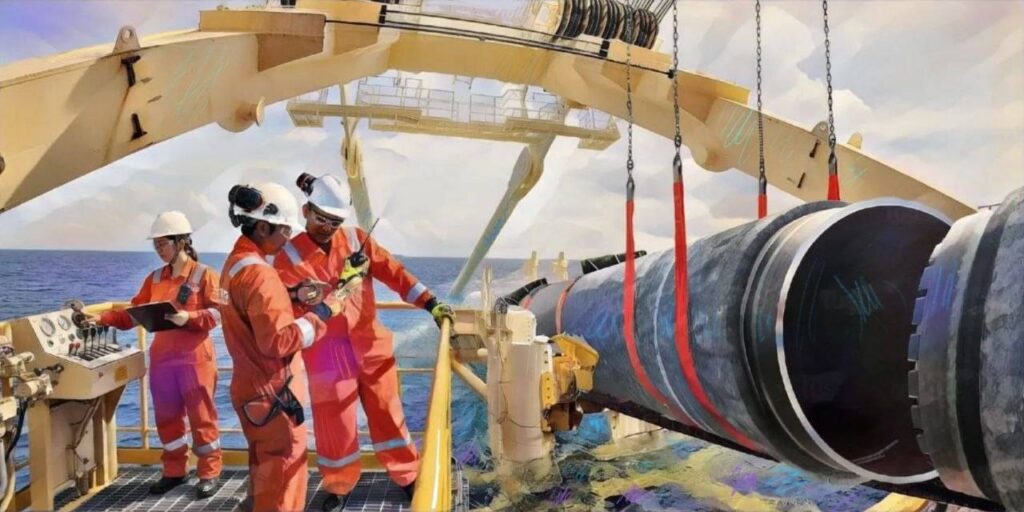
One of Turkmenistan’s largest combined-cycle power plants is currently under construction on the Caspian coast. Despite offering record-high wages by local standards, the site is experiencing persistent staff turnover. The project is being led by the Turkish company Çalık Enerji, which is building a 1,574 MW combined-cycle gas turbine (CCGT) power plant in the village of Kiyanly in Turkmenistan’s Balkan region. While the workforce is largely made up of local residents, retaining staff has proven difficult. According to former workers, even unskilled laborers can earn up to $2,856 per month, an exceptionally high salary for the region. This has attracted a steady stream of job seekers. However, many employees say the pay does not adequately compensate for the harsh realities of working on-site. The primary reason cited for resignations is the extreme natural environment. The construction site lies between the Caspian Sea and an open expanse of steppe, where strong winds are a near-constant presence. Conditions worsen in winter, when workers endure eight-hour shifts outdoors in cold and windy weather, conditions that many find intolerable beyond a few months. In addition to environmental challenges, workers point to strained relations with site management and internal conflicts among staff. They describe a lack of mutual trust between workers and middle managers, as well as growing tensions within crews. Some have also reported interethnic clashes, particularly between Turkmen and Azerbaijani workers, despite both groups being Turkmenistani citizens residing in the same region. These disputes have occasionally escalated into physical altercations, further contributing to resignations. Çalık Enerji signed a contract with the state-owned utility Turkmenenergo to carry out the Kiyanly project. The power plant will feature two units equipped with 9F.04 gas turbines, each with a capacity of 288 MW, and a D12 steam turbine produced by GE Vernova.

Central Asia Considers Single Gas Ring to Link Regional Energy Systems

A proposal to connect the five Central Asian capitals into a unified, synchronized gas network has generated widespread debate among regional energy experts following a major industry forum in Tashkent. The idea, referred to as the “Central Asia Gas Ring,” was introduced by Kazakh oil and gas analyst Askar Ismailov during the Central Asia Oil & Gas Forum in early November. An analysis of the proposal was later published by the Uzbek outlet Upl.uz, citing assessments from regional and international experts. The concept envisions physically linking the gas transportation systems of Uzbekistan, Kazakhstan, Turkmenistan, Kyrgyzstan, and Tajikistan into an integrated regional ring, modeled on the existing Central Asian Unified Power System, which already enables cross-border electricity coordination. According to Ismailov, natural gas should be seen not only as a tradable resource but as a strategic instrument for regional integration and energy security, especially in the context of growing geopolitical volatility. Experts cited by Upl.uz argue that a gas ring could help countries better manage seasonal fluctuations in demand and reduce the risk of widespread energy shortages. Recent winter blackouts, particularly in Uzbekistan, have heightened concerns about supply resilience. The proposed system could also ensure more stable gas flows to Kyrgyzstan and Tajikistan, which lack significant domestic hydrocarbon resources and frequently experience shortages. The initiative has attracted interest beyond Central Asia. Valérie Ducrot, head of the Global Gas Center, described the plan as a new model of energy cooperation that could attract international investment if the five participating states align their energy policies. Research groups such as SPIK and SpecialEurasia, also cited in the analysis, view the project as a potential cornerstone of regional infrastructure, aligning national interests around shared goals for stability and integration. Economic incentives vary across the region. For Turkmenistan, Uzbekistan, and Kazakhstan, the ring could provide enhanced flexibility in export routes and pricing mechanisms. For gas-dependent Kyrgyzstan and Tajikistan, the proposal promises greater energy security, seen as essential for long-term economic and social development. External stakeholders, including China and the European Union, are expected to show interest in financing the project, while Russia is likely to seek continued influence over pricing structures and logistics. Ismailov estimates the total cost at between $4 billion and $5 billion, with most of the funding needed for modernization of aging Soviet-era pipelines and construction of select new infrastructure segments. While Upl.uz notes that technical and political hurdles remain, the proposal highlights growing momentum toward collective energy solutions in Central Asia.

EBRD and EU Allocate €43 Million to Modernize Tajikistan’s Power Grid

The European Bank for Reconstruction and Development (EBRD) and the European Union have announced a joint initiative to enhance the reliability and transparency of Tajikistan’s electricity distribution system. Under the agreement, a €43 million financing package will support the state-owned electricity distributor Shabakahoi Taqsimoti Barq (STB). The funding aims to reduce technical losses and improve efficiency by upgrading essential infrastructure. The “Energy Loss Reduction” project was officially signed on December 4 at Tajikistan’s Ministry of Finance. The agreement was endorsed by Minister of Finance Faiziddin Kahhorzoda and the EBRD’s permanent representative in Tajikistan, Holger Wiefel. The project is backed by €28 million in sovereign loans from the EBRD and €15 million in EU grants via the Asia-Pacific Investment Fund. Funds will be directed toward upgrading billing systems and installing new electricity metering equipment in nine cities across the Sughd and Khatlon regions. These areas are among the most affected by outdated infrastructure, which contributes to technical power losses, inaccurate metering, and the reduced financial viability of STB. The modernization program includes digitizing STB’s core operations and implementing cybersecurity measures to safeguard the national power grid. Technical assistance from both the EU and EBRD will support the rollout of these reforms. A key component of the initiative is human capital development. Specialized training programs on sustainable technologies and modern energy sector skills will be offered, with a focus on youth and women. This is intended to enhance the qualifications of local professionals and strengthen the regional labor market. The EBRD remains one of Tajikistan’s most significant international investors. To date, the bank has invested more than €1 billion across 188 projects in various sectors. The new energy initiative reflects the continued strategic role of international partners in supporting the modernization of Tajikistan’s critical infrastructure.

Tajikistan Completes Modernization of Kairakkum Hydropower Plant

On November 20, Tajik President Emomali Rahmon officially inaugurated three newly modernized hydroelectric units at the Kairakkum Hydropower Plant (HPP) in Guliston, located in the northern Sughd region. Situated on the Syr Darya River, the Kairakkum HPP comprises six hydroelectric units, the last of which was commissioned in 1957. Over nearly seven decades of operation, the plant’s equipment had become outdated, leading to a decline in generation capacity. The facility currently provides electricity to approximately 500,000 residents in Sughd province. A modernization project for the aging plant began in August 2019. The first three upgraded units were brought online in September 2024. With the completion of the remaining three units, all six have now been fully renovated. [caption id="attachment_39735" align="aligncenter" width="1024"] Image: president.tj[/caption] Each upgraded unit now has a capacity of 29 MW, bringing the plant’s total capacity from 126 MW to 174 MW, an increase of 60 MW. As a result, annual electricity generation has risen from 650 million kWh to 900 million kWh. The modernization was backed by a $196 million financing package led by the European Bank for Reconstruction and Development (EBRD), which included: An $88 million EBRD loan A $37 million loan from the European Investment Bank A $50 million loan and grant from the Green Climate Fund A $21 million loan and grant from the Climate Investment Funds (CIF), directed to state-owned utility Barki Tojik. Tajikistan, which possesses vast hydropower potential but suffers from chronic energy shortages, has prioritized hydropower projects in recent years. Chief among them is the ongoing construction of the massive Rogun Dam and hydropower plant. These initiatives aim not only to address domestic supply issues but also to establish Tajikistan as a regional electricity exporter.

Kyrgyz Authorities Upgrade Energy Infrastructure in Conflict-Affected Batken Region

Authorities in Kyrgyzstan have modernized more than 600 kilometers of high-voltage power lines in the Batken region and launched construction of a new power substation near the Tajik border, an area impacted by armed clashes in 2022. According to the National Electric Grid of Kyrgyzstan (NEGK), stable and uninterrupted power supply has been ensured across all settlements in the region during the first half of 2025. Major repairs extended to remote mountainous areas prone to natural hazards, where energy workers replaced over 2,500 outdated porcelain insulators, enhancing grid reliability. Much of the infrastructure was located in landslide-prone and difficult-to-access terrain. “To prevent natural disasters, particularly floods, and ensure the safety of electrical equipment, we reinforced overhead power lines using gabions, stone materials, wire ties, and specialized equipment,” the NEGK reported. The Batken region experienced prolonged blackouts following the 2022 Kyrgyz-Tajik border conflict, which left 32 settlements without electricity. Although power was restored within a year, much of the infrastructure had not been updated for decades. Local officials now say outages should become rare. Construction has also begun on a new substation valued at $800,000 near the Tajik border, with completion expected by October 2025. The facility will supply electricity to an 800-hectare area, including the newly built village of Zhan Dostuk. The village is designated for residents displaced from areas transferred to Tajikistan under an intergovernmental agreement. Power will also extend to the planned city of Batken City, newly constructed state-owned mortgage housing, a large Russian-language school, and a stadium with a capacity of 10,000 spectators. Additionally, the region remains a key hub for the CASA-1000 project, which aims to export electricity from Kyrgyzstan and Tajikistan to Pakistan via Afghanistan, an initiative that officials say will strengthen energy infrastructure across Central Asia.

Kazakhstan Fears Electric Cars Will Strain Energy Infrastructure

Kazakhstani lawmaker Nauryz Saylaubai has raised concerns over the country’s ability to support the growing number of electric vehicles (EVs), citing infrastructure challenges and regulatory gaps. In a request to First Deputy Prime Minister Roman Sklyar, the Mazhilis (lower house of parliament) member called for urgent measures to address these issues. Growing Number of Electric Vehicles According to the Bureau of National Statistics, the share of electric-powered vehicles in Kazakhstan remains relatively small. As of February 1, 2025, the country had 12,655 registered electric cars, 350 electric trucks, and 189 electric buses. In contrast, there were 4.45 million gasoline-powered cars, 91,100 diesel-powered vehicles, 10,100 gas-powered cars, and 400,300 hybrid vehicles running on a mix of gasoline, gas, and electricity. Despite the low overall share, EV adoption has been accelerating. A year ago, on February 1, 2024, Kazakhstan had only 8,366 electric cars, 277 electric trucks, and 38 electric buses. This represents a 25% increase in electric cars and a fivefold rise in electric buses over the past year. Energy Infrastructure Concerns The rapid growth of EVs has raised concerns among lawmakers about the ability of Kazakhstan’s aging power grid to handle the additional demand. "It is well known that an increase in the number of electric vehicles puts additional pressure on power grids. Given that our grid infrastructure is already outdated, won't this lead to future accidents? What measures are being taken to address this issue?" Saylaubai asked. Kazakhstan’s EV market is expected to keep expanding, as electric vehicles are exempt from the country's scrappage tax and import registration fees, making them approximately 15% cheaper than conventional cars. Charging Infrastructure and Service Gaps Saylaubai also highlighted the country’s insufficient charging infrastructure. "According to international standards, the optimal ratio of electric vehicles to public charging stations should be 10 to 1. In Kazakhstan today, there is just one charging station for every 43 electric cars," the lawmaker noted. State-owned road infrastructure operator KazAutoZhol had planned to install 40 new charging stations along intercity highways in 2024, but by the end of last year, only 23 had been completed. Another major issue is the lack of service centers for EV repairs and maintenance, particularly in rural regions. Owners outside major cities struggle to find specialists and spare parts, while logistical challenges further complicate EV accessibility in remote areas. Saylaubai urged the government to develop a nationwide network of service stations and ensure the availability of spare parts. Legal Uncertainty Over Autopilot Systems The lawmaker also pointed to regulatory gaps regarding the use of autopilot features in electric vehicles. "The vast majority of electric cars are equipped with autopilot functions, but it remains unclear whether drivers are legally allowed to activate them within city limits or who would be held responsible in the event of an accident," he said. Additionally, he warned that electric cars can reach high speeds within seconds, potentially posing risks to road safety. As The Times of Central Asia previously reported, Kazakhstan’s car market set a new record for...