• KGS/USD = 0.01143 0%
  • KZT/USD = 0.00200 0%
  • TJS/USD = 0.10593 0.09%
  • UZS/USD = 0.00008 0%
  • TMT/USD = 0.28575 0%
  • KGS/USD = 0.01143 0%
  • KZT/USD = 0.00200 0%
  • TJS/USD = 0.10593 0.09%
  • UZS/USD = 0.00008 0%
  • TMT/USD = 0.28575 0%
  • KGS/USD = 0.01143 0%
  • KZT/USD = 0.00200 0%
  • TJS/USD = 0.10593 0.09%
  • UZS/USD = 0.00008 0%
  • TMT/USD = 0.28575 0%
  • KGS/USD = 0.01143 0%
  • KZT/USD = 0.00200 0%
  • TJS/USD = 0.10593 0.09%
  • UZS/USD = 0.00008 0%
  • TMT/USD = 0.28575 0%
  • KGS/USD = 0.01143 0%
  • KZT/USD = 0.00200 0%
  • TJS/USD = 0.10593 0.09%
  • UZS/USD = 0.00008 0%
  • TMT/USD = 0.28575 0%
  • KGS/USD = 0.01143 0%
  • KZT/USD = 0.00200 0%
  • TJS/USD = 0.10593 0.09%
  • UZS/USD = 0.00008 0%
  • TMT/USD = 0.28575 0%
  • KGS/USD = 0.01143 0%
  • KZT/USD = 0.00200 0%
  • TJS/USD = 0.10593 0.09%
  • UZS/USD = 0.00008 0%
  • TMT/USD = 0.28575 0%
  • KGS/USD = 0.01143 0%
  • KZT/USD = 0.00200 0%
  • TJS/USD = 0.10593 0.09%
  • UZS/USD = 0.00008 0%
  • TMT/USD = 0.28575 0%
21 February 2026

Viewing results 1 - 6 of 4

Opinion: Afghanistan and Central Asia – Security Without Illusions

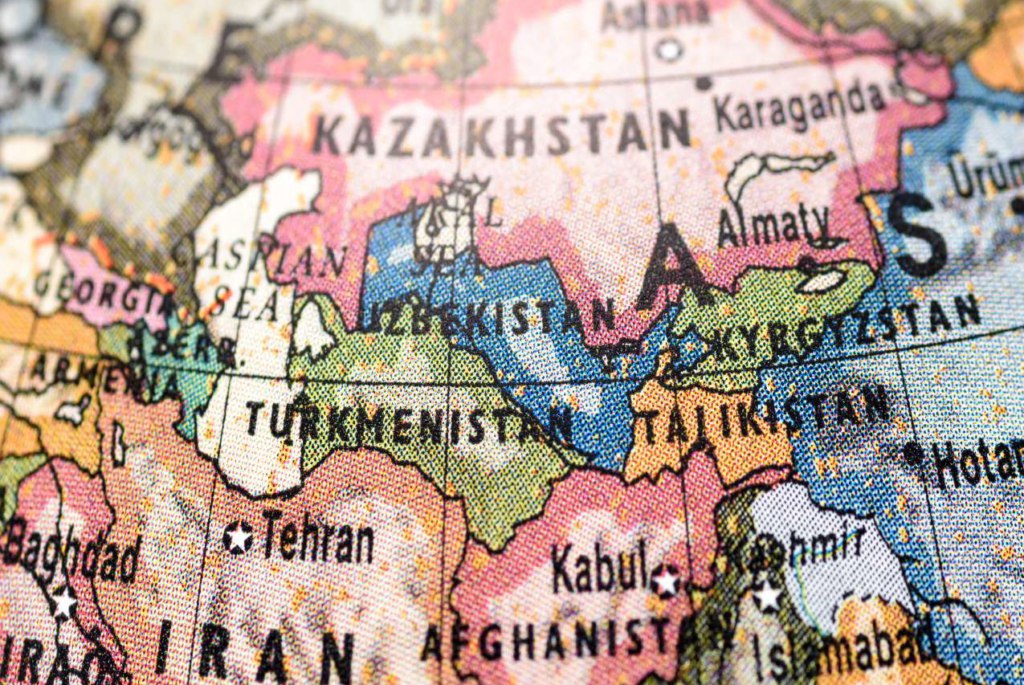
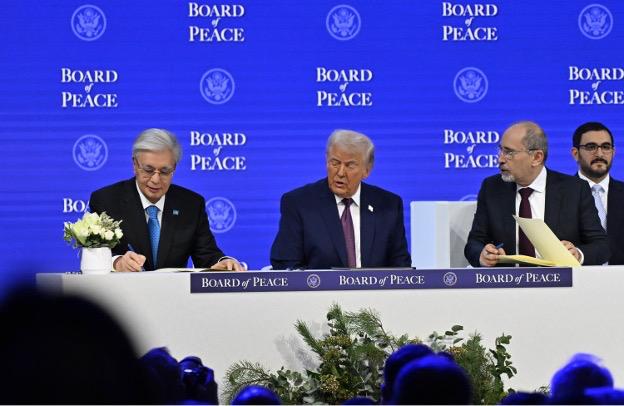
Over the past year, Afghanistan has become neither markedly more stable nor dramatically more dangerous, despite how it is often portrayed in public discourse. There has been neither the collapse that many feared, nor the breakthrough that some had hoped for. Instead, a relatively unchanged but fragile status quo has persisted, one that Central Asian countries confront daily. For the C5 countries, Afghanistan is increasingly less a topic of speculative discussion and more a persistent factor in their immediate reality. It is no longer just an object of foreign policy, but a constant variable impacting security, trade, humanitarian issues, and regional stability. As such, many of last year’s forecasts have become outdated, based as they were on assumptions of dramatic change, whereas the reality has proven far more inertial. Illusion #1: Afghanistan Can Be Ignored The belief that Afghanistan can be temporarily “put on the back burner” is rooted in the assumption that a lack of public dialogue or political statements equates to a lack of interaction. But the actions of Central Asian states show that ignoring Afghanistan is not a viable option, even when countries intentionally avoid politicizing relations. Turkmenistan offers a clear example. Ashgabat has maintained stable trade, economic, and infrastructure ties with Afghanistan for years, all with minimal foreign policy rhetoric. Energy supplies, cross-border trade, and logistical cooperation have continued despite political and financial constraints, and regardless of international debates over the legitimacy of the Afghan authorities. This quiet pragmatism stands in contrast to both isolationist strategies and symbolic or ideological engagement. Turkmenistan may avoid making public declarations about its relationship with Afghanistan, but it nonetheless maintains robust cooperation. This calculated calmness reduces risks without signaling disengagement. Importantly, this approach does not eliminate structural asymmetries or deeper vulnerabilities. But it dispels the illusion that distancing reduces risk. On the contrary, sustained economic and logistical ties foster predictability, without which attempts to “ignore” a neighboring country become a form of strategic blindness. In this sense, Turkmenistan’s experience affirms a broader regional truth: Afghanistan cannot be removed from Central Asia’s geopolitical equation by simply looking away. It must be engaged pragmatically or dealt with later, in potentially more destabilizing forms. Illusion #2: Security Is Achieved Through Isolation Closely related to the first is the illusion that security can be ensured by building walls. Security in Afghanistan, and in the broader Afghan-Pakistani zone, is often seen as an external issue, something that can be kept out by sealing borders or minimizing engagement. Yet in practice, security is determined less by geography and more by the nature of involvement. This is reflected in the recent decision by Uzbekistan and Kazakhstan to participate in U.S. President Donald Trump's “Board of Peace” initiative. While the initiative focuses on resolving crises outside Central Asia, both countries have framed their participation as essential to their own national and regional security interests. As Abdulaziz Kamilov, advisor to the President of Uzbekistan, explained, Tashkent’s involvement stems from three factors: its own security needs, its foreign policy principles,...

Italy Courts Central Asia: Trade, Transit, and Tech Take Center Stage

The inaugural Central Asia-Italy Summit, held on May 30, 2025, in Astana, marked a significant step in international diplomacy. It established a new framework for dialogue between the European Union and Kazakhstan, Kyrgyzstan, Uzbekistan, Tajikistan, and Turkmenistan. The participation of the leaders of all five Central Asian nations alongside Italian Prime Minister Giorgia Meloni underscores the region’s growing strategic and economic relevance. Bilateral Meetings Ahead of the summit, extended talks took place between Kazakh President Kassym-Jomart Tokayev and Italian Prime Minister Giorgia Meloni. Tokayev emphasized the depth and stability of bilateral ties, describing Italy as a key strategic partner. Trade between the two nations grew by 24% in 2024, reaching $20 billion. Italy is Kazakhstan’s third-largest trading partner and a major investor, with approximately $7.6 billion invested over the past two decades. Over 270 Italian companies currently operate in Kazakhstan. [caption id="attachment_32447" align="aligncenter" width="2560"] @akorda[/caption] Meloni praised the relationship as “exceptional,” highlighting Italy’s interest in expanding cooperation across trade, energy, and humanitarian domains. A pivotal outcome of the meeting was the signing of a Joint Statement on Strengthening Strategic Partnerships. [caption id="attachment_32448" align="aligncenter" width="2560"] @akorda[/caption] Additional agreements included: Security and Migration - Readmission agreement; Resources and Critical Materials - Cooperation on strategic mineral extraction; Investment and Industrial Development - Agreements involving Samruk-Kazyna, Maire Tecnimont, and Ansaldo; Water Management and Ecology - Memorandum with the Italian engineering association OICE; Finance and Project Lending - Agreements with Cassa Depositi e Prestiti and SACE SpA; Energy and Exports - Agreements with Samruk-Energo and Kazakh Invest. President Tokayev also met with Turkmen President Serdar Berdimuhamedov, emphasizing cultural and economic ties and expressing hope for the realization of joint projects. [caption id="attachment_32449" align="aligncenter" width="2560"] @akorda[/caption] Kazakhstan's Proposals Tokayev outlined proposals for expanding economic, technological, and humanitarian cooperation with Italy. He called for the development of logistics infrastructure and proposed establishing an Italian trading house in Almaty and launching the "Businessmen Plus Italy" platform. Tokayev highlighted Kazakhstan’s readiness to boost oil exports, already over 30 million tons in 2023, a 27% increase from the previous year, and expand exports of over 100 goods valued at $1 billion, particularly non-resource items. He also proposed increased cooperation in agro-industry and emphasized aligning certification standards with the EU. Kazakhstan invited Italian firms to participate in rare earth exploration under a model of “investment and technology in exchange for strategic raw materials.” Joint ventures in textiles, furniture, pharmaceuticals, and machinery were also encouraged. Tokayev stressed decarbonization as a national priority and praised Italian investments in renewable energy. He proposed collaboration on green hydrogen and ammonia production and urged Italy to engage with the Global Biofuels Alliance. [caption id="attachment_32450" align="aligncenter" width="2560"] @akorda[/caption] In education and research, Tokayev invited Italian technical universities to open branches in Kazakhstan, noting that 4,000 Kazakhstani students currently study in Italy. He proposed joint efforts in AI and innovation, including participation in the new Central Asia-EU Innovation Campus at the Astana Hub. Transport infrastructure also featured prominently. Tokayev advocated for integrating the Trans-Caspian International Transport Route (TMTR)...