• KGS/USD = 0.01144 0%
  • KZT/USD = 0.00202 0%
  • TJS/USD = 0.10672 -0.09%
  • UZS/USD = 0.00008 0%
  • TMT/USD = 0.28530 0%
  • KGS/USD = 0.01144 0%
  • KZT/USD = 0.00202 0%
  • TJS/USD = 0.10672 -0.09%
  • UZS/USD = 0.00008 0%
  • TMT/USD = 0.28530 0%
  • KGS/USD = 0.01144 0%
  • KZT/USD = 0.00202 0%
  • TJS/USD = 0.10672 -0.09%
  • UZS/USD = 0.00008 0%
  • TMT/USD = 0.28530 0%
  • KGS/USD = 0.01144 0%
  • KZT/USD = 0.00202 0%
  • TJS/USD = 0.10672 -0.09%
  • UZS/USD = 0.00008 0%
  • TMT/USD = 0.28530 0%
  • KGS/USD = 0.01144 0%
  • KZT/USD = 0.00202 0%
  • TJS/USD = 0.10672 -0.09%
  • UZS/USD = 0.00008 0%
  • TMT/USD = 0.28530 0%
  • KGS/USD = 0.01144 0%
  • KZT/USD = 0.00202 0%
  • TJS/USD = 0.10672 -0.09%
  • UZS/USD = 0.00008 0%
  • TMT/USD = 0.28530 0%
  • KGS/USD = 0.01144 0%
  • KZT/USD = 0.00202 0%
  • TJS/USD = 0.10672 -0.09%
  • UZS/USD = 0.00008 0%
  • TMT/USD = 0.28530 0%
  • KGS/USD = 0.01144 0%
  • KZT/USD = 0.00202 0%
  • TJS/USD = 0.10672 -0.09%
  • UZS/USD = 0.00008 0%
  • TMT/USD = 0.28530 0%
06 February 2026

Viewing results 1 - 6 of 7

Dushanbe Proposed as Regional Glaciology Hub Amid Accelerating Glacier Melt

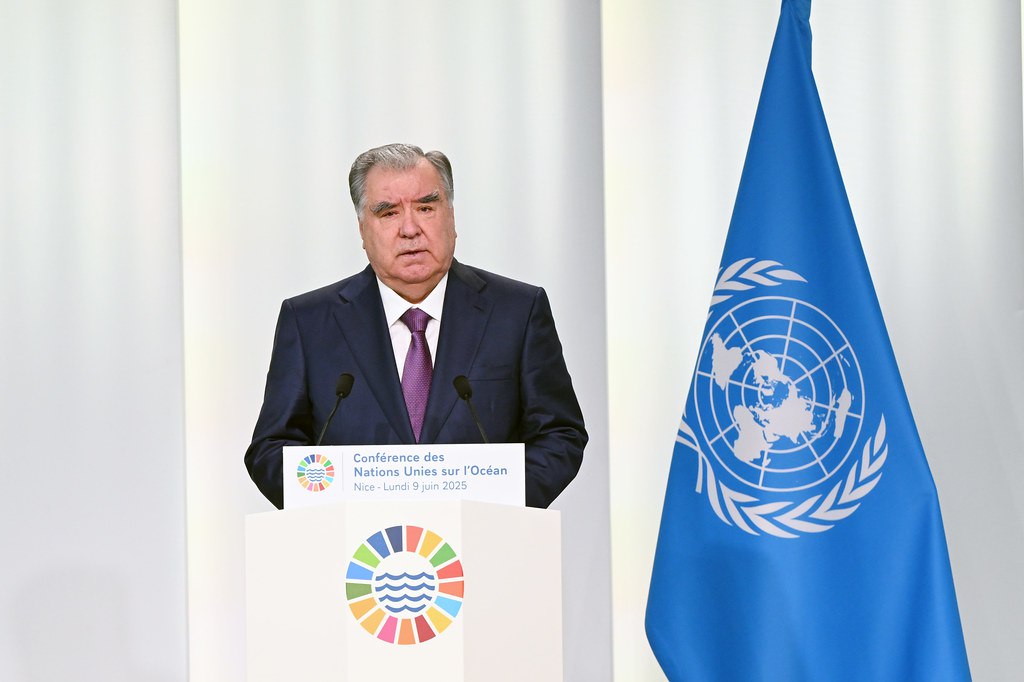
Tajikistan's President Emomali Rahmon, speaking in France on June 8 at the launch of the International Decade of Cryosphere Sciences (2025-2034), has proposed establishing a Regional Coordination Center for Glaciology in Dushanbe. The event was held as part of the Third UN Ocean Conference in Nice, which convened heads of state and government from 65 countries, UN Secretary-General António Guterres, and leaders of international organizations. Glaciology Center in the Heart of the Pamir Mountains Addressing the international community, Rahmon underscored Tajikistan's commitment to creating a glaciology center. "Given the importance of glaciers and in order to study the impact of climate change on them more accurately, we have decided, with the assistance of international partners, to establish a Regional Coordination Center for Glaciology in Dushanbe," he stated. He highlighted that Tajikistan is home to up to 60% of all glaciers in Central Asia, playing a pivotal role in the region's sustainable development. However, their rapid shrinkage poses a threat not only locally but globally. Rahmon warned that if current melting trends persist, up to a billion people could face negative consequences by 2050, particularly in coastal areas and on islands. Tajikistan: Initiator of the Climate Agenda Rahmon emphasised that Tajikistan had been a proactive advocate for water and climate issues on the global stage for two decades. He emphasized the broad international support for the joint initiative by Tajikistan and France to designate 2025-2034 as the "Decade of Action for Cryosphere Sciences." "Our initiatives in the field of water and climate issues have received the support of the international community and are being implemented through 14 resolutions of the UN General Assembly," Rahmon noted. He concluded by urging the international community to expand cooperation for cryosphere preservation and the development of scientific potential in this critical area. From Declarations to Coalitions Rahmon's speech followed the first International High-Level Conference on Glacier Protection held in late May. This forum attracted over 2,500 delegates from 80 countries, including scientists, heads of delegations, international organizations, and donor agencies. The conference's primary outcome was the signing of the Dushanbe Declaration, a document advocating for urgent action to protect glaciers and synchronize international efforts. Participants called for significant reductions in greenhouse gas emissions, a transition to sustainable production models, and the implementation of robust climate monitoring systems. An international coalition was also announced, poised to unite states, scientific institutions, environmental movements, and international organizations. Its mandate will include monitoring the declaration's implementation, facilitating the exchange of best practices, attracting investment, and developing climate change adaptation technologies.


Tajikistan Lifts Criminal Penalties for Social Media Likes on ‘Extremist’ Content

Tajik President Emomali Rahmon has signed a new law eliminating criminal penalties for liking or reacting to social media posts classified as extremist or threatening to public order. The president’s press office announced the amendment, which revokes part of a 2018 change to the Criminal Code. Previously, individuals could face prison sentences of 10 to 15 years for openly promoting or supporting purported terrorism or terrorist acts online. Under this legislation, more than 1,500 people have been convicted in Tajikistan, many for merely liking or commenting on posts the government deemed extremist. A significant number of those affected were believed to be affiliated with opposition groups. It remains unclear whether the new law will result in the release of individuals already imprisoned under the previous statute. However, lawyer Dilshod Jurayev told Radio Ozodi that those convicted may now have grounds to appeal their sentences. Regional Context In neighboring Uzbekistan, social media users still face the possibility of legal consequences for engaging with prohibited content if investigators or courts determine that liking such material constitutes distribution. Uzbekistan’s Agency for Information and Mass Communications (AIMC) has cautioned the public against spreading false information. The agency emphasized that engaging with posts containing fake news, disinformation, or extremist content could result in administrative or criminal penalties. “There is administrative and criminal liability for spreading false or harmful information,” the AIMC stated. “Before you share anything, make sure it comes from a trusted, official source.”

Tajikistan Abolishes Criminal Prosecution for Social Media ‘Likes’

Tajikistan will no longer criminalize the use of “likes” or emoji reactions on social media posts. Amendments to the Criminal Code were unanimously approved on April 10 during the first session of the newly elected lower house of parliament, the Majlisi Namoyandagon. The legislative initiative, introduced by First Deputy Prosecutor General Umed Karimzoda, removes language from Articles 179(3) and 307(1) of the Criminal Code that allowed for punishment for “endorsing” extremist or terrorist content. Specifically, the phrase “liking or other sign of approval” will be eliminated from the law. The reform will take effect after approval by the upper house of parliament, a presidential signature, and official publication. Up to 15 Years for Liking: The Way It Used to Be Previously, Tajikistan’s legislation permitted real prison sentences for online activity. Article 179(3), concerning public incitement to terrorism, carried penalties of 5 to 15 years in prison. Article 307(1), concerning public justification of extremism, allowed for 3 to 12 years behind bars. This justification included simple actions such as liking or reposting flagged content. According to Karimzoda, 1,507 people are currently imprisoned for social media activity involving likes or comments on extremist-designated materials. This figure, cited from the Main Department of Corrections, had not been officially disclosed prior to his statement. The Supreme Court of Tajikistan has also consistently declined to release related statistics to the press or the public. Government Response and Rahmon’s Remarks President Emomali Rahmon had already voiced concern over such judicial practices in October 2024, calling on authorities to end prosecutions based on social media interactions. “Some bodies are bringing cases without grounds and this should be stopped,” Rahmon said at the time. Despite this directive, media reports indicate that security services continued to detain individuals, seize phones, and inspect social media activity. One high-profile example involved the family of journalist Shervon Umriddin. In April 2024, his brother was detained in the town of Penjikent after authorities inspected his phone and discovered likes on opposition-related posts. A similar incident had affected another relative a year earlier. Both were eventually released after paying fines. Legal Experts and Human Rights Concerns Media lawyer Ranget Yatimov recalled that as early as 2018, human rights defenders warned of the risk of abuse stemming from the vague interpretation of anti-extremist legislation. Courts began equating “likes” on controversial content with public justification of terrorism. Yatimov also highlighted that such court hearings are typically held behind closed doors, lacking transparency or external oversight. Following Rahmon’s remarks, lawyers and civil society activists emphasized that rhetorical criticism was insufficient. “If the president has a desire to change the situation, he should officially initiate the legislative abolition of such norms. Otherwise, it will remain in words,” said political migrant Farҳod Odinaev. International human rights organizations have repeatedly condemned Tajikistan for restricting freedom of expression. Criminal penalties for digital activity, including likes and comments, have been widely regarded as a violation of basic human rights. The repeal of this provision could mark a step toward more proportionate law...

Tajikistan to Modernize Energy, Cotton, and Education Sectors with EU Grants

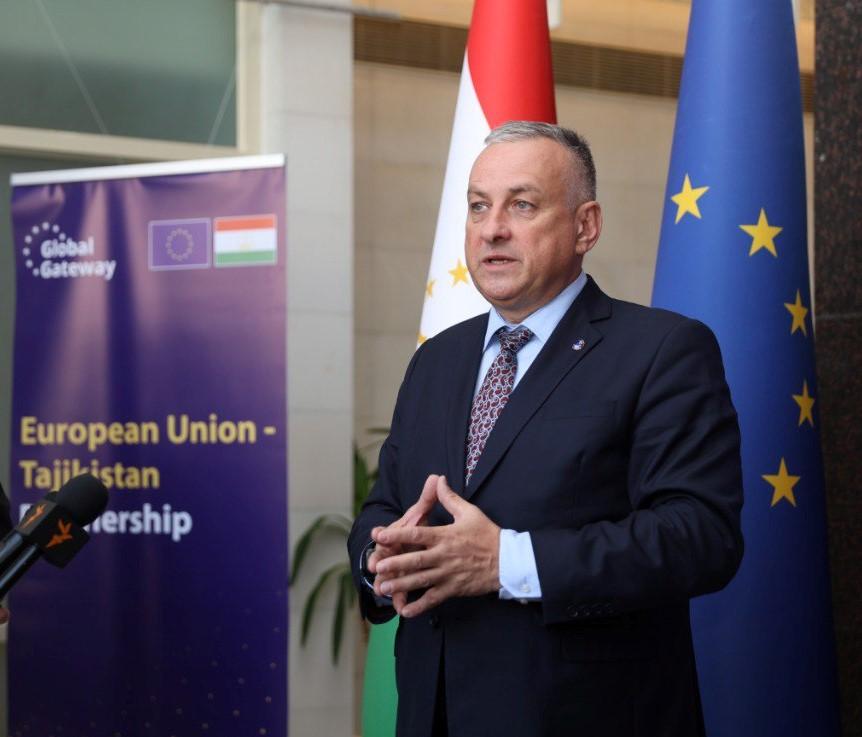
On March 14, European Commissioner for International Partnerships Jozef Síkela arrived in Tajikistan. He met with President Emomali Rahmon to reaffirm the European Union’s commitment to the country through the EU’s Global Gateway initiative​. During their meeting, Síkela and Rahmon discussed the state and future of EU-Tajikistan relations, as well as pressing regional issues. Their talks focused on expanding economic and trade ties, attracting investments in industry and agriculture, and securing funding for hydropower projects. Rahmon emphasized Tajikistan’s commitment to green technologies and its goal of generating 100% of its electricity from renewable sources under the Strategy for the Development of the Green Economy until 2037​. EU’s New Funding for Tajikistan During his visit, Síkela announced several new EU funding initiatives aimed at strengthening Tajikistan’s sustainable development. According to the EU Delegation to Tajikistan, two key agreements were signed with Team Europe partners to drive sustainability efforts in the country: A €20 million investment grant with the European Bank for Reconstruction and Development (EBRD) to modernize Tajikistan’s electricity grid, reduce energy losses, and prepare for future renewable energy investments. This aligns with the EU’s broader goal of enhancing energy security and supporting the green transition in Central Asia. A €20 million grant with Deutsche Gesellschaft für Internationale Zusammenarbeit (GIZ), the German Agency for International Cooperation, to promote sustainability in Tajikistan’s cotton sector. The initiative will support certified sustainable cotton production, improve processing for high-quality exports, and create new opportunities for the domestic private sector. Additionally, the EU announced a €10 million disbursement as part of a larger €30 million budget support program. This funding will help implement the National Strategy for Education Development 2030 and the Programme for Professional Training of Citizens 2021-2025, improving the quality and relevance of both general secondary education and vocational training​. As part of his visit, Síkela toured the Rogun Hydropower Plant, a crucial project for Tajikistan’s energy infrastructure. “With its Global Gateway strategy, the EU is investing in Tajikistan’s future by supporting critical infrastructure upgrades, expanding renewable energy capacity, and modernizing key industries such as cotton production,” Síkela stated. “These investments will reduce energy losses, create jobs, and open new export markets”​.

Tajik Women Unite to Urge Rahmon to Grant Leniency for Journalist Rukhshona Khakimova

A group of 130 women in Tajikistan have appealed to President Emomali Rahmon, requesting leniency for journalist Rukhshona Khakimova, who was sentenced to eight years in prison. A Plea for Mercy In their appeal, the women expressed deep concern over the fate of Khakimova’s two young daughters, one of whom is an infant still in need of breastfeeding. “This verdict has shaken us to the core, but most of all, it has shattered the lives of her two tiny daughters, Shakhnura and Shukrona, who overnight lost the most precious thing a child has, a mother's love, warmth, and care. Ten-month-old Shukrona was deprived not only of her mother’s hands but also of her mother’s milk, which is not just nourishment but the very essence of the mother-child bond. We cannot imagine the pain of these children, who cannot yet speak but already feel the cruel emptiness that nothing and no one can fill,” the letter reads. The signatories emphasized that they were not calling for the sentence to be overturned but rather for clemency. They urged the government to apply legal mechanisms that would allow Khakimova to serve an alternative sentence while remaining with her children. “We believe there are lawful ways to take her motherhood into account and ensure that two young children are not left without maternal care,” the appeal stated. A Controversial Conviction Khakimova was charged with high treason under Article 305 of Tajikistan’s Criminal Code, with the case initiated by the General Prosecutor’s Office in June 2024. According to sources familiar with the investigation, her prosecution is linked to a survey on China’s influence in Tajikistan. She was sentenced on February 5 during a closed trial at the Dushanbe detention center, alongside other defendants in the so-called “coup d’état case”. Before the verdict, she had been allowed to remain free, albeit with restricted movement, due to her responsibilities as a mother. However, her documents had been confiscated, preventing her from traveling. Following the court ruling, she was taken into custody immediately. International Outcry International human rights organizations have condemned the sentence. The International Coalition for the Protection of Human Rights Defenders (The Observatory for the Protection of Human Rights Defenders) has called for Khakimova’s immediate release. Similar statements have been issued by Human Rights Watch (HRW) and Reporters Without Borders (RSF), both of which have criticized the court’s decision.

President Rahmon Meets with Pope Francis

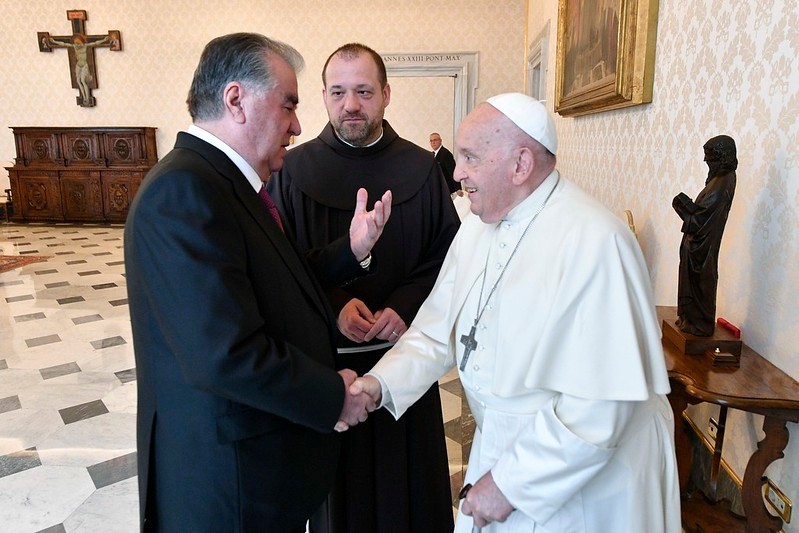
On April 26, the President of Tajikistan, Emomali Rahmon paid an official visit to the Vatican and met with Pope Francis. According to the press office of the Holy See, during the meeting the good relationship between the Holy See and Tajikistan was emphasized, and mention was made of some aspects of the country’s political and socioeconomic situation. Special attention was also paid to the importance of dialogue and mutual understanding between peoples and cultures for the promotion of peace and stability in the world. The Tajik president’s press service reported that President Rahmon stated that all conditions for tolerance and coexistence of representatives of all religions have been created in Tajikistan. The Tajik people, who have historically made a significant contribution to civilization with the development of science and literature, welcome any inter-religious and inter-civilizational dialogues, the Tajik leader said. Despite Rahmon's rhetirc, however, Tajikistan is a country where religion is often seen as a challenge to the government's authority, and it pays not to be too devout. In September 2015, clashes over the death in police custody of a man detained for "wearing his beard long" led to 17 fatalities. In that year alone, the police forcibly shaved 13,000 men's beards and shuttered over 160 shops selling Muslim clothing. Today, the authorities continue to surveil religious institutions. On his visit to the Holy See, Rahmon also met with Vatican’s Secretary of State, Cardinal Pietro Parolin to discuss issues of strengthening and expanding bilateral cooperation. Satisfaction was expressed with the beginning of a new stage in the development of relations between Tajikistan and the Vatican. The conversation centered on issues of ensuring peace and stability, tolerance, harmony, and the strengthening of inter-cultural dialogue.