• KGS/USD = 0.01143 0%
  • KZT/USD = 0.00205 0%
  • TJS/USD = 0.10433 0.1%
  • UZS/USD = 0.00008 0%
  • TMT/USD = 0.28577 0%
  • KGS/USD = 0.01143 0%
  • KZT/USD = 0.00205 0%
  • TJS/USD = 0.10433 0.1%
  • UZS/USD = 0.00008 0%
  • TMT/USD = 0.28577 0%
  • KGS/USD = 0.01143 0%
  • KZT/USD = 0.00205 0%
  • TJS/USD = 0.10433 0.1%
  • UZS/USD = 0.00008 0%
  • TMT/USD = 0.28577 0%
  • KGS/USD = 0.01143 0%
  • KZT/USD = 0.00205 0%
  • TJS/USD = 0.10433 0.1%
  • UZS/USD = 0.00008 0%
  • TMT/USD = 0.28577 0%
  • KGS/USD = 0.01143 0%
  • KZT/USD = 0.00205 0%
  • TJS/USD = 0.10433 0.1%
  • UZS/USD = 0.00008 0%
  • TMT/USD = 0.28577 0%
  • KGS/USD = 0.01143 0%
  • KZT/USD = 0.00205 0%
  • TJS/USD = 0.10433 0.1%
  • UZS/USD = 0.00008 0%
  • TMT/USD = 0.28577 0%
  • KGS/USD = 0.01143 0%
  • KZT/USD = 0.00205 0%
  • TJS/USD = 0.10433 0.1%
  • UZS/USD = 0.00008 0%
  • TMT/USD = 0.28577 0%
  • KGS/USD = 0.01143 0%
  • KZT/USD = 0.00205 0%
  • TJS/USD = 0.10433 0.1%
  • UZS/USD = 0.00008 0%
  • TMT/USD = 0.28577 0%

Viewing results 1 - 6 of 18

Weaponizing the Past: Russian Commentators Invoke Famine in Attacks on Kazakhstan

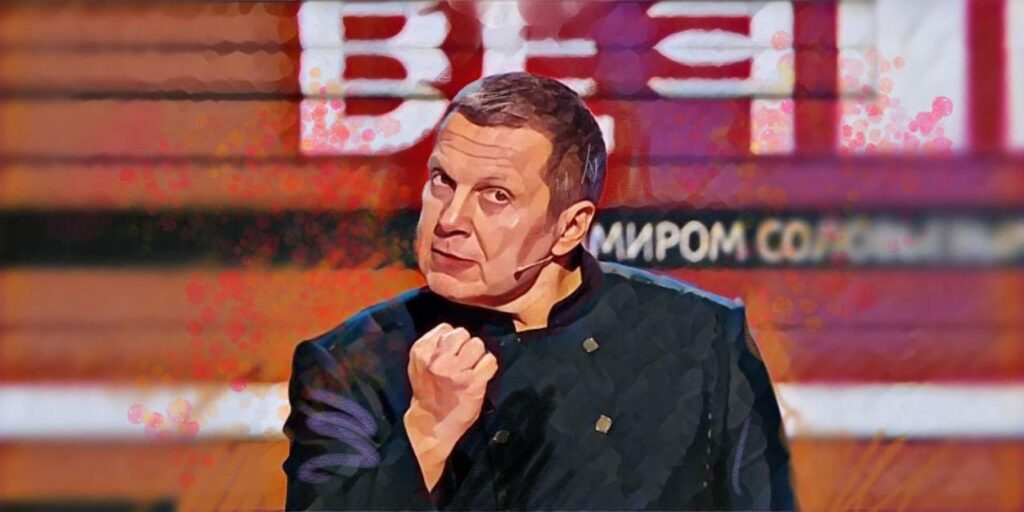
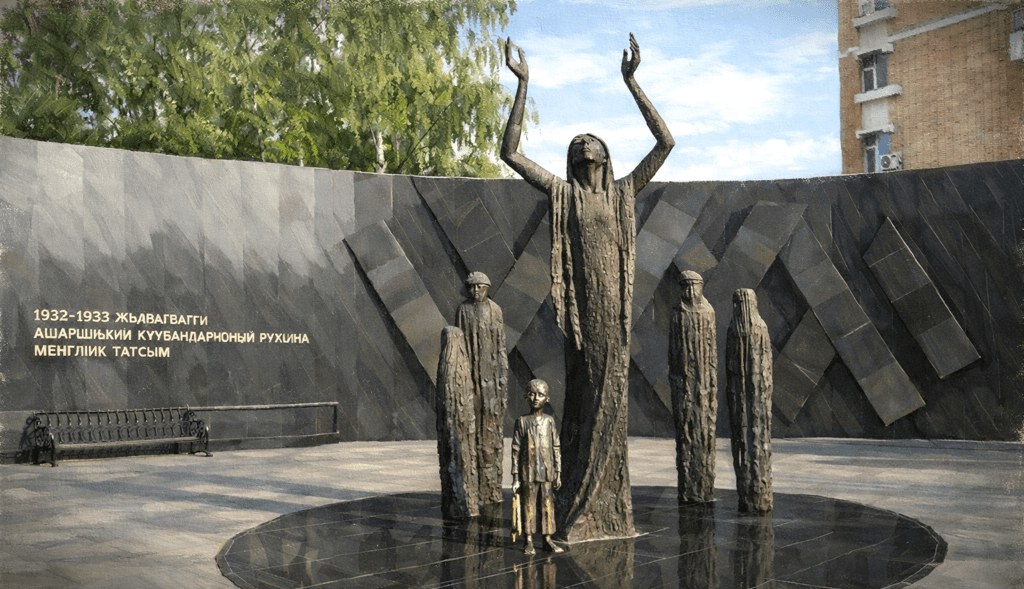
The concept of a “besieged fortress,” adopted by the Kremlin in the second half of the 2010s, increasingly conflicts with Russia’s earlier foreign policy doctrine, under which post-Soviet states were expected to remain within Moscow’s sphere of influence. That doctrine relied on alliances across the post-Soviet space, with Central Asia often described as an area of privileged interest. By contrast, the “besieged fortress” narrative assumes encirclement by enemies and frames external communication less in diplomatic than in military terms. Russia’s full-scale invasion of Ukraine, officially termed a “special military operation” by Moscow, has now lasted longer than the Soviet Union’s involvement in World War II, undermining earlier assumptions that some post-Soviet economies would remain dependent on Russian loans and access to the Russian market. In the integration sphere, Kazakh political analyst Marat Shibutov has argued that Russia is effectively “reducing its participation in the EAEU by reinstating permanent customs controls on the borders with Kazakhstan and Belarus.” Such assessments reflect growing debate within the region over the future of integration mechanisms. At the same time, segments of the Russian media space have adopted increasingly confrontational rhetoric toward Kazakhstan. In recent weeks, television host Vladimir Solovyov suggested the possibility of extending a “special military operation” to Central Asia, remarks that triggered strong reactions in Kazakhstan. Political commentator Dmitry Verkhoturov followed with statements directed specifically at Astana, invoking the sensitive historical subject of Asharshylyk, the term used in Kazakhstan for the famine of the early 1930s that followed forced collectivization under Joseph Stalin. In Ukraine, the same period is referred to as the Holodomor and is recognized there as a genocide. Kazakhstan’s official terminology does not classify the famine in those terms. Last year, the inscription on a memorial in Astana dedicated to the victims of collectivization was revised. The earlier wording referred to “victims of the Holodomor,” while the updated plaque reads “victims of the famine of 1932-1933.” The change was widely interpreted as aligning the memorial with Kazakhstan’s established historical framing. Despite this, Verkhoturov warned that further public discussion of Asharshylyk could be dangerous for Kazakhstan “from the point of view of statehood,” suggesting that such debates might escalate into armed confrontation. He also stated that Kazakhstan was “too weak and small” to oppose Russia, remarks that were widely perceived in Kazakhstan as dismissive and offensive. Particular outrage was sparked by comments contrasting Ukrainians and Kazakhs, "for us, Ukrainians are very close relatives, they are practically our own people. And yet, yes, they have brought us to a situation where we have started to fight them, while Kazakhs are not quite our own people for Russians. Yes, you can be friends with them and all that, but they are still distant people, and, as they say, they will be beaten more willingly and, it seems, more harshly than the Ukrainians," the Russian political scientist said. Kazakh political analyst Gaziz Abishev characterized the comparison as “hard-to-hide racism.” He argued that the tragedy of the famine is not exclusively a Kazakh or...

Russia Says TV Host’s Remarks on Central Asia Do Not Reflect State Policy

Russia’s Foreign Ministry moved on January 16 to distance the Kremlin from comments by television host Vladimir Solovyov after his remarks about potential military action in Central Asia provoked backlash across the region. Foreign Ministry spokesperson Maria Zakharova stated that comments by television presenters do not represent the official position of the Russian government and that Russia’s foreign policy is articulated only through authorized state channels, with relations with Central Asian countries described as based on partnership and respect for sovereignty. The clarification followed criticism in Uzbekistan, Kyrgyzstan, and Kazakhstan after Solovyov suggested that Moscow could extend its “special military operation” framework beyond Ukraine and into Central Asia. In Kyrgyzstan, public calls emerged to restrict Solovyov’s entry into the country, while officials indicated that the government would respond differently if similar claims were made by Russian state officials rather than a media figure. In Kazakhstan, political commentators warned that rhetoric questioning sovereignty risked damaging relations with Russia, even in the absence of a formal diplomatic protest. Solovyov made the remarks during a January 10 broadcast of his program “Solovyov Live.” During the segment, he described Central Asia as part of Russia’s sphere of influence and argued that international law should not constrain Moscow’s actions in territories it considers strategically important. He drew parallels with Russia’s military campaign in Ukraine and implied that states within Russia’s perceived geopolitical space could be treated differently from countries outside it. The language resonated strongly in Uzbekistan, where academics, analysts, and commentators criticized the implication that sovereignty could be conditional. Public discussion focused on the suggestion that Central Asian states might face pressure based on historical ties rather than be treated as independent actors. Critics described the framing as inconsistent with the principles of statehood established after the collapse of the Soviet Union in 1991. An Uzbek academic later issued a rebuttal rejecting the idea that Central Asia could be treated as a single external “zone” governed by different rules. The response emphasized that regional states have distinct political systems, alliances, and security priorities, and that none had delegated authority over those choices to outside powers. The episode highlighted the influence of Russian political talk shows during wartime. Figures like Solovyov command large domestic audiences and operate in an environment where commentary often overlaps with geopolitical messaging. In Central Asia, such remarks attract close scrutiny regardless of whether they carry formal policy status, particularly when they echo language used by Russian officials in other conflicts. Economic and social ties heighten that sensitivity. Millions of Central Asian citizens work in Russia, and remittances remain a significant factor in several regional economies. Russia also plays a role in regional security arrangements and energy transit routes. Statements implying that sovereignty could be overridden therefore carry weight far beyond television studios. No Central Asian government has announced formal diplomatic measures in response to Solovyov’s remarks, and Moscow’s intervention appears to have contained the immediate fallout. The episode nonetheless shows how rhetoric shaped by the war in Ukraine readily carries...

Uzbek Professor Hits Back at Vladimir Solovyov for Central Asia “Military Operation” Comments

Controversial remarks by Russian television host Vladimir Solovyov, suggesting that Moscow could conduct “special military operations” in Central Asia and Armenia, have continued to provoke a strong reaction in Uzbekistan. Scholars, journalists, and political analysts have all weighed in on the rhetoric as indicative of a dangerous political mindset developing in Russia. During a recent broadcast, Solovyov referred to Russia’s role in the region in terms that some Uzbek experts interpret as veiled threats of interference in the affairs of sovereign Central Asian states. The comments drew immediate responses from Uzbek academics, who underscored their nations' independence and territorial integrity. Political scientist and university professor Sherzodkhon Qudratkhodja issued a detailed rebuttal, emphasizing the historical and strategic gravity of Solovyov’s words. “As a citizen of a sovereign state, such remarks are unacceptable,” he said. “They challenge our independence, our territorial integrity, and our peoples' right to determine their own futures.” Qudratkhodja rejected the notion of Central Asia as a geopolitical periphery. “We are not subjects of external governance. Central Asia is a region with its own history and geopolitical agency. We are no longer objects in foreign policy, we are actors.” He warned that such public commentary normalizes the concept of military intervention by gradually expanding the so-called Overton window, the range of ideas tolerated in public discourse. “When statements like this are introduced as provocation, then normalized through discussion, and ultimately proposed as policy, it becomes a form of normalizing violence through public speech,” he said. Qudratkhodja also highlighted Central Asia’s long-standing sovereignty and global contributions. “Our history spans at least 3,500 years. Turkic peoples, including Uzbeks, pioneered the domestication of horses, early metallurgy for agriculture and warfare, and other advancements. Our ancestors were defenders of their lands and civilizations.” Turning to the geopolitical relationship between Russia and Central Asia, he said that strategic partnerships must be based on mutual respect. “Partnerships are not built on public threats or innuendo. Statements like Solovyov’s are unacceptable, especially when made about strategic partners in an increasingly multipolar world.” While Qudratkhodja acknowledged that Solovyov’s views do not represent official Russian policy, he warned that silence from Russian authorities allows such rhetoric to gain legitimacy. “Even when expressed as personal opinion, if such statements go unanswered by officials, they gain undue influence and risk becoming perceived signals that can destabilize the region.” Uzbek experts also pointed to the cultural and historical resilience of the region. Qudratkhodja invoked the legacy of Tamerlane, arguing that Central Asia has played pivotal roles in shaping regional history. “If our ancestor Tamerlane had not defeated Tokhtamysh in 1395, there would be no Russian Federation as we know it today. Our strategic role in Eurasia cannot be dismissed.” He also directly addressed Solovyov, rejecting any sense of professional kinship. “I do not consider Mr. Solovyov a colleague. His worldview belongs to the propaganda of the past. Today, discourse must be grounded in historical fact and mutual respect, not threats or insinuations.” The reaction in Uzbekistan has extended beyond academia. Social...

Russian TV Host’s Talk of ‘Military Operations’ in Central Asia Triggers Backlash in Uzbekistan

Controversial remarks by Russian television host Vladimir Solovyov, suggesting that Moscow could launch “special military operations” in Central Asia and Armenia, have provoked a strong backlash in Uzbekistan, where scholars, journalists, and political analysts warn that such rhetoric reflects dangerous political tendencies. Speaking on his Solovyov Live program, the prominent pro-Kremlin commentator claimed that regions like Armenia and Central Asia are far more critical to Russia’s national interests than distant allies such as Syria or Venezuela. He urged Russian authorities to abandon international law if it stands in the way of what he described as Russia’s national security. Solovyov was born in Moscow in 1963 and trained in economics and philosophy; after the collapse of the Soviet Union, he spent part of the early–mid-1990s living in the United States, where he worked as a businessman involved in commercial ventures rather than journalism or politics, before returning to Russia following financial difficulties. In the late 1990s and early 2000s, he entered radio and television, initially presenting himself as a liberal, pro-market commentator, but over time evolving into one of Russia’s most prominent pro-Kremlin television hosts, known for his hardline nationalist rhetoric and for aggressively promoting state narratives on domestic and foreign policy. “We must say openly: the games are over. International law and the international order mean nothing to us,” Solovyov declared, openly questioning why, if a so-called special military operation was justified in Ukraine, similar actions should not be carried out elsewhere within Russia’s claimed zone of influence. Solovyov characterized Central Asia as “our Asia,” framing it as part of Russia’s rightful sphere of influence. He warned that instability in the region represents a direct threat to Russia’s security and advocated for the Kremlin to clearly define the boundaries of its “zone of influence,” regardless of international norms. He also criticized Russia’s approach to the war in Ukraine, arguing that a lack of early harsh measures prolonged the conflict and resulted in greater losses. “We should stop casting pearls before swine and openly state that we do not care what Europe thinks,” he added. In recent years, tensions over Russian attitudes toward Central Asia have surfaced in regional discourse. In 2024, Uzbek political figure Alisher Qodirov publicly criticized what he called rising “Russian chauvinism,” responding to televised statements by Russian nationalists such as Zakhar Prilepin advocating territorial claims on Uzbekistan and Russian commentators on state TV asserting that peoples like the Uzbeks and Kazakhs did not exist before 1917, comments that Qodirov said were enough to call for cutting Russian broadcasts into Uzbekistan. Observers have also linked broader social trends in Russia - including xenophobic attacks on Central Asian migrant workers and statements by Russian officials linking Central Asian migration and security to Russia’s interests - to a narrative among some Russian public figures framing Central Asians as outsiders within Russia and Central Asia as a contested space. The remarks triggered immediate condemnation in Uzbekistan. Sherzodkhon Qudratkhodja, a political scientist and professor, said Solovyov had expressed, in plain terms, ideas...

Nomad TV: Russia’s Latest Media Venture in Kyrgyzstan

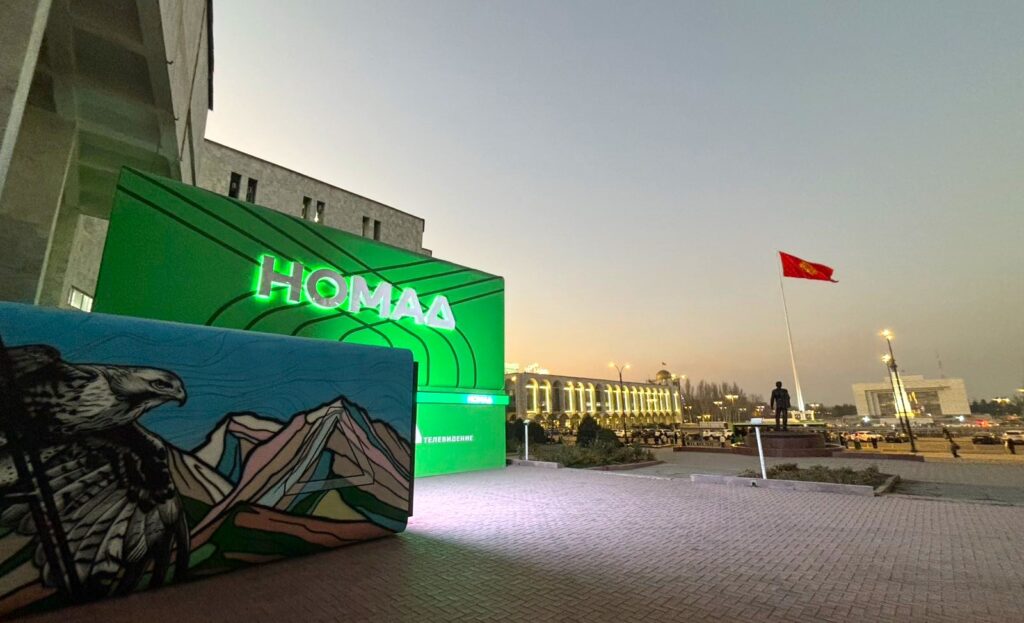
Kyrgyzstan has a new TV station. At first glance, it’s the kind of cozy, local news channel satirized in 2004’s Anchorman. The headline item on December 10th was the fact that it had snowed in Bishkek, with the on-screen reporter treading around the city asking residents whether they felt cold. “Not really,” is the general response, given that plummeting temperatures are hardly a new phenomenon in the Kyrgyz capital. “What kind of precautions did you take against the weather?” the reporter asks one gentleman. “Put on a hat and gloves,” comes the droll reply. This piece is followed by an interview with a representative of the city’s police service, advising people to tread carefully on the icy pavements. Similar soft news items follow: an interview on the progress of Asman eco-city on Lake Issyk Kul; the modernization of a factory in Bishkek; and the announcement of a new coach for the national football team. These are hardly stories to make waves. Indeed, most people in Bishkek are unaware of the new channel’s existence. “It hasn't been a major discussion point; the only presence that I felt is this huge, green box that has been installed on the central square,” Nurbek Bekmurzaev, the Central Asian editor of Global Voices, told The Times of Central Asia, referring to the broadcaster’s temporary studio at the heart of the city. Yet Nomad is one of the best-funded media outfits in the country, offering salaries twice as high as those paid by rival organizations. And, in one form or another, it seems clear that the money is coming from the Russian state. So why has the Kremlin, which is hardly underrepresented in Kyrgyzstan’s media sphere, decided to throw such sums at a local news station? [caption id="attachment_40853" align="aligncenter" width="1600"] Nomad TV’s temporary studio on Ala-Too square in the heart of Bishkek; image: TCA, Joe Luc Barnes[/caption] A Bold Start Nomad’s initial coverage was not so banal. On November 23, the channel began broadcasting with a cascade of high-profile interviews linked to Vladimir Putin’s state visit to Kyrgyzstan on November 25-27. This followed a lavish launch ceremony at the city’s opera house, attended by Russian Foreign Ministry spokeswoman, Maria Zakharova, and the Kyrgyz deputy Prime Minister Edil Baisalov. Putin himself lauded the new channel in his speech on November 26, and gave its chief editor, Natalia Korolevich, an exclusive interview the following day. This followed a feverish autumn, which the broadcaster had spent poaching talent from newsrooms around Bishkek. This included Mirbek Moldabekov, a veteran broadcaster from the state television channel, UTRK; the head of Sputnik in Kyrgyzstan, Erkin Alimbekov; and his wife, Svetlana Akmatalieva, a journalist from the National TV and Radio Corporation. The channel’s producer is Anna Abakumova, a former RT journalist who gained fame reporting from Russian-occupied territories in Ukraine. These aggressive recruitment tactics have split the profession in Kyrgyzstan. Journalist Adil Turdukolov asserted in an interview with Exclusive.kz that anyone who has chosen to work for Nomad “is not particularly concerned with...

Watches Bearing Berdimuhamedov Portraits Become Unofficial Currency in Turkmenistan’s Security Sector

In Turkmenistan, wristwatches adorned with the images of President Serdar Berdimuhamedov and his father, former president Gurbanguly Berdimuhamedov, are increasingly being used as informal bribes by citizens dealing with law enforcement. Chronicles of Turkmenistan reports that these timepieces, once symbols of official loyalty, have evolved into an unofficial currency within the country’s security apparatus. Distributed primarily through the company Sagat Turkmenistan, the watches are embellished with silver-plated cases, gold accents, precious stones, and the emblems of various law enforcement agencies. Prices range from 3,000 to 5,000 Turkmenistani Manat (TMT), or approximately $870-1,450. But few security officers reportedly pay for them out of pocket. Instead, citizens facing potential criminal prosecution are expected to offer the watches as “gifts” to investigators. “If you are told that a criminal case will be brought against you, then you need to buy such a watch and go to the investigator. This does not mean that the case will be closed. But it is the first payment,” said a resident of the town of Bayramali who had prior dealings with law enforcement. The standard version comes with a black leather strap, although a white version is seen as particularly luxurious. In some instances, investigators reportedly request a strap upgrade, an added cost that the briber must cover. The practice is not limited to security services. In May 2024, The Times of Central Asia reported that in the Balkan region, heads of state institutions were required to purchase similar watches featuring the Berdimuhamedov portraits. Prices ranged from 1,500 to 3,000 TMT ($435-870 at the official rate, or $75-150 on the black market), depending on the design and seniority of the buyer. Higher-tier models feature both Serdar Berdimuhamedov in a black tie and Gurbanguly Berdimuhamedov in a red tie, along with the Turkmen flag and a map of the country. Simpler versions show only one portrait, or a portrait combined with national symbols. All public sector entities, including institutions in healthcare, education, communications, transport, and law enforcement, were reportedly compelled to participate. Senior officials were instructed to purchase the higher-end watches, while lower-level managers had to acquire less expensive models. The use of personalized accessories as symbols of political loyalty is not new in Turkmenistan. Under former president Saparmurat Niyazov, watches featuring his image were widely distributed among schoolchildren and state employees. “We saw watches with the president’s image during Niyazov’s time. It is not surprising that Serdar [Berdimuhamedov] has also started producing gift watches with his portraits. Now all that remains is for him to start erecting monuments to himself throughout the country,” remarked an employee of a state-funded organization in the city of Turkmenbashi. What began as a tool of soft propaganda has now transformed into a transactional item, part status symbol, part bargaining chip, in the interactions between citizens, officials, and security services.