• KZT/USD = 0.00222
  • TJS/USD = 0.10850
  • UZS/USD = 0.00008
  • TMT/USD = 0.29850
  • KZT/USD = 0.00222
  • TJS/USD = 0.10850
  • UZS/USD = 0.00008
  • TMT/USD = 0.29850
  • KZT/USD = 0.00222
  • TJS/USD = 0.10850
  • UZS/USD = 0.00008
  • TMT/USD = 0.29850
  • KZT/USD = 0.00222
  • TJS/USD = 0.10850
  • UZS/USD = 0.00008
  • TMT/USD = 0.29850
  • KZT/USD = 0.00222
  • TJS/USD = 0.10850
  • UZS/USD = 0.00008
  • TMT/USD = 0.29850
  • KZT/USD = 0.00222
  • TJS/USD = 0.10850
  • UZS/USD = 0.00008
  • TMT/USD = 0.29850
  • KZT/USD = 0.00222
  • TJS/USD = 0.10850
  • UZS/USD = 0.00008
  • TMT/USD = 0.29850
  • KZT/USD = 0.00222
  • TJS/USD = 0.10850
  • UZS/USD = 0.00008
  • TMT/USD = 0.29850
19 November 2026

Viewing results 1 - 6 of 4

Kazakhstan’s Ombudsman Proposes Using Risk Data to Cut On-Site Business Inspections

Kazakhstan’s business ombudsman, Kanat Nurov, has proposed reducing on-site inspections by using a single digital system to decide which businesses warrant a visit. In a November 11 open letter to Prime Minister Olzhas Bektenov, Nurov called for regulators to assess risk using data from government agencies. The Ministry of National Economy reported 46,884 unscheduled inspections of private businesses in 2025, or 92.5% of the total. Figures Nurov cited from the Committee for Legal Statistics and Special Records at the Prosecutor General’s Office show that 43% of business inspections found no violations that year, up from 37% in 2024. Prosecutors identified more than 1,500 unlawful inspections. There was one inspection for every 64 small businesses in 2025. Medium-sized businesses averaged 2.5 inspections each, while large privately owned companies averaged 4.8. That put the rate for medium-sized businesses at more than 150 times the small-business rate, a gap Nurov said could discourage expansion. Large businesses accounted for 63% of the value of administrative fines, or 60.3 billion tenge (about $136 million) out of 96.4 billion tenge (about $217 million). Nurov noted that under many provisions of the Code of Administrative Offenses, fines double when a business moves into the next size category. A 2021 reform called for automating the selection of businesses for inspection. The system was designed to group businesses by risk level and generate inspection lists and schedules. Nurov said it went live in January 2024 but has been largely inoperative because of technical problems and a lack of ongoing support. Of the 96 areas under government oversight, 66 were designated for automation. By 2026, automated tools were in place in just 15 of those areas, according to ministry figures cited by Nurov. Under Article 141 of the Entrepreneurial Code, regulators who lack an automated risk assessment system face a cap on site visits. Risk-based compliance inspections and preventive visits may cover no more than 5% of the businesses or sites under their oversight in each area. Nurov said agencies lack reliable counts of the businesses they oversee, making it impossible to tell whether they are observing the cap. Nurov proposed reviewing how members of the Organisation for Economic Co-operation and Development assess risk. Kazakhstan would then draw up common rules for selecting businesses for inspection, specifying which data regulators should use and how they should check its quality. He also called for publishing the criteria and the weight each carries so businesses can see what affects their chances of inspection. The rollout would begin in areas where Kazakhstan’s Administrative Pressure Index shows that businesses face the heaviest regulatory burden. Nurov asked Bektenov to consider putting the legal statistics committee in charge of the system. Elsewhere in Central Asia, Tajikistan has extended its moratorium on most inspections of small and medium-sized businesses until January 1, 2029. Tax inspections are still permitted.

Kazakhstan Victims Compensation Fund Pays Out Just 9% of Revenue

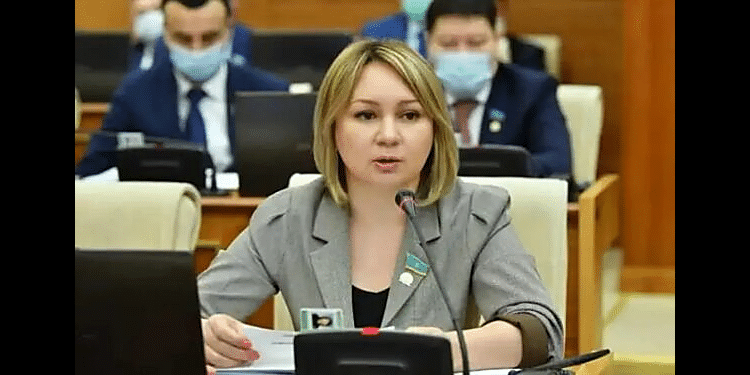
Kazakhstan’s Victims Compensation Fund has collected more than 9.3 billion tenge ($20.6 million) over eight years but paid out only about 9% of that amount to crime victims. Snezhanna Imasheva, a member of the Kurultai, Kazakhstan’s unicameral parliament, has proposed increasing compensation payments or expanding eligibility. On November 4, Imasheva submitted a parliamentary inquiry to the prosecutor general and the ministers of internal affairs and finance. She cited Finance Ministry figures showing that around 5,500 victims had received just over 855 million tenge ($1.9 million) by July 2026, while approximately 8.5 billion tenge ($18.8 million) remained in the fund. The fund was established in 2018, but compensation payments did not begin until July 2020. On November 4, Imasheva submitted a parliamentary inquiry to the prosecutor general and the ministers of internal affairs and finance. She cited Finance Ministry figures showing that around 5,500 victims had received just over 855 million tenge ($1.9 million) by July 2026, while approximately 8.5 billion tenge ($18.8 million) remained in the fund. The fund was established in 2018, but compensation payments did not begin until July 2020. Imasheva called for an assessment of whether victims are aware of their right to compensation. The fund provides one-time payments to victims of certain crimes, including minors subjected to sexual violence, victims of human trafficking or torture, and people who suffered serious bodily harm or contracted the human immunodeficiency virus as a result of a crime. In cases involving a victim’s death, eligible relatives can receive compensation. Payments currently range from 129,750 to 216,250 tenge (286–477). The amounts are tied to Kazakhstan’s monthly calculation index (MCI), a government-set benchmark used to calculate fines and benefits, among other payments. The law provides compensation of 30, 40, or 50 MCI. These multiples have remained unchanged since the system was introduced, although the value of the index in tenge is adjusted annually. One source of revenue is mandatory contributions imposed on convicted offenders, ranging from 5 to 30 MCI depending on the severity of the crime. Imasheva also called for an examination of why so little of the money paid to victims has been recovered from offenders and others legally required to repay it. Victims can apply for compensation within three years of being formally recognized as victims in a criminal case. Under the law, the authority handling the case must review an application within 10 calendar days of its registration. Payment must then be made within 10 calendar days after the list of recipients is submitted to the authority responsible for disbursement. In practice, however, Imasheva said the process can take up to four months. She proposed automating applications and payments, potentially through a digital platform operated by the Committee on Legal Statistics and Special Records under the Prosecutor General’s Office.

School Bullying in Kazakhstan: Prosecutors Propose New Deputies to Protect Students from Violence

In schools across Kazakhstan’s Zhambyl region, children told visiting inspectors about beatings, extortion, and threats. Some described incidents involving brass knuckles and stun guns. But reports from those same schools recorded no bullying. The scale of the problem was exposed in October 2025, when Kazakhstan’s commissioner for children’s rights, Dinara Zakiyeva, published the findings of inspections across the region. An interagency team identified more than 200 cases of bullying and extortion in the Baizak and Zhambyl districts alone. During the first nine months of that year, 14 suicides involving minors were recorded in the region. Prosecutors have introduced the position of deputy principal for legal affairs at 190 schools in the region. They say the initiative has helped reduce crime involving minors. The Prosecutor General’s Office now wants to extend it nationwide. But the proposal raises a question about how schools handle violence. Children do not always trust adults, teachers often prefer to resolve conflicts themselves, and school administrators may see public disclosure as a threat to their institutions’ reputations. Why Bullying Goes Unreported In November 2024, regional prosecutor Nurgalym Abdirov reported that recorded offenses counted against schools in performance rankings, giving administrators an incentive to conceal incidents. Following intervention by prosecutors, this indicator was removed from the evaluation system. But changing reporting criteria proved easier than changing school practices. In the fall of 2025, inspections again uncovered violence that children had disclosed only after outside specialists intervened. Similar incidents have been uncovered in other regions. In the Atyrau region, five school principals were held accountable for concealing beatings and other unlawful acts committed by older students. Kazakhstan introduced a legal definition of bullying in 2022, and administrative liability for bullying took effect in 2024. In 2025, authorities registered 438 administrative cases and held 272 people accountable. By October 22, 2026, authorities had received more than 2,000 reports of bullying that year. A study published in 2013 by the United Nations Children’s Fund found that 66% of children surveyed had witnessed, experienced, or perpetrated school violence or discrimination during the preceding year. The 2022 Programme for International Student Assessment found that 12% of students in Kazakhstan did not feel safe in their classrooms, while 14% felt unsafe in school hallways, cafeterias, and restrooms. Both figures exceeded the averages for countries belonging to the Organisation for Economic Co-operation and Development. The gap between official reports and children’s experiences was also evident during an independent evaluation of the DosbolLike anti-bullying program, introduced in all schools and colleges across the country in September 2025. The findings, reported in August 2026, showed that students often denied that bullying occurred when completing questionnaires but described harassment during group discussions. Some said teachers or psychologists had asked them to redo their questionnaires. Researchers also examined whom children were willing to trust with reports of violence. Nearly 90% of respondents named their homeroom teacher, 55.3% named their parents, and 18.4% selected the 111 child-protection helpline. None of the students surveyed on this question selected the police. One...

Kazakhstan to Increase Legal Protections for Investors

Kazakhstan plans to increase legal protections for investors by appointing dedicated investment prosecutors in the regions and major cities and creating a platform under the Prosecutor General’s Office to resolve disputes between investors and state agencies before they reach court. The measures were announced by Vice Minister of National Economy Arman Kassenov during a briefing in Astana as part of efforts to improve the country’s investment climate and attract more foreign capital. “To achieve this, a special platform for pre-trial settlement of disputes will be created under the Prosecutor General’s Office,” Kassenov said. “This mechanism is intended to help resolve disagreements quickly without lengthy court proceedings.” Investment prosecutors will be appointed at the regional level. Their responsibilities will include assisting investment projects, protecting investors’ rights, and providing legal assistance during major projects. Kazakhstan consists of 20 administrative territorial units: 17 regions and the cities of republican significance Astana, Almaty, and Shymkent. The initiative follows the adoption of amendments by Kazakhstan’s parliament that expand the role of the Prosecutor General in protecting investors’ rights. Under the new legislation, the Prosecutor General will also act as the country’s Investment Ombudsman, responsible for safeguarding the legal interests of domestic and foreign investors. Regional investment prosecutors are expected to be drawn from existing regional prosecutors and equivalent prosecutors in the three cities of republican significance. The government is also seeking to expand its international investment promotion work. Kazakhstan plans to open overseas representative offices in major financial and investment centers to attract investors and assist potential projects at an early stage. Kassenov said an investment service has already been established within Baiterek National Managing Holding JSC. It comprises four sector-specific investment directorates responsible for preparing projects and transferring them to the national investment promotion agency, Kazakh Invest. A new investor support center, Kazakhstan Investment House, will also be established within Kazakh Invest. According to Kassenov, the center will operate as a one-stop shop for investors throughout project implementation, helping reduce administrative barriers and speed up decision-making. The government is also working with the private sector to identify investment opportunities with strong import-substitution and export potential. Kazakhstan also plans to expand the use of its National Digital Investment Platform, which allows authorities to monitor investment projects in real time, track deadlines, and address emerging issues more efficiently. The reforms are part of Kazakhstan’s strategy to attract much higher levels of investment in the coming years. Earlier, authorities announced plans to nearly triple investment in the economy by 2029 as part of efforts to accelerate economic growth and diversification.