Kyrgyzstan’s NISI Director on Reform, Red Tape and a Bigger Global Role
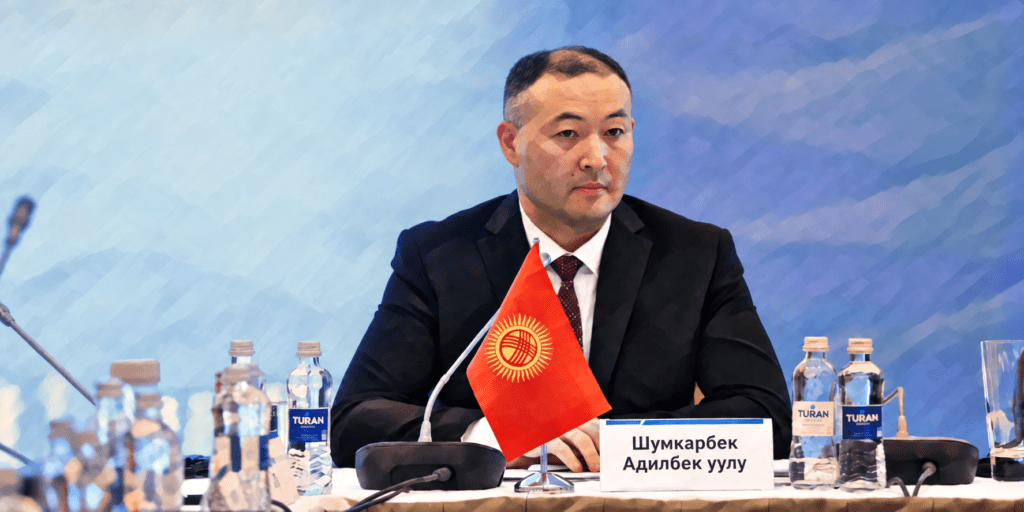
On September 15, 2026, The Times of Central Asia spoke with Shumkarbek Adilbek uulu, director of the National Institute for Strategic Initiatives (NISI) under the President of the Kyrgyz Republic. Established in its current form in 2024 through the merger of two institutes, NISI provides strategic advice to the country's leadership and develops proposals to reduce bureaucracy. Adilbek uulu discusses Kyrgyzstan's priorities for its 2027–2028 UN Security Council term and its approach to climate diplomacy. He also outlines NISI's work on economic reform and digital public services, including efforts to help smaller businesses grow. Some views expressed in this interview reflect Adilbek uulu's personal opinions rather than the official position of NISI or the Kyrgyz government, as he notes in his answers. The English text has been lightly edited for readability. TCA: What have been your main priorities since becoming director, and how did you come to join NISI? Adilbek uulu: We're focused on practical ways to drive sustainable economic growth at home: a smaller, simpler government, more room for business, and productive relations abroad that feed into our domestic agenda. By protecting our national interests, our diplomats support the domestic goal of building up the Kyrgyz Republic, nation-building if you will, without getting caught up in other countries' ambitions. I joined NISI in 2025 to help break through decades of bureaucratic gridlock, a real drag on economic development. Minister Ayaz Baetov brought me in. At the time, he was the Minister of Justice, Deputy Chairman of the Cabinet of Ministers, and NISI's director, all at once. He told me NISI's job was to give the Presidential Administration strategic advice that's pragmatic and rooted in Kyrgyz insight. I agreed and have been working at it since. That's our core job. Interestingly, Minister Baetov was just named Kyrgyzstan's Permanent Representative to the UN in New York. The significance of the contribution Mr. Baetov has made to the effort to reduce bureaucracy remains to be fully assessed. I am confident it will be rated highly, as we will feel the positive impact of many of his ideas and decisions in the future. TCA: Kyrgyzstan was recently elected a non-permanent member of the UN Security Council for 2027–2028. Will NISI be more focused on foreign policy now? Adilbek uulu: With Kyrgyzstan on the Security Council, the government will be pulled into issues outside our usual remit, so NISI will be in even closer contact with the Ministry of Foreign Affairs. To be clear, I don't speak for the Foreign Ministry. I help shape strategy for our diplomats, businesspeople, and policymakers, and I track what's happening overseas and in our neighborhood. UNSC issues will be high on our agenda, and we'll support the MFA on long-term thinking. As one example, I just got back from the China Economic and Social Forum in Hangzhou, China. The forum focused on the environment and natural resources. I'll be putting together a memo for the Office of the President with our observations. TCA: How does climate vulnerability...