Kazakhstan Launches QaJET Investment Platform for Just Energy Transition
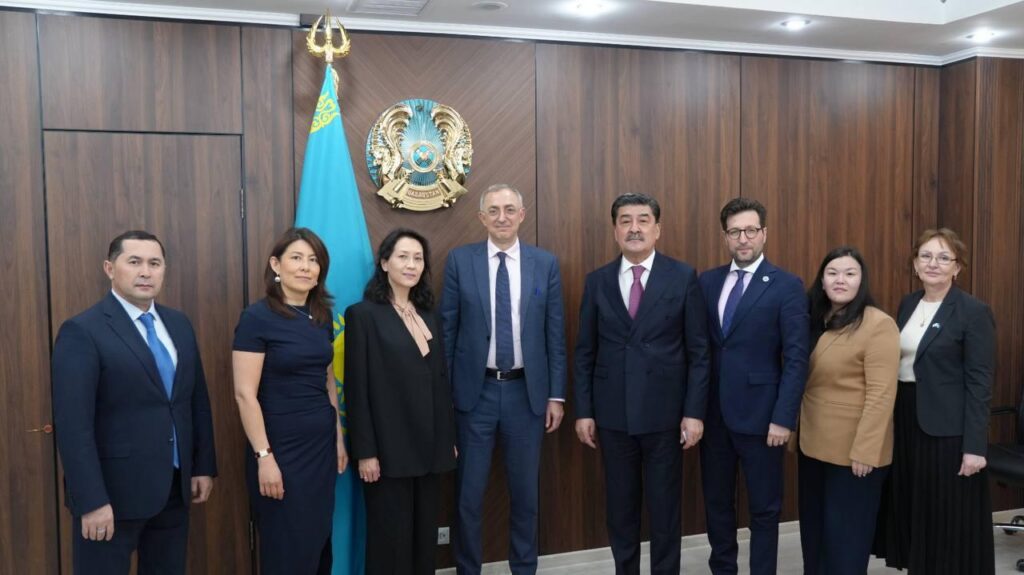
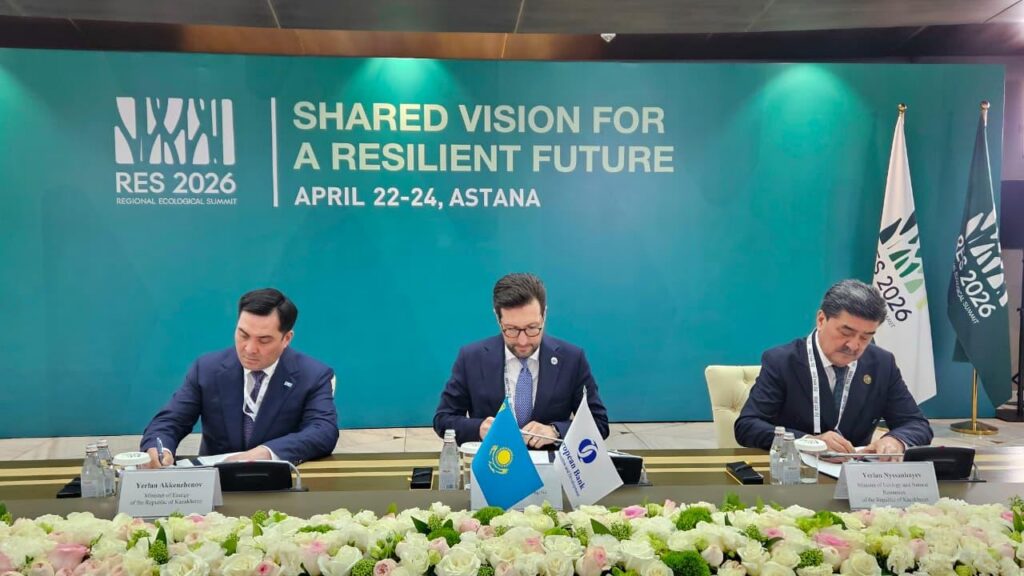
Kazakhstan has announced the launch of the QaJET (Just Energy Transition) investment platform, supported by the European Bank for Reconstruction and Development (EBRD), to attract international financing and accelerate the decarbonization of its economy. A corresponding memorandum was signed on April 23 during the Regional Environmental Summit in Astana. Signatories included Energy Minister Yerlan Akkenzhenov, Minister of Ecology and Natural Resources Yerlan Nysanbayev, and EBRD Managing Director for Central Asia and Mongolia Hüseyin Özhan. The QaJET platform reflects Kazakhstan’s ambition to accelerate the transition to clean energy through a large-scale expansion of renewable energy capacity. According to current plans, the country aims to commission 10 GW of new green capacity by 2035. According to EBRD estimates, achieving these targets will require approximately $20 billion in investment from both public and private sources. This is expected to reduce greenhouse gas emissions by more than 20 million tonnes annually, equivalent to roughly 7% of the country’s energy-related emissions. The creation of the platform is of strategic importance for Kazakhstan, whose economy remains highly carbon-intensive and heavily dependent on coal-fired power generation. At the request of the Kazakh government, the EBRD participated in developing the QaJET concept and will continue to coordinate its implementation with national and international partners. The platform is also intended to support Kazakhstan’s international climate commitments, including achieving carbon neutrality by 2060 and reducing greenhouse gas emissions by up to 25% by 2030 compared to 1990 levels. QaJET is expected not only to reduce emissions but also to strengthen energy security, enhance economic competitiveness, and promote the development of local high-tech manufacturing in the renewable energy sector. Key areas of cooperation within the platform include expanding renewable energy capacity, modernizing power grids and energy storage systems, electrifying businesses and households, and supporting a just transition, technology transfer, and the development of research and innovation capacity. Authorities expect QaJET to become the central mechanism for coordinating climate finance, bringing together international financial institutions, donors, private investors, and the government to accelerate Kazakhstan’s energy transition.