• KGS/USD = 0.01144 0%
  • KZT/USD = 0.00205 0%
  • TJS/USD = 0.10441 0.1%
  • UZS/USD = 0.00008 0%
  • TMT/USD = 0.28571 0%
  • KGS/USD = 0.01144 0%
  • KZT/USD = 0.00205 0%
  • TJS/USD = 0.10441 0.1%
  • UZS/USD = 0.00008 0%
  • TMT/USD = 0.28571 0%
  • KGS/USD = 0.01144 0%
  • KZT/USD = 0.00205 0%
  • TJS/USD = 0.10441 0.1%
  • UZS/USD = 0.00008 0%
  • TMT/USD = 0.28571 0%
  • KGS/USD = 0.01144 0%
  • KZT/USD = 0.00205 0%
  • TJS/USD = 0.10441 0.1%
  • UZS/USD = 0.00008 0%
  • TMT/USD = 0.28571 0%
  • KGS/USD = 0.01144 0%
  • KZT/USD = 0.00205 0%
  • TJS/USD = 0.10441 0.1%
  • UZS/USD = 0.00008 0%
  • TMT/USD = 0.28571 0%
  • KGS/USD = 0.01144 0%
  • KZT/USD = 0.00205 0%
  • TJS/USD = 0.10441 0.1%
  • UZS/USD = 0.00008 0%
  • TMT/USD = 0.28571 0%
  • KGS/USD = 0.01144 0%
  • KZT/USD = 0.00205 0%
  • TJS/USD = 0.10441 0.1%
  • UZS/USD = 0.00008 0%
  • TMT/USD = 0.28571 0%
  • KGS/USD = 0.01144 0%
  • KZT/USD = 0.00205 0%
  • TJS/USD = 0.10441 0.1%
  • UZS/USD = 0.00008 0%
  • TMT/USD = 0.28571 0%

Viewing results 1 - 6 of 97

Kyrgyzstan Hosts Summit of Organization of Turkic States

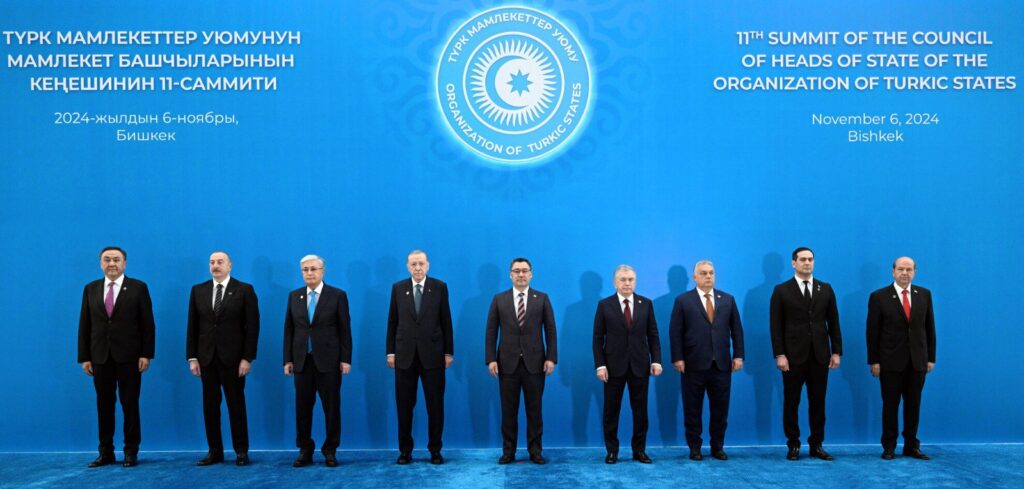
On November 6, Bishkek hosted the 11th Summit of the Council of Heads of State of the Organization of Turkic States (OTS). Chaired by Kyrgyzstan's President Sadyr Japarov and themed “Empowering the Turkic World: Economic Integration, Sustainable Development, Digital Future, and Security for All,” the summit was attended by President of Azerbaijan Ilham Aliyev, President of Kazakhstan Kassym-Jomart Tokayev, President of Turkey Recep Tayyip Erdoğan, President of Uzbekistan Shavkat Mirziyoyev, and Viktor Orbán, the Prime Minister of Hungary (observer state of the OTS). At the summit, the OTS chairmanship passed from Kazakhstan to Kyrgyzstan. In his speech, Kazakhstan's Tokayev summarized the results of his country's chairmanship of the OTS. Tokayev noted that Kazakhstan's chairmanship of the Organization of Turkic States was held under the motto "TURKTIME!" with special attention paid to strengthening the unity of the Turkic world and expanding comprehensive cooperation. Tokayev said that over the past 10 years, economic ties between the OTS members have strengthened significantly, and their trade volume exceeded $45 billion in 2024. According to Tokayev, strengthening transport and logistics ties within the OTS is a priority task. “It is necessary to fully utilize the potential of the Middle Corridor, which is strategically important for the further economic development of the Turkic world. Therefore, it seems necessary to agree to ensure the sustainable development of cargo transportation along this route.” Addressing the summit as the new chairman of the OTS, Japarov emphasized that the Organization has the unique potential to achieve high goals, strengthen its position in the international arena, intensify mutually beneficial cooperation, and create favorable conditions for the prosperity of its people. According to Japarov, during its chairmanship of the OTS, Kyrgyzstan will make every effort to develop economic partnership, sustainable development, digital integration, and strengthening common security. To expand trade and economic cooperation, negotiations will be initiated on intergovernmental agreements in services, finance, the creation and support of common labor markets, digital and e-commerce, intellectual property, agriculture, technology, innovation, tourism, and education. Japarov supported signing the Agreement on Partnership in the Field of Digital Economy, which will facilitate digital trade between the Turkic states. Joint measures to combat the challenges associated with climate change and environmental pollution will be one key area of Kyrgyzstan's chairmanship. According to Japarov, over the past 70 years, the area of glaciers in Kyrgyzstan has decreased by 16%. These glaciers are a source of drinking water for Kyrgyzstan and the entire Central Asian region. “Considering that our region is among the most vulnerable to global warming, by 2100, we may lose more than half of the glaciers,” the Kyrgyz president warned, adding that “we will develop cooperation in the implementation of joint green projects in the field of renewable energy, forest restoration, the introduction of resource-saving and energy-efficient technologies, the protection of glaciers and biological species, as well as the fight against land degradation and desertification.” Addressing the summit, Turkey's Erdoğan said: “I wholeheartedly believe that the decisions we will make today to achieve the targets we...

Kazakhstan and Uzbekistan Prioritize Cooperation Between Regions

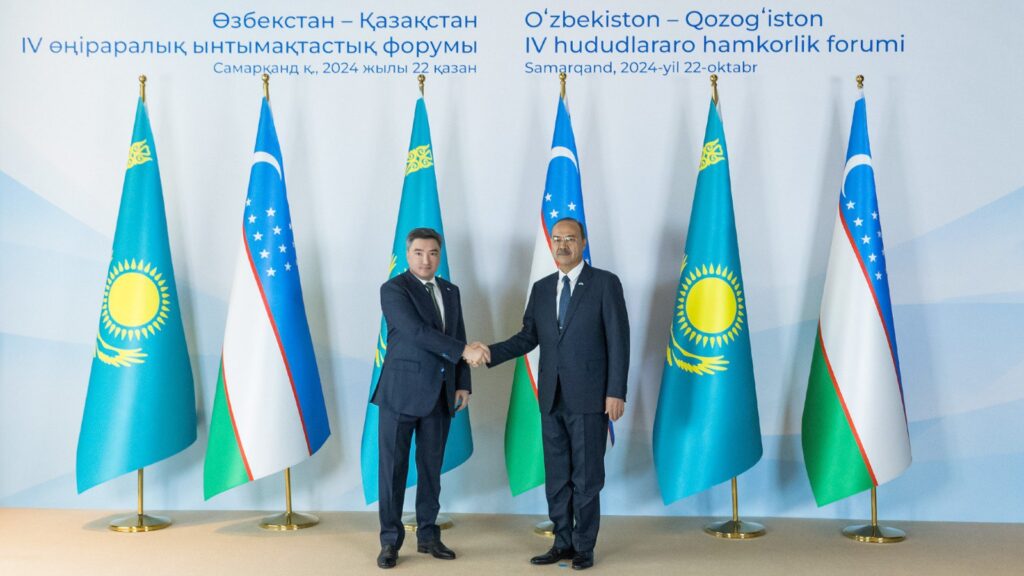
On October 22, the 4th Interregional Forum, “Uzbekistan-Kazakhstan,” was held in Samarkand, Uzbekistan. The forum addressed issues such as increasing bilateral trade turnover, developing industrial cooperation, and enhancing collaboration in the water, energy, transit, and transport sectors. Speaking at the forum, Uzbekistan’s Prime Minister, Abdulla Aripov, emphasized that developing cooperation between the regions of Uzbekistan and Kazakhstan is a priority in relations between the two countries. Aripov stated that “Over the past seven years, trade turnover between Uzbekistan and Kazakhstan has grown almost 2.5-fold, reaching $4.4 billion last year. Today, more than 1,000 enterprises with Kazakh capital operate in Uzbekistan. Border regions have established direct and close ties with each other — the Republic of Karakalpakstan [in Uzbekistan] with the Mangistau region [in Kazakhstan], the Tashkent region with the Turkestan region, and the Navoi region with the Kyzylorda region. At the same time, this great potential has yet to be realized.” Kazakhstan’s Prime Minister, Olzhas Bektenov, meanwhile, announced at the forum that Kazakhstan is ready to increase exports to Uzbekistan by over $550 million, offering 40 types of high-value-added Kazakh products. Uzbekistan is Kazakhstan’s main trading partner in Central Asia. From January-August 2024, bilateral trade amounted to $2.5 billion, with more than 50% of Uzbekistan’s trade passing through Kazakhstan in transit. The forum paid special attention to the development of industrial cooperation, including 74 joint projects with a total investment volume of $3.4 billion and the creation of 14,600 jobs. Of these, 65 enterprises will be established in Kazakhstan, creating 13,600 new jobs. Examples of Kazakh-Uzbek industrial cooperation include the manufacture of Chevrolet Onix cars in Kostanay (Kazakhstan), a plant for the production of household appliances in Saran (Kazakhstan), sewing, spinning, and weaving factories in the Shymkent and Turkestan regions (Kazakhstan), and the production of autoclaved aerated concrete in Angren (Uzbekistan). Kazakhstan and Uzbekistan are also working on establishing the International Center for Industrial Cooperation “Central Asia,” which will offer “one-stop shop” for services and tax and customs for entrepreneurs from both countries.

Central Asia: Working Together on Border Landscapes

Talk of closer cooperation among Central Asian countries has ebbed and flowed as far back as the period after independence from Soviet rule in the early 1990s. The goal of a more unified region is a work in progress, though one promising area of collaboration is a plan to restore and protect damaged ecosystems in border regions. The first regional meeting on the topic, held this month in Tashkent, Uzbekistan’s capital, brought together government officials from the host nation as well as Kazakhstan, Kyrgyzstan, Tajikistan and Turkmenistan. The portfolios of the delegates were nature preservation, protected areas, emergencies, agriculture, and forestry. They talked about coordinating on wildfire alert systems in cross-border areas, erosion control, tree-planting and nature-oriented tourism in protected areas and other sites shared by Central Asia countries, according to the Regional Environmental Centre for Central Asia, a non-profit group based in Almaty, Kazakhstan that promotes regional dialogue on the environment. The group, which organized the Tashkent meeting, was created in 2001 by the five Central Asian states as well as the European Union and the United Nations Development Programme. The initiative is supported by a $256 million World Bank program to restore degraded landscapes in the region. The World Bank has noted big progress toward poverty alleviation and economic growth by Central Asian countries in the last decades. However, it has cautioned that oil and gas extraction in Kazakhstan, Uzbekistan, and Turkmenistan have taken a heavy environmental toll, while soil erosion and water scarcity have accompanied land development in Kyrgyzstan and Tajikistan. Arid conditions exacerbated by climate change and inefficient management threaten transboundary water resources, a problem that is becoming increasingly severe. “A key example of tragic impacts on livelihoods and health of communities in Kazakhstan and Uzbekistan and across the region are massive sand and salt storms originating from the land areas once covered by the Aral Sea,” the Regional Environmental Centre for Central Asia said. It cited an international disaster database as saying more than 10 million people in Central Asia have “suffered from land degradation-related disasters” since 1990, inflicting damages estimated at around $2.5 billion. Central Asian countries also seek to collaborate on early warning systems and other emergency precautions as they face a variety of natural hazards, including floods, landslides and droughts. Supported by United Nations agencies, the heads of the national emergency departments of Kyrgyzstan, Kazakhstan, Tajikistan and Uzbekistan convened in August at a lakeside resort town in northern Kyrgyzstan. There, they shared information and experiences.

Countries of Central Asia Team up as Threat of Natural Disasters Grows

Central Asia is vulnerable to a panoply of natural hazards: Floods, landslides, droughts, sandstorms, avalanches and earthquakes. Countries in the region increasingly seek to collaborate on early warning systems and other emergency precautions, especially since disasters can spill across borders and because the effects of climate change are intensifying. To that end, the heads of the national emergency departments of Kyrgyzstan, Kazakhstan, Tajikistan and Uzbekistan met last week in Cholpon-Ata, a lakeside resort town in northern Kyrgyzstan whose attractions include ancient petroglyphs showing deer, leopards and hunting scenes. Turkmenistan´s flag – green expanse, red stripe with designs and white crescent and stars - was on display in the conference hall, though official announcements did not mention the presence of any delegation from the reclusive Turkmen government. The goal was to share information and experience, and deepen cooperation among the emergency agencies of those Central Asian countries, said Maj. Gen. Boobek Azhikeev, Kyrgyzstan’s minister of emergency situations. The five nations, which have a total of approximately 75 million people and encompass four million square kilometers, face growing risks from natural disasters, and the region has been warming faster than the global average according to a report released in May by the U.N. agency for the coordination of disaster risk reduction and the U.N. Development Programme. The two U.N. bodies, which helped to support the Central Asia meeting on the shores of Kyrgyzstan’s Lake Issyk-Kul on Aug. 15, also mentioned human-made hazards, such as industrial accidents, chemical waste facilities in densely populated areas, and severe air pollution in major cities in all the countries. “Many disaster risk management systems are still reactive, not proactive. Early warning processes are often fragmented, and poorly integrated into countries' development strategies and policies for risk-informed decision-making,” the U.N. agencies said. “There is a lack of anticipation of new and emerging risks, insufficient monitoring and forecasting, and limited financial and technological support. Early warning communication and dissemination are often unclear, especially for the most vulnerable.” The private sector and media can also get more involved in ways of reducing the risk from disasters, they said. The U.N. agencies also noted progress, saying Tajikistan had taken the lead in Central Asia in rolling out an early warning system focused on monitoring, forecasting, communication and other measures. Earlier this month TCA reported that the head of Tajikistan’s committee for emergency situations and civil defense, Rustam Nazarzada, stated that the economic damage caused by natural disasters in the country has amounted to over $12 million in this year alone. Additionally, Uzbekistan is updating an early warning system in the populous, economically important Ferghana valley that will promptly disseminate weather forecasts. Central Asian countries have sought to coordinate on environmental issues in the past, sometimes with mixed results. But the sense of urgency is growing. Earlier this year, Kyrgyzstan was among countries that sent aid to Kazakhstan after floods there that the Kazakh president described as the worst natural disaster in 80 years. Kazakhstan, in turn, sent tons of humanitarian aid to Kyrgyzstan after...

Sixth Consultative Meeting of Heads of Central Asian States Takes Place in Astana

On August 9, 2024, Astana will host the Sixth Consultative Meeting of Heads of State of Central Asia, bringing together the leaders of Kazakhstan, Kyrgyzstan, Tajikistan, Turkmenistan, and Uzbekistan. This event has become an important platform for discussing critical issues of regional cooperation, strengthening economic ties, and addressing everyday challenges. This year’s guests of honor were the President of Azerbaijan, Ilham Aliyev, and the head of the UN Regional Center for Preventive Diplomacy for Central Asian countries, Kakha Imnadze. The main topics of this year's meeting will be economic cooperation, regional security and cooperation, water resources, and energy. Special attention will be paid to water resources management, which is critical to the region's sustainable development. The leaders will also discuss strengthening trade and economic ties, which has become especially important given the growing indicators of mutual trade, which have grown 2.5 times over the past ten years, reaching almost $11 billion. Another important topic will be ensuring regional stability, including fighting terrorism and extremism, and developing joint measures to strengthen border security. The summit is also expected to adopt the "Strategy for the Development of Regional Cooperation in Central Asia-2024", which aims to expand the five-party interaction and strengthen the international role of the region. These consultative meetings of Central Asian leaders, which began in 2018, have become an important tradition and serve as a constructive platform to discuss and address common challenges. The 2024 meeting emphasizes Central Asia's growing importance in the international arena and the readiness of the region's countries to address current challenges and seize opportunities for joint development jointly. On August 9, 2024, a meeting of Central Asian foreign ministers was also held in Astana. Kazakh Foreign Minister, Murat Nurtleu opening the meeting, emphasizing that the event demonstrates the strong commitment of Central Asian countries to strengthening cooperation in all spheres, and that the region's governments have all made significant progress in economic and political interaction in recent years. The total GDP of the Central Asian countries now stands at about $450 billion, and mutual trade has grown by 80% over the past five years, reaching $11 billion. The meeting focused on strengthening regional cooperation in the key areas of energy, transportation, logistics, industry. Kazakhstan proposed developing a long-term comprehensive mechanism of collaboration in the area of water resources and hydropower that would consider the interests of all countries in the region. On the same day, the summit, Central Asia + Japan was to be attended by Japanese Prime Minister Fumio Kishida; however, Kishida cancelled his visit to Kazakhstan due to a powerful earthquake which struck off the coast of Japan.

Uzbek-Kyrgyz Expert Council Established to Support Joint Projects

Two state bodies affiliated to the governments of Uzbekistan and Kyrgyzstan have established the Uzbek-Kyrgyz Expert Council. The Council, an initiative between the Institute for Strategic and Interregional Studies under the President of Uzbekistan and the National Institute for Strategic Initiatives under the President of the Kyrgyz Republic, was designed to support the high-level dialogue between the two countries. The Council will pay particular attention to developing industrial, technological, cultural, and humanitarian cooperation between Kyrgyzstan and Uzbekistan. It will also focus on promoting the initiatives of the heads of the two states, including the planned construction of the China-Kyrgyzstan-Uzbekistan railway and water and energy cooperation in the context of joint construction of the Kambarata hydropower plant (HPP)-1 in Kyrgyzstan. These initiatives will have a multiplier effect on developing the economies of all countries in the region.