• KZT/USD = 0.00225
  • TJS/USD = 0.10810
  • UZS/USD = 0.00009
  • TMT/USD = 0.29760
  • KZT/USD = 0.00225
  • TJS/USD = 0.10810
  • UZS/USD = 0.00009
  • TMT/USD = 0.29760
  • KZT/USD = 0.00225
  • TJS/USD = 0.10810
  • UZS/USD = 0.00009
  • TMT/USD = 0.29760
  • KZT/USD = 0.00225
  • TJS/USD = 0.10810
  • UZS/USD = 0.00009
  • TMT/USD = 0.29760
  • KZT/USD = 0.00225
  • TJS/USD = 0.10810
  • UZS/USD = 0.00009
  • TMT/USD = 0.29760
  • KZT/USD = 0.00225
  • TJS/USD = 0.10810
  • UZS/USD = 0.00009
  • TMT/USD = 0.29760
  • KZT/USD = 0.00225
  • TJS/USD = 0.10810
  • UZS/USD = 0.00009
  • TMT/USD = 0.29760
  • KZT/USD = 0.00225
  • TJS/USD = 0.10810
  • UZS/USD = 0.00009
  • TMT/USD = 0.29760
24 September 2026

Viewing results 1 - 6 of 44

Kazakhstan Abandons Universal Income Declaration Plan

Kazakhstan Scraps Universal Tax Declarations Amid Public Concerns In a surprising move, the Kazakh government has proposed canceling the universal tax declaration system set to take effect in 2025. The decision, aimed at alleviating public anxiety amid worsening economic conditions, will exempt over 90% of the population from filing declarations. Experts argue that this adjustment is necessary and practical, as the reform would otherwise add unnecessary strain on taxpayers without significantly benefiting state revenues. Public Backlash and Policy Reassessment The Universal Declaration initiative was intended to include approximately 8 million additional citizens in 2025, encompassing private sector employees, pensioners, and students. However, widespread public concern about the burden on taxpayers and tax authorities prompted a reevaluation. Finance Minister Madi Takiyev announced the exemption on November 19, citing the country's advanced digital infrastructure, which already tracks key financial data. Prime Minister Olzhas Bektenov echoed these sentiments, directing the Ministries of Finance, National Economy, and Justice to draft legislative amendments within three days. He emphasized that the reform had “caused concern of the population, which was brought to the attention of the head of state.”  He added that a widespread income declaration is unnecessary because the databases of state agencies in Kazakhstan are "highly digitized." Streamlined Tax Obligations The revised approach retains declaration requirements for specific groups, including: Citizens with assets abroad. Individuals making significant purchases (exceeding 74 million KZT, or approximately $149,000, in 2024). Those receiving income are subject to independent taxation. Voluntary declarations will remain an option for all citizens. A Phased Reform The universal declaration system began in 2021 and was implemented in stages. Initially, it targeted government officials and their spouses. The requirement extended to public sector employees and the quasi-public sector in subsequent phases. By 2024, business leaders, entrepreneurs, and their spouses were included. The final stage, which aimed to include the broader population, faced criticism for being outdated in the digital era. President Kassym-Jomart Tokayev acknowledged this, stating, “It is planned that about 8 million more people will submit declarations next year. However, we should consider that the concept of universal income declaration was adopted 14 years ago. During this time, the country has made significant progress in digitalization and fintech. Databases of various government agencies have been integrated. Financial and tax control has been strengthened. Given these large-scale changes, the question arises as to whether it is advisable for citizens falling under the fourth and final stage to submit declarations. The government needs to work out a solution to this.” Expert Analysis Political scientist Gaziz Abishev highlighted the effectiveness of the reform's earlier stages, which targeted those most likely to influence public funds or earn significant income. “The first three stages have already included bureaucrats, civil servants, quasi-public sector employees, and businesspeople. Everyone who manages public funds or earns a considerable income within Kazakhstan’s economy has already been required to report and will continue to submit declarations,” Abishev explained. The fourth stage, set to include around 8 million additional citizens, drew criticism for its lack...
Uzbekistan Shares Rehabilitation Model for Returnees at UN Event

On November 11, 2024, a high-level event titled “Effective Rehabilitation and Reintegration of Returnees from North-Eastern Syria – Uzbekistan’s Experience: From Global to Local” took place at the UN Headquarters in Geneva. The event highlighted Uzbekistan’s successful approach to rehabilitating and reintegrating individuals returning from conflict zones, particularly through the work of the Regional Expert Council, established in 2024 at the initiative of President Shavkat Mirziyoyev. Vladimir Voronkov, head of the UN Counter-Terrorism Office, commended Uzbekistan’s efforts. “UN member states urgently need to develop strategies for rehabilitation and reintegration based on the experience of Uzbekistan. The Tashkent model aims to ensure the rights and dignity of the individual, which is important in these processes,” Voronkov stated. Khalid Koser, Director of the Global Community Engagement and Resilience Fund, described Uzbekistan’s model as a roadmap for other nations. He emphasized that the approach has proven to be effective, humane, and respectful of human rights in returning citizens from conflict zones. A focal point of the conference was the Regional Expert Council on Rehabilitation and Reintegration, established under the UN Office of Counter-Terrorism. The Council, based in Tashkent, aims to bring together Central Asian experts to share their knowledge and develop programs to assist reintegrated individuals in rebuilding their lives. “I am convinced that the Council, established in Tashkent at the initiative of the President of Uzbekistan, will contribute to strengthening the exchange of best practices and lessons learned in this area,” said Natalia Gherman, Head of the UN Security Council Counter-Terrorism Committee Executive Directorate. The Times of Central Asia has previously reported that Kazakhstan, Kyrgyzstan, Tajikistan, and Uzbekistan are collectively improving support systems for women and children returning from conflict zones, such as Iraq and Syria.

Tajikistan Mobilizes Civil Servants for Door-to-Door Anti-Radicalism Explanatory

As reported, officials and civil servants in Tajikistan have been tasked with going door-to-door and holding explanatory talks with the population on radicalism and extremism. In the southern Khatlon region, 1,800 civil servants, including teachers, healthcare workers, and local council members, have been assigned to carry out these talks. Officials claim the primary goal of these conversations is to prevent young people from becoming radicalized. During the meetings, they discuss topics like promoting traditional women’s clothing instead of hijabs, which authorities associate with radicalism. They also ask about relatives living abroad who might be at risk of becoming extremists and encourage young people to join the army. In the first seven months of this year, campaign groups visited over 620,000 houses. At the same time, campaign groups film their interactions with people and publish reports on social networks. Critics of the government in this regard claim that officials' door-to-door visits are nothing more than intrusions into people’s homes and interferences in their personal affairs. However, officials deny this; they say that the chosen method only allows for identifying the “most vulnerable” families and is necessary to combat radicalism among young people. “The issue of radicalization in the region is alarming, especially the joining of young people to various extremist movements. There are many cases,” said Davlatali Said, the governor of Khatlon region.

CSTO to Finalize Tajik-Afghan Border Security Plan by End of Year

The program by the Collective Security Treaty Organization (CSTO) to strengthen the Tajik-Afghan border will be adopted by the end of 2024, the Secretary-General of the CSTO, Imangali Tasmagambetov, announced. “Continuous work is underway to develop and implement specific measures to strengthen our security space. The most striking example is the CSTO Targeted Interstate Program to Strengthen the Tajik-Afghan Border, scheduled for adoption this year,” he said. According to him, the CSTO is characterized by open and honest discussions of all current issues, without exception, in the mode of constructive and “soft” alliance and decision-making strictly in compliance with the principle of consensus. “And in terms of fundamental issues of mutual support and collective security, we act exclusively consolidated,” Tasmagambetov said. “Our common task for the foreseeable future is to strengthen the role and significance of the organization in the changing system of international relations while maintaining a commitment to established principles and priorities and at the same time corresponding to the modern context of regional and global security,” he added. The first decision to strengthen the Tajikistan-Afghanistan border was made in 2013. The program itself consists of three stages, the first of which is designed for five years. The state border between Tajikistan and Afghanistan is part of the southern border of the so-called CIS and post-Soviet territory. The total length of its border is 1374.2 km, of which 1184.4 km is a river border and 189.8 km is an island border.

Karakalpak Activist Loses Asylum Bid in Kazakhstan

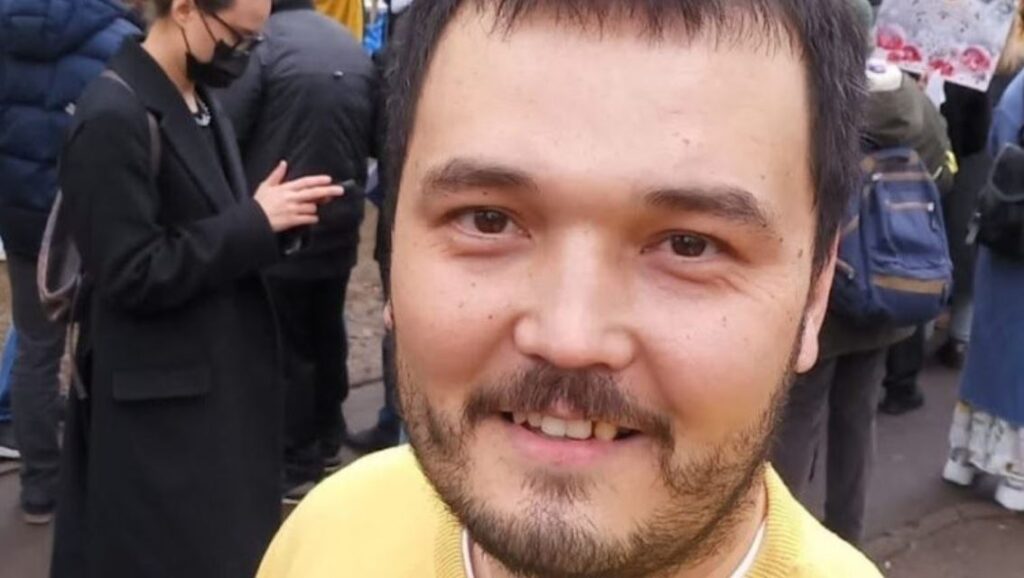
An Uzbek activist who has campaigned for the rights of people in the Uzbek region of Karakalpakstan faces possible extradition after Kazakhstan denied his asylum request, according to the activist´s supporters. Aqylbek Muratbai, who has lived in Kazakhstan for years, was arrested in February at the request of Uzbek authorities and a Kazakh commission ruled against his asylum request on Friday, his supporters said. New Kazakh regulations allow Muratbai to be moved to Uzbekistan “at any time,” according to Muratbai’s account on the X platform. His lawyer plans to appeal. Karakalpakstan is an arid, semi-autonomous area in the northwest of Uzbekistan that was the scene of deadly violence in 2022. Protesters marched in opposition to planned constitutional changes that would have removed that autonomous status, and security units used force to disperse the demonstrations. At least 21 people were killed, including 4 law enforcement officers, according to Human Rights Watch. Uzbek authorities have since prosecuted Karakalpak activists for crimes including the instigation of riots and sentenced some to long prison terms. At the same time, the government has launched an investment program to develop the long-neglected region. The Karakalpakstan question is particularly sensitive for Uzbekistan because the national constitution allows the region’s people to choose secession through a referendum. Muratbai’s camp had said that he would likely face unfair prosecution if he is extradited to Uzbekistan and that the Kazakh asylum process should take that possibility into account, even if maintaining good relations with the Uzbek leadership is also important.

Kyrgyzstan and EU Sign Enhanced Partnership and Cooperation Agreement

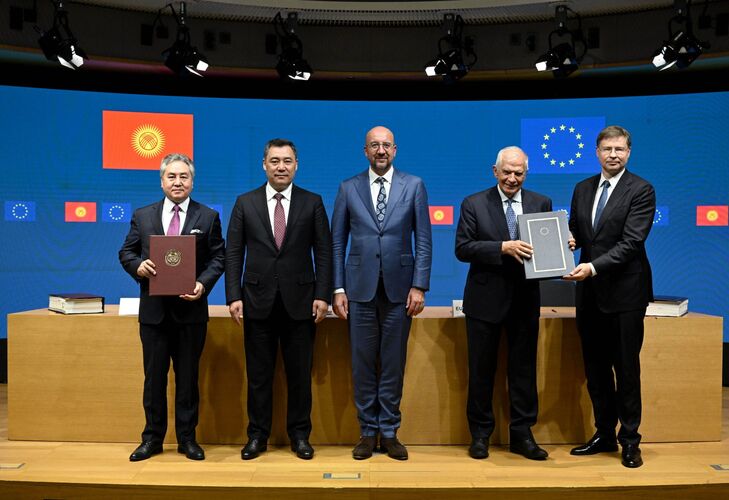
On June 25, President of the Kyrgyz Republic Sadyr Japarov met the President of the European Council Charles Michel in Brussels to discuss issues on Kyrgyzstan-EU interaction. Views were exchanged on prospects for trade and economic cooperation and the implementation of joint projects in energy, transport, rare metals, agriculture, and environmentally- friendly technologies Following the meeting, an Enhanced Partnership and Cooperation Agreement (EPCA) between the European Union and the Kyrgyz Republic was signed by the Minister of Foreign Affairs of the Kyrgyz Republic Jeenbek Kulubaev, High Representative of the European Union for Foreign Affairs and Security Policy/Vice-President of the European Commission Josep Borrell, and Executive Vice-President of the European Commission and Commissioner for Trade Valdis Dombrovskis. The new document replaces the Partnership and Cooperation Agreement (PCA) signed back in 1999. As reported by the Delegation of the European Union to the Kyrgyz Republic, the Agreement provides new legal grounds for reinforced political dialogue and deepening cooperation in areas such as trade and investment, sustainable development and connectivity, research and innovation, education, environment, and climate change, as well as rule of law, human rights, and civil society. It will also strengthen cooperation in foreign and security policy, including issues of conflict prevention and crisis management, risk reduction, cybersecurity, regional stability, disarmament, non-proliferation, arms and export control. In addition, the EPCA will create new opportunities for cooperation in critical raw materials, essential for green and digital transitions. High Representative of the European Union for Foreign Affairs and Security Policy/Vice-President of the European Commission Josep Borrell commented: “We are happy to count the Kyrgyz Republic amongst our close partners. The Enhanced Partnership and Cooperation Agreement demonstrates our steadfast commitment to strengthening and deepening our bilateral relations based on shared values and common interests in all areas of mutual benefit, reflecting new geopolitical and economic realities. We will continue working with Kyrgyzstan on further strengthening the protection of human rights and fundamental freedoms and promote cooperation with civil society which are essential pillars of an open democratic society.” Welcoming the initiative, Executive Vice-President and Commissioner for Trade Valdis Dombrovskis, announced: “This Enhanced Partnership and Cooperation Agreement marks a new chapter in the EU’s economic and trade relations with Kyrgyzstan. We have included an ambitious Trade and Sustainable Development Chapter that aims to promote fair and open competition, while also benefiting Kyrgyz consumers and SMEs. Through this Agreement, we are helping to create more opportunities for EU and Kyrgyz businesses and investors by facilitating trade flows and enhancing cooperation. We believe this partnership will contribute to the prosperity of our regions by generating new and better jobs and boosting economic development and resilience.” Since 2016, the Kyrgyz Republic has benefitted from unilateral and preferential access to the EU market through the Special Incentive Arrangement for Sustainable Development (GSP+) of the EU Generalised Scheme of Preferences. Kyrgyzstan is the EU’s third largest trading partner in Central Asia. GSP+ has contributed to an increase in EU-Kyrgyzstan trade in goods in 2023 by 116% (over 2022) reaching EUR 2.845 billion.