• KZT/USD = 0.00209
  • TJS/USD = 0.10810
  • UZS/USD = 0.00008
  • TMT/USD = 0.29850
  • KZT/USD = 0.00209
  • TJS/USD = 0.10810
  • UZS/USD = 0.00008
  • TMT/USD = 0.29850
  • KZT/USD = 0.00209
  • TJS/USD = 0.10810
  • UZS/USD = 0.00008
  • TMT/USD = 0.29850
  • KZT/USD = 0.00209
  • TJS/USD = 0.10810
  • UZS/USD = 0.00008
  • TMT/USD = 0.29850
  • KZT/USD = 0.00209
  • TJS/USD = 0.10810
  • UZS/USD = 0.00008
  • TMT/USD = 0.29850
  • KZT/USD = 0.00209
  • TJS/USD = 0.10810
  • UZS/USD = 0.00008
  • TMT/USD = 0.29850
  • KZT/USD = 0.00209
  • TJS/USD = 0.10810
  • UZS/USD = 0.00008
  • TMT/USD = 0.29850
  • KZT/USD = 0.00209
  • TJS/USD = 0.10810
  • UZS/USD = 0.00008
  • TMT/USD = 0.29850

Viewing results 1 - 6 of 77

UN Action Plan to Protect Religious Sites Presented in Astana

As part of the Congress of Leaders of World and Traditional Religions in Astana, a special session convened under the auspices of the United Nations presented an updated Action Plan to Protect Religious Sites around the world. The Congress, held every three years in Kazakhstan’s capital since its inception in 2003, has become a significant platform for interfaith dialogue and global cooperation. For the first time, this year’s forum included a dedicated session on safeguarding religious heritage. The revised plan was introduced by UN Deputy Secretary-General and High Representative for the Alliance of Civilizations Miguel Angel Moratinos, who praised Kazakhstan's longstanding commitment to promoting global peace and interreligious dialogue. He affirmed the UN’s readiness to support collaborative initiatives arising from the Congress. Kazakhstan Senate Chairman Maulen Ashimbayev emphasized the country's backing of the 2023 UN General Assembly resolution on interfaith dialogue and combating hate speech, along with the new UN Action Plan. “Throughout our history, temples and spiritual sites of different religions have coexisted peacefully and remain an integral part of our cultural heritage. Located at the crossroads of East and West, Kazakhstan has always played the role of a bridge connecting peoples, cultures, and religions. We attach great importance to the preservation and protection of these sacred places,” Ashimbayev said. Participants voiced concern over increasing threats to religious heritage in various parts of the world. Director of the UN Alliance of Civilizations Nihal Saad reminded attendees that the original plan was adopted in 2019 in response to a series of attacks on religious institutions. “Despite global efforts, we have witnessed numerous attacks on religious sites. The Alliance is convinced that all places of worship should be sanctuaries, not targets for terror and bloodshed. People should be able to practice their faith peacefully and without fear,” she stated. The session concluded with calls to establish sustainable legal and institutional frameworks to ensure the protection of sacred sites worldwide. As previously reported by The Times of Central Asia, spiritual leaders from across the globe are set to gather in Astana on September 17-18.

Kyrgyz Government Opens Islamic Academy to Strengthen Religious Education

On September 15, Kyrgyzstan inaugurated a state-funded Islamic Academy in the town of Tokmok, approximately 60 kilometers east of Bishkek. Established by presidential decree, the institution is designed to accommodate 400 students and aims to offer structured training in Islamic theology, as well as courses in Islamic finance and banking. Speaking at the opening ceremony, President Sadyr Japarov emphasized that global threats of extremism and radicalism, including in Central Asia, underscore the need for “objective, scientifically grounded religious education aligned with traditional Islamic values”.  He stated that the academy would serve as a regional hub for training imams and promoting spiritual development. Japarov also urged Kyrgyz youth to pursue religious education domestically, arguing that the academy removes the necessity of studying abroad. The launch comes amid increasingly stringent state regulation of religious activity. In January 2025, Japarov signed amendments to the Law “On Freedom of Religion and Religious Associations,” introducing restrictions on face coverings in public offices, coercion in religious conversion, ceremonies in closed institutions, and political or foreign-funded religious activities. As of 2024, Kyrgyzstan had 3,593 mosques and 220 registered religious schools, most of them located in the southern Osh region.

More Lennon, Less Lenin: Clerics to Huddle in Kazakhstan to Give Peace a Chance

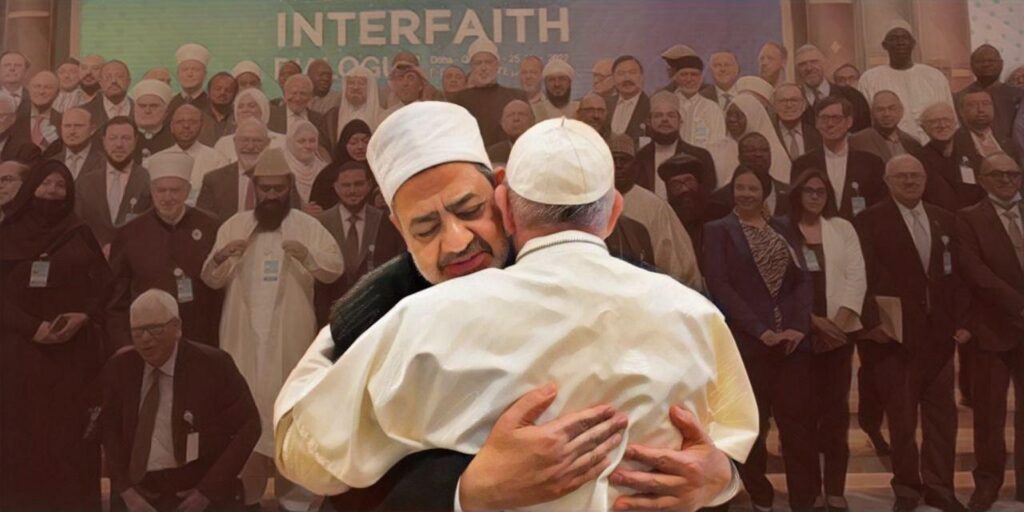
In a world wracked by war, mistrust, and political gridlock, spiritual leaders from across the globe will gather on September 17–18, 2025, in Astana for the Eighth Congress of Leaders of World and Traditional Religions. The event aims to rekindle the hope of peace, not through the exercise of geopolitical power alone, but by revisiting transcendent truths and moral values. Convened under the patronage of President Kassym-Jomart Tokayev, the Congress is more than a ceremonial dialogue among clerics. Organizers and participants describe it as an urgent appeal to depoliticize religion, recalibrate diplomacy, and — channeling John Lennon — "give peace a chance." As the principal architect of the Congress, Kazakhstan President Kassym-Jomart Tokayev is expected to deliver a speech this September that is as optimistic as his keynote at the opening ceremony of the seventh Congress in 2023, despite deepening diplomatic challenges. Two years ago, he said, “Unfortunately, tension, mutual distrust, and even hostility are returning to international relations. What can we rely on to counter today’s challenges? History provides only one answer: goodwill, dialogue, and cooperation. There are no other guarantees of success. Threats, sanctions, and the use of force do not solve problems… We must turn to humanistic ideals, the main custodians of which are, of course, traditional religions.” This year’s gathering will once again feature a mosaic of spiritual leaders — from representatives of the Vatican and al-Azhar to leaders of Judaism, Buddhism, Hinduism, and Orthodox Christianity. While their theological traditions may differ, their shared focus will be on promoting compassion, truth, and mutual respect in a fractured world. “The world is spiraling into confrontation because it has lost the language of empathy and the grammar of reason,” Kazakhstan's former Ambassador to India and Senior Advisor at the International Centre for Interfaith and Interreligious Dialogue, Bulat Sarsenbayev, told The Times of Central Asia in an interview. “The Congress in Astana is not about theology alone — it is about restoring sanity in geopolitics.” A Platform for Peace According to Maulen Ashimbayev, Speaker of the Kazakh Senate and Chief of the Secretariat of the Congress, the event can serve to help heal an increasingly fractured global landscape. Visiting China in January, Ashimbayev stated that, "The world faces today a rather complicated geopolitical situation. New challenges and problems arise. In these conditions, the collective and united efforts of religious, political, and public leaders to promote a culture of peace and dialogue are gaining importance. The VIII Congress of Leaders of World and Traditional Religions will be dedicated to this very goal.” From Ceremony to Substance This year, the Congress is set to explicitly condemn religious extremism and the weaponization of faith, distinguishing between politicized religion and authentic spiritual leadership. Rather than allowing the precept that “might is right” and faith to be hijacked by ideologues, the forum will call for religion to be a bridge-builder, not a wedge, and for diplomats to engage in genuine dialogue in a spirit of compromise, not one-sided diktat. Past participants have included Pope...

Kazakhstan Moves to Ban Face-Coverings in Public

On June 25, Kazakhstan’s Mazhilis, the lower house of parliament, approved amendments to the law “On the Prevention of Offenses,” introducing a new provision that prohibits wearing clothing that obscures the face in public places. While the regulation applies broadly, the most contentious element is its effective ban on the niqab, a religious garment that leaves only the eyes visible. This legislative move echoes ongoing debates in Kazakhstan and across Central Asia, where secular norms are enshrined in law but tensions persist over religious expression. Medical Masks Exempt Earlier, on June 19, Senator Nauryzbay Baikadamov clarified that the amendments would exempt face coverings worn for medical reasons, weather protection, or professional duties. According to Baikadamov, the law aims to enhance public safety and assist in crime prevention. While accessories such as balaclavas are included in the ban, the central controversy surrounds the prohibition of the niqab. The Scarf of Discord Understanding the distinctions among various forms of religious dress is critical to the current debate. The niqab is a face veil that leaves only the eyes uncovered, while the burqa (or paranji), typically worn in Afghanistan, covers the entire face with a mesh screen over the eyes. Burqas are rarely seen in Kazakhstan. Niqabs and black, floor-length dresses have become more visible on Kazakhstan’s streets in recent years, reflecting broader religious shifts. By contrast, the hijab, a headscarf that leaves the face exposed, has become commonplace and enjoys broader acceptance. While niqabs are widely seen as foreign to Kazakh culture, hijabs hold a more complex status. Historically, Kazakh women did not cover their faces, a fact supported by pre-revolutionary photographs. The niqab is viewed by many as an imported practice, largely linked to Islamic teachings from Arab countries. The hijab, however, is often seen as consistent with Kazakh traditions. As such, attempts to ban it have repeatedly stirred controversy. Religious Tensions in Schools In the fall of 2023, more than 150 schoolgirls in the Atyrau region refused to attend classes in protest against a hijab ban. Similar incidents were reported in other southern regions. Authorities reported that the situation was resolved after consultations with parents, but ambiguity remained regarding the scope of the restrictions, particularly whether the hijab was included. President Kassym-Jomart Tokayev ultimately addressed the issue, reaffirming Kazakhstan’s secular identity. “This principle must be strictly observed in all spheres, including education. School is, first and foremost, an educational institution where children come to gain knowledge. Religious beliefs, on the other hand, are a choice and a private matter for each citizen,” Tokayev stated. Still, the legal and cultural status of the hijab remains unresolved. While school uniform policies emphasize secular dress, enforcement is inconsistent, and experts warn of renewed conflict. Religious scholar Asylbek Izbaev noted, “It is not so important what a girl wears on her head as what she thinks.” A Regional Trend Kazakhstan’s move is part of a broader trend across Central Asia. In January 2025, Kyrgyz President Sadyr Japarov signed a law banning face-covering clothing. In...

Bans and Beliefs: Understanding Central Asia’s Most Controversial Restrictions

A recent controversy involving the Spiritual Administration of Muslims of Kazakhstan (SAMK) has reignited public debate over seemingly bizarre bans in Central Asia. SAMK was asked to comment on whether popular video games such as Counter-Strike 2, Dota 2, GTA, League of Legends, Minecraft, and Genshin Impact are permissible under Islamic law. SAMK responded that, from a Sharia perspective, all of these games are prohibited. The public interpreted this as an official ban, possibly even a fatwa, sparking a media uproar. But the reaction wasn’t unfounded: Central Asian republics often make headlines with prohibitions that, from the outside, can appear surreal. Yet, context often provides a more nuanced explanation. Turkmenistan: The Regional Champion of Bans Turkmenistan remains unmatched in its record of curious restrictions. Under its first president, Saparmurat Niyazov, the state banned smoking in cars, mobile phones, radios, stereo systems, clowns, and lip-syncing. Public smoking was also prohibited, and officials were barred from having gold teeth. Other bans targeted personal appearance. Men were forbidden from wearing long hair, beards, or mustaches, while makeup was banned for television presenters. Niyazov justified the latter by claiming it was difficult to distinguish men from women on screen and that Turkmen women’s natural “wheat-colored” complexion should be visible. Cultural life was similarly curtailed. Niyazov abolished ballet, opera, the circus, and even the national folk dance ensemble. “I don’t understand ballet. Why do I need it?” he said. “You can’t instill a love for ballet in Turkmen people if it’s not in their blood”. His successor, Gurbanguly Berdimuhamedov, retained many of these restrictions, particularly the sweeping limitations on internet access. According to Turkmen.news, as of 2023, approximately 75% of global IP addresses were blocked in Turkmenistan. The list of banned platforms includes Facebook, Instagram, TikTok, Telegram, YouTube, WhatsApp, and X (formerly Twitter). Cloud services such as Google Cloud, Microsoft Azure, and Dropbox are also blocked, along with most public DNS servers and online games such as Minecraft, Dota 2, and League of Legends. Dushanbe Follows Suit Kazakhstan and Turkmenistan are not alone in targeting video games. In 2024, the Interior Ministry in Tajikistan’s capital, Dushanbe, banned the distribution of games and video clips deemed violent or immoral. Authorities argued that such content negatively influenced youth behavior and contributed to crime. Games like Counter-Strike and GTA were explicitly named. Tajikistan has also imposed a range of non-digital bans. In 2018, the Committee for Architecture and Construction ordered that rooftops follow a citywide color scheme: green on one side of the river, burgundy on the other. The directive was short-lived. That same year, the mayor banned wearing house clothes, galoshes, and slippers in public, citing the need to uphold the capital’s dignity. The city also outlawed drying laundry on balconies to preserve the urban aesthetic. While these rules may seem odd, they reflect the ongoing transformation of societies that, until recently, were largely agrarian. Urbanization has brought with it an effort to instill new norms and behaviors. Sorcery, Beards, and Dress Codes This same logic applies...

Majority of Kazakhstanis Are Religious, But Discrimination Persists, Studies Suggest

A recent study by analysts at Energyprom.kz sheds light on the religious landscape of Kazakhstan. According to data from the educational platform Jagran Josh, Kazakhstan's population includes approximately 15.4 million believers.  The majority, 11.3 million, identify as Muslim, while about 4 million identify as Christian. A smaller segment, approximately 670,000 individuals, comprise atheists, agnostics, and those with no religious affiliation. Additionally, there are around 5,000 Hindus, 40,000 Buddhists, and about 50,000 practitioners of traditional local beliefs. It is important to note that these figures are compiled from various sources, some dating back to 2015 or earlier. Consequently, they are more suitable for broad international comparisons rather than a precise assessment of Kazakhstan's current religious demographics. Regional Characteristics of Religiosity More recent data, based on a 2024 survey of 1,500 respondents (aged 18 to 65) conducted by the Committee on Religious Affairs of the Republic of Kazakhstan, provides deeper insights into domestic religiosity. The survey revealed that 24.1% of Kazakhstani citizens consider themselves practicing believers who strictly observe religious precepts. The majority, 62.7%, identify as believers but observe only some rituals and traditions. About 9.2% of respondents stated they do not consider themselves believers yet still participate in certain rituals. A smaller proportion, 1.3%, reported no religious affiliation and no participation in rituals, while 0.9% identified as convinced atheists and 0.5% as agnostics. Regionally, Shymkent recorded the largest share of conditionally religious people who observe only certain traditions, at 77.6%. The Atyrau region exhibited the highest proportion of strict practitioners, at 46%. Conversely, the Pavlodar region led in the number of non-believers who nevertheless participate in rituals, at 24.6%. Atyrau also had the highest proportion of complete non-believers, at 10%. In terms of religious affiliation, 65.1% of respondents identified as followers of the Hanafi school of Islam, with another 11.6% belonging to other branches of Islam. Orthodox Christianity was practiced by 14.8% of respondents, Catholicism by 2.1%, and Protestantism by 1.8%. Hinduism, Buddhism, paganism, and Tengriism collectively accounted for less than 2%. An additional 0.8% reported believing but not identifying with any particular religion. The proportion of daily prayers increased from 17.7% to 19.3% over the last quarter. However, 27.9% of respondents reported never praying. Regarding attendance at places of worship (mosques, churches, etc.), 6.2% visit regularly, 14.5% do so weekly, and 33.8% two to three times a year. Notably, 10.4% of respondents have never been to a place of worship. Daily religious discussions with relatives were reported by 4.3% of Kazakhstani citizens, while 27.3% admitted that they never discuss religion within their families. Religious Discrimination Over the past three months, 41.3% of respondents reported experiencing discrimination on religious grounds. The most frequently cited incidents included the publication of offensive images (19.3%), negative comments on social media (11.5%), bans on visiting mosques or churches by the clergy (7.8%), and restrictions on education due to wearing a hijab (10.8%). Although official statistics on incidents directly classified as religiously motivated are not maintained, 54 criminal offenses were recorded between January and April 2025...