
• KGS/USD = 0.01144 0%
  • KZT/USD = 0.00213 0%
  • TJS/USD = 0.10874 0.37%
  • UZS/USD = 0.00008 0%
  • TMT/USD = 0.28571 0%
  • KGS/USD = 0.01144 0%
  • KZT/USD = 0.00213 0%
  • TJS/USD = 0.10874 0.37%
  • UZS/USD = 0.00008 0%
  • TMT/USD = 0.28571 0%
  • KGS/USD = 0.01144 0%
  • KZT/USD = 0.00213 0%
  • TJS/USD = 0.10874 0.37%
  • UZS/USD = 0.00008 0%
  • TMT/USD = 0.28571 0%
  • KGS/USD = 0.01144 0%
  • KZT/USD = 0.00213 0%
  • TJS/USD = 0.10874 0.37%
  • UZS/USD = 0.00008 0%
  • TMT/USD = 0.28571 0%
  • KGS/USD = 0.01144 0%
  • KZT/USD = 0.00213 0%
  • TJS/USD = 0.10874 0.37%
  • UZS/USD = 0.00008 0%
  • TMT/USD = 0.28571 0%
  • KGS/USD = 0.01144 0%
  • KZT/USD = 0.00213 0%
  • TJS/USD = 0.10874 0.37%
  • UZS/USD = 0.00008 0%
  • TMT/USD = 0.28571 0%
  • KGS/USD = 0.01144 0%
  • KZT/USD = 0.00213 0%
  • TJS/USD = 0.10874 0.37%
  • UZS/USD = 0.00008 0%
  • TMT/USD = 0.28571 0%
  • KGS/USD = 0.01144 0%
  • KZT/USD = 0.00213 0%
  • TJS/USD = 0.10874 0.37%
  • UZS/USD = 0.00008 0%
  • TMT/USD = 0.28571 0%

Viewing results 1 - 6 of 2

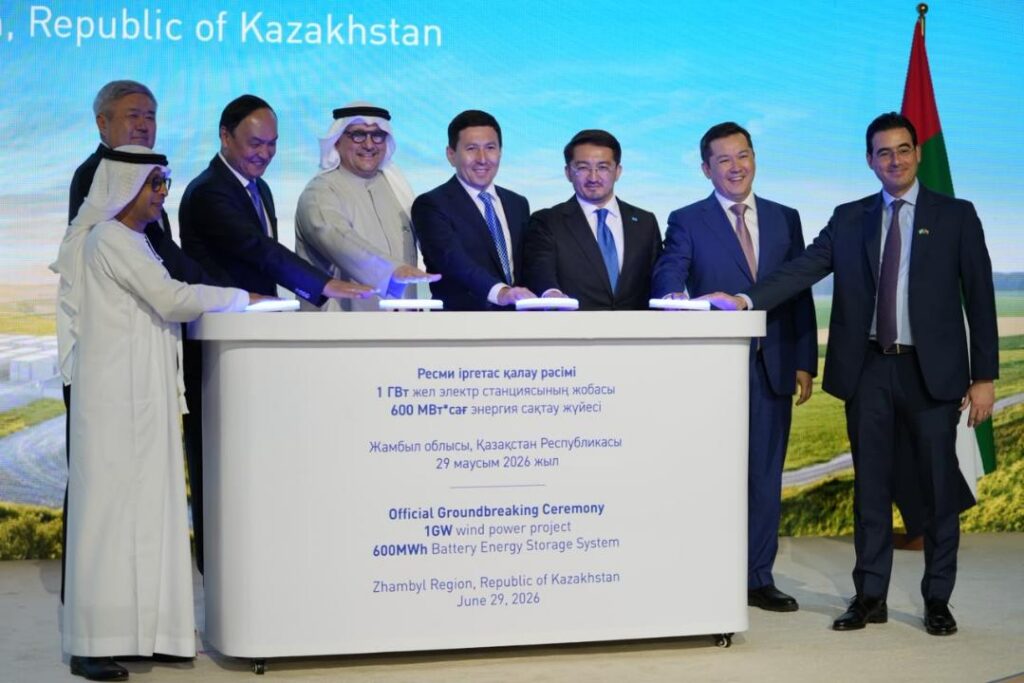
Masdar Launches Construction of $1.4 Billion Wind Farm in Southern Kazakhstan

Construction has begun on one of Kazakhstan’s largest renewable energy projects, a 1-gigawatt wind power plant in the southern Zhambyl Region, as the country moves to address energy shortages and expand green generation capacity. The $1.4 billion project is being developed by a consortium of Kazakhstani companies and investors from the United Arab Emirates. The shareholders include Abu Dhabi-based clean energy company Masdar with a 40% stake, W Solar with 40%, Kazakhstan’s Qazaq Green Power, part of the Samruk-Kazyna fund, with 18%, and the Kazakhstan Investment Development Fund with 2%. The official groundbreaking ceremony took place on June 29 in a teleconference format, with the launch signal given from Astana by Kazakhstan’s Vice Minister of Energy Sungat Yessimkhanov, Samruk-Kazyna CEO Nurlan Zhakupov, and Masdar CEO Mohamed Jameel Al Ramahi. Commercial operations are scheduled to begin in the third quarter of 2029. “Partnership with Masdar contributes to the development of renewable energy and Kazakhstan’s progress toward carbon neutrality,” Yessimkhanov said. “This project will strengthen regional energy security and bring advanced technologies into the renewable energy sector.” The project’s key technical feature is its integration of wind generation with battery energy storage. The facility will include an energy storage system with a capacity of 300 MW and storage volume of 600 MWh. Officials say the battery system will help address one of the main challenges of renewable energy by stabilizing electricity supply during fluctuating weather conditions and peak evening demand. The wind farm is expected to reduce carbon dioxide emissions by 2.5 million tons annually, supporting Kazakhstan’s national climate targets. Masdar has been expanding its presence across Central Asia. In 2024, Uzbekistan signed an agreement with the UAE company to build Central Asia’s first solar power plant with battery storage in the Bukhara region. In 2022, Masdar also reached an agreement with Turkmenistan to build the country’s first utility-scale solar plant, with a planned capacity of 100 MW. The company faces growing competition from Chinese firms in the region. In May, China Energy International Group launched construction of a 500-MW wind farm in central Kazakhstan. Kazakhstan aims to generate 15% of its electricity from renewable sources by 2030 as part of its broader strategy to reduce dependence on coal and improve long-term energy security.

Chinese Investment in Uzbekistan Surpasses $8 Billion This Year

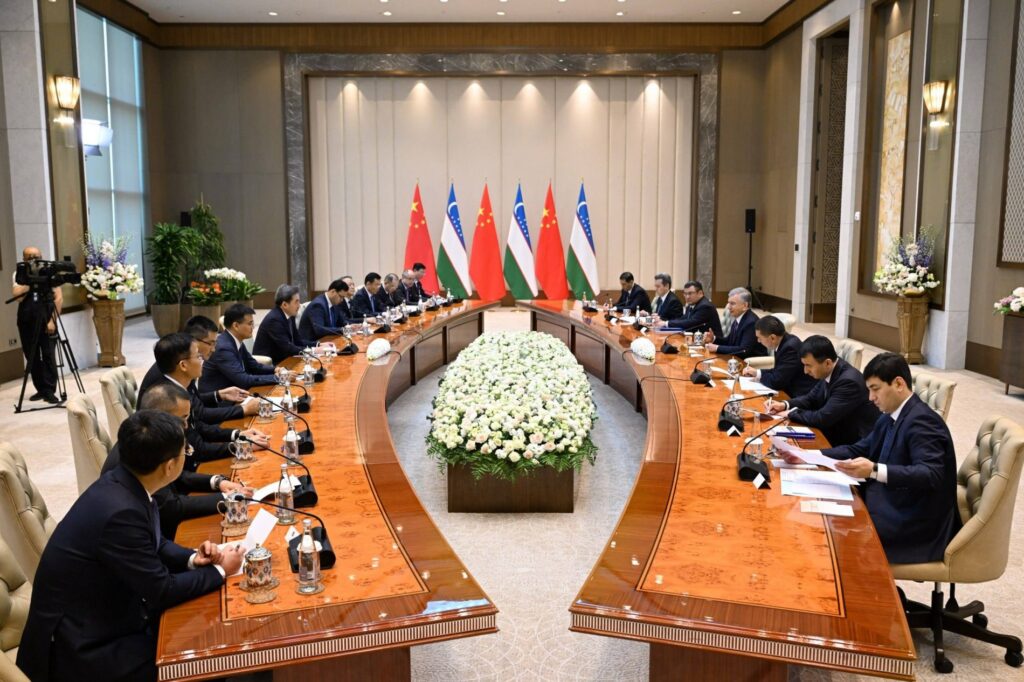
President Shavkat Mirziyoyev met with a delegation of leading Chinese companies and financial institutions on the sidelines of the Tashkent International Investment Forum. The meeting focused on new investment projects in energy, mining, infrastructure, and finance. The Chinese delegation was led by Wang Hongzhi, head of China’s National Energy Administration. It included executives from China Energy Engineering Corporation, China Datang, Sinoma Energy Conservation, China Southern Power Grid, China CAMC Engineering, China National Nuclear Corporation, and State Nuclear Uranium Resource Development. Representatives of the Export-Import Bank of China and Bank of China also attended. According to Uzbekistan’s presidential press service, the talks focused on high-tech projects in the energy and geological sectors, as well as cooperation in banking and finance. Mirziyoyev welcomed the rapid growth of Uzbekistan-China economic ties. Since the beginning of the year, bilateral trade has exceeded $6 billion, while direct Chinese investment in Uzbekistan has surpassed $8 billion. Nearly 6,000 joint ventures involving Chinese partners are operating in the country. Renewable energy projects formed a major part of the discussion. Chinese companies are already involved in building solar and wind power plants, as well as energy storage systems, across Uzbekistan. Participants supported plans to accelerate ongoing projects and launch new initiatives. These include expanding photovoltaic power generation capacity, introducing agrivoltaic technologies that combine agriculture and solar energy production, and building new transmission lines. The meeting also covered cooperation in waste-to-energy generation and advanced technological solutions, including modern data centers. In mining and geology, officials discussed joint exploration and development of mineral deposits. They also reviewed long-term partnerships in the supply of critical raw materials. Financial cooperation was another key topic. Participants reviewed opportunities for Chinese banks to support infrastructure projects, irrigation modernization, high-speed road construction, hydropower development, agricultural machinery supplies, and financing for small and medium-sized businesses. Earlier this year, the third Uzbekistan-China Interregional Forum in Xi’an resulted in more than $3.5 billion in investment and export agreements, including $3.35 billion in investment projects and $156 million in export contracts. Officials said the agreements would support infrastructure modernization, transport development, environmental services, and industrial production. Speakers at the Xi’an forum said bilateral trade reached nearly $18 billion last year, while accumulated Chinese investment in Uzbekistan totaled $17 billion.