• KGS/USD = 0.01143 0%
  • KZT/USD = 0.00207 0%
  • TJS/USD = 0.10465 0.1%
  • UZS/USD = 0.00008 0%
  • TMT/USD = 0.28571 0.28%
  • KGS/USD = 0.01143 0%
  • KZT/USD = 0.00207 0%
  • TJS/USD = 0.10465 0.1%
  • UZS/USD = 0.00008 0%
  • TMT/USD = 0.28571 0.28%
  • KGS/USD = 0.01143 0%
  • KZT/USD = 0.00207 0%
  • TJS/USD = 0.10465 0.1%
  • UZS/USD = 0.00008 0%
  • TMT/USD = 0.28571 0.28%
  • KGS/USD = 0.01143 0%
  • KZT/USD = 0.00207 0%
  • TJS/USD = 0.10465 0.1%
  • UZS/USD = 0.00008 0%
  • TMT/USD = 0.28571 0.28%
  • KGS/USD = 0.01143 0%
  • KZT/USD = 0.00207 0%
  • TJS/USD = 0.10465 0.1%
  • UZS/USD = 0.00008 0%
  • TMT/USD = 0.28571 0.28%
  • KGS/USD = 0.01143 0%
  • KZT/USD = 0.00207 0%
  • TJS/USD = 0.10465 0.1%
  • UZS/USD = 0.00008 0%
  • TMT/USD = 0.28571 0.28%
  • KGS/USD = 0.01143 0%
  • KZT/USD = 0.00207 0%
  • TJS/USD = 0.10465 0.1%
  • UZS/USD = 0.00008 0%
  • TMT/USD = 0.28571 0.28%
  • KGS/USD = 0.01143 0%
  • KZT/USD = 0.00207 0%
  • TJS/USD = 0.10465 0.1%
  • UZS/USD = 0.00008 0%
  • TMT/USD = 0.28571 0.28%

Viewing results 1 - 6 of 12

Uzbekistan Repatriates Over 21,700 Citizens from Middle East

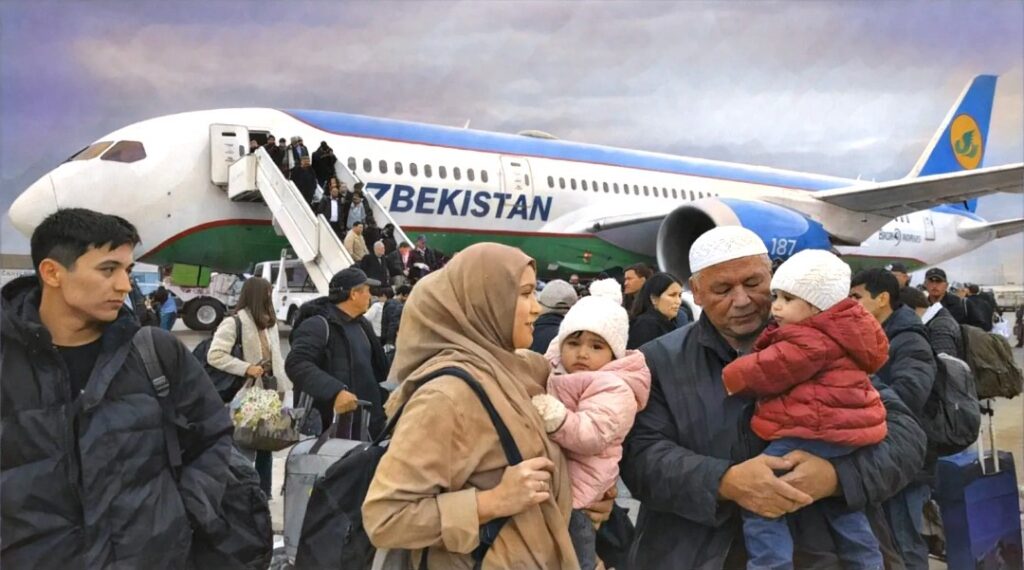
Uzbekistan has repatriated 21,712 citizens from several Middle Eastern countries as of 07:00 on March 9, the country’s Ministry of Foreign Affairs has said, as evacuation efforts continue amid regional instability. Most of those returned came from Saudi Arabia, where 17,963 citizens were brought back to Uzbekistan. Additional repatriations included 3,290 people from the United Arab Emirates, 378 from Qatar, 47 from Iran, 27 from Bahrain, and seven from Oman. The ministry said the return of Uzbek citizens is being carried out “systematically and in stages,” with authorities continuing to coordinate transport and logistics for those seeking to return. Officials noted that many repatriation flights are currently being organized through countries whose airspace remains open to civilian aviation. Uzbekistan’s evacuation reflects the scale of its citizens’ presence across the Gulf. In recent years, the country has expanded labor migration agreements with Saudi Arabia, the United Arab Emirates, and Qatar, sending thousands of workers into construction, hospitality, and service sectors. Saudi Arabia has also become a major destination for religious travel from Uzbekistan, with large annual flows of pilgrims traveling for the Hajj and Umrah. Kazakhstan has also evacuated citizens during the crisis, bringing 8,585 people home from Middle Eastern countries since the operation began. Central Asian citizens travel widely to Gulf states for work, tourism, and pilgrimage, leaving thousands affected when conflicts disrupt flights and close regional airspace. The number of returned citizens has risen steadily over the past several days. According to the foreign ministry, 19,347 Uzbek citizens had returned home as of 07:00 on March 8. Uzbek diplomatic missions in the region have also issued safety guidance to citizens who remain abroad. In a statement published by the Embassy of Uzbekistan in Israel, citizens were urged to follow official security instructions issued by local authorities. The embassy said red alerts issued by Israel’s civil defense authorities indicate a dangerous situation and require people to stay near protected shelters and immediately enter them if warning sirens sound. Blue alerts indicate that the threat has passed, and people may leave shelters. Other Central Asian countries have also organized evacuations of their citizens. According to Tajik media outlet Asia-Plus, more than 300 citizens of Tajikistan returned home on March 8 on two flights from Dubai. One charter flight brought 130 Tajik citizens to Dushanbe in the morning, while a later flight operated by Somon Air transported another 180 passengers. The charter operation was organized with support from the Tajik embassy in the United Arab Emirates, local authorities, and the airline Flydubai. About 550 Tajik citizens have returned home from Abu Dhabi and Dubai on charter flights in recent days amid the ongoing regional conflict.


Up to 300 Tajik Women and Children Remain in Syria and Iraq

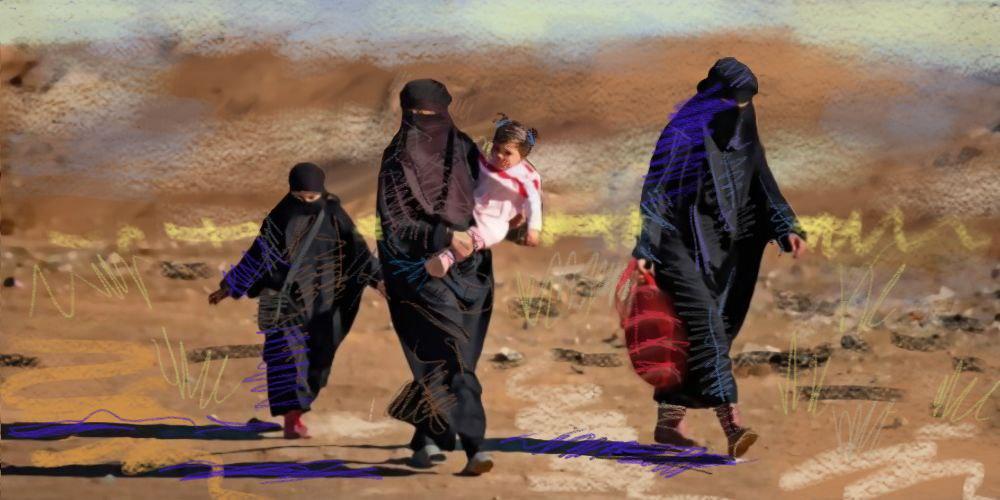
An estimated 250 to 300 Tajik women and children remain in Syria and Iraq, according to Suhaili Kodiri Abduhafizzoda, Head of the Department for State Protection of Children's Rights at the Office of the Human Rights Commissioner of Tajikistan. Abduhafizzoda stated that the repatriation process, previously overseen by a dedicated Tajik working group, has stalled since the change of government in Syria. At its peak, approximately 800 Tajik nationals, mainly women and children, were believed to be in the two countries. While more than half have returned home, hundreds remain stranded. Four Repatriation Waves Since 2019 Tajikistan has conducted four formal repatriation missions since 2019, resulting in the return of 382 individuals. These included: 2019: 84 children repatriated 2022: 144 women and children 2023: 104 individuals 2024: 47 women and children In addition, roughly 90 Tajik citizens returned independently, although their exact routes and methods of escape from conflict zones have not been officially disclosed. Final Stage Falls Short Officials had hoped the 2024 operation would mark the final stage of the repatriation effort. However, Abduhafizzoda confirmed that not all remaining women and children agreed to return. “We planned to return all remaining women and children, but this was not possible, primarily because they themselves refused,” he explained. Fear of legal consequences was the most commonly cited reason. Many of the women expressed concern that they would face criminal prosecution upon returning to Tajikistan. However, authorities insist these fears are largely unfounded. According to the ombudsman’s office, none of the women previously repatriated have been charged or prosecuted. Instead, they were reportedly met with state support and reintegration programs. “Some of the women who had already returned had similar fears. But once they came back, they saw that no criminal cases were initiated, and they were all forgiven,” Abduhafizzoda noted. Children Reunited With Families Officials report that all repatriated children have been reunited with relatives and received assistance in resuming their education and adjusting to civilian life. Nonetheless, the fate of those still in Syria and Iraq remains unclear. Legacy of the Islamic State According to official figures, more than 2,500 Tajik citizens joined the Islamic State group after 2013. Many men took their families with them to Syria and Iraq. By 2017, most of the men were reported killed or missing, and some women and children are also believed to have died during the conflict. With no current framework for further repatriation, the future of the remaining Tajik women and children in the region remains uncertain.

Uzbekistan Leads Repatriation of Deported Citizens from the U.S.

A group of 131 individuals from Uzbekistan, Kazakhstan, and Kyrgyzstan were repatriated from the United States this week on a special charter flight, Fox News reports. The flight, organized and funded by the government of Uzbekistan, followed a bilateral agreement with U.S. authorities and reflects expanding cooperation between the two countries on migration and security issues. Departing the U.S. on April 30, the flight primarily carried Uzbek nationals who had been living in the United States without legal status. According to the agreement, Uzbek citizens were transported to Tashkent, while those from Kazakhstan and Kyrgyzstan are expected to continue on to their respective home countries. U.S. officials welcomed Uzbekistan’s role in facilitating the repatriation. U.S. Secretary of Homeland Security Kristi Noem expressed appreciation for the initiative. “We commend Uzbekistan for sending a flight to return 131 illegal aliens back to their home country,” she said. “This shows the strong security ties between our countries.” Uzbekistan’s Ministry of Foreign Affairs stated that the repatriation was conducted in accordance with international standards and aimed to protect the rights of Uzbek citizens in difficult legal and humanitarian situations abroad. Most of those returned had overstayed their visas or were found in violation of U.S. immigration laws. The Embassy of Uzbekistan in Washington, D.C., and the Consulate General in New York played key roles in organizing the repatriation process. Both diplomatic missions maintained close coordination with U.S. immigration authorities and provided support to citizens throughout their return journey. This was not Uzbekistan’s first such operation. Earlier this year, the country repatriated seven citizens from the United States to Tashkent after preventing their transfer to Costa Rica. That effort also followed high-level consultations between officials from both governments. With a population exceeding 37 million, Uzbekistan continues to enhance its collaboration with the United States on migration management, repatriation procedures, and broader regional security cooperation.

Kandas Resettlement Rises as Kazakhstan Boosts Integration Efforts

Since the beginning of 2025, 3,203 ethnic Kazakhs have returned to their historical homeland and officially received received the status of Kandas. In total, since gaining independence in 1991, more than 1.15 million ethnic Kazakhs have resettled in Kazakhstan for permanent residence. The Times of Central Asia examines who today’s Kandas are and how their integration and resettlement are being managed. Geography of Return According to the Ministry of Labor and Social Protection, nearly half (48.1%) of all Kandas arriving in Kazakhstan in 2025 have come from China. This is followed by ethnic Kazakhs from Uzbekistan (39.5%), Turkmenistan (5.8%), Mongolia (2.5%), Russia (1.9%), and other countries (2.2%). As of April 1, 2025, 60.7% of new arrivals are of working age, 31.1% are minors, and 8.2% are pensioners. Regarding educational background, 17.9% hold higher education degrees, 27.8% have specialized secondary education, 52.9% have general secondary education, and 1.4% have no formal education. Resettlement and Regional Priorities Kandas are being resettled across the country, with labor-deficient regions prioritized. These include Akmola, Abay, Kostanay, Pavlodar, Atyrau, West Kazakhstan, East Kazakhstan, and North Kazakhstan. The quota for 2025 in these regions stands at 2,309 people, with 642 already resettled by early April. Since the start of the year, 147 Kandas have received various forms of state support, and 94 of them have secured permanent employment. State Support and Economic Mobility The government offers a range of support measures, including a one-time relocation subsidy of 70 Monthly Calculated Indexes (MRP), or approximately $527 per family member. Additionally, monthly payments for rent and utilities ranging from 15 to 30 MRPs ($113-$226) are provided for up to one year. To enhance economic mobility, the Kandas can receive up to $8,600 per family, covering up to 50% of housing costs, for home purchases, construction, or mortgage down payments. Homes bought with these funds cannot be sold for five years, nor can they be transferred among close relatives, to prevent misuse. Since 2025, all services related to quotas and support have been moved online. According to Vice Minister of Labor and Social Protection of the Population, Yertaev Askarbek Ertaev, this transition aims to minimize corruption and strengthen oversight of compliance with program conditions. A new tracking system within the “Labor Market” information platform monitors movements of displaced persons. Unauthorized departure from the designated resettlement region requires repayment of financial aid through a pre-trial process. Adaptation and integration centers were launched in 2024 in Pavlodar, East Kazakhstan, Akmola, and Abay. In 2025, Kostanay and North Kazakhstan joined this list. Full support is now available via the mobile app “FSM Social” (Fund for Social Payments), covering everything from adaptation to employment services. Among recent innovations is a simplified procedure for verifying Kazakh ethnic identity. To date, 13 applications have been reviewed, 9 approved and 4 denied. Program Development and Future Outlook In 2024, around 9,500 resettlement quotas were allocated, with 2,477 used by Kandas and 4,500 by internal migrants. The Ministry plans to increase the annual quota by 500 people moving...

Ethnic Kazakhs Returning to Their Historical Homeland

Ethnic Kazakhs holding foreign citizenship have received a total of 65 "Ata Zholy" cards, granting them the right to live and work in Kazakhstan for 10 years, the Kazakh Ministry of Labor and Social Protection of the Population has announced. Of these, 27 cards were issued to business immigrants seeking to establish and develop enterprises in Kazakhstan, while 38 cards were granted to qualified professional, including physicists, mathematicians, chemical engineers, maxillofacial surgeons, and paediatricians. The recipients have arrived from Russia, Germany, Mongolia, China, the United States, Israel, France, the United Kingdom, the Netherlands, Finland, Kyrgyzstan, and Uzbekistan. The Ata Zholy Program The Ata Zholy (Path of Ancestors) card was introduced in July 2023 to strengthen ties between ethnic Kazakhs abroad and their historical homeland while attracting skilled professionals and entrepreneurs to Kazakhstan. Holders of the card retain their foreign citizenship and receive a 10-year residence permit, allowing them to live anywhere in Kazakhstan. They enjoy equal rights with Kazakh citizens, including access to social benefits and employment opportunities, and can apply for Kazakh citizenship through a simplified process. However, as foreign nationals, Ata Zholy cardholders cannot vote, run for office, or hold public service positions. Growing Number of Ethnic Kazakh Returnees The Ministry of Labor and Social Protection also reported that since the beginning of 2025, 1,070 ethnic Kazakhs have returned to Kazakhstan and obtained "Kanda" status, a designation for ethnic Kazakhs and their family members who have never previously held Kazakh citizenship. The Kandas who arrived in 2024 came from: China - 51.9% Uzbekistan - 37.5% Turkmenistan - 7.1% Russia - 1.8% Other countries - 1.7% Since gaining independence in 1991, Kazakhstan has welcomed over a million ethnic Kazakhs back to their homeland.

Repatriating Islamic State Fighters and Families: Balancing Security and Humanity

With the fall of the Assad regime in Syria, repatriating foreign fighters is a pressing issue at the intersection of global security, humanitarian principles, and national responsibility. Central Asian governments — namely, Kazakhstan, Uzbekistan, Kyrgyzstan, and Tajikistan — have emerged as proactive players in repatriating their citizens from camps in northeastern Syria. While these efforts are laudable, they come with challenges and unanswered questions. Tens of thousands of people, many of them women and children associated with former ISIS or the Islamic State of Iraq and Syria - a terrorist organization known for its extreme ideology and violent actions of its’ fighters — remain trapped in the camps of northeastern Syria. Their lives are defined by squalor and uncertainty, and they face a bleak future. Central Asian nations have stepped up where many others have faltered, asserting their responsibility to help their citizens who languish there. Yet, this commitment is not without its limits. Repatriating men — many of whom were fighters — remains a challenge that even the most ambitious programs have struggled to address. This issue looms large, as it intertwines with broader questions. These include reintegration, security risks, and the potential for radicalization, both in prison systems and broader society. The scale of efforts undertaken by four of the Central Asian countries is significant. Together, they have repatriated around 2,200 citizens: Kazakhstan, the most, 754 individuals, followed by others with numbers ranging from 381 to 533. These figures represent more than just logistical achievements. They reflect these governments' commitment to humanitarian principles. However, the path has not been entirely smooth, as some of the repatriated women and children have returned back to conflict zones. As counterintuitive as this may seem, they might do so out of ideological commitment, social ties, coercion or threats, trauma bonding, or difficulty reintegrating into their home societies. All this suggests cracks in reintegration programs that must be addressed. The strategies employed by the Central Asian states, despite their common goal, differ in focus and execution. Kazakhstan’s “Operation Zhusan” is often mentioned as a model of coordination and commitment. It has gone beyond mere repatriation to a vision embracing comprehensive reintegration, including other services, such as DNA testing to identify orphaned children. Yet such efforts rely heavily on state resources and long-term political will, neither of which can be taken for granted. Uzbekistan’s Mehr ("Kindness") initiative has particularly focused on protecting children and supporting the unification of families. Yet even with international appreciation, Uzbekistan faces the same challenges as its neighbors: how to sustain this momentum and address lingering societal stigmas toward returnees. Kyrgyzstan paused its repatriation operations in Iraq due to legal roadblocks and has turned its attention to Syria. However, Kyrgyzstan relies significantly on international cooperation, as its own economic resources for such activities are comparatively limited. So far, it has repatriated 511 citizens. Tajikistan’s steady progress highlights even more pointedly the role of international cooperation with organizations like UNICEF and the European Union. The Tajik authorities have worked closely with...