• KGS/USD = 0.01143 0%
  • KZT/USD = 0.00205 0%
  • TJS/USD = 0.10433 0.1%
  • UZS/USD = 0.00008 0%
  • TMT/USD = 0.28577 0%
  • KGS/USD = 0.01143 0%
  • KZT/USD = 0.00205 0%
  • TJS/USD = 0.10433 0.1%
  • UZS/USD = 0.00008 0%
  • TMT/USD = 0.28577 0%
  • KGS/USD = 0.01143 0%
  • KZT/USD = 0.00205 0%
  • TJS/USD = 0.10433 0.1%
  • UZS/USD = 0.00008 0%
  • TMT/USD = 0.28577 0%
  • KGS/USD = 0.01143 0%
  • KZT/USD = 0.00205 0%
  • TJS/USD = 0.10433 0.1%
  • UZS/USD = 0.00008 0%
  • TMT/USD = 0.28577 0%
  • KGS/USD = 0.01143 0%
  • KZT/USD = 0.00205 0%
  • TJS/USD = 0.10433 0.1%
  • UZS/USD = 0.00008 0%
  • TMT/USD = 0.28577 0%
  • KGS/USD = 0.01143 0%
  • KZT/USD = 0.00205 0%
  • TJS/USD = 0.10433 0.1%
  • UZS/USD = 0.00008 0%
  • TMT/USD = 0.28577 0%
  • KGS/USD = 0.01143 0%
  • KZT/USD = 0.00205 0%
  • TJS/USD = 0.10433 0.1%
  • UZS/USD = 0.00008 0%
  • TMT/USD = 0.28577 0%
  • KGS/USD = 0.01143 0%
  • KZT/USD = 0.00205 0%
  • TJS/USD = 0.10433 0.1%
  • UZS/USD = 0.00008 0%
  • TMT/USD = 0.28577 0%

Viewing results 1 - 6 of 30

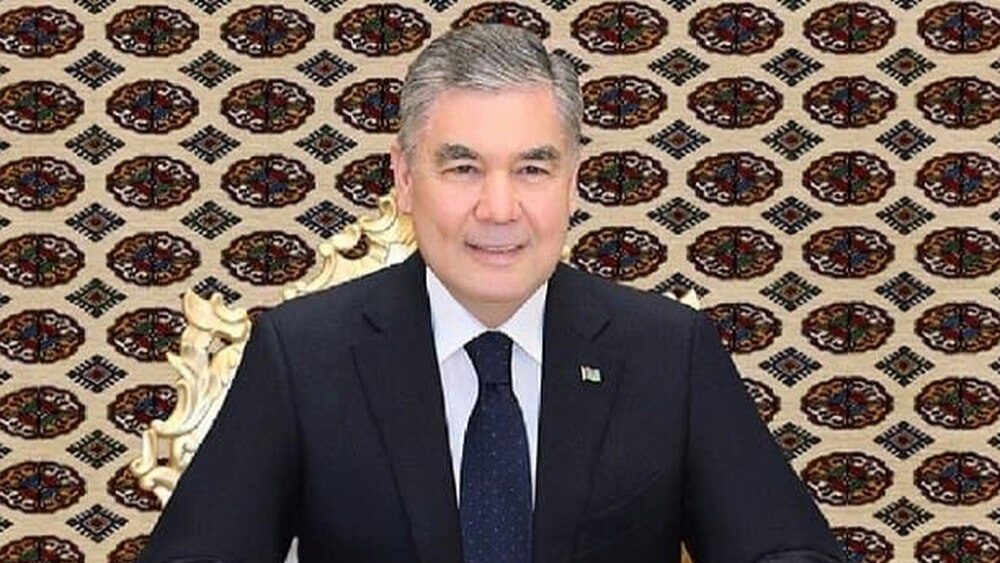
Gurbanguly Berdymuhamedov’s U.S. and Germany Trip Draws Attention to Diplomatic Reshuffle

In mid-February, Gurbanguly Berdymuhamedov, former president of Turkmenistan and current chairman of the Halk Maslahaty (the People's Council of Turkmenistan), visited the United States. State media reported extensively on the trip, although some details of the visit and its outcomes were not publicly clarified. Shortly after Berdymuhamedov’s return, President Serdar Berdymuhamedov, his son, dismissed Turkmenistan’s ambassador to the United States and the country’s permanent representative to the United Nations. No official explanation for the change was provided. According to official reports, Berdymuhamedov held meetings with executives of Nicklaus Companies, including its leadership, as well as representatives of the Turkmenistan-U.S. Business Council. The company was founded by American golfer Jack Nicklaus. During the visit, Berdymuhamedov also toured several golf facilities and visited an equestrian complex, where he was briefed on horse care and training practices. He additionally met with a number of U.S. business figures, including entrepreneurs Steve Wynn and Isaac Perlmutter, as well as William Koch, chairman of Oxbow Group. Discussions were also held with representatives of agricultural equipment manufacturer John Deere regarding potential cooperation in Central Asia. Golf and equestrian projects Interest in golf has been growing in Turkmenistan in recent years. The Ashgabat Golf Club, opened in 2017, is promoted by officials as a flagship recreational facility in the capital. Plans have also been announced to expand golf infrastructure in the Avaza National Tourist Zone, where Berdymuhamedov has previously instructed authorities to consider the construction of additional courses. On his return journey from the United States, Berdymuhamedov made a stop in Germany, where he reportedly discussed preparations for the 2026 FEI World Equestrian Championships in Aachen and an Akhal-Teke horse beauty contest scheduled to take place in the Netherlands. Unconfirmed reports and diplomatic changes Some media outlets reported that Berdymuhamedov’s visit coincided with a weekend stay by U.S. President Donald Trump at his Mar-a-Lago residence. Reports also suggested that a planned meeting did not take place, although no official confirmation has been provided. Separate reports by independent Turkmen media claimed that Berdymuhamedov’s aircraft sustained technical damage during the trip and that another government aircraft was dispatched from Ashgabat. These claims have not been officially confirmed. Personnel changes in Turkmenistan’s diplomatic service followed the visit. Veteran diplomat Aksoltan Atayeva was relieved of her post as the country’s representative to the United Nations, while Esen Aidogdyev was reassigned to the embassy in Washington. Independent media have also previously reported allegations regarding property holdings by former ambassador Meret Orazov in the United States. These claims have not been publicly addressed by Turkmen authorities.
Japarov Breaks the Kyrgyz Tandem

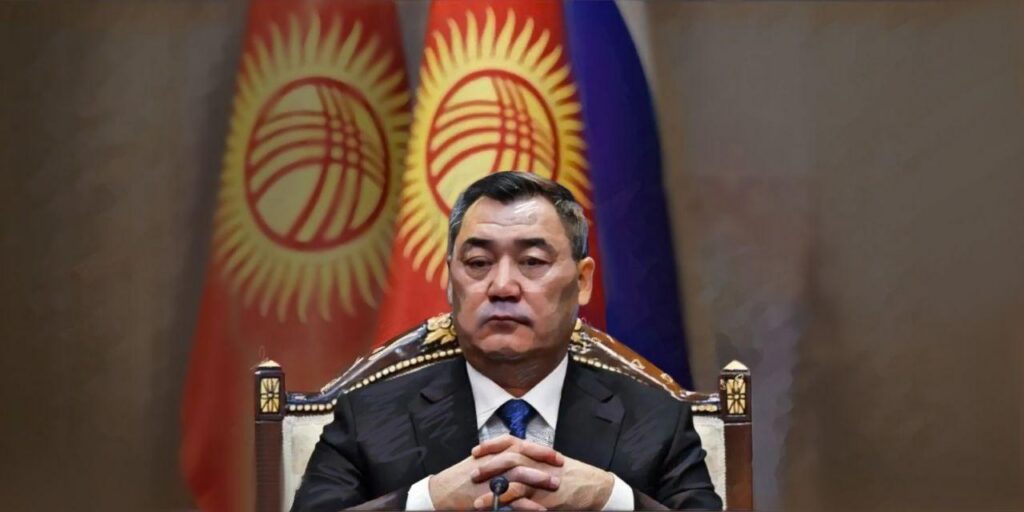
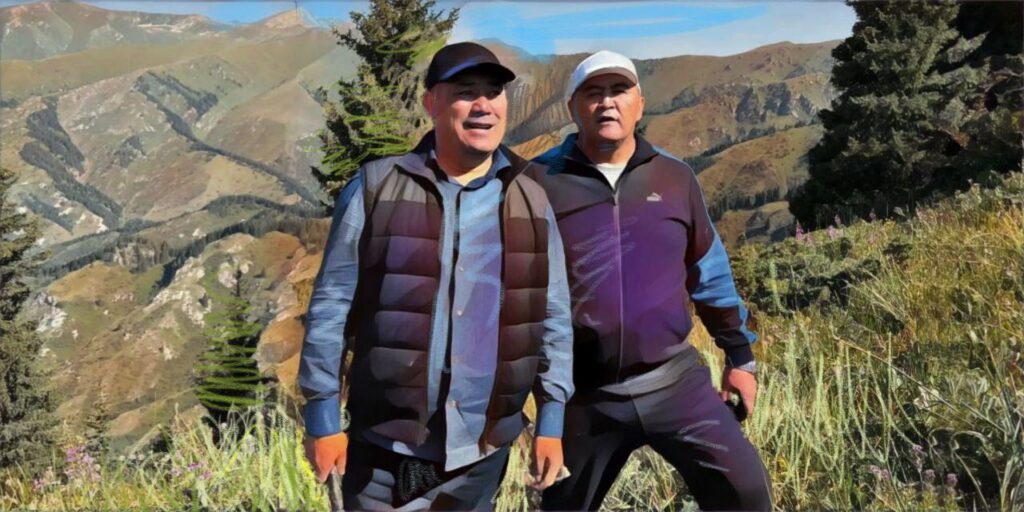
When Kamchybek Tashiyev returned to Bishkek from medical travel abroad after losing his post as Chairman of the State Committee for National Security (GKNB), as well as the deputy chairmanship of the Cabinet of Ministers, he returned to a system already being disassembled. Kyrgyzstan’s President Sadyr Japarov dismissed him on February 10, ending a five-year arrangement in which the presidency and the security apparatus were closely fused. The decision deliberately dismantled the governing tandem that had defined Kyrgyzstan’s power structure since 2020. The immediate question was whether this was a closing of an episode or the opening of a new one. The first wave of moves suggests the latter: a transition toward a more personalized presidency, with the internal-security bloc fractured and its succession logic unsettled. Japarov publicly framed the decision as preempting an institutional split. He explicitly pointed to parliamentary groupings that began sorting deputies into “pro-president” versus “pro-general” camps. Russian-language coverage has tended to present the episode as an effort to end a dual-power configuration, not merely to remove one official. This narrative implies that the state’s operative center of gravity had already begun drifting away from predictable office-holding and toward informal allegiance tests. Once such a dynamic becomes evident, according to such a telling, the preservation of regime coherence often requires rapid, coercive re-centering. Domestic Political Configurations The first domestic signal was indeed speed. Along with Tashiyev, senior security officials were removed, and an acting head was installed pending parliamentary procedures. The point here was not just about personnel but about the timing: the presidency moved first, then moved again, so that no alternative pole could consolidate inside the security institutions. If the system had been built around a Japarov–Tashiyev tandem, then the immediate dismantling of Tashiyev’s proximate layers was also a message to the broader stakeholder society that the presidency would decide who inherits the southern security networks and clan linkages. Japarov was clearly conveying a signal of dominance that ruled out negotiation. A second signal came through parliament. Speaker Nurlanbek Turgunbek uulu resigned shortly after the dismissal, amid reporting that he was politically close to Tashiyev and vulnerable once the security bloc shifted. Russian reporting treated the speaker’s resignation as part of the same chain reaction set off by the February 10 decree. This was part of a pattern whereby institutional actors in Kyrgyzstan’s domestic politics reorient quickly toward whoever appears to be winning in the short term. Loyalty is anticipatory because the penalty for backing the wrong camp can arrive through law enforcement, prosecutorial pressure, or reputational destruction. A third signal emerged through the revived early-election debate. The open-letter campaign and talk about a “snap election” did not arise in a vacuum; it built on a preexisting argument about constitutional timing and mandate renewal. That development provided a political vocabulary for testing whether the tandem’s first stage had ended. The credible possibility of early elections has destabilized patronage, compelling every member of the political class at every level to recalculate expectations. Every political actor...

Kyrgyz President Dismisses Right-Hand Man to “Prevent a Split in Society”

A political earthquake hit Kyrgyzstan on February 10. The tandem of President Sadyr Japarov and security chief Kamchybek Tashiyev was seemingly broken when Japarov dismissed Tashiyev from his post. The reason given for relieving Tashiyev of his position was that it was “in the interests of our state, in order to prevent a split in society, including between government structures,” which hinted that something serious had caused the rift. Old Friends After the brief tumultuous events of October 5-6, 2020, that saw the government of President Sooronbai Jeenbekov ousted in the wake of parliamentary elections plagued by violations, Japarov came to power and appointed Tashiyev to be head of the State Committee for National Security (GKNB). The two have remained in those positions and were often referred to as a tandem. Some believe Tashiyev has actually been the one making many of the important state decisions. Their relationship goes back much further, to the days when Kurmanbek Bakiyev was Kyrgyzstan’s president from 2005-2010. In August 2006, Japarov, Tashiyev, and some other politicians from Kyrgyzstan’s southern Osh area cofounded the Idealistic Democratic Political Party of Kyrgyzstan, which later became the foundation for the Ata-Jurt party. Both Japarov and Tashiyev were supporters of President Bakiyev. When Bakiyev was forced to flee the country after the 2010 revolution in Kyrgyzstan, the Ata-Jurt party became the strongest opposition party to the government that emerged after the revolution. Ata-Jurt won the most seats, 28, in the snap October 2010 parliamentary elections, and among the party’s deputies were Japarov, Tashiyev, and another politician named Talant Mamytov. The three Ata-Jurt deputies helped organize anti-government protests, and during one outside the government building in Bishkek in October 2012, Japarov, Tashiyev, and Mamytov jumped the fence and led an armed crowd to the building. All three were convicted in 2013 of trying to overthrow the government. They were sentenced to a mere 18 months in prison, but did not even serve that, with all three being released in July 2013. Japarov helped lead a protest in Kyrgyzstan’s northeastern Issyk-Kul Province in October that year. A local official was captured and briefly held by protesters, and after order was restored, Japarov was charged with hostage-taking. He fled the country and only returned in March 2017. Japarov was immediately arrested and sentenced to 11 ½ years in prison. A crowd released Japarov from prison when unrest started on October 5, 2020. Tashiyev was among those who quickly put forth Japarov to be Kyrgyzstan’s next leader, and by October 15, Japarov was both acting prime minister and acting president. He appointed Tashiyev to be GKNB chief on October 16. Mamytov was elected speaker of parliament on November 4, 2020. The Dismissal Tashiyev was in Germany receiving medical treatment when Japarov dismissed him. On February 11, Tashiyev commented from Germany on his dismissal, calling it unexpected, but said he would heed the president’s decision. “I served our state, people, and president honorably, and I'm proud of it,” Tashiyev said, and expressed his “gratitude...

Tokayev Unveils Major Political Reforms as Kazakhstan Moves to Replace the National Kurultai

The fifth and final session of the National Kurultai in Kazakhstan, held on January 20, marked the announcement of plans to dismantle and replace two key institutions: the National Kurultai and the Assembly of the People of Kazakhstan, structures that have played central roles in the country’s civic dialogue, particularly over the past three decades. In a sweeping address, President Kassym-Jomart Tokayev declared that these legacy institutions would be replaced by new mechanisms for state-society interaction, crafted with an eye toward modern governance models and constitutional reform. The move reflects Tokayev’s long-running criticism of consultative bodies that, while symbolically inclusive, have often duplicated functions or lacked clear decision-making authority. Tokayev’s address, which included references to U.S. President Donald Trump, prompted analysts to draw deeper geopolitical and institutional parallels. As Tokayev enters the second phase of his presidency, analysts note a shift in strategy and control. His first term (2019-2022) was marked by attempts to correct the excesses and structural stagnation of his predecessor, Nursultan Nazarbayev. At the time, Tokayev faced entrenched resistance from the political establishment, with some officials reportedly appealing directly to Nazarbayev to circumvent presidential directives. The January 2022 unrest, an attempted power shift, marked a turning point. Tokayev consolidated power and launched a comprehensive reform agenda across the political and economic spectrum. The analogy with Trump, some analysts argue, lies in this dual-phase leadership: an initial struggle with the establishment, followed by a more assertive, transformation-driven second term. Since then, Tokayev has framed political reform as a safeguard against elite capture and institutional paralysis, arguing that fragmented authority contributed to the crisis. Yet Tokayev continues to face political resistance, particularly to structural reforms. Political analyst Daniyar Ashimbayev, commenting on Tokayev’s Kurultai speech, described the president’s evolving approach as both methodical and tactical. “Sometimes, the head of state announces strategic steps he has been considering for over a year, but only unveils them at the last moment, when no one has the opportunity to influence the message,” Ashimbayev observed. He cited Tokayev’s September 2025 proposal for a unicameral parliament as an example of such strategic maneuvering, an initiative that caught even senior officials by surprise. Ashimbayev argues that Tokayev’s aim was to sideline speculation about succession by announcing long-term institutional reforms. The president further solidified this strategy by reviving the position of vice president, abolished under Nazarbayev, while proposing the dissolution or merging of overlapping structures such as the Senate, the Assembly of the People, and the Kurultai into a proposed National People’s Council. This consolidation, Ashimbayev notes, serves both symbolic and strategic purposes. “The image of a 'lame duck' has vanished, and a self-confident Uncle Scrooge, so to speak, with complex plans, has returned. Everyone expected the discussions to take a year or a year and a half, but the president decided to seize the initiative again and unexpectedly moved the Kurultai to January, where he announced a huge package of new ideas,” he remarked. The announcement of the vice presidency, one of the most consequential changes, reportedly...

Magzhan Ilyasov Appointed Kazakhstan’s Ambassador to the United States

President Kassym-Jomart Tokayev has appointed Magzhan Ilyasov as Kazakhstan’s new Ambassador Extraordinary and Plenipotentiary to the United States. The appointment is part of a broader reshuffling of the country’s foreign policy leadership. The presidential decree announcing the appointment was published on the official Akorda website. Ilyasov succeeds Yerzhan Ashikbayev, who served in Washington from 2021 until his dismissal on September 26, 2025, shortly after Tokayev’s working visit to New York. Born in Almaty in 1974, Ilyasov graduated with honors from the Faculty of International Relations at the Kazakh State University of World Languages. He later earned a master’s degree from Harvard University’s Kennedy School of Government. Ilyasov began his diplomatic career in 1996 at the Ministry of Foreign Affairs, starting as a referent before serving as attaché and secretary in the Department of the United Nations and International Economic Organizations. By the late 1990s, he transitioned to the Presidential Administration, focusing on protocol and organizing international meetings. From 2005 to 2016, he held senior roles in the foreign policy division of the Presidential Administration, eventually becoming an advisor to the president. His diplomatic postings include: 2016-2020: Ambassador to the Netherlands and Permanent Representative to the Organisation for the Prohibition of Chemical Weapons; 2020-2022: Permanent Representative of Kazakhstan to the United Nations; and 2022-2025: Ambassador to the United Kingdom, with concurrent accreditation to Iceland and Ireland beginning in 2023 Ilyasov’s appointment comes amid a broader realignment of Kazakhstan’s foreign policy team. On the same day Ashikbayev was dismissed, several key changes were announced: Murat Nurtleu stepped down as Foreign Minister to become the president’s assistant for international investment and trade cooperation; Yermek Kosherbayev was appointed as the new Foreign Minister; and Yerzhan Kazykhan, formerly the president’s assistant for international affairs, was named Kazakhstan’s permanent representative to the United Nations and other international organizations in Geneva. Ilyasov’s extensive diplomatic experience and recent high-profile postings are seen as aligning with Kazakhstan’s strategic priorities in the United States, particularly amid growing engagement in investment, trade, and security dialogue.

After New York, a Shake-Up in Astana: Tokayev Resets His Foreign Policy Team

At the end of last week, the most talked-about news in Kazakhstan was the latest reshuffle in the upper echelons of government. Just one day after returning from New York, where he participated in the UN General Assembly, President Kassym-Jomart Tokayev began issuing personnel decrees resulting in the dismissals and appointments of high-level foreign and trade policy officials. Murat Nurtleu left his position of Deputy Prime Minister and Minister of Foreign Affairs and was reassigned as Assistant to the President for International Investment and Trade Cooperation. Nurtleu navigated a turbulent regional environment marked by the Russia–Ukraine war, which destabilized trade routes and supply chains, and emphasized building broader alliances with China while balancing ties with Russia, the U.S., and other partners. In his new post, the president has tasked Nurtleu with advancing Kazakhstan’s foreign investment and trade cooperation, refocusing his mandate squarely on securing economic gains from diplomacy. Yermek Kosherbayev was appointed as the incoming Foreign Minister. He was most recently Deputy Prime Minister and is a career diplomat and administrator, having also held senior posts in the Foreign Affairs and Agriculture ministries. President Tokayev has tasked him with reinforcing a balanced foreign policy, expanding economic diplomacy, deepening multilateral engagement, and strengthening the protection of citizens abroad. The former Assistant to the President for International Affairs, Yerzhan Kazykhan, was reappointed as Kazakhstan’s Permanent Representative to the UN in Geneva. A seasoned diplomat and ex–foreign minister, Kazykhan coordinated Tokayev’s international outreach with the U.S., EU, and OSCE. His posting to Geneva - where debates on human rights, trade, and security are shaped - signals Astana’s trust in a heavyweight envoy. He succeeds Yerlan Alimbayev, who has been in the post since 2022. Yerzhan Ashikbayev was recalled as Ambassador to the United States after more than four years in Washington. His tenure was defined by efforts to deepen political and economic ties, including advancing the U.S.–Kazakhstan Enhanced Strategic Partnership Dialogue, supporting the first C5+1 leaders’ summit and Critical Minerals Dialogue, and expanding cooperation through the U.S.–Kazakhstan Strategic Energy Dialogue. Beyond the personnel changes themselves, observers quickly began parsing what the reshuffle reveals about Tokayev’s foreign policy priorities. As is customary in Kazakhstan, no official comments were offered on the reshuffle in Akorda. Nevertheless, speculation quickly spread across social media, with journalists and bloggers debating the implications throughout the weekend. Political scientist Gaziz Abishev framed Murat Nurtleu’s reassignment as shifting him from foreign policy towards the execution of the investment–trade agenda. Abishev noted that the “additional responsibilities for working with the investment bloc… which Nurtleu held as deputy prime minister, will go with him to the Presidential Administration,” narrowing his focus to delivery rather than strategy. This interpretation was later reinforced in more formal terms by the Presidential Administration’s spokesman, who explained that in his new post, Nurtleu “will develop contacts with representatives of foreign states at the highest level, as well as heads of major foreign companies, in order to accelerate the promotion of international investment and trade cooperation.” Analyst Andrei Chebotarev suggested...