

• KZT/USD = 0.00219
  • TJS/USD = 0.10810
  • UZS/USD = 0.00009
  • TMT/USD = 0.29850
  • KZT/USD = 0.00219
  • TJS/USD = 0.10810
  • UZS/USD = 0.00009
  • TMT/USD = 0.29850
  • KZT/USD = 0.00219
  • TJS/USD = 0.10810
  • UZS/USD = 0.00009
  • TMT/USD = 0.29850
  • KZT/USD = 0.00219
  • TJS/USD = 0.10810
  • UZS/USD = 0.00009
  • TMT/USD = 0.29850
  • KZT/USD = 0.00219
  • TJS/USD = 0.10810
  • UZS/USD = 0.00009
  • TMT/USD = 0.29850
  • KZT/USD = 0.00219
  • TJS/USD = 0.10810
  • UZS/USD = 0.00009
  • TMT/USD = 0.29850
  • KZT/USD = 0.00219
  • TJS/USD = 0.10810
  • UZS/USD = 0.00009
  • TMT/USD = 0.29850
  • KZT/USD = 0.00219
  • TJS/USD = 0.10810
  • UZS/USD = 0.00009
  • TMT/USD = 0.29850
02 September 2026

Viewing results 1 - 6 of 2

Kazakhstan Rolls Out AI Tools Across Its Transport Networks

Kazakhstan is turning to artificial intelligence to help decide where its airlines should fly and which roads need repair, while other systems aim to move freight across its borders faster. The projects are part of a series of government digital systems intended to increase the country’s role as a regional transport hub. Air One of the most prominent projects is Echelon Alpha. The platform analyzes passenger demand and competition between aviation hubs to assess the economics of individual routes. It has already identified around 30 promising routes that could generate additional direct or transit passenger traffic for Kazakhstan. The full list has not been made public, although its developers have cited a potential Hyderabad–Astana–Moscow connection as an example of a route modeled by the system. Kazakhstan’s favorable location between China and Europe does not automatically turn Astana and Almaty into international aviation hubs. They have to compete for transit traffic with airports in Baku and Istanbul, as well as those in the Gulf states. According to Kazakhstan’s Transport Ministry, the model processed data covering around 200 million flights over the past five years, along with approximately 170 airline reports. It also combines geomarketing data with information from open and commercial sources. Its claimed forecasting accuracy is up to 90%. “Echelon Alpha uses artificial intelligence to analyze market dynamics in real time and provide a basis for fast, accurate solutions,” said Echelon Alpha founder Rakhman Asambayev in an interview with Forbes Kazakhstan. The system assesses the commercial viability of new routes and their potential effect on the economy. Its developers estimate that the proposed network could have an annual economic impact of around $153 million, although the figure has not been independently verified. Kazakhstan is also introducing biometric Q-Gate terminals at its airports. They verify passport data against facial biometrics in 15 to 50 seconds, four to five times faster than standard checks, according to government estimates. Road Launched around two months ago, e-Joldar uses AI to track road conditions and repair spending, while also collecting data on the quality of construction materials. More than 25,000 miles of national roads have already been digitized. By the end of the year, monitoring is expected to cover the country’s entire road network of around 115,000 miles. Smart Cargo may have a more immediate effect on international freight operators. The platform combines data from 58 information systems in a single digital portal. Authorities say operators can access cargo information through a QR code. AI checks documentation and identifies the necessary permits, while the platform helps determine routes and tracks shipments. The government says Smart Cargo has increased border-crossing speeds by 30% and cut carrier waiting times by a factor of 10. These figures are based on government estimates. Rail On the rail network, digitalization is being paired with major capacity expansion as Kazakhstan pursues its transit ambitions, including through the Middle Corridor. KinetiX performs contactless diagnostics of rolling stock. Government figures indicate that it has reduced technical inspection times by 30% and manual measurements...
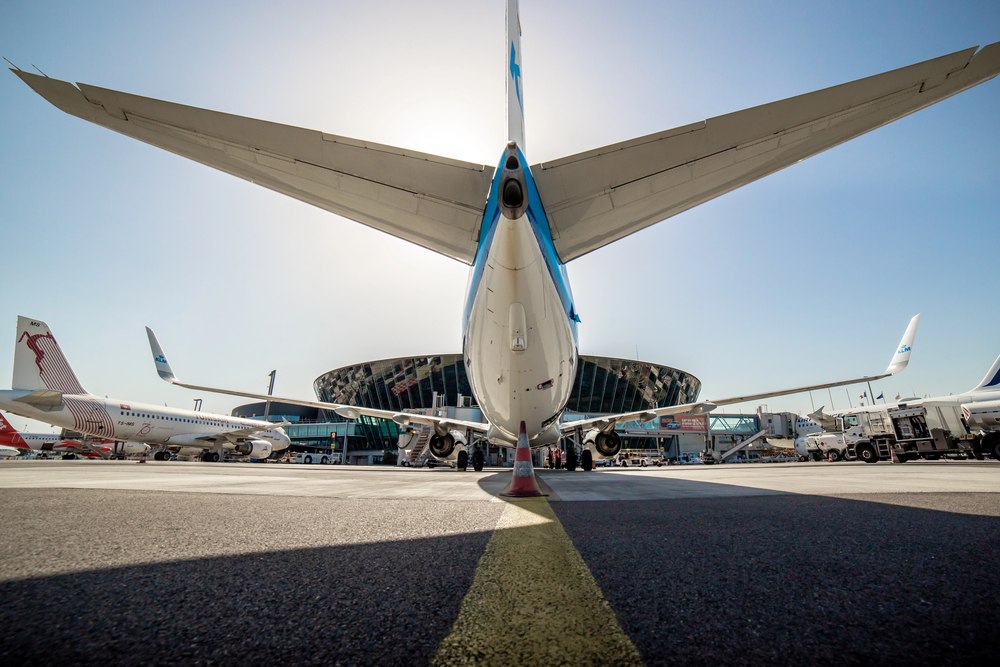

Tokayev Urges Faster Start of Construction on New Airport in Astana

Kazakhstan’s President Kassym-Jomart Tokayev has called for construction of a new airport in Astana to begin as soon as possible, citing growing regional competition for transport and passenger traffic. In 2025, the domestic terminal at Astana International Airport handled 6.3 million passengers, more than twice its annual design capacity of 3 million. The overload prompted city authorities to first consider expanding the existing airport and later to discuss building a second air hub. The idea was also backed by an earlier instruction from Tokayev to assess the feasibility of a second airport in the capital and determine a possible location. In early June, media reports suggested that the new airport could be built in the northwest of Astana, while the existing airport is located in the southeast. The city administration denied that a site had been selected, saying only that potential locations were being considered as part of adjustments to the capital’s master plan. Speaking at a joint session of parliament on June 30, Tokayev said the project should now move faster. “In aviation, there is accelerated expansion of route networks and the formation of full-fledged air hubs. From this point of view, the construction of a new airport in Astana is a task that cannot be delayed. Construction must begin as soon as possible,” Tokayev said. The president also said Kazakhstan should create a national cargo airline to enhance its position in international logistics. “As the leading oil and gas country in the region, we must create a strong aviation fuel supply infrastructure. This is a very important task that cannot be delayed,” he said. Tokayev also highlighted the need to improve Kazakhstan’s road network. He said repair work began last year on 13,000 kilometers of roads, 6,000 kilometers of which have been put into operation. Tokayev described it as the largest road infrastructure effort in the country’s history. He said modernization of several road border checkpoints should be completed next year. “As a result of these efforts, transit freight by road has doubled over the past five years and reached 6 million tons,” Tokayev said. He added that road carriers in Kazakhstan generated about $3.12 billion in revenue last year, nearly matching revenue from rail transport and showing the sector’s growth potential. Tokayev also pointed to ongoing railway modernization. Last year, traffic was launched on the second tracks of the Dostyk-Moyynty section and on the Almaty bypass railway line. This year, construction is expected to be completed on the Moyynty-Kyzylzhar and Darbaza-Maktaaral railway lines, while the Bakhty-Ayagoz line is due to be commissioned next year. “We need to focus on the most important element of the country’s infrastructure framework, the transport and logistics sector. This sector is of strategic importance. All countries in our region are paying attention to it, so competition is intensifying,” Tokayev said. As previously reported by The Times of Central Asia, Kazakhstan’s aviation authorities plan to double the country’s domestic aircraft fleet by 2030 and are seeking foreign investors to build new cargo and...