
• KZT/USD = 0.00227
  • TJS/USD = 0.10820
  • UZS/USD = 0.00009
  • TMT/USD = 0.29850
  • KZT/USD = 0.00227
  • TJS/USD = 0.10820
  • UZS/USD = 0.00009
  • TMT/USD = 0.29850
  • KZT/USD = 0.00227
  • TJS/USD = 0.10820
  • UZS/USD = 0.00009
  • TMT/USD = 0.29850
  • KZT/USD = 0.00227
  • TJS/USD = 0.10820
  • UZS/USD = 0.00009
  • TMT/USD = 0.29850
  • KZT/USD = 0.00227
  • TJS/USD = 0.10820
  • UZS/USD = 0.00009
  • TMT/USD = 0.29850
  • KZT/USD = 0.00227
  • TJS/USD = 0.10820
  • UZS/USD = 0.00009
  • TMT/USD = 0.29850
  • KZT/USD = 0.00227
  • TJS/USD = 0.10820
  • UZS/USD = 0.00009
  • TMT/USD = 0.29850
  • KZT/USD = 0.00227
  • TJS/USD = 0.10820
  • UZS/USD = 0.00009
  • TMT/USD = 0.29850
29 September 2026

Viewing results 1 - 6 of 2

Russian Diesel Returns, but Kyrgyzstan and Tajikistan Remain Exposed

Russia sharply increased diesel supplies to Kyrgyzstan and Tajikistan in August after a summer slump in Russian fuel exports strained both countries’ markets and pushed prices higher. But the August rebound underscored a weakness already exposed over the summer: disruptions at Russian refineries can quickly ripple through fuel markets across both countries. In August, Kyrgyzstan received more than 72,000 tons of Russian diesel, up from just 4,400 tons in July. Supplies to Tajikistan rose from 16,000 tons to more than 56,000 tons, around 3.5 times the July level. Overall, Russia exported more than 370,000 tons of diesel to Kazakhstan, Kyrgyzstan, Tajikistan, and Mongolia in August, more than double the July volume. Kazakhstan received around 28,000 tons after no deliveries in July, while Mongolia imported about 215,000 tons. Russia's diesel production recovered to around 170,000 tons per day in August, but Moscow maintained restrictions on exports to protect its domestic market, with exceptions for countries covered by intergovernmental agreements. The summer disruption showed that such arrangements do not insulate Kyrgyzstan and Tajikistan from falling production at Russian refineries. Kyrgyzstan Starts to Diversify Kyrgyzstan consumes around 1.6 million tons of petroleum products a year and receives the overwhelming majority of its imports from Russia. The summer disruption pushed Bishkek to look for additional sources. The authorities discussed purchases from Kazakhstan, Belarus, Azerbaijan, Uzbekistan, and Turkmenistan. Belarusian deliveries began arriving in July, while China also sent an initial batch of fuel. In August, Kyrgyz officials opened talks with China’s Sinopec over further supplies. Another option is to refine more crude oil domestically. In August, 35,000 tons of crude were shipped through Kazakhstan to Kyrgyzstan for processing at local refineries. The new route gives Bishkek another way to source feedstock while reducing its dependence on finished gasoline and diesel from Russian refineries. The 72,000 tons of Russian diesel delivered in August largely offset July’s collapse rather than establishing a new level of supply. Tajikistan's Options Tajikistan is even more dependent. In the first half of 2026, the country imported 599,500 tons of petroleum products worth $494.7 million. Russia accounted for 91.1% of those supplies. Diesel imports totaled 300,200 tons. The reduction in supplies became visible on the streets of Dushanbe over the summer. In early July, diesel disappeared from some filling stations, while others limited purchases to 20 liters per vehicle. By late July, prices at some stations had reached 17–18 somoni (about $1.90) per liter. As of August 31, the average price was around 16.5 somoni, compared with approximately 11 somoni in early June. Dushanbe responded by increasing purchases from neighboring countries. In July, imports of gasoline, diesel, and jet fuel from Kazakhstan, Uzbekistan, and Turkmenistan roughly tripled to 34,000 tons. But average monthly imports of these fuels from all suppliers in the first half of the year were around 97,000 tons. Neighboring suppliers can cover part of the shortfall, but for now they cannot quickly replace Russian volumes. In July, the presidents of Tajikistan and Kazakhstan discussed increasing supplies of Kazakh petroleum...

Uzbekistan Faces Fuel Shortage Pressure as Imports Rise

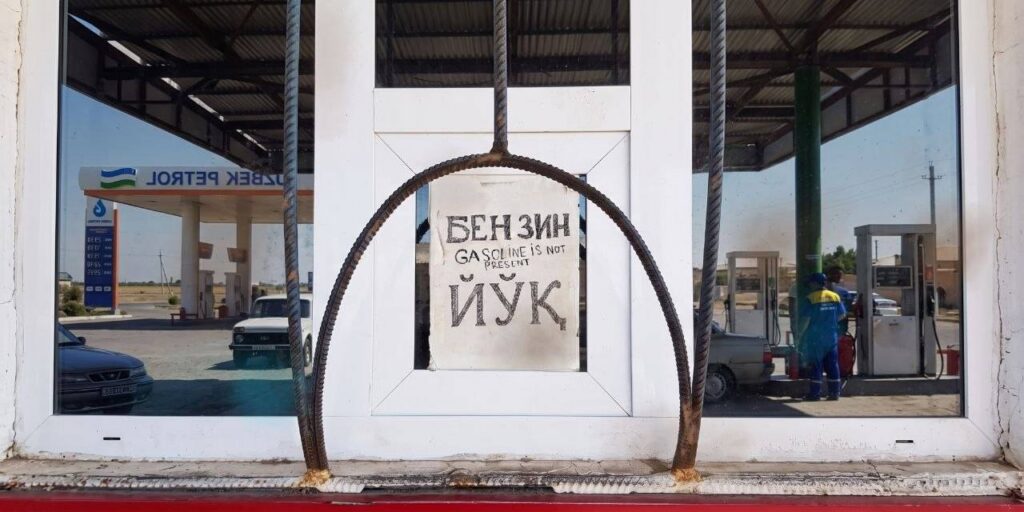
Central Asia is facing a new wave of tension in the market for fuels and lubricants. Shortages of gasoline, diesel fuel, and jet fuel have affected the entire region to varying degrees, but the situation is developing differently in each country. For Kyrgyzstan and Tajikistan, the problem is one of direct import dependence. Kazakhstan and Uzbekistan, which have their own production and refining capacity, are in a more stable position. However, rapidly growing domestic demand is increasingly tying them to imports. The Times of Central Asia previously reported that Kazakhstan is tightening domestic controls, building up reserves ahead of refinery maintenance, and considering fuel imports from China to protect its own market. Kyrgyzstan, meanwhile, has appealed to Azerbaijan, Belarus, Kazakhstan, Russia, Turkmenistan, and Uzbekistan for help in securing fuel supplies, as shortages inside Russia are placing additional pressure on the local fuel market. Uzbekistan’s refining system includes the Bukhara and Fergana oil refineries, the Altyaryk unit of the Fergana refinery, and the modern Uzbekistan GTL complex, which produces synthetic liquid fuels from natural gas. The system produces gasoline, diesel, jet fuel, oils, naphtha, bitumen, and liquefied gas. From January through May 2026, Uzbekistan imported 642 million liters of gasoline worth $373 million. Import volume was 84% higher than in the same period last year, while import value rose by 85%. Imports now cover nearly half of domestic demand. Domestic gasoline production during the five-month period totaled 502,200 tons, equivalent to about 670 million to 678 million liters. Output has declined in recent years, falling from 1.33 million tons in 2023 to 1.2 million tons in 2025. The pressure has also reached the domestic fuel exchange. In late June, AI-92 gasoline prices in Uzbekistan hit a record high, with one ton selling for 13.919 million soums. Since the start of June, prices have risen by about 11% to 12%. The steepest increase came in the first 10 days of the month. Supply on the exchange then fell sharply, from up to 7,700 tons in the first half of June to 1,600 to 2,400 tons in the second half. The price rise has already begun to affect retail fuel costs, especially in Tashkent. One reason for the imbalance was Uzbekistan’s phased reduction of AI-80 gasoline under an environmental reform. In May, Odil Temirov, deputy chairman of Uzbekneftegaz’s board for refining, said the Bukhara Oil Refinery would begin switching from AI-80 to AI-91 and AI-92 in November and December, with a full phase-out of AI-80 from the start of 2025. He said AI-80 accounted for 85% of output at the refinery, while AI-92 made up the remaining 15%, and that this ratio would begin to change in November. Demand quickly shifted toward AI-92 and AI-95, but domestic production has not yet adapted to the new consumption pattern. Additional pressure came from events in Russia, which remains one of the key suppliers of gasoline, refinery feedstock, and aviation fuel. Reduced output at Russian refineries, caused by repairs and the aftermath of attacks on energy...