
• KZT/USD = 0.00223
  • TJS/USD = 0.10820
  • UZS/USD = 0.00009
  • TMT/USD = 0.29760
  • KZT/USD = 0.00223
  • TJS/USD = 0.10820
  • UZS/USD = 0.00009
  • TMT/USD = 0.29760
  • KZT/USD = 0.00223
  • TJS/USD = 0.10820
  • UZS/USD = 0.00009
  • TMT/USD = 0.29760
  • KZT/USD = 0.00223
  • TJS/USD = 0.10820
  • UZS/USD = 0.00009
  • TMT/USD = 0.29760
  • KZT/USD = 0.00223
  • TJS/USD = 0.10820
  • UZS/USD = 0.00009
  • TMT/USD = 0.29760
  • KZT/USD = 0.00223
  • TJS/USD = 0.10820
  • UZS/USD = 0.00009
  • TMT/USD = 0.29760
  • KZT/USD = 0.00223
  • TJS/USD = 0.10820
  • UZS/USD = 0.00009
  • TMT/USD = 0.29760
  • KZT/USD = 0.00223
  • TJS/USD = 0.10820
  • UZS/USD = 0.00009
  • TMT/USD = 0.29760
21 September 2026

Viewing results 1 - 6 of 2

Kyrgyzstan’s High-Wire Act: Sanctions, Compliance, and National Interest

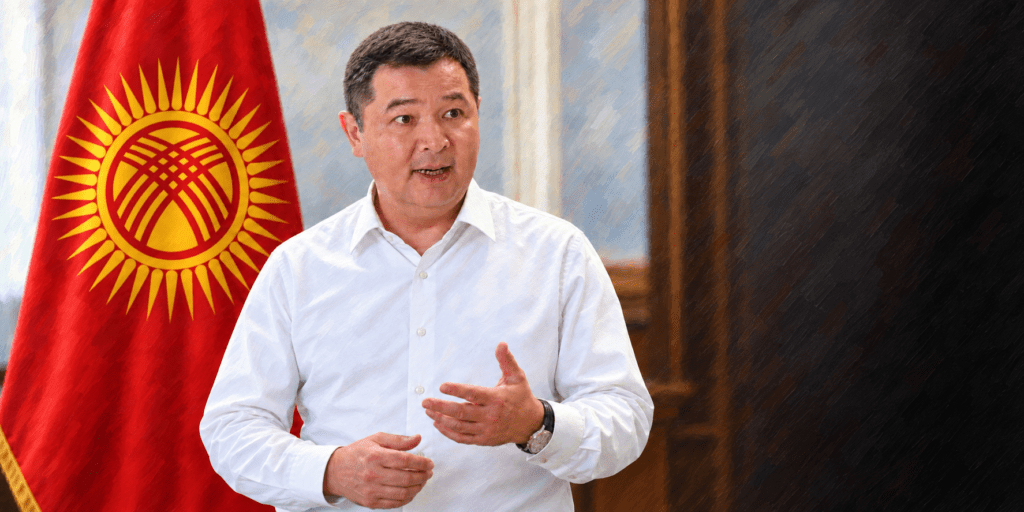
On September 2, the day after the Shanghai Cooperation Organization’s Heads of State Summit in Bishkek, The Times of Central Asia spoke with Bakyt Sydykov, Kyrgyzstan’s Minister of Economy and Commerce and Special Presidential Representative for Sanctions Policy. He outlined the government’s approach to sanctions compliance and protecting Kyrgyz businesses. Sanctions exposure can affect Kyrgyz banks and businesses, as well as their international partners. U.S. secondary sanctions and EU and UK measures affecting foreign entities operate through different legal mechanisms. Some portions of the text have been edited for clarity.   TCA: The sanctions against Russia adopted by the U.S., EU, and UK are not UN Security Council-mandated. Is it correct that Kyrgyzstan’s compliance policy addresses these measures rather than UN-mandated sanctions? Sydykov: That's correct. Secondary sanctions can affect non-U.S., non-EU, and non-UK entities or persons who knowingly facilitate transactions involving sanctioned parties. Our focus is on establishing better and better mechanisms and frameworks that address this bilateral dimension, that is, Kyrgyzstan's direct exposure through its relations with the sanctioning jurisdictions, in order to mitigate our exposure to potential secondary sanctions. TCA: Kyrgyz citizens and businesses can face sanctions exposure through dealings with sanctioned parties, including the risk of U.S. secondary sanctions. What are Kyrgyzstan’s main challenges in improving its compliance regime, and how are you addressing them? Sydykov: For technical reasons, our compliance regime is moving toward putting in place mechanisms that can flag or be anticipatory. I think you would agree that free markets are complicated and circumvention often comes to light only after it has occurred. We are largely equipped to manage these occurrences. We are moving to put in place firewall-like frameworks which would allow the country to identify and respond to occurrences before the fact. It is a great challenge — and one that every country operating in a free-market economy faces — to develop such a capacity, namely, to anticipate and prevent circumvention before it happens. Despite our best efforts, this remains a structural limitation. TCA: What concrete actions have you taken, or are you planning to take? Sydykov: We have established working groups, task forces, and interagency committees capable of swiftly halting the operations of any company engaged in sanctions circumvention. We are also working closely with commercial banks on these efforts. The banks, for their part, have introduced internal compliance committees and, in some cases, adjusted the composition of their boards of directors to strengthen governance and decision-making around potential circumvention risks. The banks are also developing a joint interbank blacklist of sanctioned entities, so that these entities are unable to operate through the banking system going forward. Those are steps to develop a working forward-looking, predictive approach — one that flags suspicious activity before it materializes – central to the comprehensive framework we are building. TCA: Some foreign investors may be reluctant to invest in Kyrgyzstan because of sanctions exposure. How could the measures you are taking address those concerns? Sydykov: Let me first say that we understand the rationale behind...

EU Sanctions Seminar in Bishkek Puts Kyrgyzstan’s Russia Trade Under Scrutiny

The European Union held a full-day sanctions seminar in Bishkek on June 9, aimed at Kyrgyz companies, banks, logistics operators and virtual-asset businesses. The session comes less than seven weeks after Brussels used its anti-circumvention tool against Kyrgyzstan for the first time. The EU Delegation to the Kyrgyz Republic said the seminar was designed to raise awareness of EU sanctions, explain their application, and improve cooperation to prevent circumvention. The published agenda set out a program covering the EU sanctions system, financial restrictions, dual-use trade controls, penalties, trade-flow risks, and practical compliance. It also included question-and-answer sessions on financial sanctions and dual-use goods. The Kyrgyz Chamber of Commerce and Industry said the event would cover sanctions policy. Trainers were expected to come from the European Commission, EU member states, international law firms, banks, logistics companies, technology firms, and the virtual-asset sector. The timing gives an otherwise technical seminar a political edge. On April 23, the Council of the EU adopted its 20th sanctions package against Russia. Brussels banned the export of computer numerical control machines and radios to Kyrgyzstan, where there is a high risk that the products could be re-exported to Russia. The Council said trade data showed a significant rise in the re-export of common high-priority items. Those narrow categories carry large compliance risk. They include machine tools, electronics, radio equipment and other components that can support military production, drones, communications systems, and advanced industrial supply chains. The EU is not attempting to stop Kyrgyz trade with Russia; it is trying to close routes for goods that European regulators say should not reach Russia through third countries. Kyrgyzstan has drawn closer EU scrutiny since Russia’s full-scale invasion of Ukraine in 2022. A member of the Eurasian Economic Union, goods can enter Kyrgyzstan, clear customs, and then move through regional trade channels. That role has supported growth in Kyrgyzstan, but has placed freight forwarders, importers and banks under closer foreign review. The concern had been building before the April decision. During a February visit to Bishkek, EU sanctions envoy David O’Sullivan discussed Kyrgyz banks, cryptocurrency and sensitive imports with Kyrgyz officials. Local coverage said the EU was watching about 80 dual-use product categories shipped from Europe to Kyrgyzstan. Around 50 had been found directly in Russian weapons, while 30 more were described as economically critical industrial items used in their production. The April package also increased pressure on Kyrgyz financial channels. The EU placed a transaction ban on 20 Russian banks and targeted four financial institutions in third countries. Keremet Bank and Capital Bank were among the affected Kyrgyz lenders. The EU also designated a Kyrgyz entity operating a platform where large volumes of the government-backed A7A5 stablecoin are traded. Virtual assets remain one of the most sensitive areas. On June 3, Kyrgyzstan’s financial-market regulator revoked the license of CJSC TengriCoin as a virtual-asset trading operator. The regulator cited systematic legal violations, failure to comply with official requirements, and failure to submit required reports. It also reminded market participants...