• KZT/USD = 0.00214
  • TJS/USD = 0.10810
  • UZS/USD = 0.00008
  • TMT/USD = 0.29760
  • KZT/USD = 0.00214
  • TJS/USD = 0.10810
  • UZS/USD = 0.00008
  • TMT/USD = 0.29760
  • KZT/USD = 0.00214
  • TJS/USD = 0.10810
  • UZS/USD = 0.00008
  • TMT/USD = 0.29760
  • KZT/USD = 0.00214
  • TJS/USD = 0.10810
  • UZS/USD = 0.00008
  • TMT/USD = 0.29760
  • KZT/USD = 0.00214
  • TJS/USD = 0.10810
  • UZS/USD = 0.00008
  • TMT/USD = 0.29760
  • KZT/USD = 0.00214
  • TJS/USD = 0.10810
  • UZS/USD = 0.00008
  • TMT/USD = 0.29760
  • KZT/USD = 0.00214
  • TJS/USD = 0.10810
  • UZS/USD = 0.00008
  • TMT/USD = 0.29760
  • KZT/USD = 0.00214
  • TJS/USD = 0.10810
  • UZS/USD = 0.00008
  • TMT/USD = 0.29760
10 August 2026

Viewing results 1 - 6 of 5

Uzbekistan-China Satellite Project Advances with AI Module

Uzbek engineers are developing an onboard artificial intelligence module for a new Earth observation satellite being built in partnership with a Chinese aerospace company. The satellite, named Samarqand-2028, is being developed under an agreement between Uzbekistan’s national space agency, Uzbekcosmos, and China’s STAR.VISION Aerospace. The Chinese company is developing the satellite itself, while Uzbek specialists are working on an onboard AI system that will help process the information it collects. The spacecraft will use hyperspectral imaging, which can detect features invisible to the human eye. Uzbekcosmos said the satellite could be used to monitor agriculture and the environment, as well as provide information for other parts of the economy. The project could include the creation of national maps showing where cotton and wheat are grown. It remains unclear when the satellite will be launched. It was expected to enter orbit in May 2026, but that target passed without a launch. In its latest update, Uzbekcosmos referred only to an upcoming launch and did not provide a revised date. Samarkand was selected to host the 2028 International Astronautical Congress in October 2025. It will be the first time the event, one of the world’s largest annual gatherings for the space industry, has been held in Central Asia. Hosting the congress will bring international attention to Uzbekistan’s space ambitions. Its longer-term impact, however, will depend on whether projects such as Samarqand-2028 help Uzbek specialists develop skills and build technology that can be used inside the country. The government has identified the space sector as one of the country's emerging high-technology priorities and is using the 2028 congress to showcase those ambitions. As The Times of Central Asia previously reported, Uzbekistan is also preparing to launch its first domestically developed scientific satellite and has begun a program to train the country’s first astronaut.
Kazakhstan Allocates More Than $22 Million for New Communications Satellite

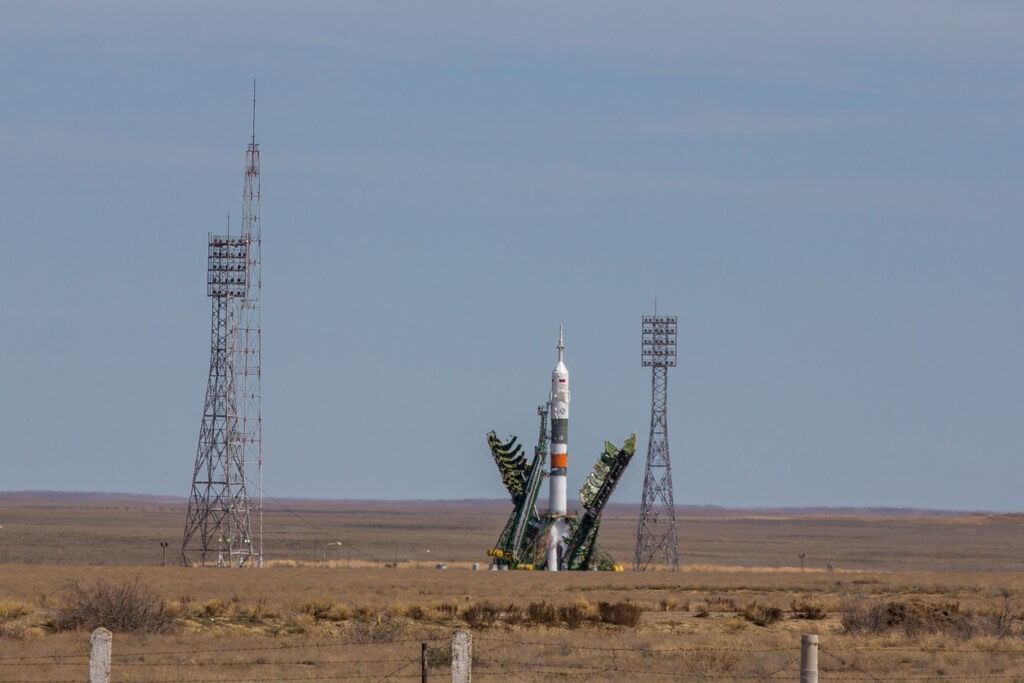
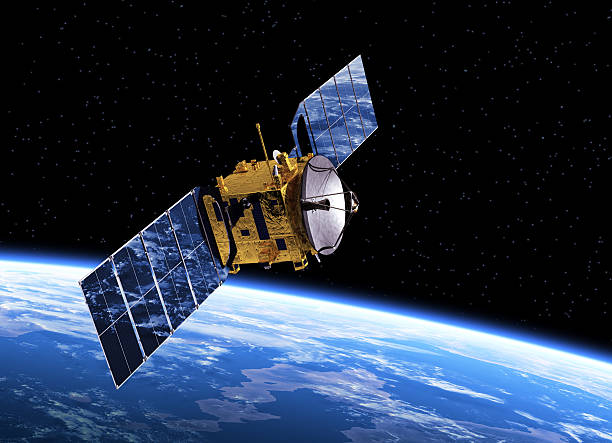
Kazakhstan has begun upgrading its national satellite infrastructure by financing the development of a new communications satellite, KazSat-3R, which is expected to replace the existing KazSat-3 by the end of the decade. The government is also working to expand the country’s Earth-observation satellite network and develop domestic manufacturing capacity. It is also preparing for commercial launches from the Baikonur Cosmodrome. The government has allocated approximately $22.3 million from its reserve for the KazSat-3R project. The new satellite will replace KazSat-3, whose planned service life expires in 2029. Kazakhstan’s national satellite communications system currently consists of two satellites, KazSat-2 and KazSat-3, as well as two ground control centers, Akkol and Kokterek. The system provides television and radio broadcasting, data transmission, telephone services, and internet access across Kazakhstan, Central Asia, and parts of Russia. KazSat-3’s approaching retirement is one reason for its replacement. In 2023, a power-system malfunction temporarily took the satellite out of service, disrupting satellite television broadcasts and exposing Kazakhstan’s dependence on its own orbital infrastructure. In May 2025, Senator Andrey Lukin, chair of the Senate Committee on International Relations, Defense and Security, previously said KazSat-3R could require 40.2 billion tenge, approximately $86 million, in state financing. He also warned that public procurement rules could restrict the participation of foreign satellite manufacturers and called for the project to be handled under a special procedure. The KazSat system is used by 19 telecommunications operators and provides television services to more than two million subscribers, the government said. It supports television and radio broadcasting, as well as data transmission. The system also provides mobile communications and internet access, particularly in remote areas where building ground-based infrastructure is difficult. Government figures indicate that 99% of Kazakhstan’s population has access to high-speed internet. The country’s population stood at 20,5 million on June 1, 2026, the Bureau of National Statistics reported. The new communications satellite is one element of Kazakhstan’s national space program. The country plans to launch three KazEOSat-MR Earth-observation satellites in 2027 to replace KazEOSat-2. Three more satellites are planned for 2029–2030, which would bring the constellation to six. Kazakhstan is also developing its own launch infrastructure. The Baiterek project, implemented with Russia, has modernized a launch complex at the Baikonur Cosmodrome for the Soyuz-5 launch vehicle. The first test launch took place successfully on April 30, 2026. The government said the test confirmed the complex’s operational readiness. The cost of a commercial Soyuz-5 launch is estimated at between $50 million and $60 million, depending on the rocket configuration and upper stage. By comparison, a commercial launch of SpaceX’s Falcon 9 is priced at approximately $67 million. Kazakh authorities expect this cost structure to allow the project to compete in the international launch-services market. Kazakhstan is also considering satellite exports as a potential area of commercial growth. Domestic companies are exploring projects to manufacture satellites for the Democratic Republic of the Congo, Mongolia, and Nigeria, with a combined potential value estimated at approximately $75 million. As previously reported by The Times of Central Asia,...

Kazakhstan to Export Earth Observation Satellites, Expand Digital Infrastructure

Kazakhstan plans to manufacture at least five to six remote sensing satellites in the coming years, with some slated for export, Deputy Prime Minister and Minister of Artificial Intelligence and Digital Development Zhaslan Madiev announced at a recent government meeting. Satellite production is managed by Kazkosmos JSC (National Space Center) and Ghalam LLP, while the Republican Space Communications Center JSC oversees satellite operations in orbit. According to Madiev, the ministry supervises these entities, and their production capacities are currently being fully utilized. “In the coming years, it is planned to launch at least five or six Earth remote sensing satellites at this complex, and part of the production will be focused on export. The expected volume of exports will be about $75 million. The implementation of the project will be the first such experience in the history of Kazakhstan and will allow the formation of high-tech exports,” Madiev said. He also announced that, starting in 2026, satellite internet will be available on trains operated by Kazakhstan Temir Zholy and aboard Air Astana flights. Currently, three satellite internet providers operate in the country, and two foreign companies are expected to enter the market soon. Pilot tests for train and aircraft connectivity are scheduled for this year. In parallel, local authorities are mandated to provide satellite internet access in tourist areas and hard-to-reach regions, funding the efforts independently. Simultaneously, a nationwide initiative is underway to deliver mobile coverage to 40,000 kilometers of national and regional highways, with completion expected within two years. The government is also expanding 5G infrastructure, with networks already active in 20 cities and plans to reach up to 75% of urban areas. More than half of the country’s rural settlements are set to gain high-speed internet access via fiber-optic lines over the next two years. As part of the “Last Mile” project, fiber optics will be extended to hundreds of thousands of households. Additionally, a major international project is underway: the construction of a fiber-optic communication line along the seabed of the Caspian Sea, connecting Kazakhstan to Azerbaijan. “The project will strengthen Kazakhstan’s position as a digital bridge between East and West and increase the stability of international data transmission channels,” Madiev said. This initiative is set for completion by year’s end. As previously reported by The Times of Central Asia, Azerbaijan and Kazakhstan are jointly investing over $50 million into the project.

Kazakhstan and China to Build Ground Satellite Station in Almaty

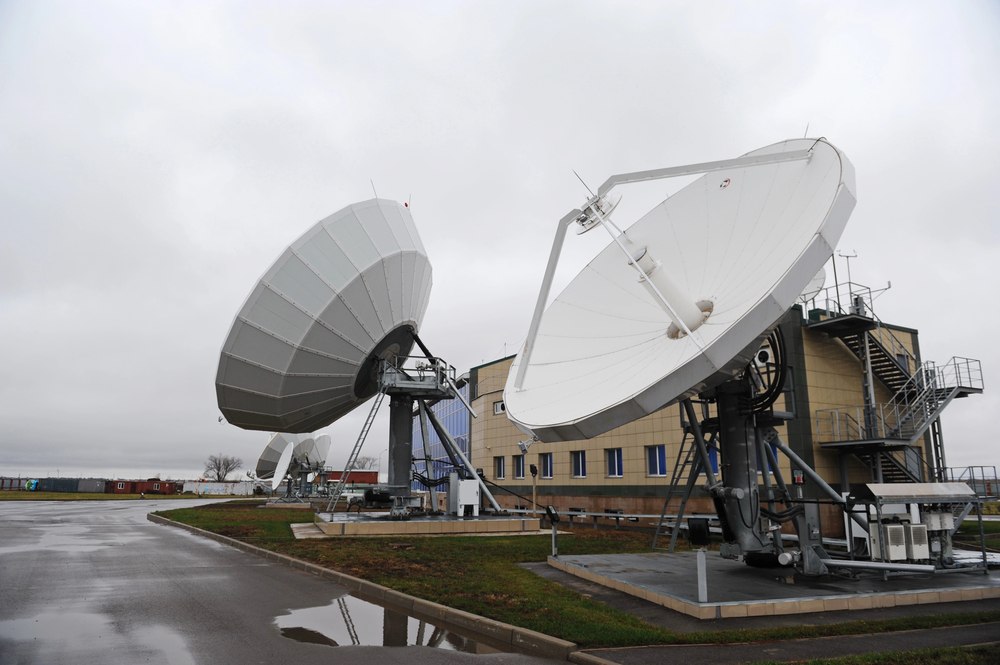
Kazakhstan and China have agreed to jointly construct a ground satellite station in Almaty, a $3 million initiative, aimed at enhancing scientific cooperation and strengthening regional satellite data infrastructure. The station will be located on the campus of Al-Farabi Kazakh National University and developed in partnership with China’s Hainan Satellite Data and Application Research Center and Northwestern Polytechnical University. According to Kazakhstan’s Ministry of Science and Higher Education, the station will operate in the X-band frequency, enabling it to receive and transmit data from both Kazakh satellites and foreign spacecraft. The project was formalized during a recent visit by a delegation from China’s Hainan Province, where officials signed a protocol confirming the station’s placement at the Kazakh branch of Northwestern Polytechnical University. “This initiative builds on last year’s cooperation agreement between Al-Farabi Kazakh National University and China’s Northwestern Polytechnical University to conduct joint research using a microsatellite,” said Margulan Ibraimov, Vice-Rector for Research and Innovation at the university. “That agreement directly followed the joint statement made by President Kassym-Jomart Tokayev and President Xi Jinping during the latter’s state visit to Kazakhstan. Our researchers are currently working together on the NKSAT project, a next-generation microsatellite that will be the first of its kind in the region,” Ibraimov added. The satellite ground station is expected to play a key role in the collection, sharing, and practical application of satellite data across Kazakhstan and neighboring regions of China. It also reflects a broader expansion of Kazakh-Chinese collaboration in advanced technology sectors, including aerospace, digital infrastructure, and academic research. This initiative aligns with Kazakhstan’s long-term strategy to build domestic capabilities in space science and data-driven technologies, and to position the country as a regional hub for satellite-based services and innovation.

Uzbekistan and Kazakhstan Plan to Launch Satellites into Space

Representatives of Uzbekistan's Ministry of Digital Technologies attended the recent Asia-Pacific Conference on Digital Transformation, which was held in Astana on September 2-3. The event was organized by the United Nations Economic and Social Commission for Asia and the Pacific (UNESCAP). The conference touched upon possible cooperation between Uzbekistan and Kazakhstan on launching a group of satellites into space. In August Uzbekistan became a signatory to the Outer Space Treaty, which regulates international cooperation in space exploration. The Times of Central Asia has also reported that Kazakhstan plans to use Amazon's "Project Kuiper" satellite internet, a competitor to Elon Musk’s famous Starlink.