• KGS/USD = 0.01143 -0%
  • KZT/USD = 0.00198 -0%
  • TJS/USD = 0.10899 0.93%
  • UZS/USD = 0.00008 0%
  • TMT/USD = 0.28490 -0.28%
  • KGS/USD = 0.01143 -0%
  • KZT/USD = 0.00198 -0%
  • TJS/USD = 0.10899 0.93%
  • UZS/USD = 0.00008 0%
  • TMT/USD = 0.28490 -0.28%
  • KGS/USD = 0.01143 -0%
  • KZT/USD = 0.00198 -0%
  • TJS/USD = 0.10899 0.93%
  • UZS/USD = 0.00008 0%
  • TMT/USD = 0.28490 -0.28%
  • KGS/USD = 0.01143 -0%
  • KZT/USD = 0.00198 -0%
  • TJS/USD = 0.10899 0.93%
  • UZS/USD = 0.00008 0%
  • TMT/USD = 0.28490 -0.28%
  • KGS/USD = 0.01143 -0%
  • KZT/USD = 0.00198 -0%
  • TJS/USD = 0.10899 0.93%
  • UZS/USD = 0.00008 0%
  • TMT/USD = 0.28490 -0.28%
  • KGS/USD = 0.01143 -0%
  • KZT/USD = 0.00198 -0%
  • TJS/USD = 0.10899 0.93%
  • UZS/USD = 0.00008 0%
  • TMT/USD = 0.28490 -0.28%
  • KGS/USD = 0.01143 -0%
  • KZT/USD = 0.00198 -0%
  • TJS/USD = 0.10899 0.93%
  • UZS/USD = 0.00008 0%
  • TMT/USD = 0.28490 -0.28%
  • KGS/USD = 0.01143 -0%
  • KZT/USD = 0.00198 -0%
  • TJS/USD = 0.10899 0.93%
  • UZS/USD = 0.00008 0%
  • TMT/USD = 0.28490 -0.28%
07 December 2025

Viewing results 1 - 6 of 8

Uzbekistan to Transition to 12-Year School System

Uzbekistan is preparing to transition to a 12-year general education system, Deputy Minister of Preschool and School Education Sardor Radjabov announced in an interview with Uzbekistan-24. The change will incorporate preparatory classes into formal education, extending schooling from the current 11 years to 12. The revised structure will include three stages: One year of school preparation Four years of primary education (grades 1-4) Five years of general secondary education (grades 5-9) Two years of full secondary education (grades 10-11), which may be completed at general schools, academic lyceums, military schools, or technical colleges According to Radjabov, the reform aims to enhance educational quality and eliminate obstacles faced by Uzbek students applying to foreign universities. Currently, graduates are often required to complete a one-year foundation program abroad before qualifying for undergraduate studies. “This means our children lose a year,” he said. “If we implement the 12-year education system, students will no longer need to study foundation courses in several countries and will be able to enter undergraduate programs directly.” He added that aligning Uzbekistan’s education system with international standards would expand opportunities for graduates and narrow the gap between local and global academic systems. The reform builds on earlier changes to Uzbekistan’s school structure. In 2017, President Shavkat Mirziyoyev proposed the reinstatement of an 11-year general education framework, emphasizing its role in improving the connection between schools and colleges. Since then, most schools have operated under the 11-year model.
Knowledge Day in Central Asia: What’s Changing in Schools This Academic Year?

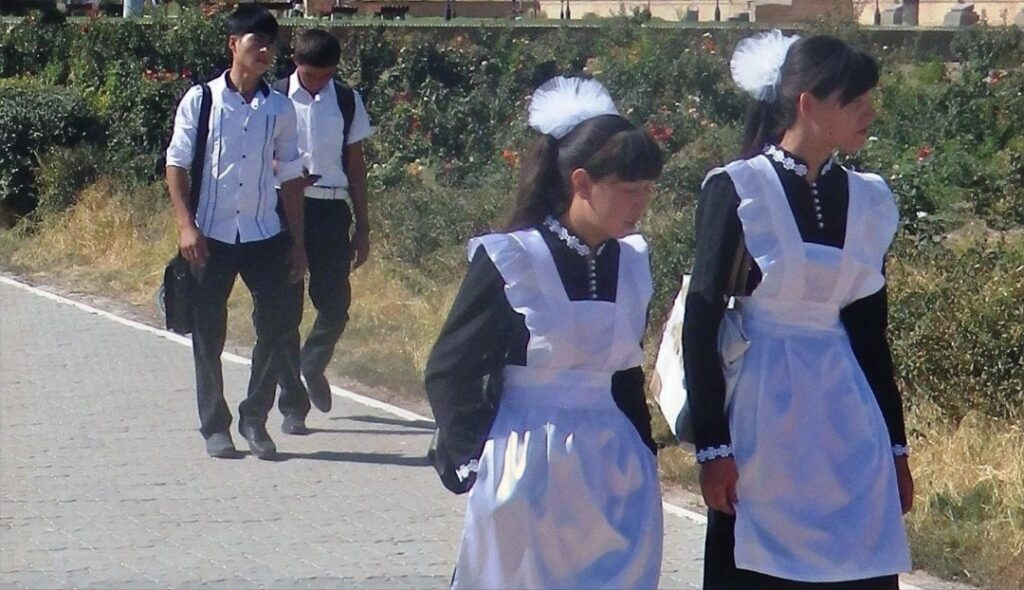
Secondary schools across Central Asia are embracing modern teaching methods and aiming to elevate the status of teachers, as the new academic year begins with a wave of reforms. Kazakhstan: AI in Classrooms and Teacher Protections In Kazakhstan, the academic year begins on September 2, as Constitution Day on the 1st is a national holiday. Over 370,000 first-graders are expected to enter school this year. As previously reported by The Times of Central Asia, significant reforms are underway in the country’s education system. Amendments to the Law “On the Status of Teachers” will shield educators from non-teaching duties and protect them from undue legal responsibility. President Kassym-Jomart Tokayev has emphasized that educators should not be held accountable for incidents involving children that occur outside school or due to parental negligence. New “personal safety” lessons will also be introduced across all educational levels, from kindergartens to colleges. These age-appropriate classes will cover topics ranging from water safety and interaction with strangers to cyberbullying, financial literacy, and legal awareness. Schools and colleges are also rolling out DosbolLIKE, an anti-bullying initiative piloted in 50 schools last year, designed to curb bullying in student communities. Artificial intelligence will be introduced into the curriculum via “Digital Literacy” and “Computer Science” classes. AI-focused online courses called Day of AI are now available for grades 1-11, with training programs also developed for teachers. Despite the construction of 1,200 new schools accommodating over a million students in recent years, the high birth rate continues to strain infrastructure. In Almaty alone, the shortage exceeds 34,000 school places. Uzbekistan: Ivy League Aspirations and Civic Values In Uzbekistan, school also starts on September 2, a customary date. The first lesson will be conducted under the motto: “In the name of the Motherland, in the name of the nation, in the name of the people!” According to the Ministry of Preschool and School Education, 738,000 first-graders will receive gifts from President Shavkat Mirziyoyev. An international school is set to open this September, initially enrolling 60 top-performing graduates of the 8th grade. The curriculum will include leadership and social activism training, with a focus on preparing students for admission to Ivy League universities. A nationwide talent identification and development program is also in development. The weekly Kelazhak Soati (“Hour of the Future”) class will debut this year, aiming to strengthen students’ moral values and encourage reflection on their future roles in society. Kyrgyzstan: Transition to 12-Year Education This academic year marks Kyrgyzstan’s official transition to a 12-year education system. The reform affects lesson structures, curricula, and textbooks. The transition, to be completed by 2028, includes the redistribution of students across grade levels. For example, third graders born in 2015 will skip to fifth grade, and sixth graders born in 2012 will advance to eighth grade. Further shifts are scheduled for the next two academic years. While the extended education model is expected to allow deeper learning and skills development, the transition period may cause confusion among students, parents, and educators. Adapting to new...

Rising Cost of Private Education in Central Asia Widens Wealth Gap

The cost of private education in Central Asia continues to rise sharply, increasingly making it an option reserved for the region’s wealthiest families, according to a report by Akchabar. Once a rarity, private schools have proliferated across the region over the past decade, driven by parental demand for smaller class sizes, enhanced discipline, improved safety, and individualized learning. Many institutions now offer full-day programs that include lessons, supervised homework, and extracurricular activities ranging from robotics and IT to sports and languages. In cases of academic decline, private tutors are assigned to help students catch up, services rarely available in the public sector. Kyrgyzstan The number of private schools in Kyrgyzstan has risen from 152 in 2020 to 224 in 2024. Annual fees vary widely: Smart School charges approximately $2,861 per year, while Indigo Sapat starts at $4,500. Tensai International School costs up to $9,600 annually, and BIS ranks among the most expensive at $15,000. More affordable options include Avenir International, with monthly fees between $423 and $480. To address overcrowding in public schools, particularly in Bishkek and Osh, the government has begun easing licensing procedures for private institutions. Kazakhstan In Almaty, tuition rates also span a wide range. Baiterek School charges $274 per month, while Koula.kz costs $443. Tamos Space School offers an annual program for nearly $4,900. Premium institutions such as Miras International School Almaty charge between $9,600 and $12,927 per year, while Galaxy International starts at $8,319. Uzbekistan Uzbekistan’s private education market is expanding rapidly. Artel TS charges $358 per month, while Diplomat International reaches up to $628. Wise School costs $437 per month, and Oxbridge International remains among the most affordable at $752 per year for primary classes. At the top end, CIS Tashkent stands as the region’s most expensive school, with tuition ranging from $19,000 to over $24,000 annually. Tajikistan Private school fees are particularly high relative to average incomes. At Empire of Knowledge, annual tuition starts at $2,362 for lower grades and rises to $2,545 for upper grades. Ruyo School offers separate programs: English-language instruction costs $2,899 per year, while the Russian-language track is around $2,577. Meanwhile, Shakhsiyat School charges approximately $1,610 annually for Tajik- or Russian-language instruction, and nearly $1,933 for the English-language track. A Growing Divide Despite the range of offerings, private school costs remain out of reach for most families. In Uzbekistan, where the average monthly wage is about $476, even mid-tier private schools amount to several months of income, while top schools charge more than $20,000 per year. In Tajikistan, where average monthly wages stand at around $279, tuition starting at $1,600 is unaffordable for the vast majority of households. For wealthier families, however, private education has become both an investment and a marker of social status, with the choice of school often carrying as much weight as profession or income.

Tokayev Urges Equal Education Standards Across Urban and Rural Kazakhstan

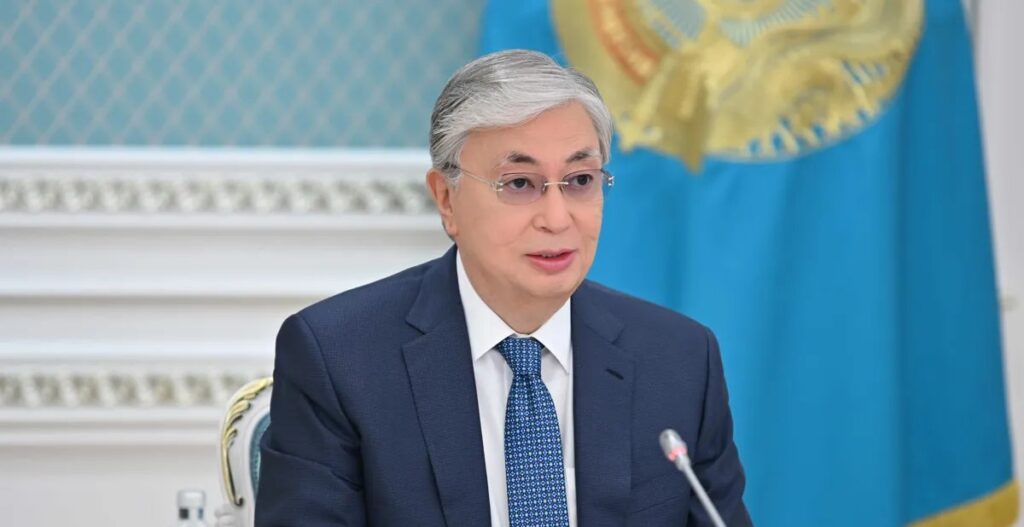
Kazakhstan's President Kassym-Jomart Tokayev has called for narrowing the gap in education quality between urban and rural schools and accelerating the integration of digital technologies and artificial intelligence (AI) into the country's education system. Speaking at the annual August Teachers' Conference, Tokayev emphasized that building a modern, inclusive nation requires equal opportunities for all children, regardless of geography. “All children must have equal opportunities. Therefore, an important task is to eliminate inequality in the quality of education in cities and villages,” he stated. Over the past four years, the material and technical infrastructure of more than 4,000 rural schools has been upgraded. Still, Tokayev stressed that this progress must be complemented by digital transformation, including the introduction of AI into the curriculum. “The concepts of ‘progressive nation’ and ‘technological nation’ are synonymous today,” he said, adding that digitalization is central to improving educational outcomes. Currently, over 95% of schools in Kazakhstan are connected to high-speed internet. Tokayev has instructed that this figure reach 100%, potentially through the use of Starlink satellite technology. “This is not just a technical issue, but a principle of social justice,” he added. The president also noted that advanced technologies will support the development of an inclusive education environment, particularly benefiting children with special needs. Several core educational services in Kazakhstan have already been digitized, including school and college admissions, inter-school transfers, and the Bilim service on the eGov mobile platform. However, Tokayev underscored the need to further equip schools with interactive tools and ensure universal access to digital platforms and electronic textbooks. The president placed particular emphasis on early instruction in AI technologies and continuous professional development for teachers. “Teachers must not only know their subject, but also be able to apply new technologies,” he said. As previously reported by The Times of Central Asia, the latest PISA assessment noted improvements in education access across Central Asia but highlighted a decline in academic performance among students in the region.

Kazakhstan’s Youth Struggle with Access to Sexual Health Information

One in five young people in Kazakhstan lacks access to information about reproductive and sexual health, according to an analysis by Ranking.kz based on a survey conducted by the Youth Research Center. Where Young People Seek Information The study reveals a significant gender disparity: 34.2% of female respondents seek information from medical specialists, compared to only 19.4% of male respondents. Alarmingly, 24.4% of young men report having no information on reproductive health at all, versus 14.9% of young women. The most commonly cited sources of reproductive health information are gynecologists, urologists, and reproductive specialists (26.6%), followed by online resources and articles (17.9%). Family discussions (16.6%), conversations with peers (15.4%), consultations with family doctors (15.3%), social media (14.4%), and printed materials from medical institutions (11.3%) also play a role. Despite these resources, 9.3% of respondents admitted they feel uncomfortable discussing such topics, while 19.8% reported receiving no information at all, underscoring the persistent knowledge gap. Infections and Awareness Sexually transmitted infections (STIs) remain a pressing concern. Only 16.8% of respondents said they are well informed about STIs. A further 36.7% reported partial awareness, 26.9% had only heard vague references, 15.4% were entirely uninformed, and 4.4% found the question difficult to answer. According to the Ministry of Health, Kazakhstan recorded 89.1 cases of STIs per 100,000 population in 2024, down from 96.4 in 2023, but still considered high. The most common infections included chlamydia (13.9 cases per 100,000), trichomoniasis (13.8), syphilis (8.5), and gonorrhea (6). The highest infection rates were recorded in Shymkent (247.7 per 100,000), Almaty (139.3), and Astana (127.1), followed by the Abai (125.9) and North Kazakhstan (118.6) regions. The lowest rates were reported in Zhambyl (24.6), Ulytau (30.7), and West Kazakhstan (31.4). Debate Over Sex Education in Schools When asked about the introduction of sex education in schools, 58.9% of survey respondents supported the idea, citing benefits such as improved understanding of physiology and anatomy, and a reduced risk of unwanted pregnancies and STIs. However, 35.6% opposed such initiatives. Among them, 15% found the topic too “embarrassing,” while 20.6% feared that sex education might encourage early sexual activity among teenagers.

Kyrgyzstan Eases Licensing Rules to Expand Private School Sector

The Kyrgyz government is taking steps to simplify the licensing process for private schools in response to a growing shortage of student places in the country’s public education system, particularly in urban centers such as Bishkek and Osh. On August 4, Chairman of the Cabinet of Ministers Adylbek Kasymaliyev announced a reform initiative aimed at easing regulatory requirements for licensing private institutions offering primary education. The goal, he stated, is to expand access to quality education and alleviate pressure on the overburdened public school network. Kasymaliyev noted that rapid population growth has led to severe overcrowding in schools in major cities, where students are often taught in three shifts instead of the standard two, negatively affecting learning outcomes. “Addressing the shortage of school places is a key priority for the government,” Kasymaliyev said. While new public schools are under construction, he emphasized that the private sector plays an important role in meeting rising demand. Kyrgyzstan currently has 219 private schools, with 108 located in Bishkek and 54 in Osh. In 2024, 33 licenses were issued to private education providers, and 21 more have been granted since the beginning of 2025. “We see strong interest from the private sector in the education field, particularly in large cities,” Kasymaliyev said. “Creating real opportunities for opening high-quality private schools is one of our tasks.” The reform is part of a broader initiative to improve educational access and quality amid demographic expansion and urbanization. Class sizes in Bishkek far exceed recommended limits, according to educators. “The average class size in Bishkek is 36 to 45 students, while the sanitary norm is up to 35,” a deputy director of a public school in the capital told The Times of Central Asia. “In some popular schools, the number exceeds 50.”