• KGS/USD = 0.01144 0%
  • KZT/USD = 0.00203 0%
  • TJS/USD = 0.10685 -0.19%
  • UZS/USD = 0.00008 0%
  • TMT/USD = 0.28530 0%
  • KGS/USD = 0.01144 0%
  • KZT/USD = 0.00203 0%
  • TJS/USD = 0.10685 -0.19%
  • UZS/USD = 0.00008 0%
  • TMT/USD = 0.28530 0%
  • KGS/USD = 0.01144 0%
  • KZT/USD = 0.00203 0%
  • TJS/USD = 0.10685 -0.19%
  • UZS/USD = 0.00008 0%
  • TMT/USD = 0.28530 0%
  • KGS/USD = 0.01144 0%
  • KZT/USD = 0.00203 0%
  • TJS/USD = 0.10685 -0.19%
  • UZS/USD = 0.00008 0%
  • TMT/USD = 0.28530 0%
  • KGS/USD = 0.01144 0%
  • KZT/USD = 0.00203 0%
  • TJS/USD = 0.10685 -0.19%
  • UZS/USD = 0.00008 0%
  • TMT/USD = 0.28530 0%
  • KGS/USD = 0.01144 0%
  • KZT/USD = 0.00203 0%
  • TJS/USD = 0.10685 -0.19%
  • UZS/USD = 0.00008 0%
  • TMT/USD = 0.28530 0%
  • KGS/USD = 0.01144 0%
  • KZT/USD = 0.00203 0%
  • TJS/USD = 0.10685 -0.19%
  • UZS/USD = 0.00008 0%
  • TMT/USD = 0.28530 0%
  • KGS/USD = 0.01144 0%
  • KZT/USD = 0.00203 0%
  • TJS/USD = 0.10685 -0.19%
  • UZS/USD = 0.00008 0%
  • TMT/USD = 0.28530 0%
09 February 2026

Viewing results 1 - 6 of 9

Tajik Schoolboy Killed in Moscow Area Sparks Central Asian Outrage

The fatal stabbing of a 10-year-old Tajik boy at a school in the Moscow area has sparked widespread condemnation across Central Asia. Russia’s Foreign Ministry extended “deep condolences” to Tajikistan following the killing. Ministry spokesperson Maria Zakharova said Moscow offered immediate assistance to the Tajik Embassy in Russia after the incident was reported by the press on December 16. She confirmed that the embassy sent a diplomatic note requesting an objective investigation. Official requests were subsequently forwarded to Russia’s Investigative Committee and the Interior Ministry to clarify the circumstances and support the Tajik side. The attack occurred at Uspensky School, where a 15-year-old ninth-grade student, identified as Timofey Kulyamov, allegedly stabbed and killed the victim, Qobiljon Aliyev. Witnesses reported that the suspect asked the child about his nationality before launching the fatal attack. On the day of the incident, he was reportedly wearing a shirt bearing the phrase “No lives matter.” Qobiljon’s family moved to Russia from the Hisor region of Tajikistan four years ago. His father passed away three years prior, and his mother has been working as a cleaner at the same school to support her three children. Journalists, civil society leaders, and public figures in Tajikistan and Uzbekistan condemned the killing, linking it to rising hostility toward Central Asian migrants in Russia. Tajik political analyst Muhammad Shamsuddinov took to social media to denounce what he described as systemic discrimination. “Who killed Qobiljon? The system,” he wrote. Shamsuddinov accused Russian public discourse and policies of fueling an environment of xenophobia, referencing remarks by State Duma members, law enforcement actions, and state-run media coverage. “Qobiljon was killed by Mironov’s constant statements. By Bastrykin’s speeches. By the State Duma’s draft laws. By Russian state television. By nationalist Telegram channels. By the constant and very public raids against migrants. By hours-long detentions at airports,” he wrote. He also criticized the Russian Embassy in Tajikistan for its silence, noting that while it continued to post routine updates and commemorative messages, it had not acknowledged the boy’s death. “As a society, where is the sympathy? The condolences? Nothing,” he wrote. Sherzodkhon Kudratkhuja, Chairman of the Supervisory Board of the Uzbekistan National Media Association and Rector of the University of Journalism and Mass Communications, also voiced his outrage. “No mother should ever go through this. None,” he said, after reportedly watching a video of the incident. He called the murder of a child based on national identity “impossible to describe in words.” Kudratkhuja urged Russia to introduce formal education on national tolerance in its schools and criticized the normalization of ethnic slurs among adults. “Children learn from adults, and this is the mirror of today’s society,” he said. He emphasized the need to foster values of tolerance, adding that all people “descended from Adam and Eve and are equal in dignity.”

Turkmenistan and American Language Schools Agree on Programs

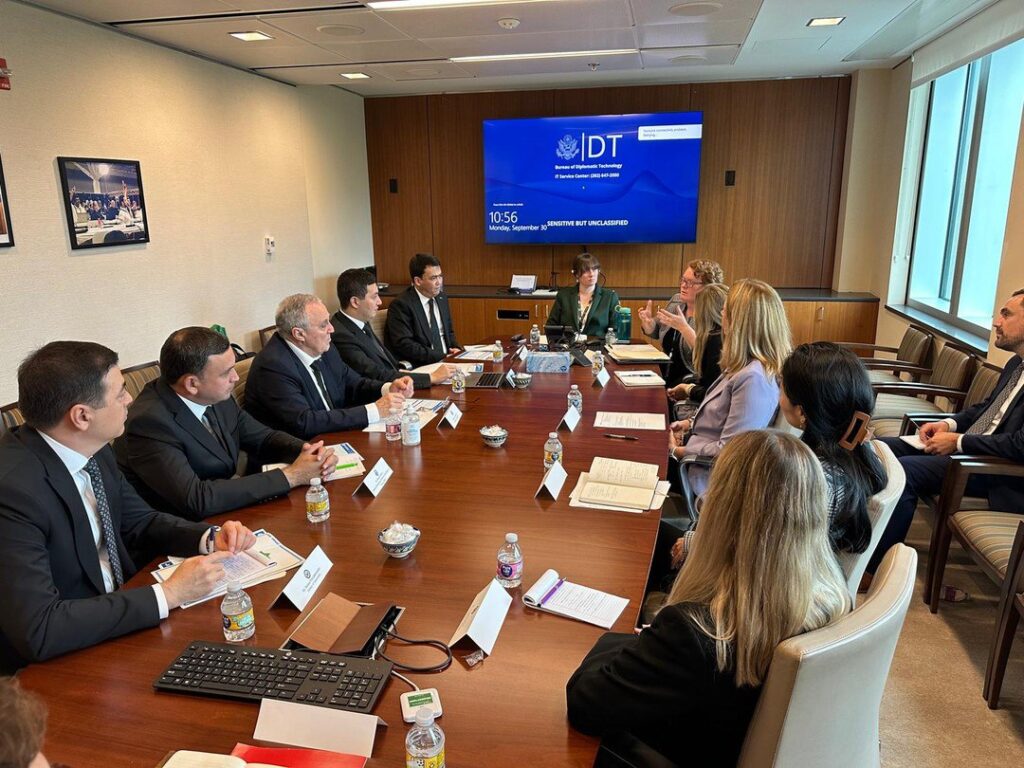
Turkmenistan is taking active steps to establish international cooperation as part of its strategy to modernize its education system. Representatives of the Turkmen Education Ministry met with the leadership of the AC Language School from the United States. The American side took the initiative to develop unique educational programs specially adapted to the needs of the Turkmen labor market. The proposal's idiosyncrasy is the combination of international quality standards with the specifics of Turkmenistan's economic development. The proposed educational package includes programs in five strategic areas. International service standards and intercultural communication skills will be trained in the tourism sector. Courses in information technology, including advanced programming, 3D printing, and bioinformatics, will strengthen the technology sector. Special attention will be given to management training through MBA-level programs and training in renewable energy and clean technologies. The agro-industrial complex has also been addressed: courses on modern agribusiness and innovative agricultural product processing methods are envisaged. An important aspect of cooperation will be the introduction of an international certification system. This will allow program graduates to receive globally recognized documents, significantly increasing their competitiveness in the global labor market. Representatives of the AC Language School noted the great potential of the educational market of Turkmenistan and readiness for long-term cooperation.

Kazakhstan’s Youth Suicide Crisis: Unraveling the Complex Web of Societal Challenges

A wave of suicides among teenagers and young adults has swept across Kazakhstan. Parents and the Children's Ombudsman have said children were provoked to do dangerous things by the internet, and deputies have demanded that social networks should be blocked. The media, meanwhile, has been accused of creating a “Werther effect,” fixating on the rash of suicides and thus encouraging teenagers to repeat these acts of self-harm. However, experts believe the cause is much more nuanced and cannot be eliminated by blocking harmful content alone. Chronicle of a Fateful September On September 13, a teenager fell from an eighth-story window in Astana. The boy died of his injuries. The very next day, a schoolgirl plummeted from a fifth-floor window in Shchuchinsk. The 12-year-old girl is in hospital, and the causes of both incidents are still under investigation. On September 16 in Almaty, two seventh-grade students from school No. 25 named after the writer I.Esenberlin, left class and climbed to the attic of a neighbor's apartment complex. The girls both fell to their death from the roof. “I came, and I saw two girls lying there. They had jumped from the roof," an eyewitness stated. "The girls were about 13 years old; seventh graders. One had a backpack next to her, and the other had no shoes and was wearing black tights. She had taken her shoes off and placed them neatly. One fell on a car, and her body rolled away. The second was immediately killed on the asphalt.” Later, it became known that one of the girls was the daughter of a famous Almaty ecologist and artist. Deputy Interior Minister Igor Lepekha said that what happened "is a suicide; the case was opened based on it being suicide." On September 21, another schoolgirl fell from a high-rise in Almaty. Allegedly, the girl left the house to perform a routine task, but climbed to the 13th floor, from where she plunged. The Almaty Police Department confirmed the girl's death and has opened a criminal case. By this time, in schools, online, and on social networks, parents had started to spread panicked rumors about the impact on children of a particular computer game, similar to the semi-mythical game “Blue Whale.” In the past, Blue Whale has been decried as a malicious game which encourages teenagers to commit suicide and acts of violence, but no convincing evidence has ever been presented. The Almaty police stated that gossip regarding the involvement of dangerous internet games in the girls' deaths is not valid and reminded the public about their responsibility vis-à-vis spreading false information. On September 22, in the yard of a multi-story residential building in Almaty, the body of a 3rd-year cadet from the Border Academy of the National Security Committee (NSC) who was on regular leave was found. “The cause of death was a fall from a height,” the NSC press service reported. On September 23, also in Almaty, multiple sources reported that a young man had tumbled from a high-rise building. Police...

American Educators to Teach English in Uzbekistan

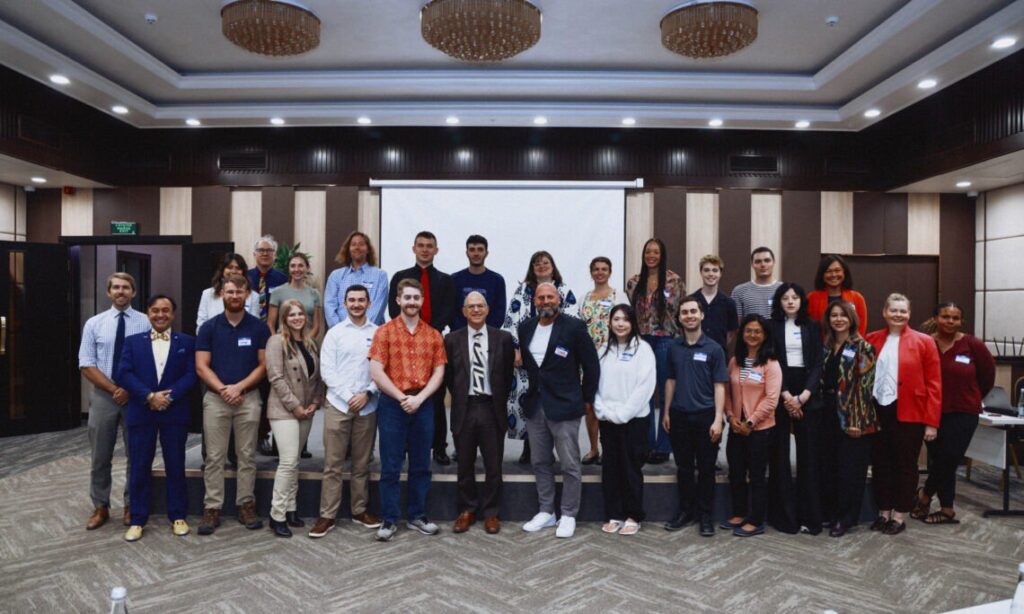
Twenty English language teachers from the United States have arrived in Uzbekistan to begin teaching and professional development programs across the country. The U.S. Embassy in Tashkent reported that they will join local teachers to provide direct classroom instruction to students. The twenty American teachers will support English language teaching within ten different regions of Uzbekistan for the 2024-2025 academic year. According to the Embassy, these teachers are just part of the U.S. Government’s vast commitment to strengthening English language education in Uzbekistan, which includes training more than 18,000 English teachers nationwide. Since 2018, the U.S. Government has invested over $31.2 million in English language teaching and learning in Uzbekistan. The U.S. Embassy has partnered with the Ministry of Preschool and School Education and the Ministry of Higher Education, Science, and Innovations to support Uzbekistan’s education reforms and to ensure that graduates are equipped with the linguistic and professional skills needed to support Uzbekistan’s economy. Since 2019, 98 American English teachers have worked at 21 public schools and more than 30 universities across Uzbekistan.

Russia Donates School Buses for Remote Regions of Kyrgyzstan

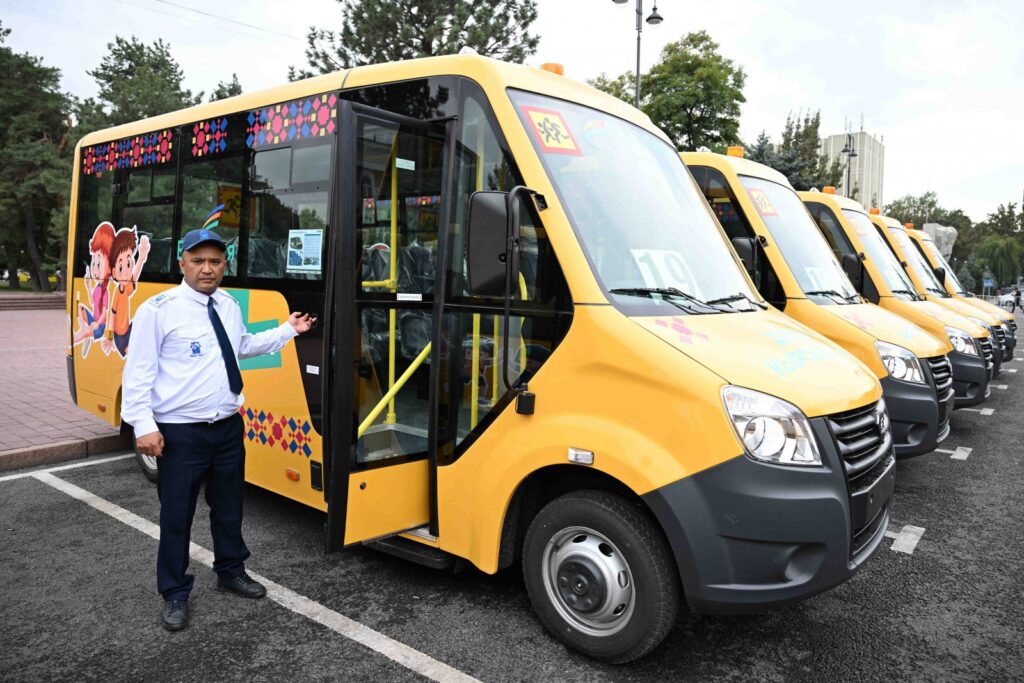
A Russian non-profit organization, Eurasia, has given 50 school buses to secondary schools in remote areas of Kyrgyzstan. The handover ceremony was held on September 2 in Bishkek. It was attended by the Chairman of the Cabinet of Ministers of the Kyrgyz Republic, Akylbek Japarov, Deputy Speaker of the State Duma of the Russian Federation, Boris Chernyshov, and State Duma deputy and chairperson of Eurasia, Alena Arshinova. At the ceremony, Japarov lauded the long-lasting, strong partnership relations between Kyrgyzstan and Russia and highly appreciated “the contribution that our Russian colleagues make to the development of Kyrgyzstan’s educational sphere.” The head of the Kyrgyz Cabinet of Ministers emphasized that in 2023, Kyrgyzstan built 105 secondary schools, compared to 15 schools constructed in 2010. He added that during this period, the number of schoolchildren in the country increased by almost half a million. At a meeting with Chernyshov and Arshinova on the same day, Japarov noted that Kyrgyzstan has begun implementing large-scale educational projects with Russia in recent years, such as the construction of nine secondary schools in all regions of Kyrgyzstan through Russian funding, construction of new campus of the Kyrgyz-Russian Slavic University in Bishkek and a branch of Moscow State University in the city of Karakol, as well as a program in which teachers from Russia teach in rural schools across Kyrgyzstan.

First ‘Comfortable’ Schools Open in Kazakhstan

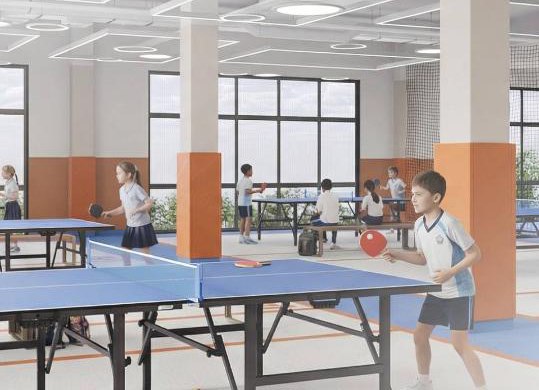
On September 1, over 3.9 million pupils returned or newly enrolled in secondary schools across Kazakhstan. The date also marked the opening of seventy new schools in the country, including several built as part of the nationwide project ‘Comfortable School.’ Speaking at the opening of one such school in the capital, Astana, Kazakh Minister of Education Gani Beisembayev announced that almost 90,000 schoolchildren are starting the new academic year in brand new schools,  and over 200,000 pupils will study in schools that have undergone significant repairs. Initiated by President Kassym-Jomart Tokayev, the national project ‘Comfortable School’ aims to solve the shortage of student places and level the difference in the quality of education between rural and urban areas. Aimed to improve the educational environment, the new schools provide separate blocks for elementary and high school students, technology for teaching contemporary subjects, specially equipped classrooms to ensure pupils' safety, and a barrier-free environment for children with special educational needs. Kazakhstan plans to build 369 ‘Comfortable’ secondary schools by 2026, accommodating 740,000 pupils; 217 schools of which will be built in the 2024-2025 academic year.