
• KGS/USD = 0.01144 0%
  • KZT/USD = 0.00204 0%
  • TJS/USD = 0.10394 -0.38%
  • UZS/USD = 0.00008 0%
  • TMT/USD = 0.28571 0%
  • KGS/USD = 0.01144 0%
  • KZT/USD = 0.00204 0%
  • TJS/USD = 0.10394 -0.38%
  • UZS/USD = 0.00008 0%
  • TMT/USD = 0.28571 0%
  • KGS/USD = 0.01144 0%
  • KZT/USD = 0.00204 0%
  • TJS/USD = 0.10394 -0.38%
  • UZS/USD = 0.00008 0%
  • TMT/USD = 0.28571 0%
  • KGS/USD = 0.01144 0%
  • KZT/USD = 0.00204 0%
  • TJS/USD = 0.10394 -0.38%
  • UZS/USD = 0.00008 0%
  • TMT/USD = 0.28571 0%
  • KGS/USD = 0.01144 0%
  • KZT/USD = 0.00204 0%
  • TJS/USD = 0.10394 -0.38%
  • UZS/USD = 0.00008 0%
  • TMT/USD = 0.28571 0%
  • KGS/USD = 0.01144 0%
  • KZT/USD = 0.00204 0%
  • TJS/USD = 0.10394 -0.38%
  • UZS/USD = 0.00008 0%
  • TMT/USD = 0.28571 0%
  • KGS/USD = 0.01144 0%
  • KZT/USD = 0.00204 0%
  • TJS/USD = 0.10394 -0.38%
  • UZS/USD = 0.00008 0%
  • TMT/USD = 0.28571 0%
  • KGS/USD = 0.01144 0%
  • KZT/USD = 0.00204 0%
  • TJS/USD = 0.10394 -0.38%
  • UZS/USD = 0.00008 0%
  • TMT/USD = 0.28571 0%

Viewing results 1 - 6 of 8

Tajik Police to Patrol Dushanbe on Electric Scooters

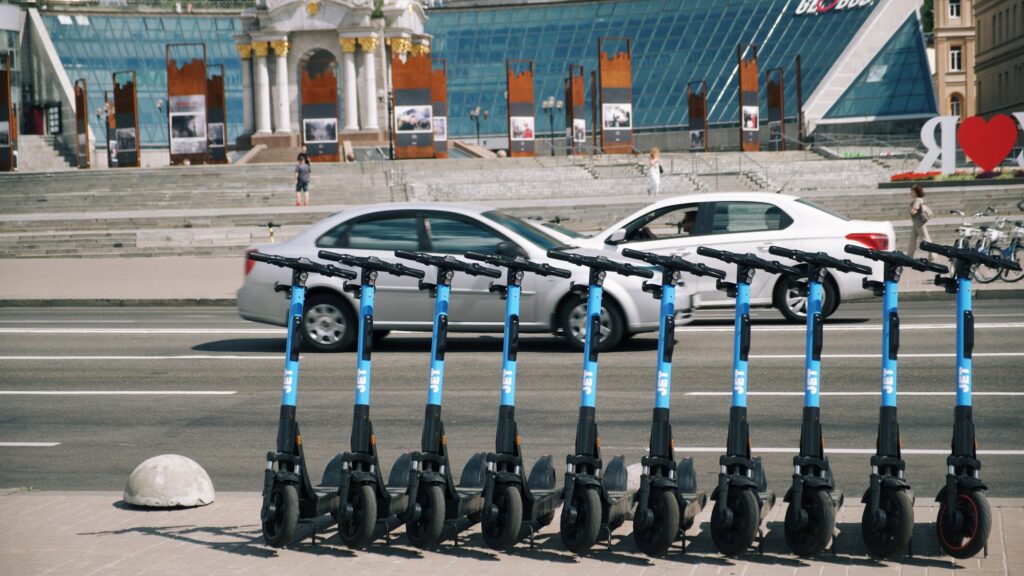
Police officers in Dushanbe have been equipped with electric scooters to patrol the streets of the Tajik capital. The Ministry of Internal Affairs said the initiative is intended to improve police efficiency and strengthen public safety. “In order to enhance security and maintain public order, police officers in the capital have been provided with electric patrol scooters,” the ministry said in an official statement. The new scooters are fitted with special equipment required for law enforcement duties, including signal beacons and sound systems. According to the ministry, the scooters can travel up to 100 kilometers on a single charge, making them suitable for daily patrols. “In the future, police officers in the capital will use these scooters in public spaces. This will help improve the effectiveness of police work and contribute to a greater sense of safety among residents,” the statement added. The use of compact electric transport in policing is becoming increasingly widespread. Such solutions enable officers to move more quickly in pedestrian areas, parks, and crowded locations where the use of patrol cars may be impractical. A similar approach has already been tested in Kazakhstan. At the end of August 2025, a large-scale operation was conducted in Almaty to monitor compliance with regulations on electric scooter use. Fifty police officers on electric scooters took part. The Almaty Police Department said that using this type of transport allowed officers to respond more quickly to offenses. According to police representatives, electric scooters help officers operate efficiently in crowded areas and in locations that are difficult for vehicles to access, while also facilitating preventive engagement with the public. Officials say that the pilot initiative was successful. Following the initial operations, discussions began on the possibility of introducing electric transport as a permanent feature of urban policing.

Kazakhstan Moves to Ban Electric Scooters from Sidewalks

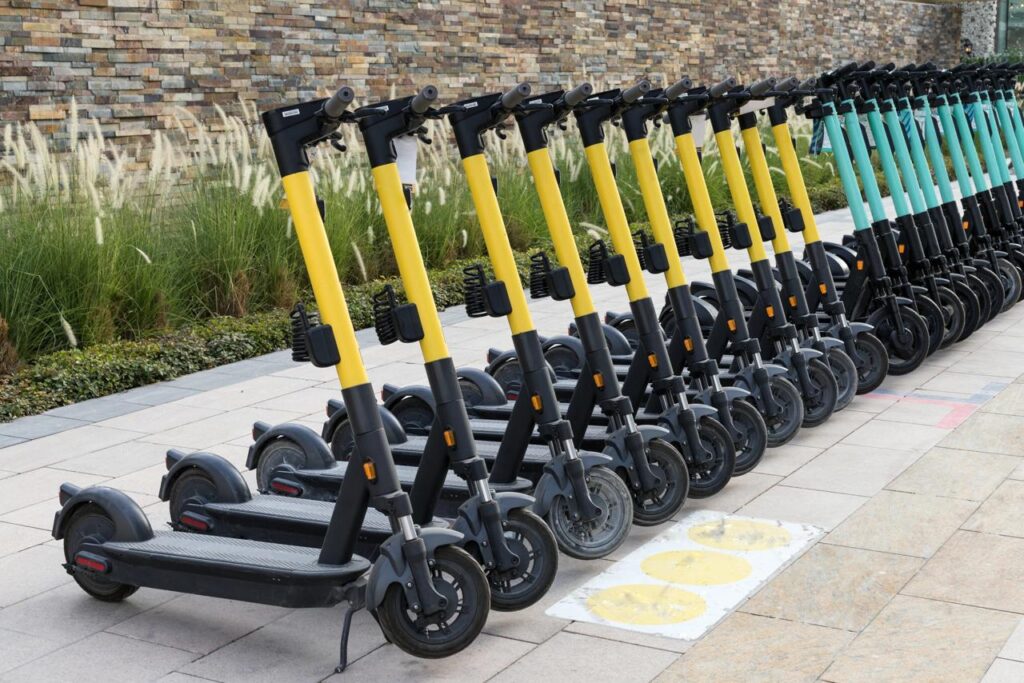
Kazakhstan’s Ministry of Internal Affairs is preparing new legislation that would prohibit electric scooters from being used on sidewalks, Deputy Minister Igor Lepekha announced. Initial restrictions on scooters were introduced in 2023, requiring riders to limit their speed to 6 km/h on sidewalks. However, compliance has been minimal, largely due to limited state enforcement and the failure of kick-sharing companies to implement speed-limiting technologies. The issue resurfaced at the highest level on September 8, when President Kassym-Jomart Tokayev called for urgent measures to improve pedestrian safety. Lepekha stated that previously rejected amendments to scooter regulations have now been redrafted. “These proposals to tighten control have already been submitted to parliament by the Ministry of Internal Affairs, but a number of them did not find support. In this regard, new amendments have been developed jointly with deputies, providing for a ban on the movement of electric scooters on sidewalks,” he said. The Ministry also proposes new safety responsibilities for kick-sharing companies and wants to give local authorities the right to regulate scooter use within their jurisdictions. “The municipality could decide for itself on which streets and at what times they can be ridden and when they should be prohibited, thus defining zones,” Lepekha added. Since the beginning of the year, Kazakhstan has recorded 361 traffic accidents involving electric scooters, resulting in 365 injuries and one death. According to a government report, authorities documented 29,000 traffic violations by scooter riders in 2025 alone, with 8,000 devices impounded. As of August 29, the Ministry had recorded 213 accidents and 224 injuries, along with 24,000 violations and 2,500 scooters sent to impound lots. The figures indicate that in the two weeks following Tokayev’s directive, scooter-related violations increased by 5,000, and the number of impounded devices more than doubled. As The Times of Central Asia previously reported, enforcement has intensified particularly in Almaty, where the highest number of violations has been reported.

Almaty Targets Scooter Safety After Tokayev Calls for Urgent Action

Kazakhstan has become the first country in Central Asia where public concern over electric scooters reached such intensity that the issue was addressed by the president himself. Kassym-Jomart Tokayev mentioned electric scooters in his latest Address to the People of Kazakhstan, a key policy document that outlines the country’s development priorities for the year ahead. In recent weeks, multiple high-profile incidents involving electric scooters have dominated headlines: a woman suffered a broken leg after being hit by teenagers on a scooter; schoolchildren collided with a baby stroller in Almaty; two girls were struck by a bus while riding a scooter; a passerby lost an eye after confronting an aggressive rider; and a fight broke out between two scooter users unable to share the road. These events, widely reported in local media, have fostered growing public frustration toward both scooter riders and the companies that rent out these vehicles. Demonstrating a commitment to what he calls a “responsive state,” Tokayev addressed the issue directly in his national address. “Attention should also be paid to electric scooters, a topic that is being actively discussed in society,” he said. “Two years ago, legislative changes were made that impose restrictions on riding on sidewalks. But the situation in public places has not changed much, and citizens are still at risk. Legislative amendments regulating this area have now been prepared and must be adopted without delay.” The changes referenced by the president came into effect on August 30, 2023. They prohibit scooter use on public roads without a driver’s license, helmet, and reflective elements. Riders are also barred from exceeding 6 km/h on sidewalks. However, these regulations have had limited impact, largely due to a lack of enforcement. Scooter rental companies pledged to implement technical solutions such as speed limiters on sidewalks, single-rider restrictions, and designated parking zones to prevent scooters from obstructing pedestrian pathways. But many of these promises have yet to materialize. On the issue of underage riders, operators have deflected responsibility, saying parents must supervise their children. "It is the parents themselves who give teenagers access to rental scooters," one business representative noted. In response to the president’s remarks, a roundtable was quickly convened in Astana with participation from police and kick-sharing companies. Authorities reported that of 31 traffic accidents involving scooters this year, 18 involved minors. In Almaty, the epicenter of most high-profile incidents, raids were carried out in response to mounting public pressure. In a single day, police recorded over 800 scooter-related violations, including 11 cases involving parental negligence. A total of 259 scooters were impounded. To bolster enforcement, 50 additional police patrols were deployed in high-traffic areas using scooters provided by rental companies. The Almaty City Administration’s Urban Mobility Department also announced plans to expand infrastructure to manage the problem of scooters left haphazardly on sidewalks. Currently, 67 workers, referred to as “scouts”, relocate abandoned vehicles to 15 designated parking zones. An additional 10 parking areas are expected to be operational by October. In short, the problem may not...

E-Scooter Ban and Moped Crackdown on Bishkek’s Agenda

The Jogorku Kenesh, Kyrgyzstan’s parliament, has called on the Ministry of Internal Affairs and the Bishkek City Council to urgently address the rising threat posed by electric scooters and mopeds on city sidewalks. Lawmakers claim that the growing presence of these vehicles has made pedestrians fearful and contributed to an increase in traffic accidents, some of them fatal. Speaker of the Jogorku Kenesh, Nurlanbek Turgunbek uulu, has formally appealed to the Minister of Internal Affairs and the Mayor of Bishkek to take swift and decisive action. “Most scooter and moped drivers are children. They do not have driver's licenses, and mopeds are not captured by traffic cameras. Many countries have strict regulations for such vehicles. We need to implement similar rules,” said Turgunbek uulu. Lawmakers argue that the unchecked proliferation of electric scooters, often abandoned on sidewalks, makes Bishkek resemble cities in Southeast Asia. According to the Patrol Service, the capital has seen a sharp rise in accidents involving scooters and mopeds, with 186 incidents recorded since the beginning of 2025, resulting in six deaths and 207 injuries. This marks a 118% increase compared to the previous year. In response, the Ministry of Internal Affairs has proposed a total ban on electric scooter rentals, asserting that rental users are the primary source of risk. Many of them ride at high speeds, ignore traffic rules, and operate scooters on sidewalks and narrow alleys. Authorities also point out that rental companies often neglect maintenance, leaving safety unchecked. The city’s infrastructure, they argue, is ill-equipped to manage the growing number of scooters. “Everyone rides however they want, there are no rules and no responsibility,” a police spokesperson commented. To improve safety on highways, the ministry also recommends mandatory registration for mopeds and the introduction of a new driver's license category, M1. Parliamentarians have drafted a bill currently under review by the State Security and National Security Committee. It introduces a new classification, individual mobility device (IMD), modeled after similar legislation in Russia. Under the proposal, all IMDs capable of exceeding 50 km/h, or with an engine displacement over 50cc or a power output above 4 kW, must be registered. Less powerful IMDs would require users to obtain a special license, available from the age of 14. The Bishkek city administration has expressed support for the Interior Ministry’s proposals but emphasized that implementing the new rules would necessitate revisiting existing agreements with scooter rental firms.
