
• KGS/USD = 0.01144 0%
  • KZT/USD = 0.00206 0%
  • TJS/USD = 0.10736 -0.19%
  • UZS/USD = 0.00008 0%
  • TMT/USD = 0.28490 -0.28%
  • KGS/USD = 0.01144 0%
  • KZT/USD = 0.00206 0%
  • TJS/USD = 0.10736 -0.19%
  • UZS/USD = 0.00008 0%
  • TMT/USD = 0.28490 -0.28%
  • KGS/USD = 0.01144 0%
  • KZT/USD = 0.00206 0%
  • TJS/USD = 0.10736 -0.19%
  • UZS/USD = 0.00008 0%
  • TMT/USD = 0.28490 -0.28%
  • KGS/USD = 0.01144 0%
  • KZT/USD = 0.00206 0%
  • TJS/USD = 0.10736 -0.19%
  • UZS/USD = 0.00008 0%
  • TMT/USD = 0.28490 -0.28%
  • KGS/USD = 0.01144 0%
  • KZT/USD = 0.00206 0%
  • TJS/USD = 0.10736 -0.19%
  • UZS/USD = 0.00008 0%
  • TMT/USD = 0.28490 -0.28%
  • KGS/USD = 0.01144 0%
  • KZT/USD = 0.00206 0%
  • TJS/USD = 0.10736 -0.19%
  • UZS/USD = 0.00008 0%
  • TMT/USD = 0.28490 -0.28%
  • KGS/USD = 0.01144 0%
  • KZT/USD = 0.00206 0%
  • TJS/USD = 0.10736 -0.19%
  • UZS/USD = 0.00008 0%
  • TMT/USD = 0.28490 -0.28%
  • KGS/USD = 0.01144 0%
  • KZT/USD = 0.00206 0%
  • TJS/USD = 0.10736 -0.19%
  • UZS/USD = 0.00008 0%
  • TMT/USD = 0.28490 -0.28%

Viewing results 1 - 6 of 7

Screenwriter Yefrat Sharipov on AI and the Future of Kazakhstani Cinema

Screenwriter Yefrat Sharipov is a graduate of Kazakhstan’s Academy of Civil Aviation and the New York Film Academy (NYFA), and one of the country’s most sought-after screenwriters in recent years. He worked on the box office hit Dos-Mukasan, a film about the legendary Kazakhstani musical group often described as the local equivalent of The Beatles. He now reflects on the future of global cinema, the role of artificial intelligence, and why Kazakhstani stories can resonate far beyond the country’s borders. In an interview with The Times of Central Asia, Sharipov discusses how engineering thinking shapes his approach to storytelling, why screenwriters must understand the inner workings of the film industry, and how technology may soon erase language barriers. TCA: You’re a screenwriter with an engineering background who graduated from the Academy of Civil Aviation. How did that happen? Sharipov: Honestly, it’s difficult for me to explain myself. The desire to write stories has been with me since childhood; I always knew I would never stop doing it. The need to express myself through writing appeared very early. Back in school, I was already trying to write short stories, novellas, poetry, even songs. But when it came time to choose a profession, I decided to pursue a technical field, although I never stopped writing “for the drawer.” Later, when I entered the film industry and worked on projects in other roles, I remembered this passion and realized there was a way to apply it professionally. There was a huge demand for screenwriters. At first, it was mostly curiosity, I wanted to see whether anyone besides me would actually find my stories interesting. Gradually, things started to work out, and here I am. TCA: What did you write about as a child? Sharipov: About whatever fascinated me at the time. At one point, I became obsessed with Tolkien and started inventing fantasy stories with imaginary creatures. I mostly wrote for myself, though sometimes I let friends, parents, and relatives read my work. I remember my mother always praising me, and I usually got good grades for essays at school. My friends and I even kept what we called “school chronicles,” where we humorously wrote about everything happening around us. Honestly, if I were a better speaker, maybe I would have become a stand-up comedian. TCA: Does your technical education help you in your current work? Sharipov: It does. Technical disciplines probably influenced the way I approach storytelling. I look at stories almost like an engineer, everything has to be structured and logical. Before starting a film, I research the subject deeply. I don’t just read materials casually. I use an approach similar to scientific research. I gather facts, critically analyze the material, and repeatedly verify information. TCA: So, every film becomes almost like a dissertation. But cinema is always about people. Can human beings really be approached scientifically? Sharipov: When I worked on the Dos-Mukasan biopic, I didn’t just rely on archival material, I tried to meet personally with everyone who had...
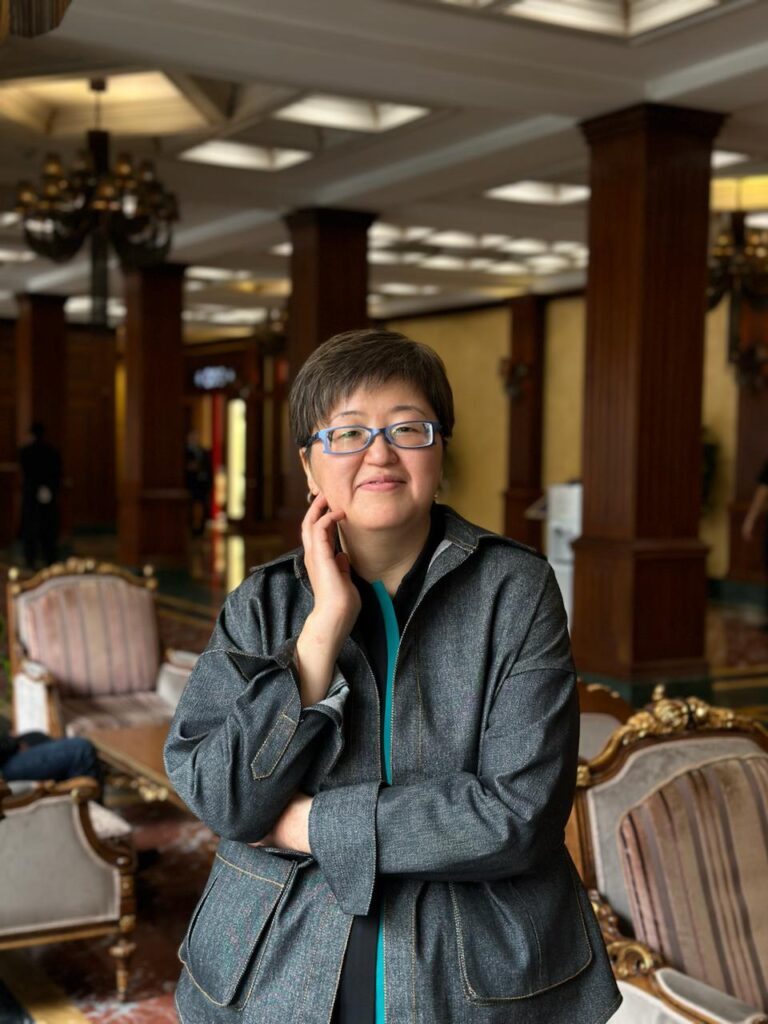

Kazakhstani Cinema at a Turning Point: Screenwriter Sergey Litovchenko Discusses the Industry

Kazakhstani cinema may be entering a “golden age.” Kazakh films are increasingly appearing at international festivals, while television series are reaching major global streaming platforms and attracting millions of viewers. Yet the country has not broken through at the Oscars, and the reasons go beyond funding. Screenwriter and creative producer Sergey Litovchenko discusses the changes and challenges shaping the industry, why the pandemic unexpectedly benefited Kazakhstani cinema, and which projects he considers the most significant milestones to date. TCA: Sergey, the Oscars have just taken place. Will Kazakhstan ever win an Oscar? And when might that happen? Sergey: Our industry is developing rapidly, with the pace increasing every year. I believe we are close to that moment. However, it will probably come sooner in the short-film category. Although it may seem like an unattainable goal, that is not the case. Look at Brazil, for example, which has been prominent in the Oscar race for the second year in a row. Last year, the film I’m Still Here received three nominations and won an Oscar for Best International Feature Film. This year, Brazilian entries have already secured four nominations, including Best Picture. So anything is possible. At present, the main factor holding us back is technical capacity. TCA: The relatively low-budget film Sentimental Value won Best International Feature Film this year. Is technical prowess really the most important factor? Sergey: It is technically very well made. We should also remember that it participated in a major festival and featured Hollywood star Elle Fanning. The reason I mentioned the Brazilian example is that Brazilian cinema is not widely known to mass audiences, yet the technical quality and acting impressed me. It is clear they have the time and resources to prepare thoroughly for filming. For Kazakhstan, the situation is more complex. We often operate in a “we should have filmed this yesterday” mode. The only film to reach not just the shortlist but the nominations was Sergei Bodrov’s Mongol. It is a masterpiece of technical craftsmanship. Its $17 million budget is evident on screen. It is not only technically accomplished, but also a strong film artistically. There have been other worthy candidates: Sergei Dvortsevoy’s Aika and Tulpan, Yermek Tursunov’s Kelin, and Askhat Kuchinchirekov’s Bauryna Salu. All are high-level works. But for a major breakthrough, we need stronger production capacity. TCA: Is this primarily a question of money? Sergey: Not always. I often hear filmmakers say, “Give us a budget and we will make it happen.” I ask them how much they need, a billion? Two? Asghar Farhadi shot A Separation for $400,000. Andrey Zvyagintsev filmed The Return for about $300,000. So it is not only about money. Nor is it about casting, we have many talented people. To create a breakthrough film, you need not only a profound story but also extensive preparation and a certain uncompromising attitude, in a positive sense. In Kazakhstan, however, we often adapt films to circumstances. If the weather is unsuitable, we proceed anyway. If the actor...

Behind the Scenes in Hollywood: Kyrgyz Screenwriter Guljan Toktogul on the Industry Without the Glamour

Screenwriter Guljan Toktogul spent nearly a decade in Hollywood. She wrote the script for the movie Salam, New York, about a Kyrgyz man adapting to life in America, and also has writing credits for the short films I'll Be A Star and Alexandra. A graduate of the American Film Institute (AFI), she now plans to continue her screenwriting career in her native Kyrgyzstan, having recently returned to Bishkek. The Times of Central Asia spoke with Toktogul about how screenwriters sell scripts in the U.S., how much they earn, what the bidding process entails, and whether it’s all worth it. TCA: What was it like living in Hollywood? Did it ever feel like home? Toktogul: It became comfortable, but not immediately, only after I built some connections. I first arrived in the U.S. in 2016 with my brother, who was there for work. We lived in Washington, D.C. for two years. When he left, I suddenly felt anxious. The thought of being alone so far from family, literally a day’s flight away, was overwhelming. I cried. But when I moved to L.A., completed a semester, and made friends, things improved quickly. I was lucky to be studying screenwriting at film school. TCA: Did the school feel like a second family? Toktogul: Exactly. Writing and working together means sharing deeply personal memories and thoughts, so people bond much faster than in everyday life. The school created a very supportive environment, full of people just as obsessed with film as I was. You live and breathe cinema, nothing else seems to matter. TCA: How are screenwriters treated in the U.S. compared to Central Asia? Toktogul: In the U.S., screenwriters are respected, but still often in the background. Producers and directors are the main creative forces. That’s why many screenwriters eventually try directing, to retain more control. You hand over your script, but what happens next is out of your hands. We don’t just write randomly, there’s meaning in every scene. When a script is mishandled on set, it’s painful. Many screenwriters avoid being on set for that reason. TCA: Are screenwriters usually present during filming? Toktogul: Yes, and rightly so. Unexpected problems always arise, maybe an actor drops out or a location falls through, so changes must be made on the spot. This is especially true for low-budget projects. I once worked on an indie film in Chicago and realized just how crucial a screenwriter’s presence can be. TCA: But aren’t things in the U.S. locked down by contracts before filming begins? Toktogul: Only if you're someone like Aaron Sorkin. He insists on filming scripts exactly as written. He’s known for demanding that actors deliver 10 pages of dialogue in nine minutes with no cuts. And it works, his dialogue has a musical quality. But most writers aren’t in that position. Ideally, scripts would be treated with more care. We’re not trying to take over, we just want the best version of the story to be told. TCA: Were you a member of...