• KGS/USD = 0.01144 0%
  • KZT/USD = 0.00207 0%
  • TJS/USD = 0.10417 -0.76%
  • UZS/USD = 0.00008 0%
  • TMT/USD = 0.28571 0%
  • KGS/USD = 0.01144 0%
  • KZT/USD = 0.00207 0%
  • TJS/USD = 0.10417 -0.76%
  • UZS/USD = 0.00008 0%
  • TMT/USD = 0.28571 0%
  • KGS/USD = 0.01144 0%
  • KZT/USD = 0.00207 0%
  • TJS/USD = 0.10417 -0.76%
  • UZS/USD = 0.00008 0%
  • TMT/USD = 0.28571 0%
  • KGS/USD = 0.01144 0%
  • KZT/USD = 0.00207 0%
  • TJS/USD = 0.10417 -0.76%
  • UZS/USD = 0.00008 0%
  • TMT/USD = 0.28571 0%
  • KGS/USD = 0.01144 0%
  • KZT/USD = 0.00207 0%
  • TJS/USD = 0.10417 -0.76%
  • UZS/USD = 0.00008 0%
  • TMT/USD = 0.28571 0%
  • KGS/USD = 0.01144 0%
  • KZT/USD = 0.00207 0%
  • TJS/USD = 0.10417 -0.76%
  • UZS/USD = 0.00008 0%
  • TMT/USD = 0.28571 0%
  • KGS/USD = 0.01144 0%
  • KZT/USD = 0.00207 0%
  • TJS/USD = 0.10417 -0.76%
  • UZS/USD = 0.00008 0%
  • TMT/USD = 0.28571 0%
  • KGS/USD = 0.01144 0%
  • KZT/USD = 0.00207 0%
  • TJS/USD = 0.10417 -0.76%
  • UZS/USD = 0.00008 0%
  • TMT/USD = 0.28571 0%

Viewing results 1 - 6 of 19

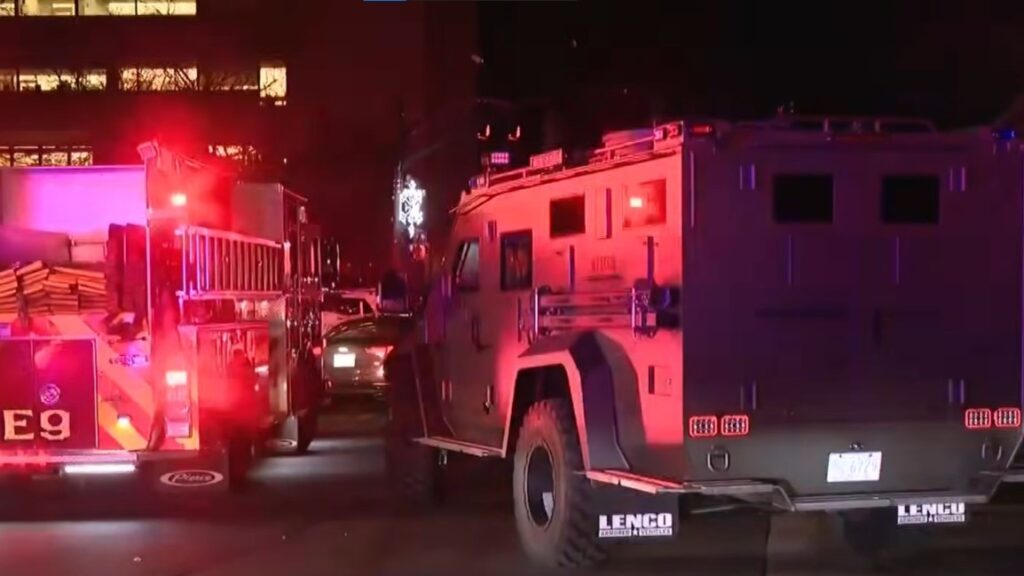
Shooting in Tajikistan’s Detention Center: Prosecutor General’s Office Reveals Details of January Incident for the First Time

Tajik authorities have for the first time officially commented on the incident on January 31 at a detention facility in the city of Khujand. Tajikistan’s Prosecutor General, Khabibullo Vokhidzoda, disclosed details during a press conference in Dushanbe that was reported by Asia-Plus. Vokhidzoda confirmed that an armed confrontation took place at the Khujand pre-trial detention center. According to him, three prisoners attacked facility staff while in the exercise yard. The prosecutor general stated that the inmates used “various objects” to inflict bodily harm on staff members and assaulted another prisoner who was present. He said they ignored repeated demands to cease their actions and resisted, posing what he described as a serious threat to employees’ lives. As a result, the three prisoners were “neutralized” by security personnel. “While in the Khujand pre-trial detention center, in the exercise yard, they attacked the facility’s staff using various objects, causing them bodily harm and even beating another prisoner who was there. They ignored the staff’s demands to stop their actions and resisted, posing a serious threat to the lives of the facility’s employees. In this situation, they were neutralized by staff members responsible for the security of the correctional facility,” Vokhidzoda said. He emphasized that no staff members were killed, although they sustained injuries. He did not specify the number of injured employees. According to the prosecutor general, the three inmates had previously been sentenced to 12 to 14 years’ imprisonment for terrorist and extremist offenses. He added that they had repeatedly violated prison regulations, leading a court to impose stricter detention conditions. At the time of the incident, the prisoners were being temporarily held in the Khujand facility pending transfer. A criminal case has been opened under Articles 332 and 365 of Tajikistan’s Criminal Code. “How it happened, why it happened, who did it, all these questions will be clarified during the investigation,” Vokhidzoda said. This marks the first official confirmation of the incident. Earlier, Radio Ozodi reported on the events, citing sources who claimed casualties among both guards and inmates. At the time, journalists’ attempts to obtain official comment were unsuccessful. The Minister of Justice, whose ministry oversees correctional institutions, declined to comment. The January 31 incident is not the first serious episode of violence in Tajikistan’s penitentiary system, including in Khujand. In November 2018, a large-scale riot erupted at maximum-security prison 3/3 in Khujand. According to official data, 21 prisoners were killed during efforts to restore order. Two prison staff members were also killed and five guards were seriously injured. On February 3, 2025, unrest broke out at correctional facility No. 3/2 in the town of Vahdat, commonly known as “Kirpichny.” Official reports stated that three prisoners and three employees, including the prison director, were killed. On May 19, 2019, another riot occurred at the same Vahdat facility. According to official information, 30 inmates armed with knives and other sharp objects seized three employees and killed them. Five prisoners were also killed. During the subsequent suppression of the riot, 29...

Tajik Schoolboy Killed in Moscow Area Sparks Central Asian Outrage

The fatal stabbing of a 10-year-old Tajik boy at a school in the Moscow area has sparked widespread condemnation across Central Asia. Russia’s Foreign Ministry extended “deep condolences” to Tajikistan following the killing. Ministry spokesperson Maria Zakharova said Moscow offered immediate assistance to the Tajik Embassy in Russia after the incident was reported by the press on December 16. She confirmed that the embassy sent a diplomatic note requesting an objective investigation. Official requests were subsequently forwarded to Russia’s Investigative Committee and the Interior Ministry to clarify the circumstances and support the Tajik side. The attack occurred at Uspensky School, where a 15-year-old ninth-grade student, identified as Timofey Kulyamov, allegedly stabbed and killed the victim, Qobiljon Aliyev. Witnesses reported that the suspect asked the child about his nationality before launching the fatal attack. On the day of the incident, he was reportedly wearing a shirt bearing the phrase “No lives matter.” Qobiljon’s family moved to Russia from the Hisor region of Tajikistan four years ago. His father passed away three years prior, and his mother has been working as a cleaner at the same school to support her three children. Journalists, civil society leaders, and public figures in Tajikistan and Uzbekistan condemned the killing, linking it to rising hostility toward Central Asian migrants in Russia. Tajik political analyst Muhammad Shamsuddinov took to social media to denounce what he described as systemic discrimination. “Who killed Qobiljon? The system,” he wrote. Shamsuddinov accused Russian public discourse and policies of fueling an environment of xenophobia, referencing remarks by State Duma members, law enforcement actions, and state-run media coverage. “Qobiljon was killed by Mironov’s constant statements. By Bastrykin’s speeches. By the State Duma’s draft laws. By Russian state television. By nationalist Telegram channels. By the constant and very public raids against migrants. By hours-long detentions at airports,” he wrote. He also criticized the Russian Embassy in Tajikistan for its silence, noting that while it continued to post routine updates and commemorative messages, it had not acknowledged the boy’s death. “As a society, where is the sympathy? The condolences? Nothing,” he wrote. Sherzodkhon Kudratkhuja, Chairman of the Supervisory Board of the Uzbekistan National Media Association and Rector of the University of Journalism and Mass Communications, also voiced his outrage. “No mother should ever go through this. None,” he said, after reportedly watching a video of the incident. He called the murder of a child based on national identity “impossible to describe in words.” Kudratkhuja urged Russia to introduce formal education on national tolerance in its schools and criticized the normalization of ethnic slurs among adults. “Children learn from adults, and this is the mirror of today’s society,” he said. He emphasized the need to foster values of tolerance, adding that all people “descended from Adam and Eve and are equal in dignity.”

Thousands Donate in Name of Uzbek-American Student Killed at Brown University

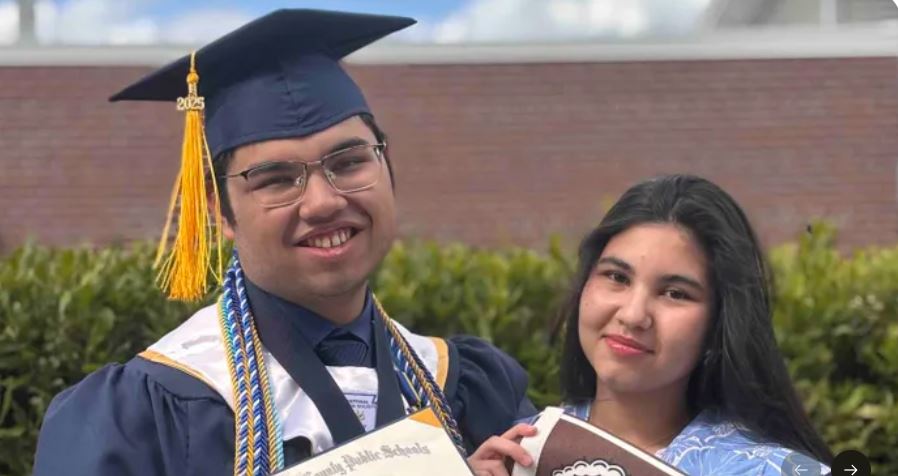
A fundraising campaign dedicated to an 18-year-old Uzbek-American student who was killed in a shooting at Brown University in Rhode Island has collected more than half a million U.S. dollars. MukhammadAziz Umurzokov, who went to high school in Virginia, and another Brown student, 19-year-old Ella Cook of Alabama, died in the attack in a university building on December 13. Nine other students were injured. Law enforcement agencies are searching for the suspect and have not publicly commented on a possible motive. One of Umurzokov’s sisters, Samira Umurzokova, set up a GoFundMe page that had drawn more than 10,000 donations totaling over $500,000 by Thursday. “Our family is incredibly devastated by this loss. Any donations will help significantly with any expenses my family will have to face, and the rest of the funds will be donated to charity in his name,” the page reads. Without providing personal details, it lists a William Ackman as making the top donation of $18,000. American billionaire investor William, or Bill, Ackman, has been active in other fundraising campaigns, including the GoFundMe campaign for Ahmed al-Ahmed, a man who disarmed one of the two shooters in the attack at Sydney’s Bondi Beach that killed 15 people on December 14. Al-Ahmed was hospitalized after being shot. One of two gunmen, believed to have been inspired by the Islamic State group, was killed; the second was injured and has been charged with murder and terrorism. Umurzokova has said that her brother, who was a first-year student at Brown, had suffered Chiari malformation, in which brain tissue extends into the spinal canal, as a child. He wanted to become a doctor so that he could help people in the same way that he was helped, she said. “He’s a real person. He had real ambitious goals and aspirations, like anyone else would,” Umurzokova said in a CNN interview. “I want people to know that him and the other victims are not just numbers. They’re not just statistics. They’re real people and real families are genuinely hurting like crazy because of their loss.” Umurzokova said her parents wanted people to “hear their son’s name, see their son’s picture, instead of, you know, seeing ‘two dead nine injured.´” Cook, the other student who was killed in the Brown shooting, was a sophomore focusing on French and mathematics-economics.

“I Miss Everything:” Friends, Officials Mourn Uzbek Student Slain in the U.S.

MukhammadAziz Umurzokov, one of two students killed by a gunman at Brown University on Dec. 13, seemed to be making the most of life after moving to the United States from Uzbekistan with his family some years ago. He hoped to become a neurosurgeon, according to a sister, and his acceptance into the elite university in Rhode Island signaled that he was on the way to achieving his goals. So, the killing of Umurzokov, along with that of student Ella Cook of Alabama, hit hard for some people who, though accustomed to periodic news of mass shootings in the United States, were especially saddened that lives of such promise ended in violence. In Umurzokov’s case, he was mourned from the halls of power and diplomacy in the Uzbek capital of Tashkent to the suburbs of Richmond, Virginia, where he went to high school. “The loss of innocent lives as a result of this tragedy is a heavy loss for all of us,” Akhror Burkhanov, press secretary for Uzbekistan’s Ministry of Foreign Affairs, said on X. “Representatives of the missions of the Republic of Uzbekistan in the United States are in constant contact with the relatives of the deceased and are working closely with the relevant U.S. agencies on all issues.” Jonathan Henick, the U.S. ambassador to Uzbekistan, also expressed his sadness over the killings at Brown. “We extend our sincere condolences to Mr. Umurzokov’s family, friends, and fellow students and mourn the loss of his bright future,” Henick said in a statement. He added the Uzbek-language phrase: “Marhumni Xudo rahmat qilsin” (May God have mercy on the deceased). The Uzbek American Association issued a tribute to the Uzbek student, saying: “His passing has left an immeasurable void in the hearts of his family, friends, classmates, and the broader Uzbek American community.” Some comments from old friends in the United States suggested that Umurzokov, as a member of the Uzbek diaspora, was integrated into the rhythms of American life. “I miss everything,” Jameson Huang said on the GoFundMe page that was set up by Umurzokov’s sister, Samira Umurzokova. “Let’s catch up one day in Publix, drinking Arizonas and eating mac and cheese. Let’s race our cars and see who’s faster. Let’s redo the chaos of the college application cycle and the late night calls and hangouts. One day man, one day. For now, rest easy and stay safe up there.”

Uzbek Student Among Two Killed in Brown University Shooting

Two students were killed, and nine others were injured in a shooting on the campus of Brown University in Providence, Rhode Island, a tragic event that has drawn international attention. Uzbekistan’s Ministry of Foreign Affairs has confirmed that one of the deceased was an Uzbek national. The shooting occurred overnight on December 13-14 at the Ivy League institution. The death of Muhammad Aziz Umurzoqov was first reported by family members through a fundraising appeal on the GoFundMe platform and later officially confirmed by the press secretary of Uzbekistan’s Foreign Ministry. In the GoFundMe statement, Umurzoqov was remembered as a kind, intelligent, and compassionate young man who dreamed of becoming a neurosurgeon. “He always lent a helping hand to anyone in need without hesitation,” the family wrote. As of 10:30 a.m. Uzbekistan time on December 15, donations had reached $171,326. The family stated that a portion of the funds would be donated to charity in his name. Initial reports from CNN, citing law enforcement sources, indicated that a 24-year-old man from Wisconsin had been detained in connection with the incident. However, Brown University later clarified that the man had been released. In an official statement, the university said Providence police had found “no basis” to consider him a person of interest, a conclusion also confirmed by the Rhode Island Attorney General. Brown University confirmed that two students were fatally shot, while nine others sustained injuries ranging from minor to critical. Law enforcement authorities have stated there is no immediate threat to the campus or surrounding community, though the investigation remains ongoing. Providence police are leading the investigation in coordination with local, state, and federal agencies. In response, Brown University has significantly increased its on-campus police presence, with the Department of Public Safety more than doubling its staff. Authorities have established a dedicated tip line and urged anyone with relevant information to contact the Providence Police Department. University officials have reiterated their commitment to campus safety and urged students, faculty, and staff to remain alert as the investigation progresses.

Two Kyrgyz Citizens Shot Dead by Uzbek Border Guards Near Tripoint Frontier

According to the Kyrgyz Border Service, two Kyrgyz citizens were shot and killed on August 15 near the junction of the Kyrgyz, Uzbek, and Kazakh borders after allegedly failing to comply with Uzbek border guards during an attempted detention. Their bodies were returned to Kyrgyzstan via the Baymak checkpoint, and authorities from both countries are conducting a joint investigation. The two men, residents of Aygyr-Zhal village in Kyrgyzstan’s Chatkal District, were reported missing on August 25. During bilateral consultations held three days later, the Uzbek authorities informed their Kyrgyz counterparts that on August 15, an Uzbek border patrol had encountered two unidentified individuals in the border zone. According to the Uzbek side, the men ignored orders to stop, prompting border guards to open fire. Both men sustained fatal injuries. On August 31, family members of the deceased traveled to Uzbekistan to identify the bodies, which were subsequently returned to Kyrgyzstan for forensic examination. Uzbek officials also expressed their readiness to return the men's belongings, including three horses and a tent. Authorities in both countries have confirmed that the incident will be subject to a formal investigation, with its findings to be made public. The shooting follows the resolution of a decades-long border demarcation process involving Kyrgyzstan, Uzbekistan, and Tajikistan. In March 2025, after nearly twenty years of negotiations, the three countries agreed on the official tripoint demarcation during talks in Dushanbe. While that agreement was hailed as a breakthrough in regional cooperation, the recent incident underscores the lingering sensitivities and security challenges along portions of the border.