• KGS/USD = 0.01144 0%
  • KZT/USD = 0.00218 0%
  • TJS/USD = 0.10610 -0.09%
  • UZS/USD = 0.00008 0%
  • TMT/USD = 0.28530 0%
  • KGS/USD = 0.01144 0%
  • KZT/USD = 0.00218 0%
  • TJS/USD = 0.10610 -0.09%
  • UZS/USD = 0.00008 0%
  • TMT/USD = 0.28530 0%
  • KGS/USD = 0.01144 0%
  • KZT/USD = 0.00218 0%
  • TJS/USD = 0.10610 -0.09%
  • UZS/USD = 0.00008 0%
  • TMT/USD = 0.28530 0%
  • KGS/USD = 0.01144 0%
  • KZT/USD = 0.00218 0%
  • TJS/USD = 0.10610 -0.09%
  • UZS/USD = 0.00008 0%
  • TMT/USD = 0.28530 0%
  • KGS/USD = 0.01144 0%
  • KZT/USD = 0.00218 0%
  • TJS/USD = 0.10610 -0.09%
  • UZS/USD = 0.00008 0%
  • TMT/USD = 0.28530 0%
  • KGS/USD = 0.01144 0%
  • KZT/USD = 0.00218 0%
  • TJS/USD = 0.10610 -0.09%
  • UZS/USD = 0.00008 0%
  • TMT/USD = 0.28530 0%
  • KGS/USD = 0.01144 0%
  • KZT/USD = 0.00218 0%
  • TJS/USD = 0.10610 -0.09%
  • UZS/USD = 0.00008 0%
  • TMT/USD = 0.28530 0%
  • KGS/USD = 0.01144 0%
  • KZT/USD = 0.00218 0%
  • TJS/USD = 0.10610 -0.09%
  • UZS/USD = 0.00008 0%
  • TMT/USD = 0.28530 0%

Viewing results 1 - 6 of 17

Two Lost Silk Road Cities Unearthed in Uzbekistan

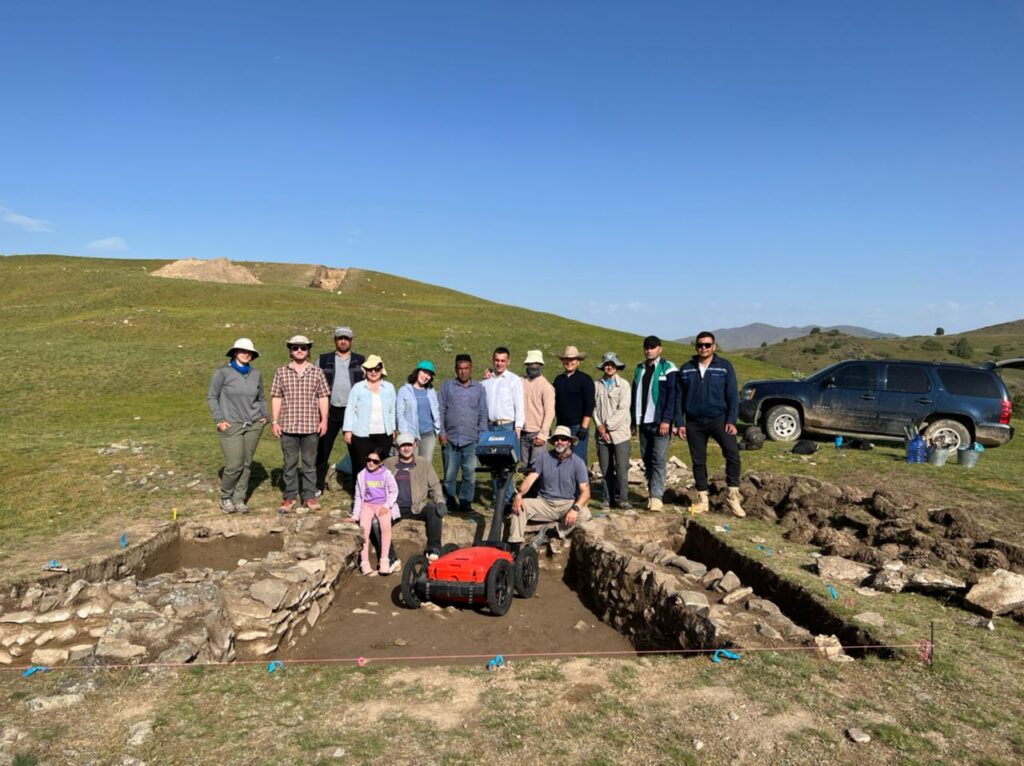
Aided by laser-based technology, archaeologists in south-east Uzbekistan, have discovered two lost cities that once thrived along the Silk Road from the 6th to 11th centuries AD. As reported  by Reuters, one was a center for the metal industry, and the other, indicates early Islamic influence. Located some five kilometers apart, these early fortified outposts are among the largest found on the mountainous sections of the Silk Road. “These cities were completely unknown. We are now working through historical sources to find possible undiscovered places that match our findings,” said archaeologist and lead author of the report, Michael Frachetti of Washington University in Saint Louis. The researchers state that the most expansive of the two, Tugunbulak, covered about 300 acres (120 hectares) and in existence from around 550 to 1000 AD, boasted a population of tens of thousands. As such, it was one of the largest cities of its time in Central Asia, rivaling even the famed trade hub Samarkand, situated about 110 km away, and according to Frachetti,  many times larger and more enigmatic than other highland castles or settlements that have been documented in high-elevation Central Asia." The other city, Tashbulak, inhabited from around 730-750 to 1030-1050 AD, was only a tenth the size of its neighbor, with a population perhaps in the thousands. After discovering the first signs of the cities' existence, archaeologists employed drone-based lidar -  a technology that floods the landscape with lasers to measure the topography - to map and establish the size and layout of the sites. Findings revealed highly defined structures, plazas, fortifications, roads, homes, and other urban features. An initial dig at one of Tugunbulak’s buildings, fortified with thick earthen walls, uncovered kilns and furnaces, suggesting it was a factory wherein, metalsmiths turned local iron ore into steel. During the 9th and 10th centuries, the region was known for its steel production and researchers are now analyzing slag found on-site to confirm their hypothesis that in addition to trade in livestock and related products such as wool, the metal industry may have been a central feature of Tugunbulak’s economy. According to Franchetti, “Tugunbulak, in particular, complicates much of the historical understanding of the early medieval political economy of the Silk Routes, placing both political power and industrial production far outside the regional ‘breadbaskets’ such as Samarkand." As stated in the report, Tashbulak lacked the industrial scale of Tugunbulak but boasted an interesting cultural feature: a large cemetery that reflects the early spread of Islam in the region. Its 400 graves—for men, women, and children—include some of the oldest Muslim burials documented in the area.“The cemetery is mismatched to the small size of the town," said Frachetti. "There's definitely something ideologically oriented around Tashbulak that has people being buried there." Tugunbulak and Tashbulak are especially remarkable given their altitude, which is roughly comparable to that of the later Inca citadel of Machu Picchu in Peru, and as noted by Frachetti, “The key finding of this study is the existence of large, fortified, and...

Secret Spots Favored by Tashkent’s City Dwellers

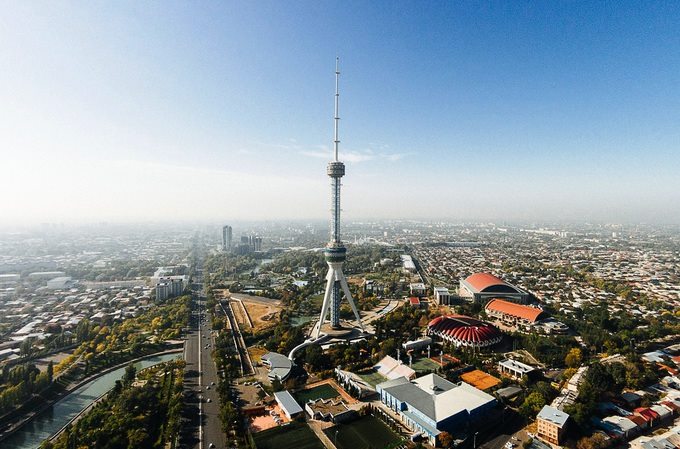
Tashkent, the capital of Uzbekistan, has a wealth of unique attractions, each with its own history and atmosphere. Residents, from students to entrepreneurs, have their favorite corners where they return again and again. Here some of a few recommended by locals to TCA.   [caption id="attachment_24632" align="aligncenter" width="1100"] photo: uzbekistan.travel Eco Park[/caption] Eco Park Located in the city center, the Eco Park is especially popular amongst students seeking somewhere to relax, take a break from their studies and immerse themselves in nature. “Here you can not only walk around, but also learn and be inspired by new ideas.” Saeed, 19, Programming student   [caption id="attachment_24625" align="aligncenter" width="900"] photo: www.tripadvisor -Seoul National Park[/caption] Seoul National Park Easily accessible by bus from the city center, Seoul National Park offers a taste of Korea in its landscaping and various pavilions. Passionate about Korean culture, Samira often visits the park to relax and socialise with friends. “This place has become my little world where I can enjoy nature and feel part of Korean culture.” Samira, 17, High school student   [caption id="attachment_24624" align="aligncenter" width="680"] photo: www.afisha -Patriki Coffee Shop[/caption] Patriki Coffee Shop For Dilshot, aside from its excellent coffee, the cozy atmosphere of Patriki is a perfect and inspirational spot in which to complete tasks on his computer. “There is always cool music here, and I can focus on my projects without being distracted by noise.” Dilshot, 22, Programmer   [caption id="attachment_24626" align="aligncenter" width="900"] photo: www.tripadvisor - Café 1991[/caption] Café 1991 Nasiba, prefers to chill in Cafe 1991; a venue renowned for its excellent menu and which she favors for its elegant and stylish atmosphere. “It is my place of rest. I like to relax here after work, enjoy delicious food and socialize with friends.” Nasiba, 30, Cafe Administrator   [caption id="attachment_24627" align="aligncenter" width="680"] photo: www.gazeta.uz - Chinorkent[/caption] Chinorkent Mountain Resort Lured by the great outdoors, Gafur likes to escape his daily routine and the hustle and bustle of the city by heading for the picturesque mountain resort of  Chinorkent. Located in Tashkent's  Bostanlyk district, 65 kilometers from the center, the resort has a cable car to transport visitors within ten minutes to an observation deck offering panoramic views. “The tranquil atmosphere makes it a perfect place to relax.” Gafur, 22, Entrepreneur  

Laughter Amidst Ruins: Rediscovering Tajikistan’s Resilience Through Comedy and Cultural Exchange

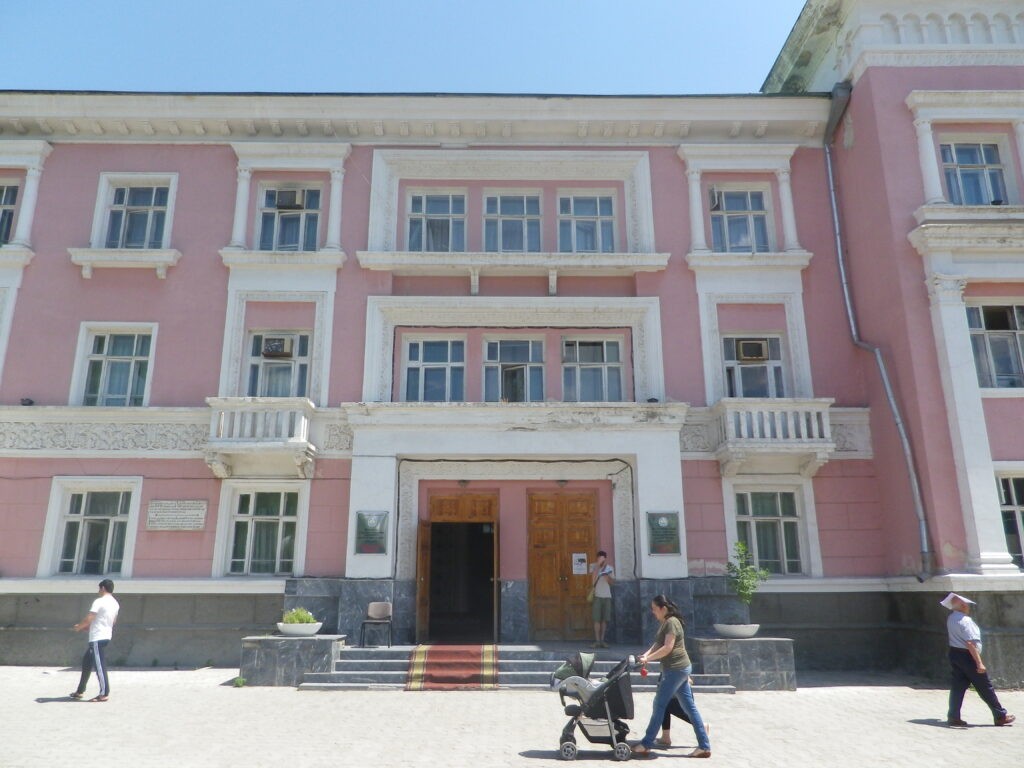
The UN General Assembly's Human Rights Council recently condemned the government of Tajikistan for its failure to implement the recommendations of a 2019 study by UN representatives. The study focused on the unreconciled atrocities and societal wounds caused by the civil war that swept through the republic after the collapse of the Soviet Union. More than 60,000 people died in this war, and more than 250,000 fled the republic. Reading this news, I was reminded of and reflected on post-war Tajikistan, which I visited in the late summer of 2000. At that time, the country had been in a state of fragile peace for two years, and you could still feel the tension in the air. Since my visit to the country in 2000, the Tajik Civil War has been reflected on by many people in the arts. In the same year that UN researchers were raking up the old tragedy, the film Kazbat was released in Kazakhstan. This movie is a military drama about the real deaths of 17 soldiers of the Internal Troops of the Ministry of Internal Affairs of the Republic of Kazakhstan (now the National Guard), who fell into an ambush in Tajikistan on April 7, 1995. A little earlier, in 2017, Russian writer Vladimir Medvedev released the novel Zakhok, which talks about the horrors of that six-year war through the struggles of a single family, where the mother is Russian, and the children are half Tajik. My visit to this war-torn country was for a reason most wouldn’t have expected - a comedy festival. The group that I traveled with consisted of my teammates, Almaty residents, as well as people from other Kazakh, Uzbek, and Kyrgyz cities. Despite coming from all over Central Asia, we ended up in Tajikistan for the first international СVN festival (СVN - Club of the Funny and Inventive) in Central Asia. СVN is an improv and sketch comedy competition involving students that originated in Soviet times, the point of which is to satirize the surrounding reality through theatrical skits and question-based improv. Due to its satirical nature, СVN was banned for two decades during the Soviet-era. It was later revived during Perestroika, and, in the shortest possible time, became a phenomenon in all universities in Russia and across almost all of post-Soviet space. In Kazakhstan, СVN was developed immediately after the collapse of the USSR. Alma-Ata, which was the capital city back then, organized its own league, which included teams from the leading national universities of that time - Kazakh State University, Narkhoz, Almaty Institute of Transport Engineers, and Almaty State Medical Institute. I belong to the second generation of СVN players. Our task was to popularize this game throughout the republic and attract not only universities but also colleges and schools. Later, the new СVN league went beyond Kazakhstan, starting with friendly meetings with universities from Bishkek, Tashkent, and other Central Asian cities. Then, the International League of СVN, which was created and headed by Alexander Maslyakov, who passed...

The First-Ever Audio Recording of Kazakh Music

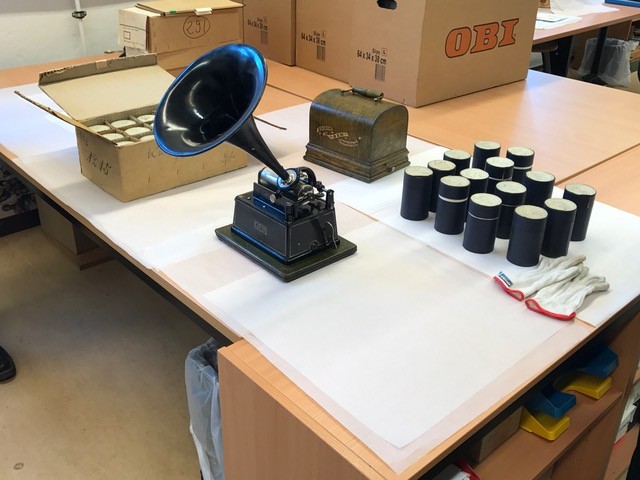
It was long believed that the world's first audio recording of Kazakh music was made in 1925 during the performance of singer, Amre Kashaubaev, at the Exposition Internationale des Arts Decoratifs et Industriels Modernes in France. However, the Berlin Museum of Visual Anthropology and Ethnology has recordings of Kazakh folk music, voices, and ritual chants, which were made in western Kazakhstan twenty years earlier. These recordings were made during the Acoustic Era, when sound waves were still recorded through analog methods. In 1857, Frenchman, Édouard-Léon Scott de Martinville invented the so-called phonautograph. Three years later, the world's first song was recorded. It was a French folk song, “By the Light of the Moon”. In 1877, Thomas Edison invented the phonograph. This invention could both record and playback audio and marked the start of the Acoustic Era. Later, in 1900, Carl Stumpf, a professor of psychology at the University of Berlin, established a phonogram archive in Berlin, where, at the same time, an orchestra from Thailand was touring. Stumpf recorded the Thai music, which was considered exotic to Europeans at that time. This recording became the first in the rich Ethnomusicology collection of the Ethnological Museum of Berlin. These recordings were originally discovered at the Institute of Russian Literature, also known as Pushkin House, which is part of the network that is affiliated with the Russian Academy of Sciences. Dr. Efim Rezvan, a well-known scholar of Turkology, showed the TCA team the wax rollers - cylindrical wax containers that can be played using Edison's phonograph. The first-ever audio recordings of Kazakh music were made using these devices. The German scientist Richard Karutz recorded them in the early 20th century when he organized an expedition to the steppes of Turkestan. As a result of his expedition, he wrote a book called Among the Kirghiz and Turkmens in Mangyshlak. During his expedition, Karutz took many photos and collected audio recordings of the local peoples' art. In addition to his scientific research, Karutz pursued other goals; for instance, he wrote about the health benefits of tea, which the locals consumed in large quantities. He claimed that drinking tea in large quantities when the air temperature was over 40 degrees Celsius helped them to bear the heat. Karutz wrote that, “It is necessary for our troops to weigh the importance of tea consumption during summer maneuvers and campaigns.” Richard Karutz was born into a mercantile family. In 1886, he went to study medicine at the University of Jena 1891. Completing his studies and receiving his doctorate in 1891, he then worked as a doctor aboard a ship. Whilst on working as a surgeon on a ship, Karutz traveled to South America and West Africa. After these trips, Karutz became interested in ethnography. In 1896, he was appointed head of the ethnographic collection of the Museum of Ethnology in Lübeck. Karutz enriched the museum's collection with artifacts from his travels, and encouraged other merchants and travelers to bring items from other countries for the collection. The...

Silk Road Treasures: Almaty’s Mountains

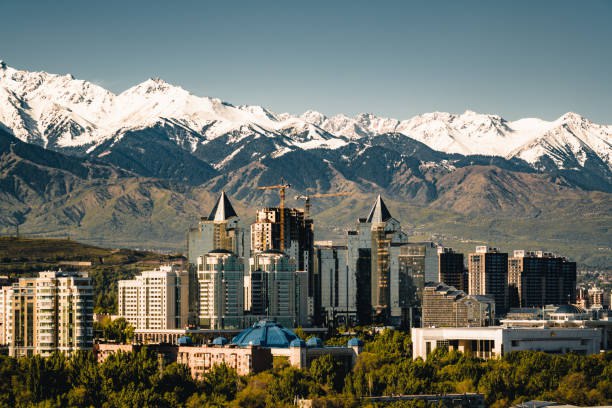
Under the banner of "Silk Road Treasures", TCA's people -journalists, editors, authors- share their personal experiences of Central Asia and her people, and by listing their favorite places, literature, films, architecture and archaeological sites, alongside encounters with customs and traditions, provide pointers for readers wishing to visit the region. Vagit Ismailov, Journalist The first thing a travelers notice when descending at Almaty International Airport are the towering snow-capped peaks of the Zailiyskiy Alatau mountains. However, alongside their majestic presence which make this city unique, the mountains harbour a constant threat which anyone who has experienced an earthquake whilst inside a high-rise building, will both well understand and fear. Almaty, capital of Kazakhstan until 1997, is one of those cities whose growth is independent of either metropolitan status or the presence of large enterprises. Now one of the most dynamic cities in the post-Soviet space and, perhaps, one of the most prosperous in Central Asia, the ever-evolving city absorbs money from other regions and boasts a wealth of amenities, high-end restaurants and cosy cafes to welcome customers day and night. Inevitably, the population continues to rise and as commented by one of Almaty's akims (mayors), every day, the number of people entering the city is equivalent to Latvia's population of over 1.5 million. As a result, the roads are constantly clogged with traffic, again showing the megacity's restless energy and the potential for further growth. Amidst the boom in development which has spurred the construction of modern residential and business complexes, the city center remains quintessentially Soviet in style, flanked by streets of  familiar communist apartment blocs from the sixties and seventies. Today's new builds reach for the sky but under the Soviet regime, high-rise construction was forbidden in Almaty. The only exception was the Kazakhstan Hotel, which standing 102 meters high, is now the city's third tallest building. Constructed in 1977, it was designed to withstand zone 9-point seismic activity, but nevertheless, its survival of several earthquakes is regarded as miraculous. [caption id="attachment_22785" align="aligncenter" width="600"] Hotel "Kazakhstan" Image: @iStock[/caption] The proximity of the mountains and unspoilt natural landscape, provide residents and tourists alike, a perfect place to relax and enjoy the great outdoors. The nearby resorts of Shymbulak and Medeo, home to  the world's largest ice rink which sits like a diamond in a box of green velvet, offer a range of winter sports facilities. Cable cars traversing deep gorges, operate all year round, aiding access to the high pastures, and panoramic views of the Tien Shan ranges, and numerous, graded hiking trails wind through passes to lakes and waterfalls. Scenery aside, visitors can experience more of what Kazakhstan has to offer by sampling local fayre in various venues and watching demonstrations of eagle hunting, and for lovers of antiquity, there are petroglyphs to be discovered, carved on red rock, and the famous Boroldai Saka Burial mounds, dating back to V-VIII BC. [caption id="attachment_22786" align="aligncenter" width="540"] Medeo. Image: @iStock[/caption] But the threat of the Zailiyskiy Alatau is ever-present. In 1887, ...

Silk Road Treasures: The Wild Beauty of Mangistau

Under the banner of "Silk Road Treasures", TCA's people -journalists, editors, authors - share their personal experiences of Central Asia and her people, and by listing their favorite places, literature, films, art, architecture and archaeological sites, alongside encounters and customs, provide pointers for readers wishing to visit the region. Aliya Haidar, Journalist Kazakhstan's Mangistau Peninsula (Mangyshlak) is far from fit for human habitation. Fresh water is scarce, the air is filled with dust raised by searing desert winds, huge waves roll over the turbulent Caspian Sea, and only camels can feed on its vegetation. Mangistau is a symbol of the triumph of nature and, simultaneously, a symbol of victorious industrialization. The balance between the two, however, is very fragile, as events on the peninsula have repeatedly confirmed. In 2000, the peninsula's landscape still retained its wild, natural beauty but just a decade later, it was a place plagued by social conflict. The remains of ancient nomadic sites and necropolises of Sufi missionaries illustrates that people have long been determined to tame and develop this remote and barren land but its explosive growth only occurred with the discovery of oil and uranium.  In the 1960s, geologists settled in the desert. Within ten years, cities appeared and hundreds of enterprises were established, making  Mangistau one of the gems in the Soviet Union's crown. Colossal desalination plants near the regional center of Aktau (former Shevchenko) resembling spaceships, are a legacy of the era of rapid development when the world's first industrial nuclear reactor on fast neutrons, the BN-350, was built on the peninsula. The reactor was shut down after independence in the late 1990s, but conservation is ongoing. Today, few people are allowed into the gloomy catacombs, to the heart of the reactor, but the memory of the power of the atom and the payback has remained. BN-350 is part of the Mangistau Atomic Energy Combine (MAEC), and the giant desalination plants now supply most of the peninsula with water from the Caspian Sea. But there is still insufficient capacity, and the presence of the endless row of desalination plants warns: "Beware, man. You will have to fight for every drop." Even in the regional center of Aktau, water cuts are not uncommon, and intensive farming is out of the question. In the bazaars of Mangistau, most of the products, especially fruit and vegetables, are imported and far more expensive than elsewhere in Kazakhstan where they grow in abundance.  And although salaries in the oil industry are higher than the national average, locals pay triple the price for just about  everything. Irresistibly attracted by the glitter of “black gold," the population in the peninsula continues to rise. Almost 800 thousand people currently live in the Mangistau region, making it the ninth most populous region in the country. The load on the peninsula's natural resources however, is now so disproportionate that it has become the cause of constant conflicts. But outside the cities, it is easy to forget the harsh reality of the industrial...