• KGS/USD = 0.01144 0%
  • KZT/USD = 0.00213 0%
  • TJS/USD = 0.10714 0.09%
  • UZS/USD = 0.00008 0%
  • TMT/USD = 0.28571 0%
  • KGS/USD = 0.01144 0%
  • KZT/USD = 0.00213 0%
  • TJS/USD = 0.10714 0.09%
  • UZS/USD = 0.00008 0%
  • TMT/USD = 0.28571 0%
  • KGS/USD = 0.01144 0%
  • KZT/USD = 0.00213 0%
  • TJS/USD = 0.10714 0.09%
  • UZS/USD = 0.00008 0%
  • TMT/USD = 0.28571 0%
  • KGS/USD = 0.01144 0%
  • KZT/USD = 0.00213 0%
  • TJS/USD = 0.10714 0.09%
  • UZS/USD = 0.00008 0%
  • TMT/USD = 0.28571 0%
  • KGS/USD = 0.01144 0%
  • KZT/USD = 0.00213 0%
  • TJS/USD = 0.10714 0.09%
  • UZS/USD = 0.00008 0%
  • TMT/USD = 0.28571 0%
  • KGS/USD = 0.01144 0%
  • KZT/USD = 0.00213 0%
  • TJS/USD = 0.10714 0.09%
  • UZS/USD = 0.00008 0%
  • TMT/USD = 0.28571 0%
  • KGS/USD = 0.01144 0%
  • KZT/USD = 0.00213 0%
  • TJS/USD = 0.10714 0.09%
  • UZS/USD = 0.00008 0%
  • TMT/USD = 0.28571 0%
  • KGS/USD = 0.01144 0%
  • KZT/USD = 0.00213 0%
  • TJS/USD = 0.10714 0.09%
  • UZS/USD = 0.00008 0%
  • TMT/USD = 0.28571 0%

Viewing results 1 - 6 of 6

Alatau: Inside Kazakhstan’s $20 Billion “City of the Future”

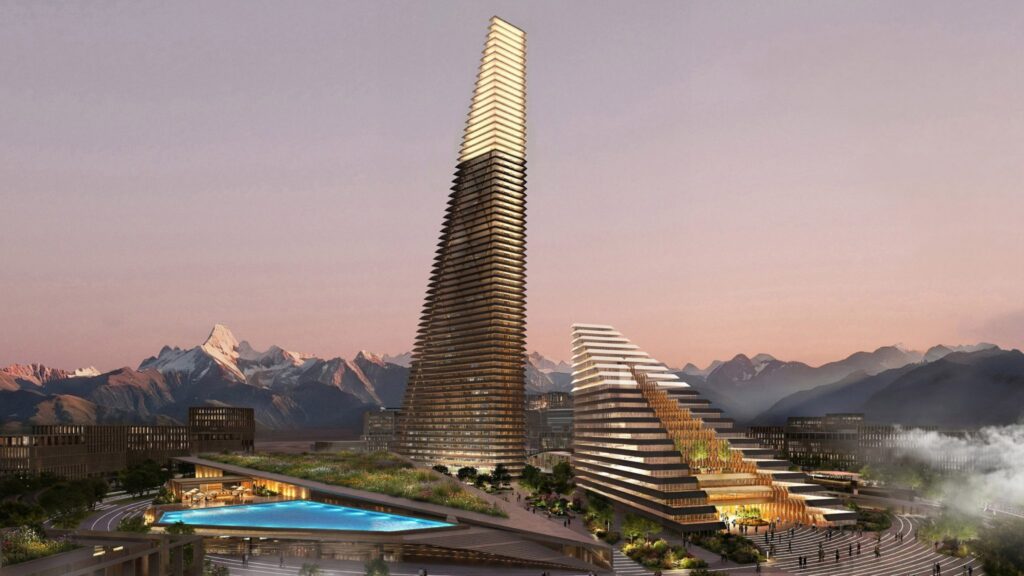
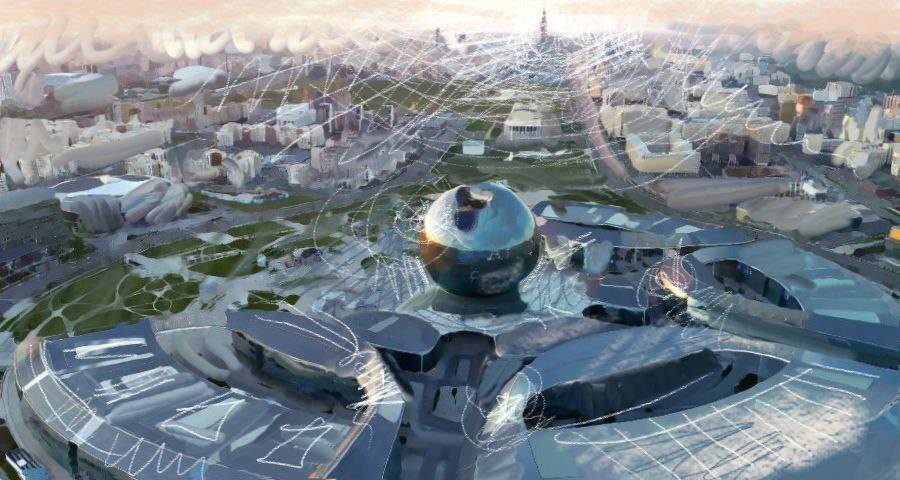
Details about the ambitious plans for Alatau city were presented to a joint session of Kazakhstan’s parliament on March 20. Authorities are moving ahead full-speed on the project to build the new city that one day could be home to some two million people. According to the plans, Alatau will be a unique city, not only in Kazakhstan, but in the world. [caption id="attachment_45827" align="aligncenter" width="1704"] Image: Skidmore, Owings & Merrill (SOM) [/caption] From Village to Metropolis Alatau city is being built on the site of what was the village of Zhetygen, some 50 kilometers north of Almaty. It will occupy an area of some 88,000 hectares, “larger than both Singapore and Seoul.” Relieving the congestion of Kazakhstan’s commercial capital was one of the major concerns when selecting a site for the new city. Another consideration was Alatau’s location along the Middle Corridor, the developing East-West trade route linking Europe and China. Alatau city will have an airport and railway junctions. Alatau city will have four districts – Green, Growing, Golden, and Gate. [caption id="attachment_45826" align="aligncenter" width="1704"] Image: Skidmore, Owings & Merrill (SOM) [/caption] The Gate district will be the business and financial area and is where the airport and railways will be located. It will also be the southern-most area of the city and therefore closest to Almaty. The Golden district will be the “hub of knowledge, healthcare, and innovation,” the location of hospitals and other medical facilities, tech centers, and educational institutions able to take 40,000 students are planned for the district. The Growing district will be the industrial and logistics center for export-oriented trade. It will include clusters for food, chemicals, building materials, and light industry. The Green district, on the shore of Kapchagay Lake and with the Kaskelen River running through it, will be the recreational and tourist area of the city. [caption id="attachment_45828" align="aligncenter" width="1704"] Image: Skidmore, Owings & Merrill (SOM) [/caption] Alatau city lies along the main road between the cities of Almaty and Konayev (the “gambling capital of Kazakhstan"). Deputy Prime Minister Kanat Boumbayev told parliament on March 20 that testing of air taxis to ferry people between Almaty and Alatau would start this year, and within two to three years, operations would open to the public. Bozumbayev said the flight time would be 10-15 minutes. Additionally, expansion of the Almaty metro system is progressing with plans for the Green Line to eventually reach Alatau. Alatau will be a smart city and will be developed under the principle “digital by default,” meaning people will be encouraged to go online as much as possible for goods and services, but will still offer support for those who prefer to use traditional means. Financing The Kazakh authorities are expecting construction of Alatau city to require some 10 trillion tenge (about $20.836 billion) of investment by 2050. Kazakhstan is seeking foreign investment and offering advantageous conditions to foreign companies. Deputy Prime Minister Bozumbayev said, “The tax model is described separately: incentives are proposed to be granted only...

Ten Years On, Kazakhstan’s Digital Experiment Moves Closer to Citizens

On a snowy afternoon in Taldykorgan, a group of university students reacts with excitement at the mention of the words “smart city.” “Finally!” one of them says, but they struggle to define what it actually means. Artificial intelligence? Cameras? Faster internet? It doesn’t really matter. For them, the concept signals something simple: progress. That expectation has accompanied Kazakhstan’s digital strategy for nearly a decade. When the government adopted the “Digital Kazakhstan” program in 2017, the goal was to modernize public administration and infrastructure through data. Astana and Almaty were the first testing grounds. But the real challenge began elsewhere. To scale the model nationally, authorities turned to medium-sized towns and small urban centers, places where infrastructure gaps were sometimes more visible than innovation. In some regions, electricity supply remains unstable. In others, sidewalks, heating networks, or waste management systems require urgent upgrades. Aqkol: The Laboratory Aqkol, a town of around 13,000-14,000 residents located 100 kilometers north of Astana, became the country’s first official pilot in 2018. The project, developed in partnership with Kazakhtelecom JSC, Tengri Lab, and the Eurasian Group, aimed to create a “conceptual model” of an intelligent city. Around 3,000 sensors and 150 cameras were installed to monitor everything from traffic flows to air quality. In theory, Aqkol became a data-driven microcosm. In practice, the transformation was uneven. [caption id="attachment_43867" align="aligncenter" width="2560"] During winter, some residents of Aqkol contend with poor street lighting and snow-covered roads; image: TCA, Manon Madec.[/caption] At first glance, Aqkol does not immediately appear transformed. On the main avenue, two heated bus stops operate through the winter. Nearby, smart benches equipped with Wi-Fi and charging ports stand mostly unused. A seventy-year-old resident waiting for his bus acknowledges that “the city has become more comfortable.” [caption id="attachment_43864" align="aligncenter" width="2560"] In Aqkol, residents are waiting for more “smart” bus stops; image: TCA, Manon Madec.[/caption] Yet a few streets away, there are no sidewalks and limited street lighting. “Children walk home from school in the dark,” says Nadejda, a resident in her thirties. Zeinolla, a taxi driver native from Aqkol, questions whether the investment reached the entire town. To understand the project, one has to step inside the Smart Aqkol control room. In a small office, screens display live environmental and security data. Air quality is measured every ten minutes. During winter evenings, coal-burning households generate visible emission peaks on the graphs. “With these systems, we see exactly when pollution increases,” explains Asylbek Baiboranov, deputy director of the Smart Akmola regional program. “We can identify patterns and respond faster.” On one of the large LED screens, a woman’s portrait appears alongside a live video feed of her entering what looks like a post office. The system matches faces in real time. “The surveillance cameras are equipped with facial recognition technology,” Baiboranov explains. Since their installation, recorded offences have fallen by roughly 20%, according to him. Taldykorgan: more security, more environmental considerations Taldykorgan already has an extensive camera network. Ameer, a student, supports further expansion. A smart city,...