• KGS/USD = 0.01143 0%
  • KZT/USD = 0.00205 0%
  • TJS/USD = 0.10724 0.09%
  • UZS/USD = 0.00008 0%
  • TMT/USD = 0.28571 0%
  • KGS/USD = 0.01143 0%
  • KZT/USD = 0.00205 0%
  • TJS/USD = 0.10724 0.09%
  • UZS/USD = 0.00008 0%
  • TMT/USD = 0.28571 0%
  • KGS/USD = 0.01143 0%
  • KZT/USD = 0.00205 0%
  • TJS/USD = 0.10724 0.09%
  • UZS/USD = 0.00008 0%
  • TMT/USD = 0.28571 0%
  • KGS/USD = 0.01143 0%
  • KZT/USD = 0.00205 0%
  • TJS/USD = 0.10724 0.09%
  • UZS/USD = 0.00008 0%
  • TMT/USD = 0.28571 0%
  • KGS/USD = 0.01143 0%
  • KZT/USD = 0.00205 0%
  • TJS/USD = 0.10724 0.09%
  • UZS/USD = 0.00008 0%
  • TMT/USD = 0.28571 0%
  • KGS/USD = 0.01143 0%
  • KZT/USD = 0.00205 0%
  • TJS/USD = 0.10724 0.09%
  • UZS/USD = 0.00008 0%
  • TMT/USD = 0.28571 0%
  • KGS/USD = 0.01143 0%
  • KZT/USD = 0.00205 0%
  • TJS/USD = 0.10724 0.09%
  • UZS/USD = 0.00008 0%
  • TMT/USD = 0.28571 0%
  • KGS/USD = 0.01143 0%
  • KZT/USD = 0.00205 0%
  • TJS/USD = 0.10724 0.09%
  • UZS/USD = 0.00008 0%
  • TMT/USD = 0.28571 0%

Viewing results 1 - 6 of 143

From Kyz Kuu to Niqabs: Why Kazakh Women Face a Crisis of Values

Before the 1917 revolution, Kazakh women enjoyed significant freedoms due to their nomadic lifestyle. Living in the remote steppe, women were responsible not only for managing livestock and households but also for defending their families and property, often with weapons in hand. The Soviet era formalized gender equality, enabling women to become leading producers, scientists, decorated soldiers, and politicians.  Today, however, these traditions face erosion from two opposing forces: rising consumerism and a growing Arab-influenced Islamization. According to Kazakh political scientist Zamir Karazhanov, women in Kazakhstan are struggling to find their place amid an expanding spiritual vacuum and polarized ideologies. A Reversal in Feminism A centuries-old game, Kyz Kuu (“Catch the Girl”), exemplifies the historical freedom of nomadic Kazakh women. The game, rooted in equestrian tradition, involved a female rider gaining a head start before being pursued by a young horseman. If he caught her and took her ribbon, he could propose marriage. If not, the woman would chase and whip the suitor with a kamcha (whip) in front of spectators, a demonstration of both female skill and independence. During the Soviet period, the roles of Aliya Moldovan and Manshuk Mametova both posthumously named Heroes of the Soviet Union in World War II, underscored female empowerment in Kazakhstan. In contrast, contemporary Kazakhstan is embroiled in a heated debate over the niqab, a face-covering garment not traditionally worn by Kazakhs. This shift has sparked national concern, culminating in the passage of a June 2025 law banning face coverings in public places. Declining Representation and Shifting Priorities Women’s representation in politics and governance has deteriorated, particularly in Kazakhstan’s southern and western regions. Despite officially favorable statistics, political scientist Zamira Karazhanova argues that the state practices only “artificial equality.” Party-imposed quotas for women and youth offer a superficial solution without addressing the systemic barriers to real empowerment. “To achieve gender equality, we must create genuine opportunities for women to participate in politics and civil service,” said Karazhanova. Karazhanov notes a broader cultural shift, with young women increasingly drawn to the lifestyle of tokal, unofficial second wives of wealthy men. These figures flaunt luxury and affluence on social media, eclipsing the appeal of education and career development. “The pursuit of wealthy husbands is becoming a kind of ideology,” Karazhanov said. “Many young women are growing up with no interest in professional growth. They have entirely different ideals.” The Rise of Foreign Influences “Islam in Kazakhstan is becoming Arabized,” Karazhanov stated. “This affects not only how women dress, but also how they are perceived and perceive themselves. Religion is becoming a key part of national identity, even if some believers visit the mosque on Fridays and bars on Saturdays.” Following the collapse of the USSR, Kazakhstan experienced a spiritual vacuum, filled rapidly by imported religious ideologies. Many religious leaders were educated in Arab countries or Afghanistan, bringing with them foreign dogmas that were alien to traditional Kazakh Islam. Karazhanov stressed that Arabization and radicalization are not confined to Kazakhstan, but also affect Russia, Turkey, and...
Uzbek-Born Author Dina Rubina’s Tashkent Event Suspended Amid Outrage Over Gaza Comments

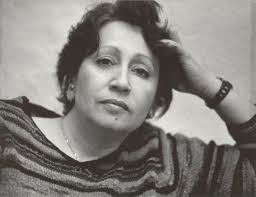
Ticket sales for an upcoming literary event in Tashkent by Israel-based writer Dina Rubina have been suspended following widespread controversy over her remarks about the Gaza conflict. Rubina, born in Tashkent in 1953, was formerly a member of the Uzbekistan Writers’ Union. She moved to Moscow in 1984 and currently resides in Israel, continuing to write in Russian. Rubina was scheduled to perform at Turkiston Palace in Tashkent on October 10, with tickets sold through box offices and online via iTicket.uz, according to Anons. However, online sales have since been discontinued, and promotional materials on Afisha.uz have been taken down. The backlash emerged after excerpts from Rubina’s recent interview with Russian television channel Dozhd were widely circulated and criticized. In the interview, aired on July 20, Rubina discussed the Hamas attacks on Israel on October 7, 2023, and the ensuing violence. Journalist Mikhail Kozyrev, who conducted the interview, later revealed on his Facebook page that some of Rubina’s more inflammatory statements had been edited out. According to Kozyrev, Rubina had said: “Israel has the right to defend itself. It has the right to dissolve them all in hydrochloric acid, clean Gaza and turn it into a parking lot. There is no civilian population there! One teacher kept an Israeli soldier’s head in a refrigerator, another stored body parts for sale, they are expensive, in a basement. Don’t talk to me about ‘peaceful civilians’.” Kozyrev explained that the phrases were removed from the broadcast due to their extreme nature, but he later published the full transcript online. This prompted backlash, with some accusing the channel of censorship. Russian musician Andrei Makarevich criticized Dozhd’s editorial choices, arguing that they “cut out the most important parts.” Kozyrev responded that the remarks were omitted because “such statements should not be made about anyone.” As the controversy intensified, Rubina posted a statement on July 29 accusing Kozyrev of misrepresenting her words: “Apparently, the interview seemed too mild to the interviewer, so he hastily filled his Facebook page with dirty distortions of my various words and phrases. This is not just falsification; it’s deliberate manipulation of meaning.” Kozyrev later issued an apology, acknowledging that publishing the unedited transcript was a mistake: “Generalizing about entire nations is destructive. There are no bad nations, only bad people. Even war cannot justify statements like ‘they all must be destroyed’.” In response, Russian journalist Ilya Azar called for a more humane approach from supporters of Israel. “I saw photos of starving children in Gaza and then read Rubina’s comments,” he wrote on social media. “How can an educated adult, especially Jewish, aware of their history, say or even think this? Yes, the October 7 attack was horrific, but it has already been answered, terrifyingly. People must stop this genocide.” Kazakh journalist and activist Aigerim Bukeyeva compared Rubina’s remarks to Russian war propaganda: “To the fans of Dina Rubina, who is apparently planning another tour in Kazakhstan, are you eager to see the ‘talented writer’ because of her work or because...

In Tajikistan, Tradition Defines the Ideal Bride in a Changing World

In Tajikistan, the image of the “ideal bride” is shaped not only by character but by deep-rooted societal expectations. While wedding customs vary across Central Asia, they are united by traditional values that place a high premium on modesty, obedience, and domestic skill—qualities that can determine a woman’s future prospects in marriage. Restraint in All Things In traditional Tajik households, modesty is synonymous with decency. Future mothers-in-law scrutinise prospective brides for soft-spoken voices, humble body language, and conservative attire. In some homes, daughters-in-law are expected not to make direct eye contact with their parents-in-law—considered a mark of humility. Clothing is another marker. Revealing outfits like shorts or miniskirts are widely viewed as signs of frivolity and can irreparably damage a girl's reputation. Respect for elders is paramount. During the matchmaking process, the groom’s family pays close attention to whether a girl rises when elders enter the room, places her hand over her heart in greeting, and avoids using first names. A “well-raised” kelinka is also expected to manage the home without protest—never challenging her husband or his family, and always deferring to elder relatives. Cooking, especially traditional dishes like pilaf, cleaning, and hospitality are seen as baseline qualifications for marriage. Chastity as a Social Standard Virginity remains a critical factor in bride selection. Although the Tajik Ministry of Health does not officially require it, virginity testing remains widespread. A joint statement from the UN and WHO has condemned these tests as “humiliating, traumatic, and medically unnecessary.” In Tajik culture, premarital sex is widely considered a dishonour to the family. Some households even prohibit young women from grooming practices like eyebrow plucking until marriage, believing these are reserved for wives only. Age Expectations and Digital Matchmaking Efforts to arrange marriages can begin as early as a girl’s 18th birthday. In conservative communities, being unmarried by 30 may carry social stigma. However, this does not always preclude education or employment—many families now see value in educated daughters-in-law. In recent years, digital matchmaking has gained traction. Platforms like Facebook host matchmaking groups where relatives post ads in search of “decent and well-mannered” partners. Girls introducing potential matches often include detailed preferences such as height and eye colour. While the legal marriage age is 18, Tajik courts can authorise marriage at 17 in “exceptional circumstances.” In reality, these exceptions often stem from emotional or economic hardship—such as orphanhood, poverty, or family pressure. A Society in Transition? Despite these enduring customs, signs of change are emerging. Urbanisation, rising education levels, and increased internet access are giving Tajik women new tools to assert choice in their personal lives. NGOs and human rights organisations are pushing for better enforcement of existing protections, and the growing discourse around women’s rights may gradually soften the rigidity of old expectations. While traditions still dominate, a slow cultural shift is underway—one that may eventually reshape what it means to be the “ideal bride” in Tajikistan.  

Mother Gives Birth on Uzbekistan Airways Flight to Tashkent

A baby boy has been born on board an Uzbekistan Airways flight from Istanbul to Tashkent. According to the airline, the mother went into premature labor during the flight. “There were two doctors on board who, together with the crew, quickly provided all the necessary medical assistance,” the company said in a statement. “The flight attendants acted professionally, calmly, and clearly. Their confidence, composure, and care were vital at this important moment.” The plane made an emergency landing at the airport in the Uzbek city of Urgench, where medics were waiting for the woman and her newborn boy and took them to the hospital. Uzbekistan Airways congratulated the family on the new addition and expressed its gratitude to the pilots and flight attendants, singling out the two doctors who were on the same flight and organized assistance for the woman in labor. After landing in Urgench, the plane flew on to Tashkent. In January this year, the crew of a Uzbekistan Airways plane delivered a baby to a passenger during a flight from Tashkent to New York. The aircraft was forced to land in Keflavik (Iceland), where the mother and child were taken to hospital. In April 2024, a boy was born on a flight operated by the same airline from Tashkent to Istanbul.

Kazakhstan Moves to Ban Face-Coverings in Public

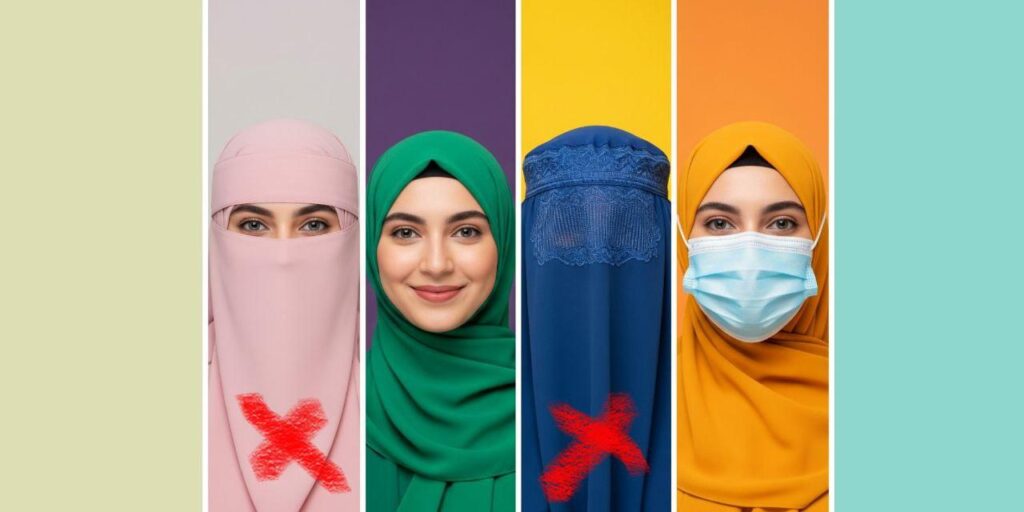
On June 25, Kazakhstan’s Mazhilis, the lower house of parliament, approved amendments to the law “On the Prevention of Offenses,” introducing a new provision that prohibits wearing clothing that obscures the face in public places. While the regulation applies broadly, the most contentious element is its effective ban on the niqab, a religious garment that leaves only the eyes visible. This legislative move echoes ongoing debates in Kazakhstan and across Central Asia, where secular norms are enshrined in law but tensions persist over religious expression. Medical Masks Exempt Earlier, on June 19, Senator Nauryzbay Baikadamov clarified that the amendments would exempt face coverings worn for medical reasons, weather protection, or professional duties. According to Baikadamov, the law aims to enhance public safety and assist in crime prevention. While accessories such as balaclavas are included in the ban, the central controversy surrounds the prohibition of the niqab. The Scarf of Discord Understanding the distinctions among various forms of religious dress is critical to the current debate. The niqab is a face veil that leaves only the eyes uncovered, while the burqa (or paranji), typically worn in Afghanistan, covers the entire face with a mesh screen over the eyes. Burqas are rarely seen in Kazakhstan. Niqabs and black, floor-length dresses have become more visible on Kazakhstan’s streets in recent years, reflecting broader religious shifts. By contrast, the hijab, a headscarf that leaves the face exposed, has become commonplace and enjoys broader acceptance. While niqabs are widely seen as foreign to Kazakh culture, hijabs hold a more complex status. Historically, Kazakh women did not cover their faces, a fact supported by pre-revolutionary photographs. The niqab is viewed by many as an imported practice, largely linked to Islamic teachings from Arab countries. The hijab, however, is often seen as consistent with Kazakh traditions. As such, attempts to ban it have repeatedly stirred controversy. Religious Tensions in Schools In the fall of 2023, more than 150 schoolgirls in the Atyrau region refused to attend classes in protest against a hijab ban. Similar incidents were reported in other southern regions. Authorities reported that the situation was resolved after consultations with parents, but ambiguity remained regarding the scope of the restrictions, particularly whether the hijab was included. President Kassym-Jomart Tokayev ultimately addressed the issue, reaffirming Kazakhstan’s secular identity. “This principle must be strictly observed in all spheres, including education. School is, first and foremost, an educational institution where children come to gain knowledge. Religious beliefs, on the other hand, are a choice and a private matter for each citizen,” Tokayev stated. Still, the legal and cultural status of the hijab remains unresolved. While school uniform policies emphasize secular dress, enforcement is inconsistent, and experts warn of renewed conflict. Religious scholar Asylbek Izbaev noted, “It is not so important what a girl wears on her head as what she thinks.” A Regional Trend Kazakhstan’s move is part of a broader trend across Central Asia. In January 2025, Kyrgyz President Sadyr Japarov signed a law banning face-covering clothing. In...

Bans and Beliefs: Understanding Central Asia’s Most Controversial Restrictions

A recent controversy involving the Spiritual Administration of Muslims of Kazakhstan (SAMK) has reignited public debate over seemingly bizarre bans in Central Asia. SAMK was asked to comment on whether popular video games such as Counter-Strike 2, Dota 2, GTA, League of Legends, Minecraft, and Genshin Impact are permissible under Islamic law. SAMK responded that, from a Sharia perspective, all of these games are prohibited. The public interpreted this as an official ban, possibly even a fatwa, sparking a media uproar. But the reaction wasn’t unfounded: Central Asian republics often make headlines with prohibitions that, from the outside, can appear surreal. Yet, context often provides a more nuanced explanation. Turkmenistan: The Regional Champion of Bans Turkmenistan remains unmatched in its record of curious restrictions. Under its first president, Saparmurat Niyazov, the state banned smoking in cars, mobile phones, radios, stereo systems, clowns, and lip-syncing. Public smoking was also prohibited, and officials were barred from having gold teeth. Other bans targeted personal appearance. Men were forbidden from wearing long hair, beards, or mustaches, while makeup was banned for television presenters. Niyazov justified the latter by claiming it was difficult to distinguish men from women on screen and that Turkmen women’s natural “wheat-colored” complexion should be visible. Cultural life was similarly curtailed. Niyazov abolished ballet, opera, the circus, and even the national folk dance ensemble. “I don’t understand ballet. Why do I need it?” he said. “You can’t instill a love for ballet in Turkmen people if it’s not in their blood”. His successor, Gurbanguly Berdimuhamedov, retained many of these restrictions, particularly the sweeping limitations on internet access. According to Turkmen.news, as of 2023, approximately 75% of global IP addresses were blocked in Turkmenistan. The list of banned platforms includes Facebook, Instagram, TikTok, Telegram, YouTube, WhatsApp, and X (formerly Twitter). Cloud services such as Google Cloud, Microsoft Azure, and Dropbox are also blocked, along with most public DNS servers and online games such as Minecraft, Dota 2, and League of Legends. Dushanbe Follows Suit Kazakhstan and Turkmenistan are not alone in targeting video games. In 2024, the Interior Ministry in Tajikistan’s capital, Dushanbe, banned the distribution of games and video clips deemed violent or immoral. Authorities argued that such content negatively influenced youth behavior and contributed to crime. Games like Counter-Strike and GTA were explicitly named. Tajikistan has also imposed a range of non-digital bans. In 2018, the Committee for Architecture and Construction ordered that rooftops follow a citywide color scheme: green on one side of the river, burgundy on the other. The directive was short-lived. That same year, the mayor banned wearing house clothes, galoshes, and slippers in public, citing the need to uphold the capital’s dignity. The city also outlawed drying laundry on balconies to preserve the urban aesthetic. While these rules may seem odd, they reflect the ongoing transformation of societies that, until recently, were largely agrarian. Urbanization has brought with it an effort to instill new norms and behaviors. Sorcery, Beards, and Dress Codes This same logic applies...