• KGS/USD = 0.01144 0%
  • KZT/USD = 0.00213 0%
  • TJS/USD = 0.10562 0%
  • UZS/USD = 0.00008 0%
  • TMT/USD = 0.28530 0%
  • KGS/USD = 0.01144 0%
  • KZT/USD = 0.00213 0%
  • TJS/USD = 0.10562 0%
  • UZS/USD = 0.00008 0%
  • TMT/USD = 0.28530 0%
  • KGS/USD = 0.01144 0%
  • KZT/USD = 0.00213 0%
  • TJS/USD = 0.10562 0%
  • UZS/USD = 0.00008 0%
  • TMT/USD = 0.28530 0%
  • KGS/USD = 0.01144 0%
  • KZT/USD = 0.00213 0%
  • TJS/USD = 0.10562 0%
  • UZS/USD = 0.00008 0%
  • TMT/USD = 0.28530 0%
  • KGS/USD = 0.01144 0%
  • KZT/USD = 0.00213 0%
  • TJS/USD = 0.10562 0%
  • UZS/USD = 0.00008 0%
  • TMT/USD = 0.28530 0%
  • KGS/USD = 0.01144 0%
  • KZT/USD = 0.00213 0%
  • TJS/USD = 0.10562 0%
  • UZS/USD = 0.00008 0%
  • TMT/USD = 0.28530 0%
  • KGS/USD = 0.01144 0%
  • KZT/USD = 0.00213 0%
  • TJS/USD = 0.10562 0%
  • UZS/USD = 0.00008 0%
  • TMT/USD = 0.28530 0%
  • KGS/USD = 0.01144 0%
  • KZT/USD = 0.00213 0%
  • TJS/USD = 0.10562 0%
  • UZS/USD = 0.00008 0%
  • TMT/USD = 0.28530 0%

Viewing results 1 - 6 of 26

Kyrgyzstan Seeks Credit Rating Upgrade from Moody’s

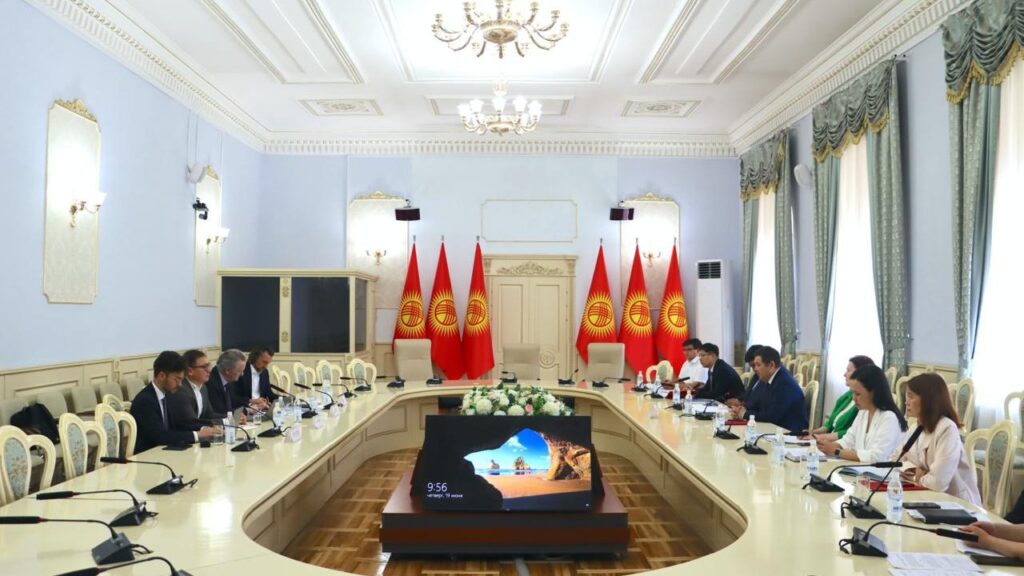
Kyrgyzstan is aiming to secure an upgrade to its sovereign credit rating following a visit by a delegation from international ratings agency Moody’s, and meetings with top government officials, including Minister of Economy and Commerce Bakyt Sydykov. During the discussions, Sydykov presented Moody’s analysts with an overview of Kyrgyzstan’s socio-economic performance, ongoing structural reforms, and fiscal priorities. He formally requested that Moody’s consider raising the country’s credit rating. “The Kyrgyz Cabinet is consistently implementing policies aimed at maintaining macroeconomic stability, fostering a competitive environment, and enhancing social protections for our citizens,” Sydykov stated. He noted that these measures are improving the investment climate and strengthening the country's financial position. Moody’s delegation also held separate consultations with representatives from the Ministry of Finance, the National Bank, and other key state institutions. The agency’s analysts focused on Kyrgyzstan’s fiscal policy, public debt sustainability, long-term economic growth prospects, and its investment climate. Government officials said that comprehensive data on macroeconomic indicators and policy initiatives were shared during what they described as a “constructive” dialogue. The consultations are seen as an important step in Kyrgyzstan’s engagement with international financial institutions. Moody’s currently assigns Kyrgyzstan a long-term sovereign credit rating of B3 with a stable outlook. This rating places the country in the speculative category, implying elevated credit risk, but with no immediate threat of default. In 2023, Moody’s revised Kyrgyzstan’s outlook from “negative” to “stable.” The agency at the time cited concerns over the nationalization of the Kumtor gold mine and the potential impact of Western sanctions on Russia, Kyrgyzstan’s primary trading partner. However, the feared capital flight and deterioration in economic indicators did not materialize. Despite this, Moody’s has continued to flag key vulnerabilities, including high levels of state intervention in the economy, lingering risks linked to domestic political instability, and the unpredictability of some government decisions. The next sovereign rating update from Moody’s is expected later this year.


Uzbekistan Applies for UN Security Council Membership for 2035-2036

Uzbekistan has announced its bid for a non-permanent seat on the United Nations Security Council (UNSC) for the 2035-2036 term. The move reflects the country’s growing ambitions on the global stage, as it seeks to enhance its role in international diplomacy and regional stability. At a recent international meeting, Uzbek officials outlined the country’s key priorities in working with the UN. They emphasized Uzbekistan’s commitment to global cooperation, fostering regional security, and supporting Afghanistan’s economic recovery. Strengthening Ties with Afghanistan Uzbekistan’s expanding international engagement was further highlighted during a high-level visit by a delegation from the Islamic Emirate of Afghanistan, led by Deputy Prime Minister Mullah Abdul Ghani Baradar. The delegation met with Uzbek officials, including Prime Minister Abdulla Aripov and Deputy Prime Minister Jamshid Khojayev, to discuss trade and economic cooperation. Talks focused on strengthening trade, transit, and investment ties. Uzbekistan expressed its readiness to establish a joint trade zone on the border, featuring processing plants for pine nuts and cotton, packaging and logistics centers, and food production facilities. Uzbek investors also showed interest in Afghanistan’s oil and gas sector and industrial projects, including plans for a cement plant in Namangan. Relations between Uzbekistan and Afghanistan have grown in recent years, with projects like the Termez International Trade Center boosting bilateral trade. Tashkent has also reaffirmed its commitment to tackling global challenges, including drug trafficking, terrorism, and organized crime. Environmental and Development Initiatives Uzbekistan has placed environmental protection at the center of its development strategy. The government has declared 2025 the “Year of Environmental Protection and Green Economy” and is taking steps to address the consequences of the Aral Sea crisis. Efforts include large-scale reforestation projects, water conservation measures, and the expansion of renewable energy sources. Uzbekistan has called for increased international support to sustain these initiatives. Additionally, Uzbekistan invited UN member states to participate in the UN Public Services Forum, scheduled to take place in Samarkand in June 2025. The forum will focus on improving public services and accelerating progress toward global development goals.

Central Asia’s Economic Growth to Reach 5% in 2025

The World Bank’s Global Economic Prospects report offers projections for economic growth, risks, and challenges across Europe and Central Asia (ECA), highlighting mixed outcomes for the region as a whole. Regional Outlook Economic growth across ECA is projected to slow to 2.5% in 2025, with a modest recovery to 2.7% expected in 2026. This deceleration is largely attributed to weaker economic activity in Russia and Turkey, two key regional economies. Excluding these two countries and Ukraine, growth in the rest of the region is forecasted to average 3.3% in 2025-2026. The recovery in these areas will primarily be driven by private consumption and investment, as inflationary pressures ease and monetary policies gradually become less restrictive. Despite these projections, significant risks remain. Global policy uncertainty and potential changes in trade policies could negatively affect trade flows, capital investments, and economic growth. Geopolitical tensions - particularly stemming from Russia’s invasion of Ukraine - and persistent inflation in the region could also pose serious challenges to stability. Central Asia: A Bright Spot Central Asia is expected to outperform the broader ECA region, with growth projected to accelerate to 5% in 2025 before softening to 4.2% in 2026. This growth will be driven by increased oil production in Kazakhstan, which will serve as a critical engine of recovery for the region. Remittances will also continue to play a key role, particularly for Kyrgyzstan and Tajikistan. These inflows provide vital support to household consumption and help improve current account balances. However, international sanctions on Russia and financial restrictions on cross-border transfers could push some remittance flows into informal channels, potentially limiting their economic impact. Long-Term Challenges While short-term recovery appears promising, the ECA region’s long-term growth potential remains subdued. Between 2022 and 2030, annual growth is projected to average just 3.0%, down from 3.6% in the previous decade. Several factors contribute to this slowdown, including labor shortages caused by low workforce participation rates, aging populations, and significant emigration, particularly from the Western Balkans. Education remains a critical area for improvement. Although ECA boasts relatively strong educational systems, issues such as declining quality in higher education and ongoing brain drain have hindered human capital development. Addressing these issues and improving education systems could help the region move closer to high-income economies in the long term. Conclusion While Central Asia’s projected growth for 2025 presents an optimistic outlook, the region - and ECA as a whole - faces significant headwinds. Structural challenges, geopolitical instability, and demographic pressures will require governments to adopt forward-looking policies to sustain growth and promote resilience. As inflation cools and monetary policies ease, targeted investments in education and workforce development could unlock new opportunities for long-term economic stability.

Tokayev’s Approval Rating Soars Amid Economic Gains, But Leadership Challenges Persist

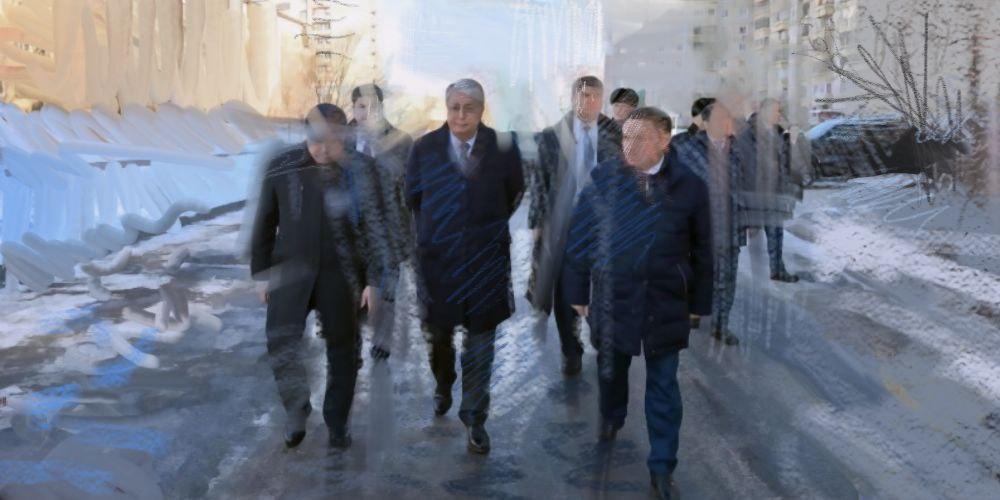
President Kassym-Jomart Tokayev’s approval rating remains consistently high, as confirmed by multiple surveys. However, experts note challenges within Kazakhstan's political landscape, including a lack of standout leaders and frequent staff turnover in government structures. High Approval Ratings Linked to Economic Well-Being In December 2024, the Social and Political Research Foundation "Strategy" released a survey showing President Tokayev's approval rating at 80.4%. This marks an increase from December 2023, when the foundation reported a 76.4% approval rating. Other studies corroborate these findings; for instance, the Kazakhstan Institute for Strategic Studies found in July 2024 that 77.1% of Kazakhstanis trust the president. Explaining the methodology behind these surveys, Gulmira Ileuova, head of the Strategy Foundation and a member of the advisory public organization, the National Kurultai, told the Times of Central Asia: “The question to respondents is framed as, ‘Do you approve of the activities of the president, parliament, and government?’ Of those surveyed, 80.4% chose ‘I approve/Somewhat approve.’ Additionally, a separate project showed trust in the president at 77%.” Ileuova highlighted that Tokayev has faced numerous social, economic, and political challenges during his tenure. She noted a significant drop in his approval rating during December 2021, when the COVID-19 pandemic and quarantine restrictions were in effect. At that time, his approval rating fell to 40%. However, it rebounded in the subsequent years, reaching its highest level in 2024. By comparison, the government and parliament lag in terms of public support, with approval ratings of 59% and 54%, respectively. Ileuova explained that such gaps between the president’s popularity and that of other branches of government were also characteristic during the presidency of Nursultan Nazarbayev, which ended in 2019. The sustainability of these high ratings, she argued, hinges on the country’s economic performance. Historically, fluctuations in citizens’ well-being have had a direct impact on the approval ratings of political leaders. Criticism and Public Perception Despite the high ratings, Ileuova acknowledged skepticism toward her research. Critics often accuse survey organizations of bias, particularly those who inhabit what she describes as “information bubbles.” “On social media, individuals often focus solely on content that aligns with their negative perception of the president or the country’s overall situation. For example, some claim the government failed to help flood victims. While isolated cases exist, most victims received aid, and houses were built for them. Of course, there are valid reasons for criticism, but there are also many achievements that benefit ordinary people,” she explained. The connection between Tokayev’s approval rating and public living standards is evident. According to Strategy’s December 2024 survey, 29.6% of respondents described their financial situation as “good” or “very good,” while 15% rated theirs as “bad” or “very bad.” The majority - 52.8% - said their family’s financial situation is “average.” The Challenge of Personnel Management Experts point to difficulties in assessing President Tokayev’s personnel policies. While some figures - such as Mazhilis Speaker Yerlan Koshanov, Senate Speaker Maulen Ashimbayev, State Counselor Yerlan Karin, and Prime Minister Olzhas Bektenov - maintain steady approval ratings,...

U.S. Government Supports Kyrgyzstan’s Dairy Sector

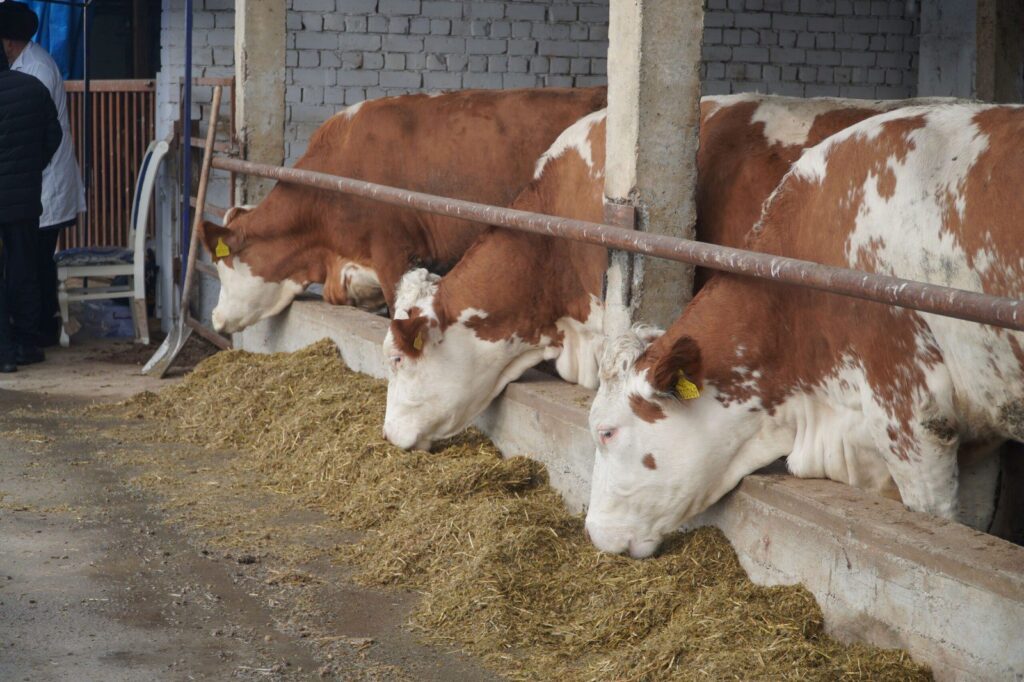
The United States government, through the United States Agency for International Development (USAID), is advancing Kyrgyzstan’s dairy industry by supporting cattle management, fodder cultivation, and artificial insemination initiatives. These programs will benefit over 500 people in the southern regions of Kyrgyzstan, according to a report from the U.S. Embassy in Bishkek. USAID’s Agro Trade Activity has provided dairy processing equipment valued at 4.6 million KGS ($33,786) to PE Begalieva, a local producer in the Jalal-Abad region specializing in kurut (dried yogurt balls), butter, and kefir (fermented milk drink). This investment has increased the company’s processing capacity from 1,000 to 4,000 liters per day and expanded its product range from seven to 12 varieties. The partnership will also facilitate exports to Uzbekistan and train over 300 households on modern cattle management and milking technologies. In Osh, USAID has equipped TES Center, a local advisory service provider, with milking and extruder equipment worth 1.1 million KGS ($12,650). This will enhance their training programs for over 100 farmers on fodder cultivation and dairy cow husbandry. Additionally, Public Foundation Tybyt Kashmir received artificial insemination equipment valued at over 1 million KGS ($11,500), including cryogenic storage, a microscope, an ovulation detector, and a veterinary ultrasound machine. These tools will be used to train 54 livestock graders and 65 veterinarians in the Osh, Jalal-Abad, and Batken regions to master artificial insemination techniques. Over the past four years, USAID has supported 17 dairy companies in southern Kyrgyzstan, benefiting over 4,200 households and creating more than 3,500 jobs. This has led to increased sales and exports of dairy products. Kyrgyzstan produces more than 1.7 million tons of milk annually but processes only 2.5% of its production. The cost of raw milk is lower in Kyrgyzstan compared to neighboring Kazakhstan, providing an opportunity for cost-efficient production. While foreign ownership of Kyrgyz farmland is prohibited, joint ventures with local landowners could help reduce production costs and ensure a stable supply of raw milk. Local inefficiencies have historically resulted in Kyrgyz consumers relying on dairy products from more expensive producers in Russia and Kazakhstan. However, Kyrgyz producers are closing the gap. In 2020, dairy exports nearly doubled compared to 2016 levels. Exports to Uzbekistan surged in 2022, reaching 746 tons, contributing to a total of 31,000 tons of dairy products exported for $49 million that year. Kazakhstan remains the largest export market, followed by Russia, Uzbekistan, and Tajikistan. Additionally, 13 Kyrgyz companies received certifications in 2022 to export dairy products to China, marking a significant step in expanding the sector’s international reach.

Rahmon Unveils Tajikistan’s Roadmap for Economic Growth and Diplomacy

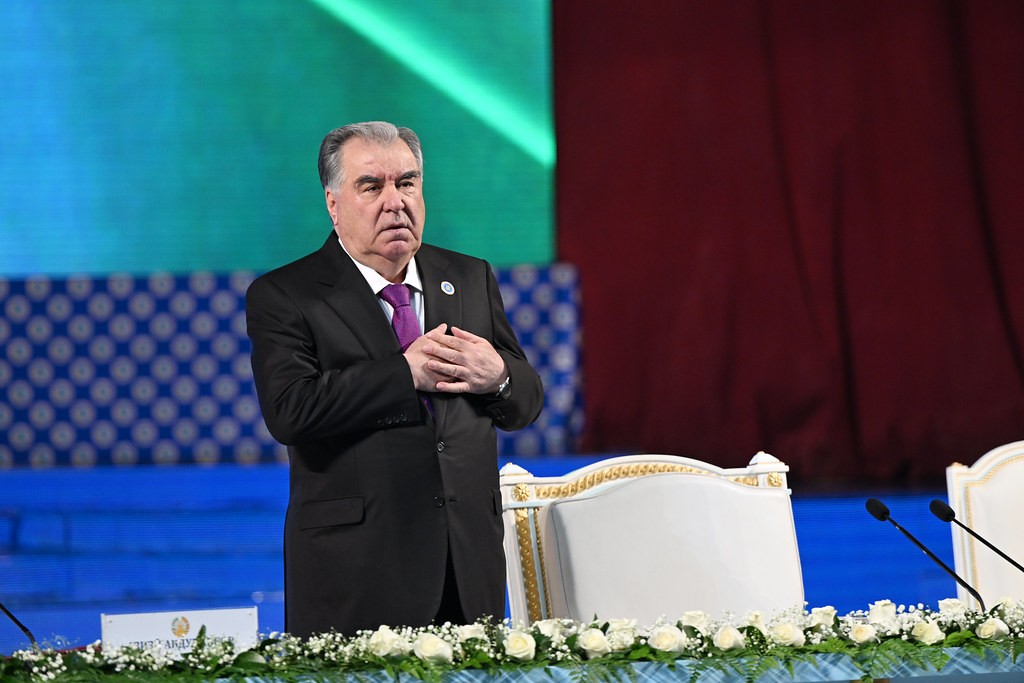
On December 28, Tajikistan’s President Emomali Rahmon delivered his annual address, titled “On Major Dimensions of Tajikistan’s Domestic and Foreign Policy,” during a joint session of both chambers of the Tajik Parliament​. The president outlined key priorities for implementing domestic and foreign policy and advancing various sectors of Tajikistan's economy, including industry, energy, agriculture, transport, investment, entrepreneurship, education, science, healthcare, and social protection. Rahmon directed the government to draft a "Medium-Term Development Program for 2026-2030" by the end of 2025. Highlighting the need for innovation, he proposed declaring 2025-2030 the “Years of Development of the Digital Economy and Innovation.” Additionally, he announced plans to establish a University of Innovation and Digital Technologies in Kulob, building upon the existing Institute of Technology and Innovation Management. Rahmon noted significant progress in industrialization, with Tajikistan’s industrial production nearly doubling in the past five years. This growth included the creation of more than 2,040 industrial enterprises and 74,000 jobs. In the road and transport sector, Rahmon underscored the importance of transforming Tajikistan into a transit hub. Ongoing modernization and reconstruction efforts have already improved the country’s ranking in the World Economic Forum’s road quality index, rising from 50th to 44th among 165 countries. Rahmon highlighted that 43% of Tajikistan's 2024 state budget is allocated to the social sector. Over the past five years, public-sector wages have increased four times, doubling overall during this period. He instructed the government to further raise salaries for employees in education, healthcare, social protection, culture, sports, government agencies, law enforcement, and the military. Employment remains a strategic priority. Rahmon noted that 4.1 million jobs have been created since independence, and he directed regional and local authorities to generate an additional 1.4 million jobs across all sectors of the economy in the next five years. On foreign policy, Rahmon reiterated Tajikistan’s commitment to its “open doors” approach, expressing readiness to strengthen bilateral and multilateral relations. He emphasized the importance of constructive engagement with international and regional organizations, including the United Nations, international financial institutions, and development partners. Rahmon’s address outlined a comprehensive roadmap for Tajikistan’s development, combining innovation, infrastructure, and social investment with an open and cooperative foreign policy. His directives reflect a vision aimed at fostering economic growth, improving living standards, and enhancing the country's position on the global stage.