
• KGS/USD = 0.01144 0%
  • KZT/USD = 0.00198 -0%
  • TJS/USD = 0.10857 -0.18%
  • UZS/USD = 0.00008 0%
  • TMT/USD = 0.28571 0%
  • KGS/USD = 0.01144 0%
  • KZT/USD = 0.00198 -0%
  • TJS/USD = 0.10857 -0.18%
  • UZS/USD = 0.00008 0%
  • TMT/USD = 0.28571 0%
  • KGS/USD = 0.01144 0%
  • KZT/USD = 0.00198 -0%
  • TJS/USD = 0.10857 -0.18%
  • UZS/USD = 0.00008 0%
  • TMT/USD = 0.28571 0%
  • KGS/USD = 0.01144 0%
  • KZT/USD = 0.00198 -0%
  • TJS/USD = 0.10857 -0.18%
  • UZS/USD = 0.00008 0%
  • TMT/USD = 0.28571 0%
  • KGS/USD = 0.01144 0%
  • KZT/USD = 0.00198 -0%
  • TJS/USD = 0.10857 -0.18%
  • UZS/USD = 0.00008 0%
  • TMT/USD = 0.28571 0%
  • KGS/USD = 0.01144 0%
  • KZT/USD = 0.00198 -0%
  • TJS/USD = 0.10857 -0.18%
  • UZS/USD = 0.00008 0%
  • TMT/USD = 0.28571 0%
  • KGS/USD = 0.01144 0%
  • KZT/USD = 0.00198 -0%
  • TJS/USD = 0.10857 -0.18%
  • UZS/USD = 0.00008 0%
  • TMT/USD = 0.28571 0%
  • KGS/USD = 0.01144 0%
  • KZT/USD = 0.00198 -0%
  • TJS/USD = 0.10857 -0.18%
  • UZS/USD = 0.00008 0%
  • TMT/USD = 0.28571 0%
05 December 2025

Viewing results 1 - 6 of 11

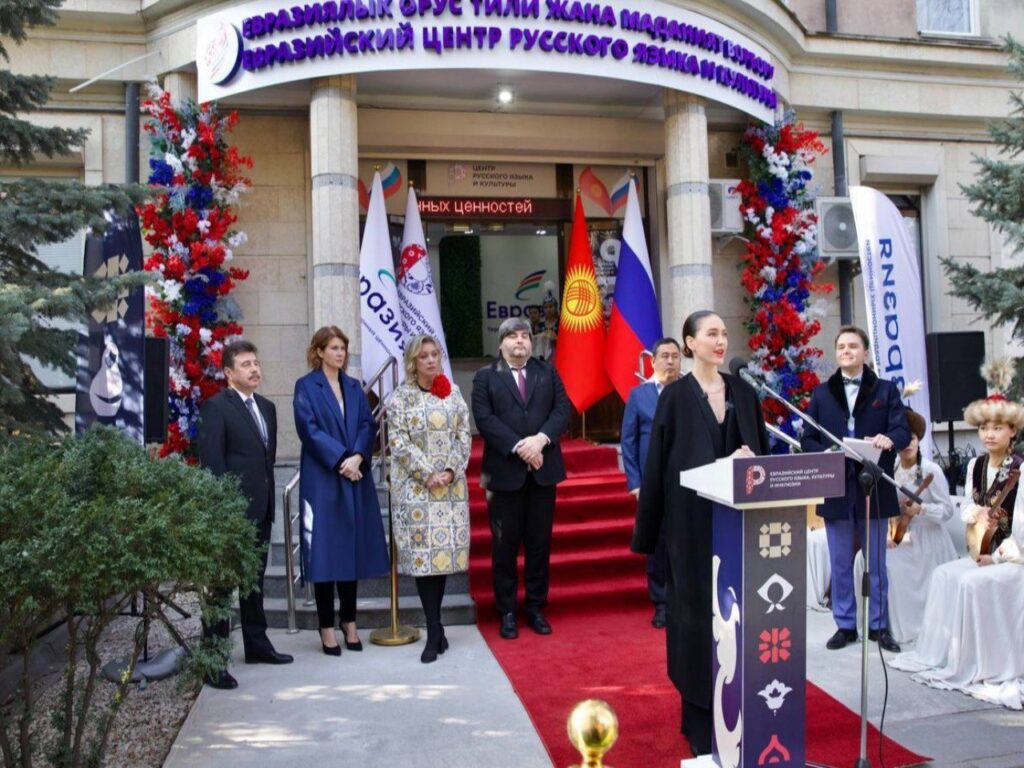
Russia Expands Soft Power Through New Cultural Center in Kyrgyzstan

Russia’s international cooperation organization Evraziya has launched Kyrgyzstan’s first Eurasian Center for Russian Language and Culture in Bishkek. The initiative aims to promote the Russian language, support local educators, and advance bilateral humanitarian projects. The center’s opening came just days before Russian President Vladimir Putin’s state visit to Kyrgyzstan, which begins today on November 25. Evraziya, a Russian non-profit, presents itself as a vehicle for deeper integration in the post-Soviet space and is widely viewed as a key instrument of Moscow’s soft power strategy in Central Asia. High-Level Delegation at Launch The opening ceremony was attended by Russian Ambassador to Kyrgyzstan Sergey Vakunov, Russian Foreign Ministry spokesperson Maria Zakharova, Head of the Presidential Executive Office for Strategic Partnership and Cooperation Vadim Titov, State Duma Deputy and Chair of Eurasia’s Coordination Council Alyona Arshinova, and Kyrgyz Deputy Minister of Education and Science Albert Makhmetkulov. Arshinova noted that Evraziya had spent the past year enhancing cooperation with Kyrgyz institutions by offering teacher support, organizing educational forums, and providing professional development programs. “Kyrgyzstan is not just a partner; it is a country with which we share common values and a strategic vision,” she said. “The Russian language remains a foundation that connects our countries and opens opportunities for new educational and cultural initiatives.” Cultural and Educational Programming The new center will run a range of initiatives for schoolchildren and adolescents, including a theater studio, workshops in art and media, digital culture and programming courses, and the "Unboring Russian" project. For adults, the center will offer film clubs, discussion platforms, and a literary lounge. It will also serve as a training center for local teachers and coordinate bloggers focused on language and culture, reinforcing the Russian-language educational and cultural environment in Kyrgyzstan. Deputy Minister Makhmetkulov called the opening “a strategic step for education and interethnic dialogue,” describing the center as a space for both promoting Russian and fostering cultural exchange and professional growth. Evraziya plans to expand its network to other regions in Kyrgyzstan and eventually to other countries in the region. Wider Engagement Strategy Since 2024, Evraziya has intensified its presence in Kyrgyzstan through education, social, and humanitarian projects. In partnership with Russia’s Ministry of Education, the organization has dispatched young Russian teachers to Kyrgyz schools to teach various subjects in Russian. It has also donated 100 school buses to rural areas and financed renovations at schools in Bishkek and Kyzyl-Kyya. On August 28, in cooperation with Kyrgyzstan’s Cabinet of Ministers, Evraziya opened a $35 million amusement park in Bishkek. Two days earlier, the group launched its first social store in the capital, offering discounted essential goods to pensioners, veterans, large families, and people with disabilities. Russian Language as a Strategic Link The Russian language continues to be a central element in Moscow-Bishkek relations. During a July meeting at the Kremlin, Putin praised Kyrgyzstan’s decision to retain Russian as an official language. Russian remains one of Kyrgyzstan’s official languages and is widely used in public administration, education, and interethnic communication. As part of...
Beyond Infrastructure: China’s New Environmental Footprint in Central Asia

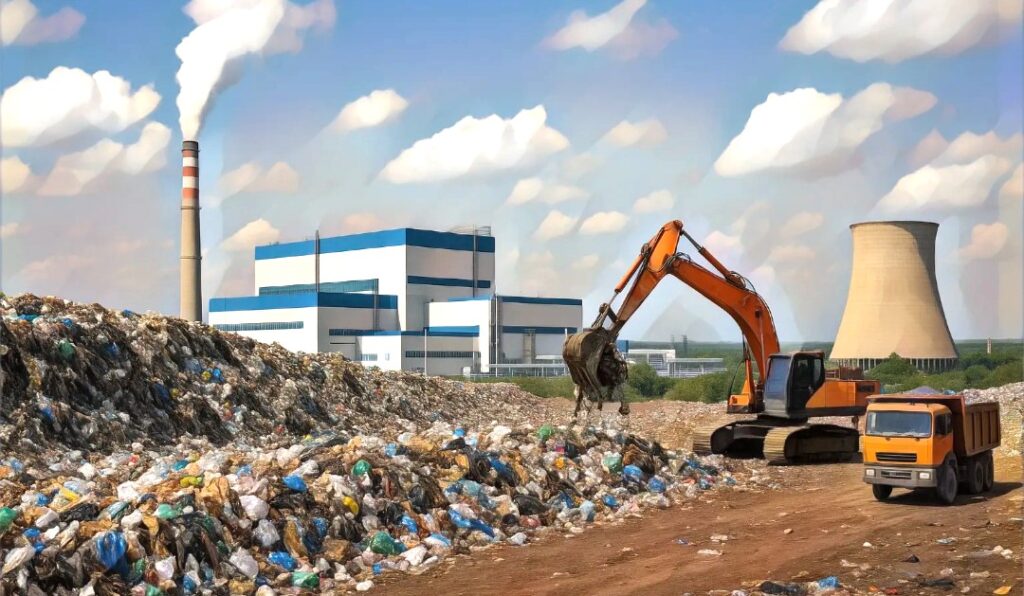
Uzbekistan’s economy is expanding at one of the fastest rates in Central Asia, creating new opportunities for businesses and citizens alike. Yet this rapid growth also brings challenges that the country must learn to manage. Among them, one of the most pressing issues is the growing problem of waste management, which has become an unfortunate consequence of economic progress. Over the past decade, the volume of municipal solid waste in Uzbekistan has increased steadily. It rose from about 6.1 million tons in 2010 to 7 million tons in 2017, and current projections suggest that annual waste generation could reach as high as 16 million tons by 2028. Currently, the country generates around 14 million tons of waste annually, but only a small portion of this - approximately 5% - is recycled. Landfills now release more than seven million tons of greenhouse gases every year, and more than forty thousand tons of toxic waste seep into the soil, threatening both the environment and public health. The government of Uzbekistan has recognized the urgency of the issue and placed waste management at the heart of its green development agenda. Alongside the promotion of renewable energy and electric vehicles, the authorities are investing in waste-to-energy projects that can help convert solid waste into electricity. This approach can reduce the amount of waste going to landfills while providing a cleaner source of energy. China’s Role in Uzbekistan’s Waste-to-Energy Development To implement these projects, Uzbekistan is actively cooperating with foreign partners who can bring technology, investment, and experience. Among these partners, China has emerged as a leading player. Chinese companies, facing a saturated domestic market, are increasingly looking abroad for new opportunities. Uzbekistan’s ambitious targets in waste management perfectly align with this interest, creating a partnership that benefits both sides. Several large-scale projects have already been launched. China’s CAMC Engineering is investing about $350 million to build two waste-to-energy plants in the Andijan and Tashkent regions. Another Chinese company, Shanghai SUS Environment, has signed an agreement with Uzbekistan’s Waste Management Agency to develop projects using advanced green technology. In addition, China Everbright Environment Group has announced the creation of joint ventures with Uzbek partners Maxsus and CR No.17 Second Engineering. These partnerships will result in two new plants in Namangan and Ferghana, each with an estimated cost of $283 million. Opportunities and Risks These initiatives promise significant benefits. For China, they open the door to exporting green technologies, generating new revenue, and deepening economic ties in Central Asia. The growing demand for waste-to-energy projects across the region also creates opportunities for China to share its proven technological model, helping partner countries build capacity while integrating more closely into China’s expanding technological ecosystem. Beyond the economic gains, this cooperation is shaping China’s broader image. Through such environmentally focused projects, Beijing is gradually being seen not only as a builder of physical infrastructure but also as a provider of innovative and sustainable solutions. This transformation strengthens China’s soft power and adds new depth to its Belt and...

Beneath the Silk Road: China’s Archaeological Diplomacy in Uzbekistan

As China’s economic footprint expands across Central Asia, Beijing is quietly pursuing another, subtler form of influence - one that reaches beneath the soil rather than above it. Alongside highways, pipelines, and industrial parks, China is investing in archaeological diplomacy that uses shared history and cultural discovery to deepen ties with its neighbors. Uzbekistan has emerged as a key partner in this effort. Beyond trade and infrastructure, the two countries are now working hand in hand to uncover the remnants of ancient civilizations that once thrived along the Silk Road. This collaboration combines science and strategy, offering a soft power approach that complements China’s growing hard power presence in the region. Across Uzbekistan’s Surkhandarya, Samarkand, Ferghana, and Khorezm regions, joint Chinese-Uzbek teams are making discoveries. One notable example is the joint Chinese-Uzbek team working at the Chinar-Tepa site in the upper Surkhandarya River valley, where researchers have uncovered more than 30 ancient house foundations along with a rich collection of cultural artifacts. Another major project has revealed the remains of an Iron Age city-state in the Surkhandarya River basin in southern Uzbekistan. These findings are the result of three excavation seasons conducted between 2024 and 2025, during which the joint team surveyed 47 sites across the basin and identified the area as a major center of ancient Bactria. This cooperation is not just confined to the field. In October 2023, Ferghana State University and Chinese partners launched a joint archaeology department. Their subsequent joint studies of the ancient city of Kuva have revealed key insights into urban planning, including city walls, moats, and roads dating back centuries. Meanwhile, China’s funding for the restoration of the ancient city of Khiva highlights another layer of cultural collaboration on the preservation of shared heritage. For both countries, archaeology is more than an academic pursuit; it's a bridge between culture, economy, and future cooperation. For Uzbekistan, cities like Samarkand, Bukhara, and Khiva are already world-renowned tourist destinations. The government’s ambition to attract up to 15 million foreign visitors underscores tourism’s growing role in national development. Unearthing new historical sites expands this potential, offering travelers a richer experience that spans both the pre-Islamic and Islamic eras. Each discovery deepens the cultural map of Uzbekistan, and each new site means more visitors, more investment, and greater economic diversification for the state. Beyond the economic dimension, the partnership with China is also cultivating a new generation of experts in archaeology and heritage preservation. Many members of these joint excavation teams belong to the post-2000 generation, young professionals who are gaining firsthand experience through collaboration. With access to cutting-edge technologies such as drone-based aerial photography, geomagnetic surveying, and 3D modeling, Uzbek archaeologists and students are learning to combine traditional excavation with modern science. Over time, this knowledge transfer strengthens the country’s human capital base, empowering Uzbekistan to pursue its own archaeological research and heritage conservation independently on a larger scale. For China, promoting joint archaeological exploration aligns closely with the Belt and Road Initiative’s vision of soft connectivity....

Russian Organization Builds Amusement Park in Bishkek

On August 28, a new amusement park named Eurasia officially opened in Bishkek. Covering approximately 10 hectares, the park offers free admission and features around 30 amusement rides, sports facilities, and a food court. The project began in 2024 as part of a collaboration between Kyrgyzstan’s Cabinet of Ministers and Russia’s non-profit organization for international cooperation, Eurasia. Total investment in the park reached $35 million. The initiative commemorates the 10th anniversary of the Eurasian Economic Union (EAEU), a regional integration bloc comprising Armenia, Belarus, Kazakhstan, Kyrgyzstan, and Russia. All construction and equipment costs were funded by the Eurasia organization. Expanding Russia’s Soft Power Since 2024, Eurasia has been active in Kyrgyzstan through various social and humanitarian projects. In partnership with Russia’s Ministry of Education, the organization has deployed young Russian teachers to secondary schools across Kyrgyzstan to instruct in specialized subjects taught in Russian. Eurasia has also donated 100 school buses to rural Kyrgyz villages and funded renovations of schools in Bishkek and Kyzyl-Kyya. On August 26, the organization opened its first social store, also named Eurasia, in Bishkek. The store aims to support vulnerable populations, including pensioners, veterans, large families, and people with disabilities, by offering essential food items at reduced prices.

USAID Pullback in Kazakhstan Creates Space for China and Raises Security Concerns – Expert

President Trump’s executive order restricting the United States Agency for International Development (USAID) globally has led to a reduction in Western-funded projects in Kazakhstan. USAID previously funded initiatives in humanitarian aid, media, blogging, and non-governmental organizations (NGOs). As a result of the new U.S. administration's actions, experts suggest that China is expanding its influence. Gulmira Ileuova, head of the Strategy Foundation and a member of the advisory public organization, the National Kurultai, told TCA that the Kazakh government had already taken measures to limit foreign financial influence. "Kazakhstan was among the first post-Soviet countries to regulate foreign funding, requiring grant providers to be registered. Most of these organizations, including Soros-Kazakhstan and the Rosa Luxemburg Foundation, operate within legal frameworks," she stated. Ileuova noted that German political foundations maintain a presence in Kazakhstan, while French grant-making organizations are largely absent. Beyond civil society projects, USAID also funded state-involved initiatives in education, healthcare, and energy. According to Ileuova, the withdrawal of USAID could lead to a shortfall in funding for NGOs, though state-backed projects are unlikely to be significantly affected. China’s Expanding Role Ileuova believes that China’s influence in Kazakhstan is growing faster than Russia’s, as Beijing has moved beyond economic partnerships to broader engagement." Russia relies on language and media ties to sustain its influence, while China is actively reshaping its approach," she said. Ileuova highlighted China’s soft power initiatives, including the Community of a Common Destiny for Mankind, which promotes cooperation and mutual development among nations. She also pointed to growing cultural and educational exchanges, suggesting that China’s approach mirrors past Western strategies of funding local partnerships and academic institutions. While China does not emphasize democracy or human rights in its outreach, its economic initiatives prioritize infrastructure development and poverty alleviation, often accompanied by media campaigns highlighting the benefits of Chinese investment. In recent years, Kazakhstan and China have strengthened cultural and educational ties. In August 2024, Kazakh President Kassym-Jomart Tokayev and Chinese President Xi Jinping inaugurated Chinese cultural centers in Astana and Beijing via video link. The Beijing Language and Culture University also opened a branch in Astana, marking the first Chinese university in Central Asia.  Additionally, in February 2025, China’s Consul General in Almaty, Jiang Wei, attended the opening of the Belt and Road scientific and educational center in Almaty.  Religious Extremism and Security Considerations Ileuova also stated that the withdrawal of USAID and Western funds is unlikely to directly impact radical religious groups, as Western organizations primarily engage with urban, educated populations rather than communities at risk of radicalization. In a recent interview, Kazakhstan’s Ambassador to Russia, Dauren Abayev, said that there is no immediate security risk from the return of Kazakh nationals who fought in Syria. According to official estimates, more than 30 Kazakhs remain in militant groups in Syria. From 2019 to 2021, the government carried out the Zhusan humanitarian operation, repatriating 600 individuals, including 413 children. Most male returnees were prosecuted and sentenced in Kazakhstan. Kazakhstan continues to monitor and prosecute individuals linked to...
