• KZT/USD = 0.00222
  • TJS/USD = 0.10820
  • UZS/USD = 0.00009
  • TMT/USD = 0.29760
  • KZT/USD = 0.00222
  • TJS/USD = 0.10820
  • UZS/USD = 0.00009
  • TMT/USD = 0.29760
  • KZT/USD = 0.00222
  • TJS/USD = 0.10820
  • UZS/USD = 0.00009
  • TMT/USD = 0.29760
  • KZT/USD = 0.00222
  • TJS/USD = 0.10820
  • UZS/USD = 0.00009
  • TMT/USD = 0.29760
  • KZT/USD = 0.00222
  • TJS/USD = 0.10820
  • UZS/USD = 0.00009
  • TMT/USD = 0.29760
  • KZT/USD = 0.00222
  • TJS/USD = 0.10820
  • UZS/USD = 0.00009
  • TMT/USD = 0.29760
  • KZT/USD = 0.00222
  • TJS/USD = 0.10820
  • UZS/USD = 0.00009
  • TMT/USD = 0.29760
  • KZT/USD = 0.00222
  • TJS/USD = 0.10820
  • UZS/USD = 0.00009
  • TMT/USD = 0.29760
11 September 2026

Viewing results 1 - 6 of 9

The Language Gap: Why the Korean Language Is Outpacing Japanese in Kazakhstan and Uzbekistan

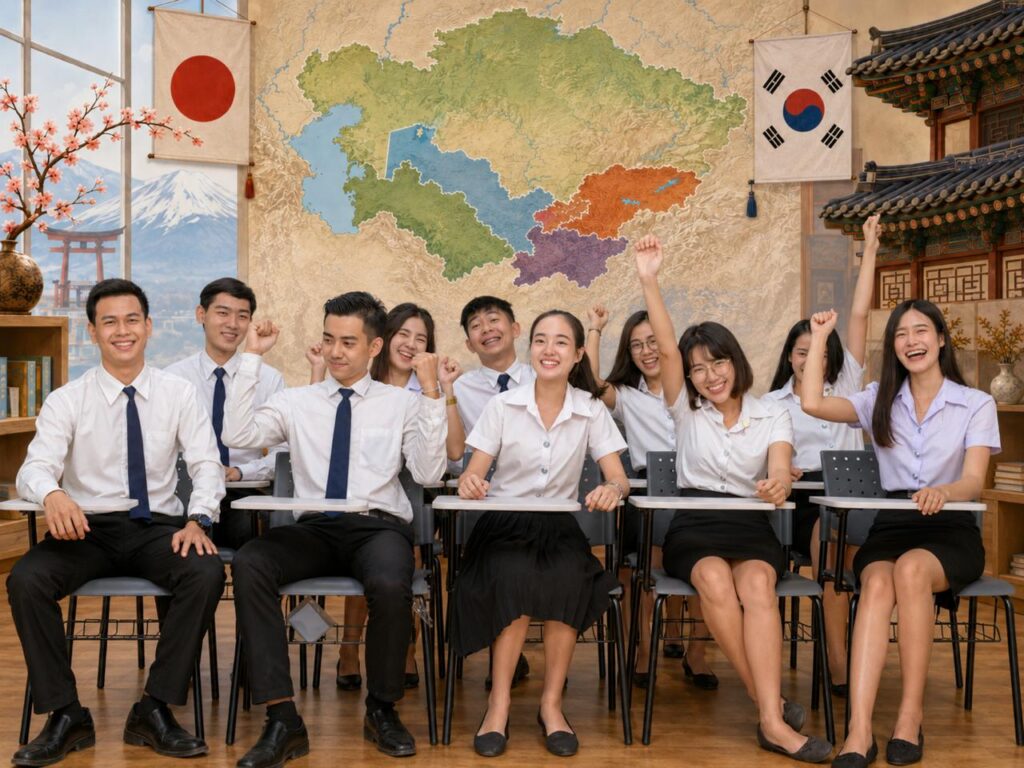
Two weeks ago, Kazakhstan officially joined South Korea’s Employment Permit System (EPS), becoming the 18th country admitted to the program. Even before the change, thousands of Kazakhstani nationals were working in South Korea, many without legal status. Kazakhstani authorities estimated the total at around 15,000 in 2025, including 11,000 without legal documentation. To work legally in South Korea under the EPS, applicants must pass the EPS-TOPIK, a standardized Korean-language test. In this context, learning Korean has become a direct route to better-paid work for many young people in Kazakhstan. Japan, however, has generated no comparable rush. A Widening Gap, By the Numbers The contrast is also evident in language-learning trends. In 2022, Jang Ho-jong, a professor at the Kazakh Ablai Khan University of International Relations and World Languages, told The Korea Times that Korean ranked alongside English and Chinese among Kazakhstan’s three most popular foreign languages and was taught at 15 to 20 universities. About 400 students were taking Korean courses at his university, compared with just three or four when the program opened 20 years earlier. South Korea has also expanded teaching and testing infrastructure. In July 2026, the King Sejong Institute at Akhmet Baitursynuly Kostanay Regional University became Kazakhstan’s first official center for the Sejong Korean Language Assessment (SKA), allowing candidates to take the exam without traveling abroad. Official enrollment data from the King Sejong Institute Foundation show that 1,320 students were enrolled at its institutes in Kazakhstan in 2025, down slightly from 1,481 in 2024. The picture is very different for Japanese. The Japan Foundation counted 581 learners across eight institutions in Kazakhstan in 2024, compared with 1,569 learners in 2006. In Uzbekistan, Korean-language education has expanded even faster. The country recorded the largest increase worldwide in 2025, adding 68 schools offering Korean classes. Sri Lanka placed second with 43. Enrollment at King Sejong institutes in Uzbekistan rose from 1,873 in 2021 to 7,931 in 2024. It eased to 6,308 in 2025, according to the same official dataset. Japanese-language study has also grown in Uzbekistan, but more slowly. The same Japan Foundation survey counted 4,201 learners across 19 institutions in 2024, up from 3,579 at 18 institutions in 2021. Although the two datasets cover different types of institutions, the nationwide Japanese total remained below enrollment in Uzbekistan’s King Sejong network that year. A More Complicated Picture Next Door Across the rest of Central Asia, however, the comparison is less clear-cut. The Japan Foundation’s 2024 regional survey recorded 1,708 Japanese-language learners at 14 institutions in Kyrgyzstan, taught by 50 teachers. That was almost three times Kazakhstan’s total, even though Kyrgyzstan’s population is roughly one-third as large. Among the learners in Kyrgyzstan, 411 were in primary or secondary education. A 2020 account by a Japan Foundation specialist described young people learning through anime and the internet, while Japan International Cooperation Agency volunteers introduced Japanese in rural schools. Some later traveled to Bishkek for more formal study. This points to demand developing from the ground up alongside institutional support. Korean-language...
World Nomad Games Return Home as Kyrgyzstan Welcomes World Leaders

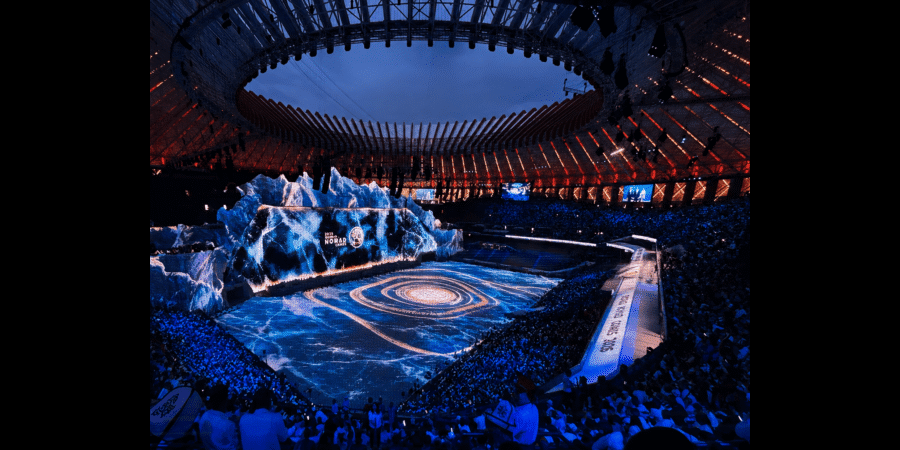
Few periods since independence have put Kyrgyzstan so squarely in the international spotlight. On August 31, the country marked 35 years of independence, opened the sixth World Nomad Games, and prepared to host a Shanghai Cooperation Organization summit that has brought more than a dozen foreign leaders to Bishkek. The Games themselves were back where they began. Kyrgyzstan launched the World Nomad Games in 2014 and staged the first three editions at Cholpon Ata before the event moved to Turkey in 2022 and Kazakhstan in 2024. This year's Games run through September 6, with The Times of Central Asia reporting from Bishkek and Issyk-Kul throughout the week in our special coverage. The opening took place at the new Bishkek Arena, rising out of the dust on the southwestern edge of the capital near the foothills of the Kyrgyz Ala-Too Range. Around 30,000 spectators attended the ceremony. The stadium will eventually hold more than 51,000, but it is not formally due to open until October 5. The Games opened while work on the arena was still underway, with parts of the building still looking unfinished. In the weeks before the ceremony, horses had circled the arena floor during rehearsals while drilling continued around them. By the time the spectators arrived, the construction site had become the biggest show in town. Before the politics and pageantry, there was pop. Kyrgyzstan put many of its best-known performers on stage in a concert that at times had a distinctly Eurovision feel. Energetic hosts introduced a succession of singers and rappers while tightly choreographed dancers moved between traditional dress and contemporary styling. The lineup included Bayastan, Malika Dina, Erlan Andashev, Begish, and others, but veteran singer Baktiyar Toktorov received the loudest reaction. When he launched into "Yza," known almost universally by its "Bui-Bui" refrain, spectators rose from their seats and sang with him. Even some of the security guards joined in. The refrain does not demand many words, but almost everybody in the arena seemed to know them. The new stadium also showed some early teething problems, with concession stands running out of bottled water and food as crowds built. After the concert, the momentum disappeared. The audience waited for around 90 minutes while footage of arriving dignitaries played on the giant screens. The reason for the pause soon became clear, as one motorcade after another delivered guests for the formal ceremony. Russian President Vladimir Putin, Indian Prime Minister Narendra Modi, Turkish President Recep Tayyip Erdogan, Iranian President Masoud Pezeshkian, and Belarusian President Alexander Lukashenko were among those in the stands. The presidents of Kazakhstan, Tajikistan, and Uzbekistan also attended, along with leaders and senior officials from elsewhere in Asia, the Caucasus, and Africa. UN Secretary-General Antonio Guterres was among the international guests. One expected heavyweight was missing. Chinese President Xi Jinping, in Bishkek for a state visit and the SCO summit, had been due to attend the opening. Presidential spokesman Askat Alagozov said Xi had stayed away because of the deadly flooding and landslides in...

Kok Boru and the Art of Being Noticed: The World Nomad Games as Kyrgyzstan’s Calling Card

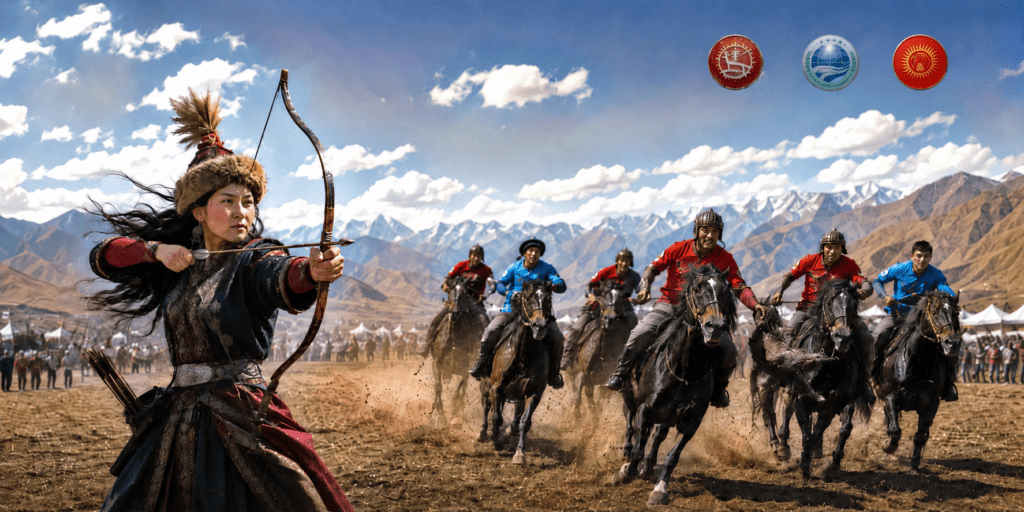
A stampede throws up a great wall of dust as a scrum of white, sweating stallions tears past. A roar rises from the stands. With horsemen in hot pursuit, a rider bursts from the pack, swinging a 30-kilo plastic simulation of a goat carcass. As they charge toward the goal, the horses bare their teeth. This is the spectacle awaiting travelers from far and wide at this year’s World Nomad Games. For Kyrgyzstan, the Games are a source of pride. Born beside Lake Issyk-Kul, twelve years on, the sixth edition will see 100,000 visitors descend on a town of 13,000. The timing in 2026 makes the aspiration hard to ignore. The opening ceremony falls on Kyrgyzstan’s Independence Day, while leaders are also gathering in Bishkek for the Shanghai Cooperation Organization summit. Presidential spokesman Askat Alagozov has said 21 heads of state are expected. The Games will open before many of them in the new 51,000-seat Bishkek Arena. [caption id="attachment_54493" align="aligncenter" width="1774"] Image: International Secretariat of the World Nomad Games[/caption] Kyrgyzstan has spent more than a decade building toward this goal. The initiative was approved at the Turkic Council summit in Bishkek in 2012 before the first Games were staged in Cholpon Ata in 2014. Then, there were 583 athletes from 19 countries. Kyrgyzstan hosted again in 2016 and 2018, before the event moved to Turkey in 2022 and Kazakhstan in 2024. That decision could have diluted Kyrgyzstan’s ownership. Instead, each foreign edition strengthened the identity of the event Kyrgyzstan had started. In December 2025, founder Askhat Akibaev transferred the intellectual property rights to the Kyrgyz state. Cabinet Chairman Adylbek Kasymaliev called the Games “the flagship of our state’s cultural diplomacy.” Akibaev explained the achievement succinctly after the first three editions. “We proved to ourselves and the world that a small country can do something global,” he told RFE/RL. Kyrgyzstan cannot match major powers through stadium budgets or international sports leagues, but the Games have given it access to an audience money alone could not buy. The cultural case has also gained international recognition. In 2021, UNESCO selected “Nomad games, rediscovering heritage, celebrating diversity” for its Register of Good Safeguarding Practices. The program was praised for reviving traditional games and passing knowledge to younger generations, while bonding contestants across borders. [caption id="attachment_54490" align="aligncenter" width="1774"] Image: International Secretariat of the World Nomad Games[/caption] The numbers tell their own story. Astana brought together 2,500 athletes from 89 countries in 2024. This year, around 3,000 athletes are registered from 113 countries for 43 sports. Local organizers say the field now reaches far beyond states with a direct nomadic heritage, with newcomers expected from New Zealand and several African countries. Team GB offers one of the clearest examples. Britain competed in Astana in 2024, and is returning with a larger contingent. The team has expanded beyond tug-of-war and intellectual games into horseback archery and wrestling. The sole British competitor in the Alysh wrestling will be The Times of Central Asia contributor, Jonathan Campion. The British...

Soft Power in Times of Geopolitical Turbulence: Kazakhstan’s Strategy as a Middle Power

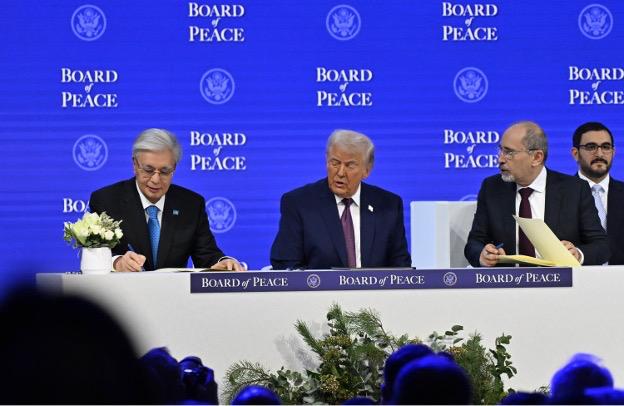
For Kazakhstan, deeply embedded in global supply chains and international investment flows, soft power is evolving from an image-building asset into a strategic instrument of resilience. In an era of globalization, when even geographically distant conflicts can directly threaten national infrastructure and economic security, Astana’s ability to leverage institutional initiatives and investment interdependence as a form of diplomatic protection has become a decisive advantage. Over the long term, stability tends to characterize states whose infrastructure and economic interests are deeply interconnected with those of major global centers of power. A middle power and rational diplomacy Kazakhstan’s status as a middle power is not a matter of ambition, but a deliberate choice in favor of rational diplomacy, where flexibility and institutional engagement serve as key resources. Multilateral dialogue with the U.S., Russia, China, the EU, Turkey, and countries of the Middle East is being developed not as situational maneuvering but as a core strategy for minimizing external risks and preserving sovereignty. It is precisely the combination of proactive soft power, political neutrality, and economic openness that allows Kazakhstan to transform geopolitical turbulence into a strategic advantage, positioning the country as an indispensable hub of international stability. Ultimately, the rational diplomacy of a middle power transforms the country’s geographical position from a potential zone of conflict into a platform for dialogue, where pragmatism and institutional mediation become the principal guarantees of national sovereignty. The Ukrainian case: infrastructure protection as an element of soft power Developments surrounding Russia's war in Ukraine illustrate how Kazakhstan’s soft power can function as a form of economic protection. The attacks on infrastructure in the Novorossiysk area, through which the Caspian Pipeline Consortium exports oil, highlighted a distinctive mechanism for safeguarding national interests through investment interdependence. Strikes near the Black Sea hub posed a direct threat not only to logistics but also to the assets of major American investors in Kazakh energy projects, including Tengiz. According to reports cited in public discussions, the U.S. urged Ukraine to take into account the interests of American investors in Kazakhstan. If confirmed, such a step would represent an important precedent: even amid an intense military conflict, global actors remain attentive to protecting the economic interests tied to Kazakhstan’s energy infrastructure. For Astana, this episode illustrates how decades of building strategic relations with Western partners have created a significant layer of economic security. In this context, soft power manifests itself as a form of “investment protection,” discouraging actions that could damage oil production or transport infrastructure linked to global stakeholders. Institutionalizing neutrality: why Kazakhstan needs a Board of Peace The creation of the Board of Peace by U.S. President Donald Trump and Kazakhstan’s active participation signals Kazakhstan’s transition from ad hoc mediation toward a more structured institutional architecture of soft power. The signing of the Board of Peace Charter by President Kassym-Jomart Tokayev formally embeds peacebuilding activities within the state’s foreign policy framework. Kazakhstan’s developing participation in this initiative is also linked to its experience hosting the Congress of Leaders of World...

Russia Expands Soft Power Through New Cultural Center in Kyrgyzstan

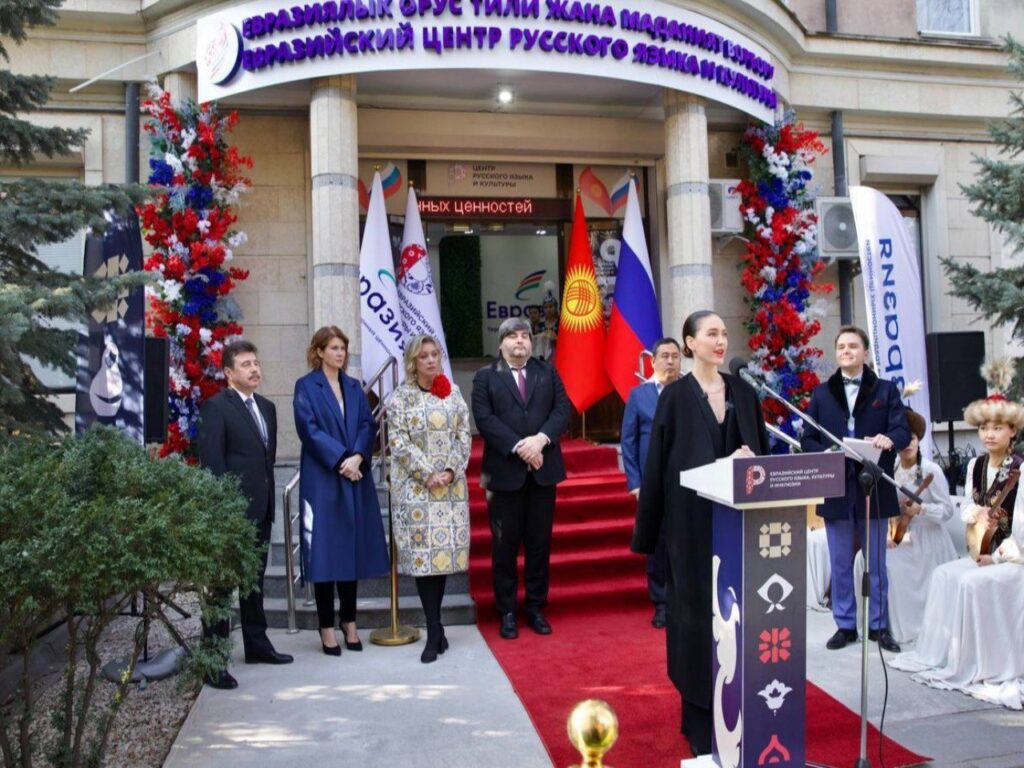
Russia’s international cooperation organization Evraziya has launched Kyrgyzstan’s first Eurasian Center for Russian Language and Culture in Bishkek. The initiative aims to promote the Russian language, support local educators, and advance bilateral humanitarian projects. The center’s opening came just days before Russian President Vladimir Putin’s state visit to Kyrgyzstan, which begins today on November 25. Evraziya, a Russian non-profit, presents itself as a vehicle for deeper integration in the post-Soviet space and is widely viewed as a key instrument of Moscow’s soft power strategy in Central Asia. High-Level Delegation at Launch The opening ceremony was attended by Russian Ambassador to Kyrgyzstan Sergey Vakunov, Russian Foreign Ministry spokesperson Maria Zakharova, Head of the Presidential Executive Office for Strategic Partnership and Cooperation Vadim Titov, State Duma Deputy and Chair of Eurasia’s Coordination Council Alyona Arshinova, and Kyrgyz Deputy Minister of Education and Science Albert Makhmetkulov. Arshinova noted that Evraziya had spent the past year enhancing cooperation with Kyrgyz institutions by offering teacher support, organizing educational forums, and providing professional development programs. “Kyrgyzstan is not just a partner; it is a country with which we share common values and a strategic vision,” she said. “The Russian language remains a foundation that connects our countries and opens opportunities for new educational and cultural initiatives.” Cultural and Educational Programming The new center will run a range of initiatives for schoolchildren and adolescents, including a theater studio, workshops in art and media, digital culture and programming courses, and the "Unboring Russian" project. For adults, the center will offer film clubs, discussion platforms, and a literary lounge. It will also serve as a training center for local teachers and coordinate bloggers focused on language and culture, reinforcing the Russian-language educational and cultural environment in Kyrgyzstan. Deputy Minister Makhmetkulov called the opening “a strategic step for education and interethnic dialogue,” describing the center as a space for both promoting Russian and fostering cultural exchange and professional growth. Evraziya plans to expand its network to other regions in Kyrgyzstan and eventually to other countries in the region. Wider Engagement Strategy Since 2024, Evraziya has intensified its presence in Kyrgyzstan through education, social, and humanitarian projects. In partnership with Russia’s Ministry of Education, the organization has dispatched young Russian teachers to Kyrgyz schools to teach various subjects in Russian. It has also donated 100 school buses to rural areas and financed renovations at schools in Bishkek and Kyzyl-Kyya. On August 28, in cooperation with Kyrgyzstan’s Cabinet of Ministers, Evraziya opened a $35 million amusement park in Bishkek. Two days earlier, the group launched its first social store in the capital, offering discounted essential goods to pensioners, veterans, large families, and people with disabilities. Russian Language as a Strategic Link The Russian language continues to be a central element in Moscow-Bishkek relations. During a July meeting at the Kremlin, Putin praised Kyrgyzstan’s decision to retain Russian as an official language. Russian remains one of Kyrgyzstan’s official languages and is widely used in public administration, education, and interethnic communication. As part of...

Beyond Infrastructure: China’s New Environmental Footprint in Central Asia

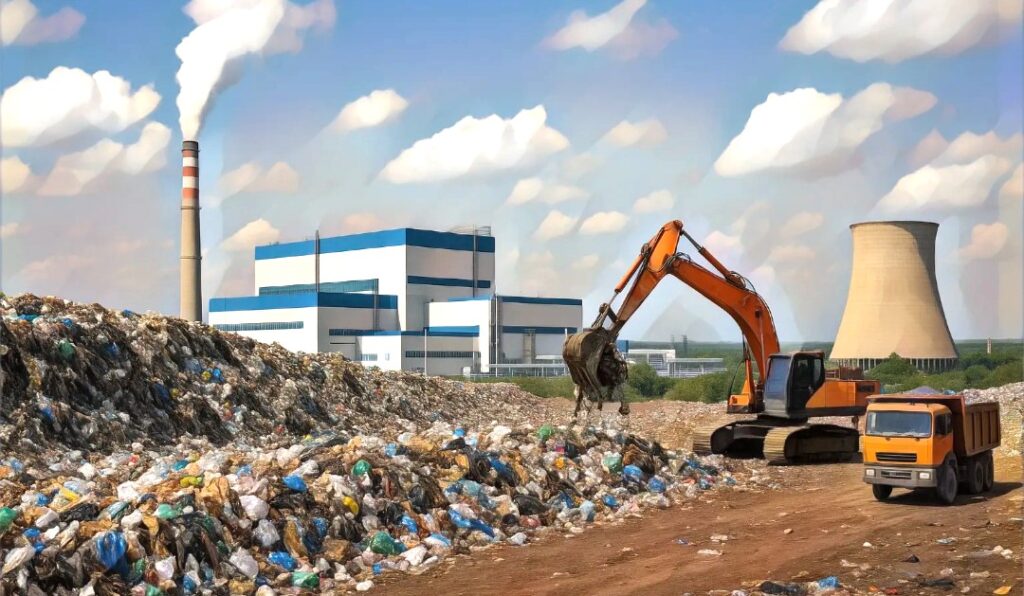
Uzbekistan’s economy is expanding at one of the fastest rates in Central Asia, creating new opportunities for businesses and citizens alike. Yet this rapid growth also brings challenges that the country must learn to manage. Among them, one of the most pressing issues is the growing problem of waste management, which has become an unfortunate consequence of economic progress. Over the past decade, the volume of municipal solid waste in Uzbekistan has increased steadily. It rose from about 6.1 million tons in 2010 to 7 million tons in 2017, and current projections suggest that annual waste generation could reach as high as 16 million tons by 2028. Currently, the country generates around 14 million tons of waste annually, but only a small portion of this - approximately 5% - is recycled. Landfills now release more than seven million tons of greenhouse gases every year, and more than forty thousand tons of toxic waste seep into the soil, threatening both the environment and public health. The government of Uzbekistan has recognized the urgency of the issue and placed waste management at the heart of its green development agenda. Alongside the promotion of renewable energy and electric vehicles, the authorities are investing in waste-to-energy projects that can help convert solid waste into electricity. This approach can reduce the amount of waste going to landfills while providing a cleaner source of energy. China’s Role in Uzbekistan’s Waste-to-Energy Development To implement these projects, Uzbekistan is actively cooperating with foreign partners who can bring technology, investment, and experience. Among these partners, China has emerged as a leading player. Chinese companies, facing a saturated domestic market, are increasingly looking abroad for new opportunities. Uzbekistan’s ambitious targets in waste management perfectly align with this interest, creating a partnership that benefits both sides. Several large-scale projects have already been launched. China’s CAMC Engineering is investing about $350 million to build two waste-to-energy plants in the Andijan and Tashkent regions. Another Chinese company, Shanghai SUS Environment, has signed an agreement with Uzbekistan’s Waste Management Agency to develop projects using advanced green technology. In addition, China Everbright Environment Group has announced the creation of joint ventures with Uzbek partners Maxsus and CR No.17 Second Engineering. These partnerships will result in two new plants in Namangan and Ferghana, each with an estimated cost of $283 million. Opportunities and Risks These initiatives promise significant benefits. For China, they open the door to exporting green technologies, generating new revenue, and deepening economic ties in Central Asia. The growing demand for waste-to-energy projects across the region also creates opportunities for China to share its proven technological model, helping partner countries build capacity while integrating more closely into China’s expanding technological ecosystem. Beyond the economic gains, this cooperation is shaping China’s broader image. Through such environmentally focused projects, Beijing is gradually being seen not only as a builder of physical infrastructure but also as a provider of innovative and sustainable solutions. This transformation strengthens China’s soft power and adds new depth to its Belt and...