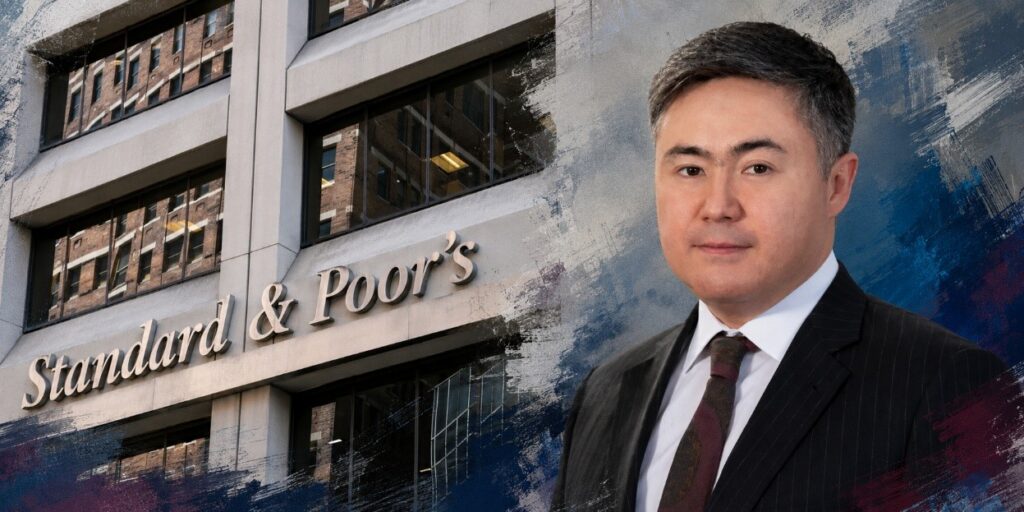
S&P Bolsters Kazakhstan’s Standing as Central Asia’s Financial Hub
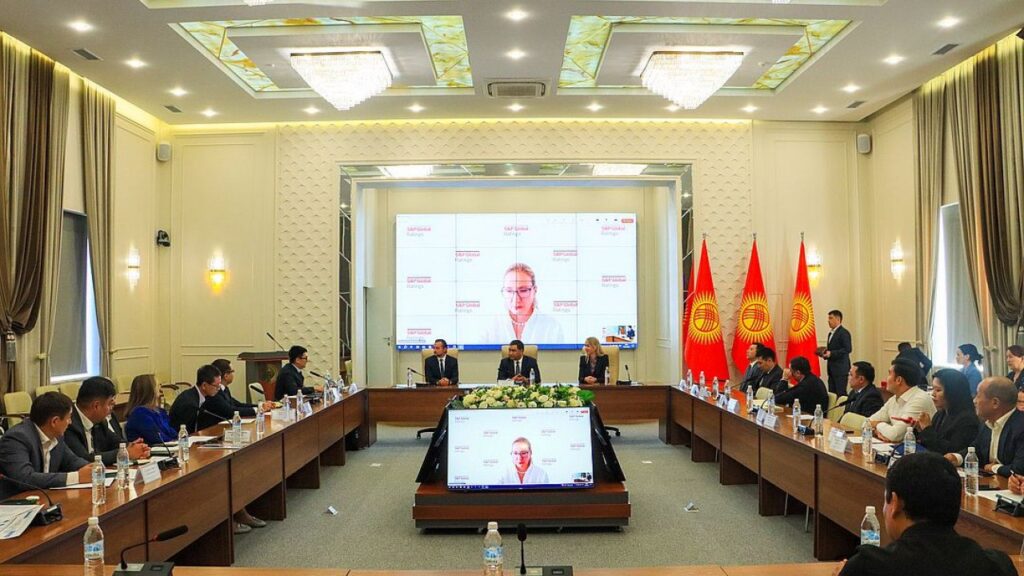
S&P Global Ratings has improved its assessment of Kazakhstan’s banking industry as Astana Finance Days opens on September 9, lowering the industry risk score for the country’s banking system from 7 to 6 and citing stronger regulation and supervision. According to Kazakhstan’s Agency for Regulation and Development of the Financial Market, the September 4 decision improved the industry risk component of S&P’s Banking Industry Country Risk Assessment, or BICRA. S&P also changed the trend on Kazakhstan’s separate economic risk assessment from stable to positive. S&P’s BICRA framework evaluates banking systems on a scale of 1 to 10, with lower numbers indicating lower risk. Industry risk assesses factors including banking regulation and supervision, competitive dynamics, and the stability of systemwide funding. Kazakhstan’s overall BICRA grouping remains at 7, while its industry risk score improved from 7 to 6. The industry risk comparison puts the change in perspective. S&P’s published assessments place the United States at 3, Germany at 4, and Brazil at 5. Kazakhstan’s new score of 6 places it alongside banking systems including Bahrain, Oman and Thailand in recent S&P assessments. Within Central Asia, the difference is wider. S&P has assigned Kyrgyzstan an industry-risk score of 8 and Uzbekistan a score of 9. S&P does not currently publish BICRA assessments for Tajikistan or Turkmenistan. S&P also considers Kazakhstan’s banking regulation and supervision more effective than those of Uzbekistan, Kyrgyzstan, Armenia, and Azerbaijan, according to the Kazakh regulator. Stronger Supervision The regulator attributed S&P’s decision to regular asset-quality reviews, risk-based supervisory assessments and measures to limit excessive bank risk-taking, particularly in retail lending. It also cited tighter capital and liquidity oversight and stress testing. The change has already affected individual institutions. The regulator reported an upgrade of the Bank Center Credit’s long-term rating to BB+, while Halyk Bank’s BBB− rating received a positive outlook, indicating the possibility of a future upgrade. The banking decision follows S&P’s August 21 sovereign upgrade from BBB− to BBB with a stable outlook. Kazakhstan remains Central Asia’s only investment-grade sovereign. In an interview with TCA, National Bank Governor Timur Suleimenov linked that improvement to a stronger monetary policy framework, banking resilience, and closer coordination with the government. Kazakhstan also has Central Asia’s most developed capital markets. Almaty’s banks, professional services and Kazakhstan Stock Exchange operate alongside the Astana International Financial Centre and its exchange, giving the country an established concentration of financial business. Capital on the Agenda The timing of S&P’s decision gives the assessment added relevance as Kazakhstan hosts Astana Finance Days. The forum’s announced program includes regulation, law and market confidence, capital market development, and financing for the real economy. Organizers expect more than 5,500 participants from over 80 countries, with representatives of BlackRock, Goldman Sachs and Brookfield among the confirmed speakers. In an August 27 interview with TCA, Zhanbolat Kakishev, chief product officer at the AIFC Authority, said a cumulative $26.3 billion in investment had been attracted to Kazakhstan through the center’s ecosystem, which included more than 6,000 registered companies from 90 countries....