• KZT/USD = 0.00225
  • TJS/USD = 0.10860
  • UZS/USD = 0.00008
  • TMT/USD = 0.29850
  • KZT/USD = 0.00225
  • TJS/USD = 0.10860
  • UZS/USD = 0.00008
  • TMT/USD = 0.29850
  • KZT/USD = 0.00225
  • TJS/USD = 0.10860
  • UZS/USD = 0.00008
  • TMT/USD = 0.29850
  • KZT/USD = 0.00225
  • TJS/USD = 0.10860
  • UZS/USD = 0.00008
  • TMT/USD = 0.29850
  • KZT/USD = 0.00225
  • TJS/USD = 0.10860
  • UZS/USD = 0.00008
  • TMT/USD = 0.29850
  • KZT/USD = 0.00225
  • TJS/USD = 0.10860
  • UZS/USD = 0.00008
  • TMT/USD = 0.29850
  • KZT/USD = 0.00225
  • TJS/USD = 0.10860
  • UZS/USD = 0.00008
  • TMT/USD = 0.29850
  • KZT/USD = 0.00225
  • TJS/USD = 0.10860
  • UZS/USD = 0.00008
  • TMT/USD = 0.29850
12 November 2026

Viewing results 1 - 6 of 63

Kyrgyzstan Prepares for First-Ever Ultramarathon Around Lake Issyk-Kul

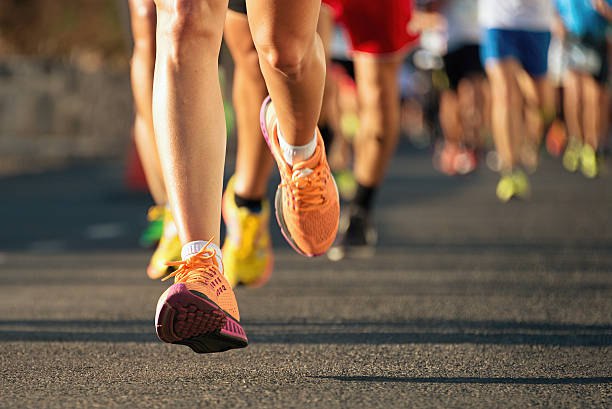
Kyrgyzstan is set to host its first-ever ultramarathon around Issyk-Kul Lake, one of the world’s largest high-altitude lakes, between May 5 and 10. The event, titled the 1st Issyk Kul Six-Day Challenge, is billed as the world’s longest six-stage foot race, covering a total distance of 460 kilometers. The ultramarathon will take place over six days and six grueling stages: 90 km, 74 km, 87 km, 85 km, 79 km, and 45 km. Participants will race on a mix of asphalt, gravel roads, and dirt trails at elevations reaching up to 2,000 meters above sea level. Participation is capped at 100 runners. The racecourse has been carefully planned not only to circumnavigate the entire lake but also to showcase some of Kyrgyzstan’s most dramatic landscapes, including the otherworldly Fairy Tale Canyon and the striking rock formations of the Seven Bulls. “Issyk-Kul has been a place of power for many great marathoners, including Olympic champion Valentina Egorova and Olympic bronze medalist Satymkul Dzhumanazarov,” said Alex Golowin, Race Director and Head Coach at Running Expert. “We at Running Expert have been coming here for years to train for both marathons and ultras. The working altitude, mild weather, food familiar to Europeans, and the stunning nature make training here not only effective but also inspiring.” Organizers hope the event will help establish Kyrgyzstan as an emerging destination for sports tourism, drawing endurance athletes from around the world to the heart of Central Asia.

Kazakhstan Bans Use of Public Funds to Pay Foreign Athletes

President Kassym-Jomart Tokayev has signed a new law prohibiting the use of state budget funds and funds from the quasi-governmental sector, to finance the participation of foreign athletes in Kazakh sports clubs. Under the legislation, foreign “legionnaires” may now only be contracted using money from private sponsors. The move aims to refocus state support on domestic talent in professional sports. According to the presidential administration, athletes holding Kazakhstani passports who compete at elite levels, including in Olympic, Paralympic, Deaflympic, Asian, and national sports, will remain eligible for public funding. Funding Priorities and Implementation “The priority sports will be defined based on achievements on the international stage,” Akorda stated. These will include sports featured in the programs of major multi-sport events, along with traditional national disciplines. Budget allocations will also continue for state-run physical culture and sports organizations, grassroots sports initiatives, and the development of sports infrastructure. The final list of high-performance priority sports, along with detailed budget allocation procedures, will be finalized by the Ministry of Tourism and Sports. In addition to the funding changes, the new law introduces unified standards for athlete training and outlines measures to promote traditional values and patriotic education. A new concept, “national standards of sports training”, has been formally introduced into legislation. Financial Impact and Transition Period Deputy Minister of Tourism and Sports Serik Zharasbayev previously estimated that Kazakhstan allocates around 400 billion tenge (approximately $797 million) annually to high-performance sports through national and regional budgets. Currently, football and hockey clubs can receive up to 1.2 billion KZT ($2.4 million) per year, while basketball and volleyball clubs are limited to 450 million KZT ($897,000). The new rules, however, will not affect existing contracts, as Kazakh law is not retroactive. Nevertheless, authorities have advised clubs across all sports not to sign new agreements with foreign athletes in 2025. Potential Legal Challenges Observers note that the restrictions may conflict with Kazakhstan’s obligations under the Eurasian Economic Union (EAEU) Treaty, which guarantees the free movement of labor among member states. The move could impact the future participation of Russian and Belarusian athletes, in particular, in Kazakhstan’s domestic leagues. As previously reported by The Times of Central Asia, legal interpretations of the EAEU Treaty’s provisions may play a decisive role in how these new restrictions are implemented in practice.

Kazakhstan Senate Approves Ban on Budget Funding for Foreign Athletes

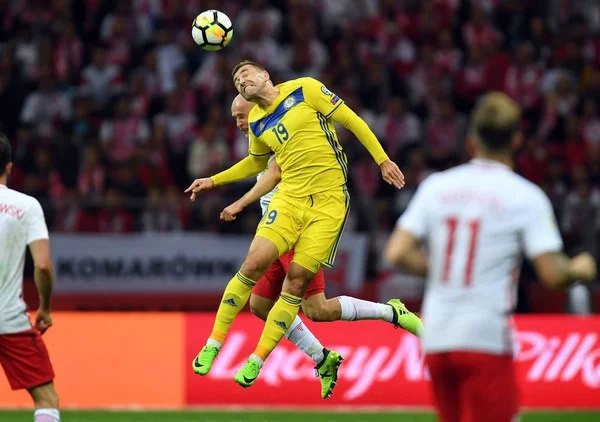
The Senate, Kazakhstan’s upper house of parliament, has passed amendments to the Law on Physical Culture and Sports that ban the use of state funds to finance foreign athletes, commonly known as "legionnaires." The bill is now awaiting President Kassym-Jomart Tokayev’s signature to become law. Ending State Support and Introducing Salary Caps Kazakhstan’s efforts to reduce foreign dominance in national sports date back to 2020. Initial measures included capping the number of foreign players allowed on the field in football and hockey, as well as restricting their funding through state budgets. However, according to Vice-Minister of Tourism and Sports Serik Zharasbayev, these regulations, embedded in competition rules and government resolutions, have not been consistently enforced at the regional level. The new legislation aims to enshrine these restrictions in law. “Regarding the financing of legionnaires: the bill prescribes a prohibition on funding these individuals from the state budget and quasi-governmental sector. However, funding from extra-budgetary sources, such as sponsorships, remains permissible,” Zharasbayev explained. The law will also empower the Ministry of Tourism and Sports to set financial limits for clubs in football, hockey, and other team sports. “This legislation will allow us to define how much each club is eligible to receive from the budget and to cap salaries of football and hockey players accordingly,” the Vice-Minister said. He added that the savings would be redirected to support grassroots youth sports, although he could not specify the projected amount. Budget Caps for Sports Clubs While specific funding limits have yet to be determined, Zharasbayev noted that the combined annual allocation from national and regional budgets is about 400 billion KZT (approximately $797 million). Currently, football and hockey clubs may receive up to 1.2 billion KZT (around $2.4 million) annually, while other sports, such as basketball and volleyball, are capped at 450 million KZT ($897,000). “For the 14 clubs in the Kazakhstan Premier League, a cumulative 30 billion KZT was allocated in 2024. It’s within this sum that we aim to identify potential savings,” Zharasbayev said. He reported that 325 foreign players competed in Kazakhstan’s three professional football divisions last year. Some have since obtained Kazakhstani citizenship, making them eligible for state funding. The new law, however, will apply only to future contracts. “Existing contracts will remain in effect until their expiration, as the law is not retroactive. Still, we have advised clubs not to sign new contracts with foreign players starting in 2025,” Zharasbayev stated. He also emphasized the need to regulate domestic athletes’ salaries, citing “unreasonably high payments” as a growing concern. A separate legal act is in development to address the issue. Scandals Within the Football Federation The legislation comes amid ongoing investigations into financial misconduct under the previous leadership of the Kazakhstan Football Federation. The Prosecutor General’s Office reported violations amounting to 3 billion KZT (nearly $6 million), including unjustified bonuses, misused funds for infrastructure, questionable player transactions, and embezzlement related to athlete meals. Specifically, over 300 million KZT ($597,000) in unwarranted bonuses were issued, and more than...

Uzbek Star Khusanov Named Man City’s Player of the Month

Uzbek footballer Abdukodir Khusanov has made history by being named Etihad Player of the Month for February, just six weeks after joining Manchester City on a four-and-a-half-year contract. A Rapid Rise at City Khusanov has quickly won over fans with his strong, fast, and determined defensive performances under head coach Pep Guardiola. His impressive displays earned him the highest number of votes ever recorded for the award, surpassing star players Erling Haaland and Joško Gvardiol. The 21-year-old, who recently celebrated his birthday, has already made a significant impact at City. He scored his first goal for the club in early February, helping City secure a 2-1 victory against Plymouth Argyle in the FA Cup. Last month, he played every minute of City’s Premier League matches against Newcastle, Liverpool, and Tottenham Hotspur. The team won two of these games, keeping clean sheets against Newcastle and Spurs. Even in City’s defeat to Liverpool, Khusanov stood out as one of the team’s best performers. His steady improvement suggests he is adapting well to English football. Transfer and Future Prospects As previously reported by The Times of Central Asia, Khusanov joined Manchester City from French club Lens in a €40 million transfer. He signed a contract until June 2029, with an option to extend for another year. Manchester City congratulated Khusanov on his award and thanked fans for their votes. With such a strong start, many believe he has much more to offer Guardiola’s squad in the future.

Uzbekistan Doubles Sports Budget to $230 Million, Launches Presidential Olympics

Uzbekistan has announced the launch of the Presidential Olympics, a new national sports competition, following a recent video conference meeting chaired by President Shavkat Mirziyoyev. Competitions in Olympic sports, titled "Olympic Peaks of New Uzbekistan," will be held twice a year across the country. Winners at the district and regional levels will receive awards from local authorities, while regional champions will advance to the Presidential Olympics, which will take place annually at the Olympic Village from December 10-20. Top athletes will be awarded valuable prizes, including houses and cars. Additionally, first and second-place winners will gain admission to the Republican Olympic and Paralympic Center, where they will receive scholarships for their first two years of study. The initiative aims to enhance Uzbekistan’s international sports standing and help the country secure a top-ten finish at the Los Angeles 2028 Olympic Games. During the meeting, it was noted that Uzbekistan’s sports budget has doubled over the past four years, rising from UZS 1.5 trillion ($115.38 million) to UZS 3 trillion ($230.77 million). Additionally, coaches’ salaries have doubled; significant investments have been made in sports infrastructure; 101 new sports facilities have been built; and 67 existing facilities have been reconstructed. To further support athletes preparing for international competitions, including the Olympics, an additional UZS 300 billion ($23 million) will be allocated. President Mirziyoyev commented, “Sport is, first of all, an ambassador of peace, a source of national pride for every country.”

Kazakhstan to Reconstruct Medeu, the World’s Largest High-Altitude Skating Rink

Kazakhstan plans to reconstruct Medeu, the world’s largest high-altitude skating rink, in 2025, expanding its capabilities and modernizing its facilities. Prime Minister Olzhas Bektenov announced the initiative in response to a request from senators. Medeu is a high-mountain sports complex located outside Almaty in the Medeu gorge, at an altitude of 1,691 meters above sea level. According to Bektenov, the planned modernization will enhance the rink’s technical specifications, bringing it in line with International Skating Union (ISU) standards for hosting speed skating and figure skating competitions. Additionally, the Almaty City Council (Akimat) aims to expand Medeu’s functionality to accommodate ball hockey (bandy) tournaments, world championships in ice speedway racing, and various ice shows and mass sporting events. Calls for Renovation In late December, Kazakh senators urged the prime minister to take action, noting that Medeu is now 52 years old. “Opened in 1972, it quickly became one of the best ice rinks in the world. In its first year alone, 249 of a possible 375 world records were set on its ice. The clean mountain air, rarefied atmosphere, and glacial meltwater used for ice resurfacing contributed to outstanding athletic performances. For two decades, Medeu led the world in speed skating. However, after the ISU introduced rules requiring competitions to be held in indoor arenas, outdoor rinks lost their prominence. Should we simply accept that a rink built for records is losing its significance? Medeu remains the world’s largest outdoor artificial ice rink, spanning 10,500 square meters and accommodating up to 8,100 spectators,” the senators wrote in their appeal. Proposed Measures To restore Medeu’s global sporting relevance, the senators proposed the following initiatives: Grant Medeu a special ISU status. Establish a high-altitude training center for athletes. Develop facilities for ball hockey (bandy) competitions. Utilize the arena for ice shows and performances by world-class figure skaters. Host stages of the world ice speedway championship. With its historical significance and unique natural conditions, Medeu remains a symbol of Kazakhstan’s sporting legacy. The upcoming renovation aims to ensure it remains a world-class venue for both competitive and recreational ice sports.