• KGS/USD = 0.01144 0%
  • KZT/USD = 0.00207 0%
  • TJS/USD = 0.10465 0.1%
  • UZS/USD = 0.00008 0%
  • TMT/USD = 0.28490 0%
  • KGS/USD = 0.01144 0%
  • KZT/USD = 0.00207 0%
  • TJS/USD = 0.10465 0.1%
  • UZS/USD = 0.00008 0%
  • TMT/USD = 0.28490 0%
  • KGS/USD = 0.01144 0%
  • KZT/USD = 0.00207 0%
  • TJS/USD = 0.10465 0.1%
  • UZS/USD = 0.00008 0%
  • TMT/USD = 0.28490 0%
  • KGS/USD = 0.01144 0%
  • KZT/USD = 0.00207 0%
  • TJS/USD = 0.10465 0.1%
  • UZS/USD = 0.00008 0%
  • TMT/USD = 0.28490 0%
  • KGS/USD = 0.01144 0%
  • KZT/USD = 0.00207 0%
  • TJS/USD = 0.10465 0.1%
  • UZS/USD = 0.00008 0%
  • TMT/USD = 0.28490 0%
  • KGS/USD = 0.01144 0%
  • KZT/USD = 0.00207 0%
  • TJS/USD = 0.10465 0.1%
  • UZS/USD = 0.00008 0%
  • TMT/USD = 0.28490 0%
  • KGS/USD = 0.01144 0%
  • KZT/USD = 0.00207 0%
  • TJS/USD = 0.10465 0.1%
  • UZS/USD = 0.00008 0%
  • TMT/USD = 0.28490 0%
  • KGS/USD = 0.01144 0%
  • KZT/USD = 0.00207 0%
  • TJS/USD = 0.10465 0.1%
  • UZS/USD = 0.00008 0%
  • TMT/USD = 0.28490 0%

Viewing results 1 - 6 of 194

Kazakhstan’s Bublik Wins Back-to-Back Tennis Titles on Clay

Another week, another title. Alexander Bublik of Kazakhstan won the Generali Open in Kitzbühel, Austria on Saturday, just a week after raising the winner’s trophy in Gstaad, Switzerland. Both tennis titles were on clay, a surface he once disparaged. Bublik beat Arthur Cazaux of France, 6-4, 6-3 in Kitzbühel, pounding groundstrokes and feathering dropshots against a player he had also beaten on the way to the title in Gstaad. It’s all part of what Bublik, 28, has described as his greatest season on the tour, which includes a quarterfinals run at the French Open and the grass court title at Halle in Germany. He now has won a total of seven ATP Tour singles titles, and his No. 30 ranking is projected to climb after the victory in Austria on Saturday. He struggled earlier in the year and was ranked 82 in mid-March. The Russia-born player stumbled at Wimbledon with a loss in the first round.  

Kazakhstani Woman Earns Grandmaster Title, Says Chess is “My World”

As Bibisara Asaubayeva of Kazakhstan puts it, she has dedicated 17 of her 21 years of life to chess. Was it worth it? Well, this month, FIDE, the Switzerland-based governing body of chess, awarded grandmaster status to Asaubayeva, making her the second Kazakhstani woman and the 43rd female player ever to earn the coveted title. The announcement came on Monday after a FIDE council meeting on July 18 that approved nine other grandmasters, including 15-year-old Kazakhstani Edgar Mamedov. It wasn’t a surprise for the players from Kazakhstan because they had achieved the required ratings two months ago and were awaiting official confirmation. Still, the accomplishment spurred reflections this week from Asaubayeva, who posted an Instagram slideshow of photos spanning her career, from a young girl perched in front of chessboards at tournaments to a young woman with a wealth of accolades and experience behind her. She described being “haunted” by missed chances or mistakes on the board and said chess was no longer a game for her because it is so much a part of her identity. “It’s so strange sometimes to look at my childhood photos from tournaments,” she said. “The games, the trips, the emotions — everything seemed so big, so extraordinary back then. I remember how differently I saw chess at the time — with awe, excitement, as if I were entering a fairytale where anything was possible.” Asaubayeva said losses hurt and she never gets used to them, but they make her more resilient. “To me, chess isn’t just 64 black and white squares. It’s a whole world. My world. And there’s still so much left to explore,” she said. “And you know… If you ever give it a try — this game will never let you go.” The first woman from Kazakhstan to become a grandmaster was Zhansaya Abdumalik in 2021. Asaubayeva won consecutive titles at the Women's World Blitz Championships in 2021 and 2022. Currently, she is ranked 10th among the world's highest-rated women with a rating of 2509, according to Chess.com. It stated that she received a wildcard into the Freestyle Chess Grand Slam in Las Vegas and played there a few days ago, but struggled against the world-class competition. Kazakhstan has been pushing to develop homegrown talent, introducing chess into the curricula of hundreds of schools, training chess teachers, organizing numerous tournaments, and even supporting chess federations in some other Asian countries. At last week’s chess council meeting, delegates confirmed the dates for several upcoming events, including the 2nd FIDE Chess Olympiad for people with disabilities, scheduled to take place in Kazakhstan in October this year.

Why Kazakhstan Still Isn’t a Sports Power, Despite Massive Investment

Between 2021 and 2024, Kazakhstan more than doubled its public spending on sports from KZT 153 billion (USD 289 million) to KZT 315 billion (USD 594 million). Yet, the country has not achieved a breakthrough in high-performance sports. A new report by the analytical portal Ranking.kz highlights why substantial investments have failed to deliver world-class results. Spending More, Achieving Less An audit by Kazakhstan’s Supreme Audit Chamber revealed declining efficiency in sports sector spending. Over three years, violations totaling KZT 17 billion (USD 32 million) were identified. KZT 13.7 billion (USD 26 million) was categorized as ineffective spending, while KZT 2.8 billion (USD 5.3 million) was lost due to poor planning. Despite numerous strategic documents, the sector still lacks a centralized development strategy. Objectives are often recycled from one policy to the next, with no clear implementation mechanisms or performance evaluations. Funding distribution is also inconsistent. In some cases, more resources go to non-Olympic sports, while Olympic disciplines remain underfunded. Nineteen of the 46 Olympic sports had no training programs, and Kazakhstan failed to send athletes to Olympic qualifiers in five disciplines, despite spending KZT 2 billion (USD 3.8 million) on them. Million-Dollar Bonuses vs. Grassroots Development While efficiency falters, some officials are awarding themselves generous bonuses. Staff at the “Sports Development Directorate” received over KZT 3.5 billion (USD 6.6 million) in bonuses over three years, averaging KZT 7.7 million (USD 14,500) per person annually, or roughly KZT 640,000 (USD 1,200) per month, often exceeding their base salaries. In contrast, funding for grassroots sports has declined. According to the Ministry of Tourism and Sports, in 2023, KZT 121 billion (USD 228 million) was allocated to youth sports schools (DYuSSh). That figure dropped to KZT 91 billion (USD 172 million) in 2024. Payroll funding has been reduced by nearly 25%, and National Schools of Olympic Reserve (RShVSM) experienced cuts of up to 65.9%. Meanwhile, funding for sports boarding schools for gifted children rose by 69.3%, reaching KZT 29.7 billion (USD 56 million). Schools of higher sports mastery and Olympic preparation centers each received KZT 16.7 billion (USD 31.5 million). The Ministry has pledged to introduce a per capita funding system for youth sports schools starting in 2026. This reform aims to improve transparency and better align funding with children's sports preferences. Participation in Decline Despite rising budgets, participation in sports is falling. In 2024, the number of Kazakh citizens engaged in sports dropped by 750,000 to 8.4 million. Of these, 6.9 million attend sports clubs or sections, a 9.8% decrease from the previous year. Olympic sports remain the most popular, with 4.3 million participants, followed by non-Olympic sports (1.8 million) and traditional national sports (667,000). Football leads with over 1.1 million players, followed by volleyball (768,000) and basketball (656,000). Kazakhstan has over 37,500 sports facilities, including 21,800 outdoor grounds and around 10,000 indoor gyms, two-thirds of which are operated by educational institutions. On paper, Kazakhstan appears to be making significant investments in sports. In practice, however, the absence of a coherent...

Kazakhstan to Host Third Future Games in 2026

Kazakhstan will host the third edition of the international Games of the Future tournament in the summer of 2026, combining traditional sports with their digital counterparts in a unique “phygital” format. The event will take place in Astana from July 18 to August 1, Deputy Minister of Tourism and Sports Serik Zharasbayev announced at a recent briefing. The Games of the Future is an annual global competition where athletes compete in both physical and digital disciplines, with overall scores determined by performance in both categories. The inaugural tournament was held in Kazan, Russia, in early 2024. The second edition is scheduled for December 2025 in the United Arab Emirates, while Kazakhstan will host the third installment in 2026. Over 1,500 athletes from nearly 100 countries are expected to participate in the event, which will feature 13 phygital disciplines. Competitions will be held at several of Astana’s premier sports venues, including the Qazaqstan Sports Complex, Barys Ice Arena, Saryarka Velodrome, Zhekkpe-Zhek Martial Arts Palace, Alaou Ice Palace, Beeline Arena Tennis Center, and the Inclusive Sports Center. The tournament is being organized by the government of Kazakhstan in partnership with Phygital International, a global organization representing 98 member countries. Diverse Disciplines and Substantial Prize Pool Disciplines confirmed for the 2026 tournament include: Phygital Football (soccer), Phygital Fighting (martial arts), Phygital Basketball, Phygital Dancing, Phygital Hockey, Phygital Shooter (tactical combat), Phygital Battle Royale (multiplayer battles), two MOBA disciplines (team esports games), Phygital Drone Racing, Battle Bots (robot battles), Phygital Boxing, and Cybathletics (competitions involving technology-enhanced athletes). The total prize fund will amount to $10 million. According to Alibek Khasenov, president of Kazsportinvest JSC, “The funds will be distributed among the 13 disciplines, some will receive more, some less. All funding, including organizational costs and prize money, will be provided exclusively through sponsorship.” Khasenov noted that several Kazakhstani companies have already shown interest in sponsoring the event. The first edition of the tournament in Kazan reportedly garnered over 3.5 billion views across digital platforms. Rescheduled Due to Flood Recovery Efforts Originally, Kazakhstan was set to host the second Games of the Future in 2025. However, in the aftermath of unprecedented spring floods in 2024, the government reprioritized spending to address recovery efforts. As previously reported by The Times of Central Asia, this led to the postponement of several high-cost and image-driven events, including the Future Games, which have now been rescheduled for 2026.

Tennis Revolution in Kazakhstan: How Systemic Investment Is Creating Champions

Over the past decade, Kazakhstan has evolved from a promising tennis nation into a formidable contender on the global stage. Elena Rybakina’s Wimbledon triumph, Alexander Bublik’s steady rise, and a new wave of top-ranked juniors are no coincidence; they are the product of a long-term, meticulously executed strategy. In an interview with The Times of Central Asia, Yuriy Polskiy, President of the Asian Tennis Federation and Vice President of the Kazakhstan Tennis Federation (KTF), explains how strategic investment, public-private partnerships, and a grassroots approach have fundamentally reshaped the country's tennis landscape. TCA: Kazakhstani tennis players have recently made headlines at top international tournaments. How would you assess Kazakhstan’s current standing on the global tennis map? Are the successes of Elena Rybakina and Alexander Bublik, as well as the emergence of top juniors, the result of systemic work or just coincidence? Polskiy: Luck plays a role in any athlete’s career, but it's fleeting. Kazakhstan’s results, among both professionals and juniors, are consistent, which points to a system that delivers. Over the past decade, we’ve seen numerous players ranked in the world’s top 30: Shvedova, Voskoboeva, Kukushkin, Golubev, Korolev, Nedovyesov, and more recently, Diyas, Putintseva, Danilina, Bublik, and, of course, Rybakina. Together, they’ve secured four Grand Slam titles, reached multiple singles and doubles finals, and won WTA 1000, 500, and ATP/WTA 250 tournaments. Among the juniors, talents like Dastanbek Tashbulatov, Amir Omarkhanov, and Sonya Zhienbayeva have ranked in the ITF Top 5 and Top 20. Our Under-14 and Under-18 national teams have reached the world’s top four and consistently defeated traditional powerhouses such as Australia, France, Italy, and Argentina. These results underscore the strength of Kazakhstan’s national coaching program and the Federation’s long-term vision. In 2024, Kazakhstan had six players in the ITF junior Top 100, including three in the Top 50. Seven more under-14s were ranked in the Tennis Europe Top 100, more than Italy, currently the leader in that category. Notably, all 13 of these top-ranked juniors were born and raised in Kazakhstan, highlighting the success of a nationwide, structured development model that blends public support with private initiative. TCA: What is the Federation’s strategic outlook for the next five to ten years? How extensive is the infrastructure, and are there plans to expand into smaller cities? Polskiy: Since 2007, when businessman and philanthropist Bulat Utemuratov became the KTF president, Kazakhstan has built 38 major tennis centers, each with at least six courts, totaling 364 hard and clay courts nationwide. Over the past 17 years, more than $150 million has been invested in infrastructure. Hundreds of coaches have been trained, particularly for early childhood programs. The number of certified ITF coaches has nearly doubled in five years, now surpassing 400. Infrastructure growth has significantly reduced training costs: hourly court rental has dropped from $50 in 2007 to just $10 today. Facilities now exist in 16 of the 18 regional capitals and smaller cities like Lisakovsk. Major complexes in Astana, Almaty, Shymkent, Karaganda, Aktobe, and Ust-Kamenogorsk each include six indoor and...

Kyrgyzstan to Host First International Equestrian Rally Gallops

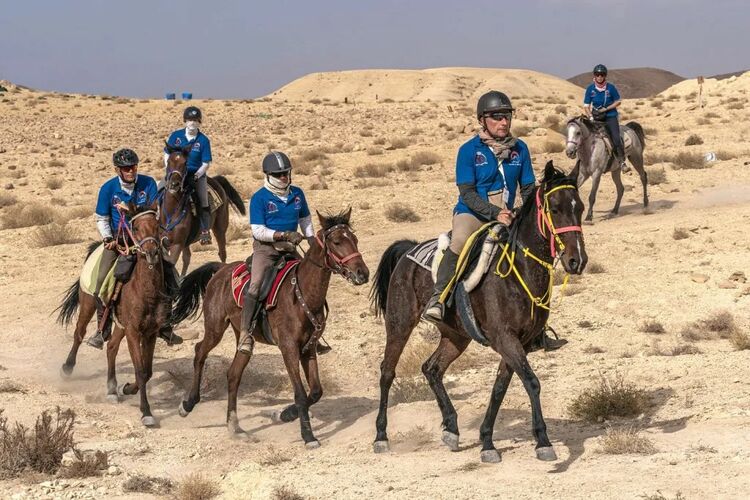
For the first time, the international equestrian adventure race known as The Gallops will be held in Central Asia, with the 2025 edition taking place around the scenic mountain lake of Son-Kul in Kyrgyzstan’s Naryn region. Scheduled for July 19-27, Gallops-2025 will begin in the village of Kyzart. Over five days, participants will cover more than 200 kilometers on horseback, navigating a route encircling Lake Son-Kul. This unique event, inspired by the spirit of the Paris-Dakar rally, combines elements of orienteering and endurance riding. While not a traditional competition, The Gallops tests participants’ stamina, solidarity, and self-discipline, making it a challenge of both physical and mental endurance. Organized in collaboration with local government authorities, Gallops-2025 is expected to attract around 100 riders, including professionals and VIPs from more than 15 countries. Participants will include public figures such as actors, athletes, members of royal families, and media personalities. According to the office of the Kyrgyz president’s plenipotentiary representative in the Naryn region, the event has already garnered significant attention from global media and social platforms, bolstering Kyrgyzstan’s profile as a destination for adventure tourism. Past editions of The Gallops were held in Oman (2014), Morocco (2018), India (2019), and Jordan (2021).