• KZT/USD = 0.00223
  • TJS/USD = 0.10810
  • UZS/USD = 0.00009
  • TMT/USD = 0.29850
  • KZT/USD = 0.00223
  • TJS/USD = 0.10810
  • UZS/USD = 0.00009
  • TMT/USD = 0.29850
  • KZT/USD = 0.00223
  • TJS/USD = 0.10810
  • UZS/USD = 0.00009
  • TMT/USD = 0.29850
  • KZT/USD = 0.00223
  • TJS/USD = 0.10810
  • UZS/USD = 0.00009
  • TMT/USD = 0.29850
  • KZT/USD = 0.00223
  • TJS/USD = 0.10810
  • UZS/USD = 0.00009
  • TMT/USD = 0.29850
  • KZT/USD = 0.00223
  • TJS/USD = 0.10810
  • UZS/USD = 0.00009
  • TMT/USD = 0.29850
  • KZT/USD = 0.00223
  • TJS/USD = 0.10810
  • UZS/USD = 0.00009
  • TMT/USD = 0.29850
  • KZT/USD = 0.00223
  • TJS/USD = 0.10810
  • UZS/USD = 0.00009
  • TMT/USD = 0.29850
22 September 2026

Viewing results 1 - 6 of 21

Kazakh National University of Sports Joins Olympic Studies Network

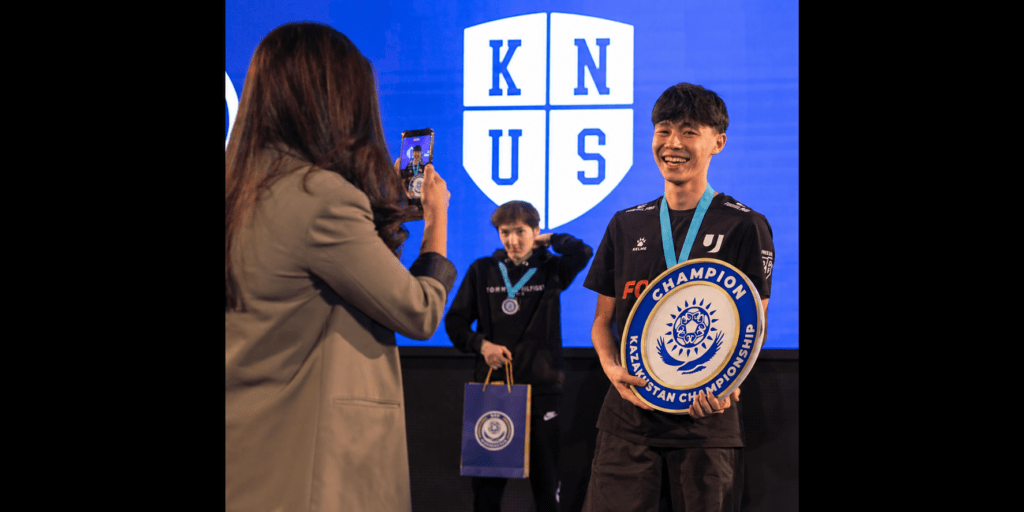
The Kazakh National University of Sports in Astana says it has become the first university in Central Asia to join a global network of academic Olympic studies centers. It announced the recognition on September 17. The Academic Olympic Studies and Research Centres network connects institutions researching the Olympic Games and the Olympic Movement. The university says around 80 such centers operate worldwide. Their work includes teaching, scientific events, and the publication of research. The network is coordinated by the International Olympic Committee’s Olympic Studies Centre in Lausanne and provides a forum for cooperation between academics in different countries. The university trains coaches, physical education teachers, sports managers, and other specialists. Its training also extends to staff for rehabilitation centers and organizers of mass sporting events. It is now developing a Center for Olympic Studies, Education and Legacy, which will focus on research into the history, values, and long-term impact of the Olympic Movement. Membership in the international network will allow the Astana center to work with universities and research centers overseas and exchange research and teaching practices, the university said. The university said support from the National Olympic Committee was an important condition for recognition. It is already working with Kazakhstan’s committee on projects involving Olympic education and research. The new center is intended to bring students and lecturers into discussion with researchers and sports professionals, making Olympic studies part of the university’s sports science and education work.

Kyrgyzstan Opens National Chess Academy in Bishkek

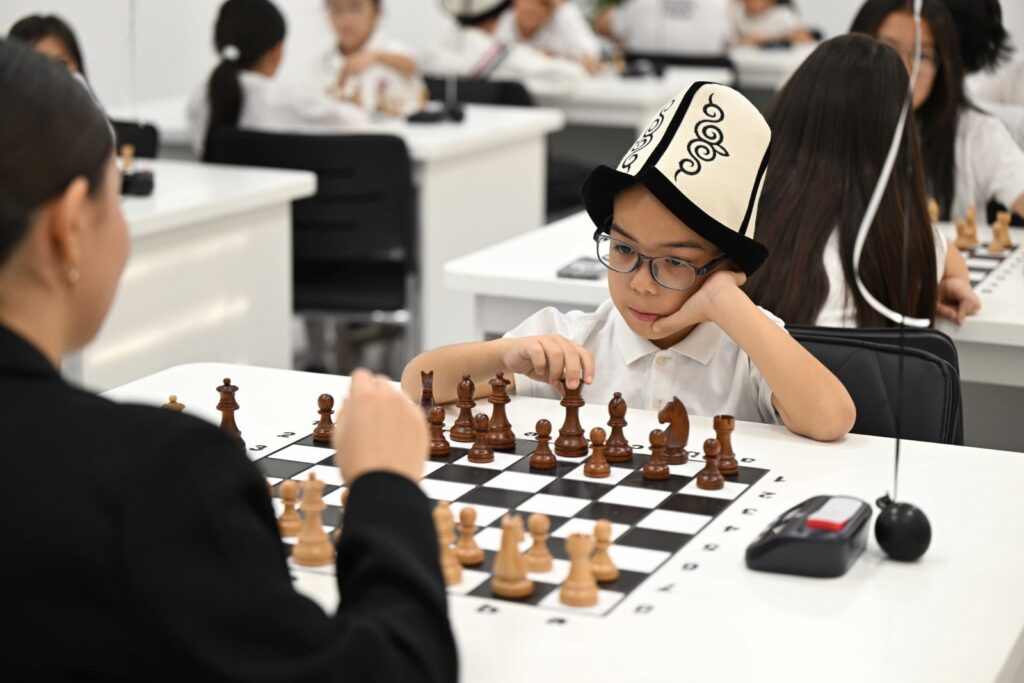
Kyrgyzstan is linking school chess programs with advanced training as it seeks greater success internationally. The National Chess Academy opened in Bishkek on September 13, while a pilot program is introducing chess clubs for students in grades three to five at 500 schools across the country. The academy, established under the Kyrgyz Chess Union, will identify and train promising young players. It will also organize competitions and provide a permanent base where they can prepare for national and international tournaments. The academy is part of a national chess development program for 2026–2030. The program also provides for teacher training to support the school clubs and annual presidential awards for the country’s best player and coach. At the opening ceremony, Adylbek Kasymaliyev, chairman of the Cabinet of Ministers, said he expected the academy to train talented players and develop a new generation capable of representing Kyrgyzstan internationally. Aida Salyanova, president of the Kyrgyz Chess Union, has said the longer-term goal is to build a system that allows players to progress from school programs to international competition. Creating that system will take longer than opening an academy or launching hundreds of clubs. Young players need years of coaching and regular competition before they can reach that level. Kyrgyzstan already has young players competing at a high level. At the 2025 national championship, International Master Eldiyar Orozbaev won the open event, while Begimai Zairbek Kyzy won the women’s title. Five of the top 10 finishers in the open event were under 20. International Master is the second-highest open title awarded by the International Chess Federation (FIDE), below Grandmaster. Kyrgyzstan has produced one grandmaster, Leonid Yurtaev, who received the title in 1996. No player representing the country has since followed him. This expansion comes at a time of growing chess success across Central Asia. Uzbek grandmaster Nodirbek Abdusattorov won the Tata Steel Chess Masters in the Netherlands in early 2026, one of the world’s most prestigious annual tournaments. Abdusattorov later won the Prague International Chess Festival Masters and rose to fourth in FIDE’s world rankings. Uzbekistan is also hosting the 2026 Chess Olympiad in Samarkand. The event opened on September 15, and play began the following day. The Olympiad is FIDE’s flagship international team competition. Kazakhstan is pursuing a similar approach to chess education. Its Chess in Education program now covers 1,500 schools, while KazChessLab trains future chess teachers and develops teaching methods.

Samarkand Expects Record Turnout for Chess Olympiad

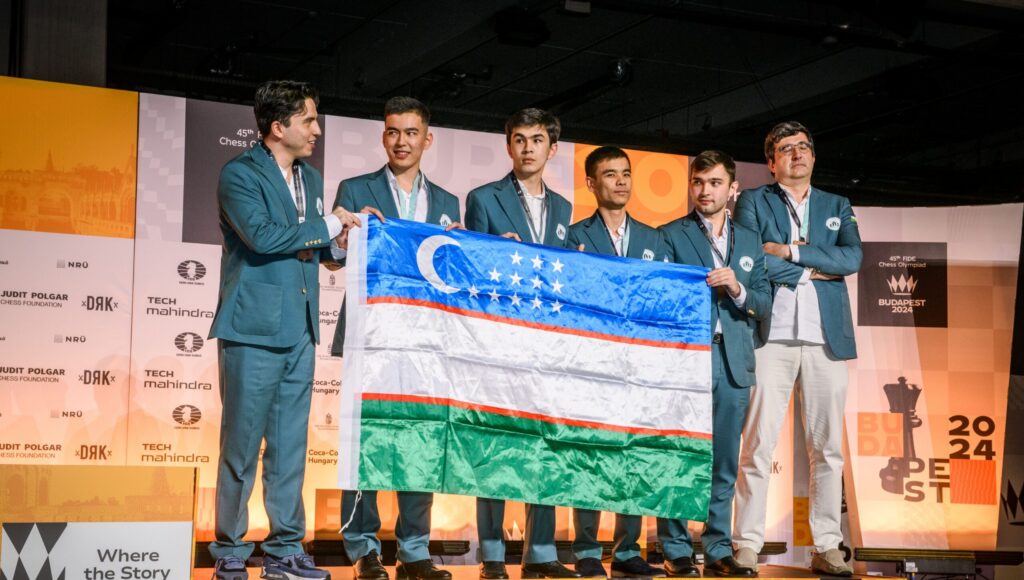
Samarkand is preparing to host the largest Chess Olympiad yet, with organizers expecting 398 teams as Uzbekistan stages the tournament for the first time in Central Asia. The 46th Chess Olympiad opens on September 15 at the Silk Road International Tourism Center and runs until September 27, with the first round to be played on September 16, according to the official schedule. Organizers say 208 teams will compete in the Open section and 190 in the women’s competition. The expected field of 1,974 players includes 240 grandmasters. More than 4,000 guests are expected when coaches and delegation members are included. That turnout would exceed the 374 teams recorded by FIDE at the 2024 Budapest Olympiad. Both sections will be contested over eleven rounds, with four players competing for each team in every match. Teams may also register one reserve player. The Olympiad dates back to 1927. Its arrival in Samarkand brings the competition to a historic Silk Road city whose center is inscribed on UNESCO’s World Heritage List. Uzbekistan enters the Open competition as the third seed, according to the organizers’ figures based on average team ratings. The United States leads the seedings, ahead of defending champions India. The U.S. team includes Fabiano Caruana, Wesley So, and Levon Aronian, while Hans Niemann is set to make his Olympiad debut. Vincent Keymer will represent Germany, and France’s squad includes Maxime Vachier-Lagrave. For Uzbekistan, Javokhir Sindarov and Nodirbek Abdusattorov bring top-ten credentials to the home challenge. Sindarov is fourth in FIDE’s September rankings, while Abdusattorov is seventh. The rankings cited by the organizers also place Nodirbek Yakubboev 39th and Shamsiddin Vokhidov 61st, giving the main squad four players among the world’s top 100. Former FIDE world champion Rustam Kasimdzhanov has also been named in the main Open lineup. His inclusion adds experience to a squad built around Uzbekistan’s younger grandmasters. The hosts will field three teams in each section, opening places for emerging players. Nilufarkhon Imomkuziyeva and Khumoyun Begmurodov, both 16, are among those making their Olympiad debuts. In the women’s competition, Gulrukhbegim Tokhirjonova is set to represent Uzbekistan after playing for the United States at the 2024 Budapest Olympiad. Nafisa Muminova, Uzbekistan’s first woman grandmaster, will serve as captain. The organizers cite Afruza Khamdamova’s position at 26th in the women’s world rankings, with Tokhirjonova 80th. Uzbekistan’s women have climbed 17 places since 2025 to 21st in FIDE’s federation rankings, while the Open side has risen 15 places to sixth. India is the top seed in the women’s competition. Kazakhstan’s lineup includes three-time women’s world blitz champion Bibisara Assaubayeva, who also won Norway Chess Women 2026, securing the title in Oslo with a round to spare. Ukraine’s first board will be 16-year-old Anastasiia Hnatyshyn, who won the European Women’s Championship in June after entering the tournament as the 76th seed. Samarkand will also host the third FIDE Chess Olympiad for People with Disabilities from September 10 to 18. Organizers expect a record 41 teams, compared with 26 at the inaugural event in...

Leaked Recording Stirs Controversy Ahead of FIDE Presidential Election in Samarkand

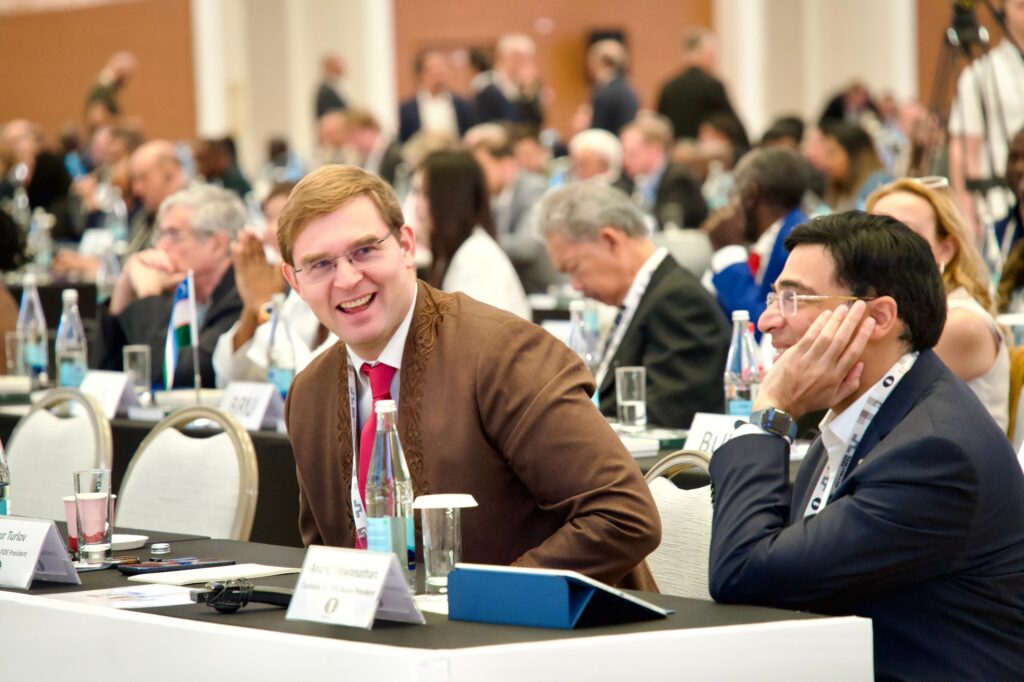
An audio recording attributed to Russian chess organizer Mark Glukhovsky has surfaced online ahead of the International Chess Federation (FIDE) presidential election in Samarkand. In the recording, the speaker makes derogatory remarks about Uzbeks and Uzbek officials and appears to discuss bribery as one of the tactics used during the 2018 FIDE election campaign. Glukhovsky has acknowledged that a private conversation was secretly recorded but maintains that the material released online was edited and partly reworked using artificial intelligence. The Ukrainian Chess Federation published the audio on its Facebook page. Its full context and authenticity, including whether it had been edited, could not be independently verified. In it, the speaker describes his involvement in Arkady Dvorkovich’s campaign for the FIDE presidency in 2018. Glukhovsky was Dvorkovich’s campaign manager at the time. According to the speaker, the team had to work with around 200 delegates from different countries. “You need to talk to some people, send the program to some, bribe some, and connect some in an alliance with someone else,” the speaker says in the recording. Dvorkovich, a former Russian deputy prime minister, won the election and became FIDE president in 2018. He was reelected in 2022. On July 23, 2026, the European Union added Dvorkovich to its Ukraine-related sanctions list. The same day, he said he considered the sanctions unlawful and intended to challenge them, but would voluntarily suspend the exercise of his powers as FIDE president for as long as the restrictions remained in force. His duties were assumed by FIDE Deputy President Viswanathan Anand, a former world champion, who became interim president. The recording then turns to Uzbekistan and Otabek Umarov, first vice president of the National Olympic Committee of Uzbekistan. The speaker questions why an Uzbek representative was part of Dvorkovich’s team and uses several offensive expressions to describe him. “Some Uzbek guy. Why the hell is this Uzbek even there?” the speaker says. He refers to Umarov’s position on the National Olympic Committee of Uzbekistan and appears at first to be unaware of his family connection to the president. The tone changes after the speaker says he searched for information about Umarov and learned that he is President Shavkat Mirziyoyev’s son-in-law. “Then I googled him – the president’s son-in-law. That, I would say, changes things,” the speaker says in the recording. The speaker also refers to Uzbekistan’s prime minister, claiming that the official had previously assured Dvorkovich of his support. He then questions whether such a commitment would still carry weight with Umarov involved in Dvorkovich’s campaign. The recording also contains a dismissive assessment of Uzbekistan’s role in the FIDE election. “Uzbekistan’s vote by itself doesn’t matter at all,” the speaker says before making further offensive remarks about Uzbeks. The recording appeared less than a month before the FIDE presidential election. Voting will take place on September 26 during the organization’s General Assembly in Samarkand. Each member federation represented at the General Assembly is entitled to one vote. FIDE has approved three presidential tickets. Timur...

Turkmenistan’s Allayar Shirliev Wins Abu Dhabi Chess Tournament

Allayar Shirliev was a conscripted soldier when he became Turkmenistan’s national chess champion in 2024 and has said he wants to break the world record for playing the most games simultaneously while blindfolded. The 22-year-old Turkmen player has now won a chess tournament in the United Arab Emirates, the Turkmenportal platform and other media reported. Shirliev won the Open A tournament at the 32nd International Chess Festival in Abu Dhabi, which was held from August 15 to August 24. The Open A category is for players with a rating of 2299 and below under the rules of FIDE, the international governing body of chess. The top ten players in the world all have ratings above 2750. Shirliev, whose chess title is candidate master, entered the Abu Dhabi tournament with a classical chess rating of 2184, and his victory is expected to raise his rating by about 40 points when FIDE publishes new figures. He won eight out of a possible nine points in the competition, drawing with two players who have the more advanced international master title, Bashir Eiti of Syria and Richilieu III Salcedo of the Philippines. In a separate category, Uzbek grandmaster Jakhongir Vakhidov won the masters tournament for players with a rating of 2,300 and above in Abu Dhabi. Next month, Uzbekistan will host the FIDE Chess Olympiad in Samarkand, fielding a team led by Javokhir Sindarov, winner of the FIDE Candidates Tournament in April. Born in Ashgabat, Shirliev is eager to push his limits. In April 2021, he played 25 games simultaneously while blindfolded and was planning another 30-game event, state media in Turkmenistan reported.  Then, in July of that year, he played 40 games blindfolded, according to the InAshgabat news site. The world record for simultaneous games while blindfolded is held by Uzbek-born Timur Gareyev, according to Guinness World Records. He played 48 games at the University of Nevada in Las Vegas in 2016. He won 35 games, drew seven, and lost six. Hungarian grandmaster János Flesch played 52 opponents simultaneously while blindfolded in Budapest in 1960. But the performance wasn’t recognized as a world record.

Will Host Uzbekistan Be the “Most Dangerous Team” at the Chess Olympiad?

Some 400 teams have been confirmed for the FIDE Chess Olympiad in Samarkand, Uzbekistan, next month, an increase of 20 teams over the previous record number that competed at the Olympiad in Budapest, Hungary two years ago. In the open section, the United States is the top seed with Fabiano Caruana leading the five-player team, while India will aim to defend its 2024 title with Arjun Erigaisi at the head of its lineup, according to FIDE, the international governing body of chess. “The host nation might be the most dangerous team in Samarkand,” FIDE said this week. Uzbekistan’s Javokhir Sindarov, winner of the prestigious Candidates Tournament in April, leads the team, ahead of Nodirbek Abdusattorov, another of the world’s top players. Nodirbek Yakubboev, Shamsiddin Vokhidov, Madaminov will also play for Uzbekistan, which won the Chess Olympiad in Chennai, India in 2022 and took bronze in Budapest. China is also fielding a strong team in the open section, while Germany is seeded fifth. The gender-neutral category is called open because women have occasionally participated in male-dominated chess events. In the women’s competition in Samarkand, India is the top seed with Humpy Koneru at the head of the team, followed by Georgia, China, Kazakhstan and the U.S., according to FIDE. Kazakhstan’s female chess players have been progressing strongly in recent years, finishing fifth at the Chess Olympiad in Chennai, India in 2022, and second in Budapest in 2024. Bibisara Asaubayeva, who was second at the women’s Candidates tournament this year, leads her squad, followed by Alua Nurman, Meruert Kamalidenova, Elnaz Kaliakhmet and Zarina Nurgaliyeva. Host Uzbekistan is seeded 13th on the women’s side in Samarkand. The Chess Olympiad will feature 11 rounds of classical chess from September 16 to 27.