• KGS/USD = 0.01144 0%
  • KZT/USD = 0.00211 0%
  • TJS/USD = 0.10526 0%
  • UZS/USD = 0.00008 0%
  • TMT/USD = 0.28530 0%
  • KGS/USD = 0.01144 0%
  • KZT/USD = 0.00211 0%
  • TJS/USD = 0.10526 0%
  • UZS/USD = 0.00008 0%
  • TMT/USD = 0.28530 0%
  • KGS/USD = 0.01144 0%
  • KZT/USD = 0.00211 0%
  • TJS/USD = 0.10526 0%
  • UZS/USD = 0.00008 0%
  • TMT/USD = 0.28530 0%
  • KGS/USD = 0.01144 0%
  • KZT/USD = 0.00211 0%
  • TJS/USD = 0.10526 0%
  • UZS/USD = 0.00008 0%
  • TMT/USD = 0.28530 0%
  • KGS/USD = 0.01144 0%
  • KZT/USD = 0.00211 0%
  • TJS/USD = 0.10526 0%
  • UZS/USD = 0.00008 0%
  • TMT/USD = 0.28530 0%
  • KGS/USD = 0.01144 0%
  • KZT/USD = 0.00211 0%
  • TJS/USD = 0.10526 0%
  • UZS/USD = 0.00008 0%
  • TMT/USD = 0.28530 0%
  • KGS/USD = 0.01144 0%
  • KZT/USD = 0.00211 0%
  • TJS/USD = 0.10526 0%
  • UZS/USD = 0.00008 0%
  • TMT/USD = 0.28530 0%
  • KGS/USD = 0.01144 0%
  • KZT/USD = 0.00211 0%
  • TJS/USD = 0.10526 0%
  • UZS/USD = 0.00008 0%
  • TMT/USD = 0.28530 0%

Viewing results 1 - 6 of 200

A Year After Olympic Gold, Uzbek Boxer Mullojonov Enmeshed in Doping Probe

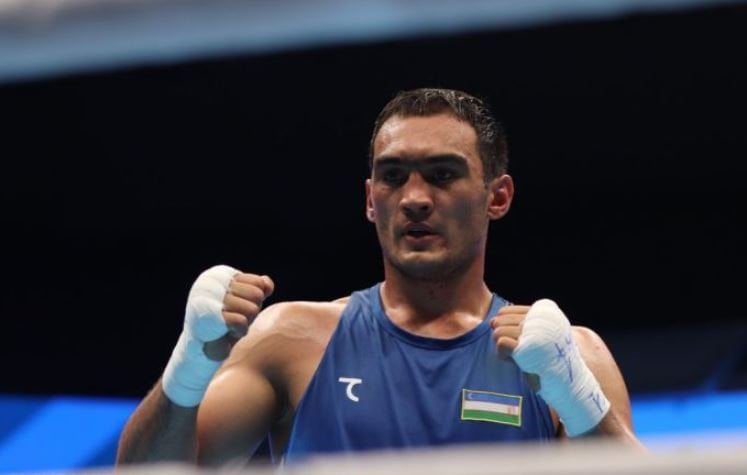
The Uzbekistan Boxing Federation is defending Olympic gold medalist Lazizbek Mullojonov after he tested positive for a banned steroid, saying he may have ingested “prohibited doping substances” during a hair transplant last year.  The federation responded this week to online commentary about Mullojonov’s case, which threatens to tarnish his heavyweight victory at the Paris games last year. The boxer has been suspended under international anti-doping codes pending the outcome of the investigation. Some media reports have said he could lose his Olympic medal if a doping violation is confirmed, though Uzbek boxing officials say his Olympic result won’t be affected. “On June 11 of this year, a doping test was taken from our athlete according to international doping rules, and an information letter was submitted to the International Testing Agency (ITA) indicating the presence of prohibited substances based on the test results,” said the federation, stating that Mullojonov had “always” complied with doping rules.  “Our athlete underwent a hair transplant surgery on November 19, 2024, at a private clinic in Fergana city after the Paris 2024 Olympic Games. It is assumed that during the four-stage surgery and postoperative treatments, he took medications provided by the clinic for treatment, which may have contained some prohibited doping substances.”  On July 29, the International Testing Agency said it informed Mullojonov that he had tested positive for methasterone, a steroid that can promote fast muscle growth and increased strength. It said he had the right to request an analysis of a second sample, which would confirm or contradict the first test, and that he can also provide explanations for a positive test.  In line with the World Anti-Doping Code and World Boxing anti-doping rules, “a mandatory provisional suspension has been imposed on the athlete,” said the testing agency, which is based in Lausanne, Switzerland. Mullojonov can challenge the provisional suspension, it said.  The boxer had reached the quarterfinals of the Boxing Grand Prix in Riyadh, Saudi Arabia, the tournament said on July 27. Two days ago, in an apparent reference to Mullojonov, it said that there was one “adverse finding” among 95 anti-doping tests that had been conducted in connection with the tournament and an investigation is ongoing.  “The Tournament participant whose sample yielded the adverse finding had won his bouts in Phases 1 and 2. He will not participate in Phase 3,” said the tournament, which is organized by the World Boxing Council. Phase 3 is the quarterfinals stage.  Mullojonov, 26, also won gold in the super-heavyweight category at the Asian Championships in 2022. Now he awaits a final decision on what the International Testing Agency called “an apparent anti-doping rule violation.”

Uzbekistan Joins Asian Cricket Council as Sport Gains Momentum

Uzbekistan has taken another major step in its cricket journey, as the Cricket Federation of Uzbekistan (CFU) was officially welcomed into the Asian Cricket Council (ACC) during its conference in Dhaka, Bangladesh on July 30.  In 2022 Uzbekistan became an Associate Member of the sport’s governing body, the International Cricket Council (ICC). Cricket has grown swiftly in Uzbekistan, with more than 4,000 players now participating in schools, universities, and community clubs across the country. The CFU has introduced cricket to 253 sports schools, using ICC training materials translated into Uzbek to engage young players. Facilities have been set up in Tashkent, Chirchiq, and Samarkand, laying the groundwork for Uzbekistan’s first national cricket team. “Becoming part of the Asian Cricket Council is a historic step for Uzbekistan,” CFU Chairman Aziz Mihliev said. “It connects us with the wider Asian cricket community and strengthens our ability to grow the sport locally. With the support of the ICC and ACC, we are committed to developing grassroots cricket, training local coaches, and providing more opportunities for young Uzbeks to experience this global sport.” This membership places Uzbekistan among Asia’s recognised cricket nations, including India, Pakistan, Sri Lanka, Bangladesh and Nepal. Last year, the Times of Central Asia reported that Uzbekistan’s cricket team was preparing to play its first international matches, possibly against Mongolia.

Kazakhstan’s Bublik Wins Back-to-Back Tennis Titles on Clay

Another week, another title. Alexander Bublik of Kazakhstan won the Generali Open in Kitzbühel, Austria on Saturday, just a week after raising the winner’s trophy in Gstaad, Switzerland. Both tennis titles were on clay, a surface he once disparaged. Bublik beat Arthur Cazaux of France, 6-4, 6-3 in Kitzbühel, pounding groundstrokes and feathering dropshots against a player he had also beaten on the way to the title in Gstaad. It’s all part of what Bublik, 28, has described as his greatest season on the tour, which includes a quarterfinals run at the French Open and the grass court title at Halle in Germany. He now has won a total of seven ATP Tour singles titles, and his No. 30 ranking is projected to climb after the victory in Austria on Saturday. He struggled earlier in the year and was ranked 82 in mid-March. The Russia-born player stumbled at Wimbledon with a loss in the first round.  

Kazakhstani Woman Earns Grandmaster Title, Says Chess is “My World”

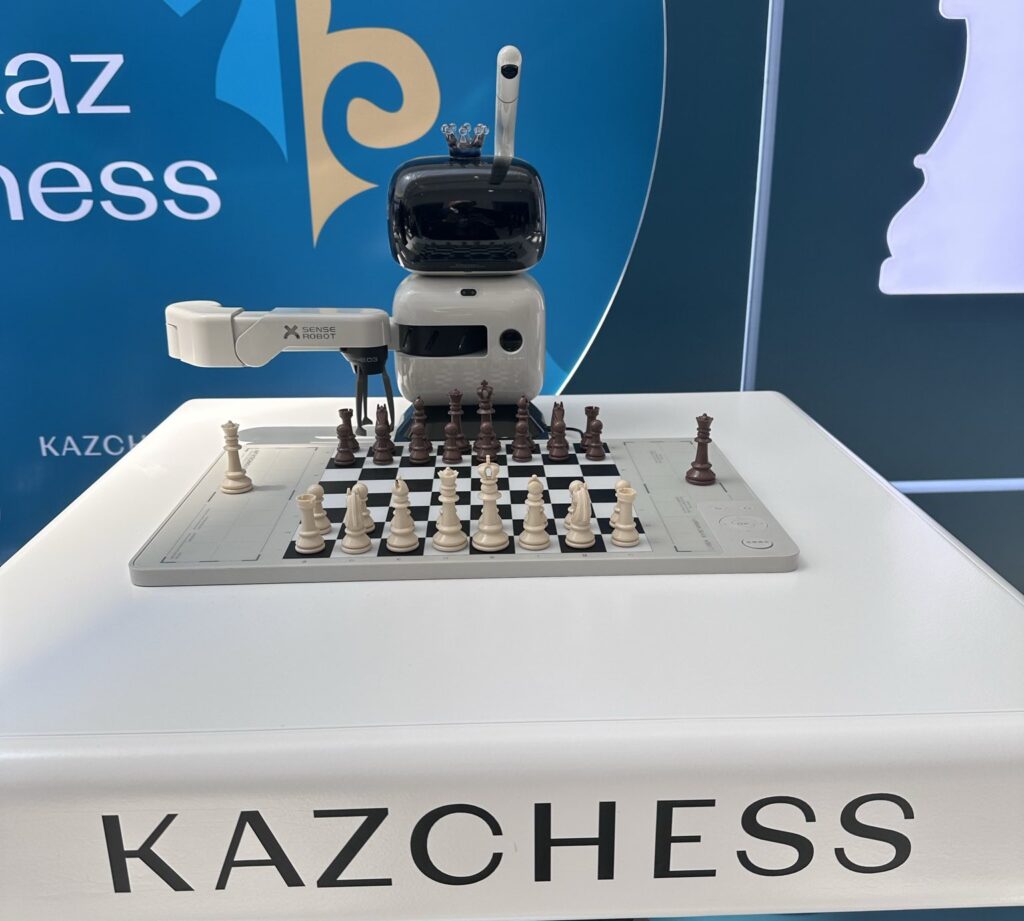
As Bibisara Asaubayeva of Kazakhstan puts it, she has dedicated 17 of her 21 years of life to chess. Was it worth it? Well, this month, FIDE, the Switzerland-based governing body of chess, awarded grandmaster status to Asaubayeva, making her the second Kazakhstani woman and the 43rd female player ever to earn the coveted title. The announcement came on Monday after a FIDE council meeting on July 18 that approved nine other grandmasters, including 15-year-old Kazakhstani Edgar Mamedov. It wasn’t a surprise for the players from Kazakhstan because they had achieved the required ratings two months ago and were awaiting official confirmation. Still, the accomplishment spurred reflections this week from Asaubayeva, who posted an Instagram slideshow of photos spanning her career, from a young girl perched in front of chessboards at tournaments to a young woman with a wealth of accolades and experience behind her. She described being “haunted” by missed chances or mistakes on the board and said chess was no longer a game for her because it is so much a part of her identity. “It’s so strange sometimes to look at my childhood photos from tournaments,” she said. “The games, the trips, the emotions — everything seemed so big, so extraordinary back then. I remember how differently I saw chess at the time — with awe, excitement, as if I were entering a fairytale where anything was possible.” Asaubayeva said losses hurt and she never gets used to them, but they make her more resilient. “To me, chess isn’t just 64 black and white squares. It’s a whole world. My world. And there’s still so much left to explore,” she said. “And you know… If you ever give it a try — this game will never let you go.” The first woman from Kazakhstan to become a grandmaster was Zhansaya Abdumalik in 2021. Asaubayeva won consecutive titles at the Women's World Blitz Championships in 2021 and 2022. Currently, she is ranked 10th among the world's highest-rated women with a rating of 2509, according to Chess.com. It stated that she received a wildcard into the Freestyle Chess Grand Slam in Las Vegas and played there a few days ago, but struggled against the world-class competition. Kazakhstan has been pushing to develop homegrown talent, introducing chess into the curricula of hundreds of schools, training chess teachers, organizing numerous tournaments, and even supporting chess federations in some other Asian countries. At last week’s chess council meeting, delegates confirmed the dates for several upcoming events, including the 2nd FIDE Chess Olympiad for people with disabilities, scheduled to take place in Kazakhstan in October this year.

Why Kazakhstan Still Isn’t a Sports Power, Despite Massive Investment

Between 2021 and 2024, Kazakhstan more than doubled its public spending on sports from KZT 153 billion (USD 289 million) to KZT 315 billion (USD 594 million). Yet, the country has not achieved a breakthrough in high-performance sports. A new report by the analytical portal Ranking.kz highlights why substantial investments have failed to deliver world-class results. Spending More, Achieving Less An audit by Kazakhstan’s Supreme Audit Chamber revealed declining efficiency in sports sector spending. Over three years, violations totaling KZT 17 billion (USD 32 million) were identified. KZT 13.7 billion (USD 26 million) was categorized as ineffective spending, while KZT 2.8 billion (USD 5.3 million) was lost due to poor planning. Despite numerous strategic documents, the sector still lacks a centralized development strategy. Objectives are often recycled from one policy to the next, with no clear implementation mechanisms or performance evaluations. Funding distribution is also inconsistent. In some cases, more resources go to non-Olympic sports, while Olympic disciplines remain underfunded. Nineteen of the 46 Olympic sports had no training programs, and Kazakhstan failed to send athletes to Olympic qualifiers in five disciplines, despite spending KZT 2 billion (USD 3.8 million) on them. Million-Dollar Bonuses vs. Grassroots Development While efficiency falters, some officials are awarding themselves generous bonuses. Staff at the “Sports Development Directorate” received over KZT 3.5 billion (USD 6.6 million) in bonuses over three years, averaging KZT 7.7 million (USD 14,500) per person annually, or roughly KZT 640,000 (USD 1,200) per month, often exceeding their base salaries. In contrast, funding for grassroots sports has declined. According to the Ministry of Tourism and Sports, in 2023, KZT 121 billion (USD 228 million) was allocated to youth sports schools (DYuSSh). That figure dropped to KZT 91 billion (USD 172 million) in 2024. Payroll funding has been reduced by nearly 25%, and National Schools of Olympic Reserve (RShVSM) experienced cuts of up to 65.9%. Meanwhile, funding for sports boarding schools for gifted children rose by 69.3%, reaching KZT 29.7 billion (USD 56 million). Schools of higher sports mastery and Olympic preparation centers each received KZT 16.7 billion (USD 31.5 million). The Ministry has pledged to introduce a per capita funding system for youth sports schools starting in 2026. This reform aims to improve transparency and better align funding with children's sports preferences. Participation in Decline Despite rising budgets, participation in sports is falling. In 2024, the number of Kazakh citizens engaged in sports dropped by 750,000 to 8.4 million. Of these, 6.9 million attend sports clubs or sections, a 9.8% decrease from the previous year. Olympic sports remain the most popular, with 4.3 million participants, followed by non-Olympic sports (1.8 million) and traditional national sports (667,000). Football leads with over 1.1 million players, followed by volleyball (768,000) and basketball (656,000). Kazakhstan has over 37,500 sports facilities, including 21,800 outdoor grounds and around 10,000 indoor gyms, two-thirds of which are operated by educational institutions. On paper, Kazakhstan appears to be making significant investments in sports. In practice, however, the absence of a coherent...

Kazakhstan to Host Third Future Games in 2026

Kazakhstan will host the third edition of the international Games of the Future tournament in the summer of 2026, combining traditional sports with their digital counterparts in a unique “phygital” format. The event will take place in Astana from July 18 to August 1, Deputy Minister of Tourism and Sports Serik Zharasbayev announced at a recent briefing. The Games of the Future is an annual global competition where athletes compete in both physical and digital disciplines, with overall scores determined by performance in both categories. The inaugural tournament was held in Kazan, Russia, in early 2024. The second edition is scheduled for December 2025 in the United Arab Emirates, while Kazakhstan will host the third installment in 2026. Over 1,500 athletes from nearly 100 countries are expected to participate in the event, which will feature 13 phygital disciplines. Competitions will be held at several of Astana’s premier sports venues, including the Qazaqstan Sports Complex, Barys Ice Arena, Saryarka Velodrome, Zhekkpe-Zhek Martial Arts Palace, Alaou Ice Palace, Beeline Arena Tennis Center, and the Inclusive Sports Center. The tournament is being organized by the government of Kazakhstan in partnership with Phygital International, a global organization representing 98 member countries. Diverse Disciplines and Substantial Prize Pool Disciplines confirmed for the 2026 tournament include: Phygital Football (soccer), Phygital Fighting (martial arts), Phygital Basketball, Phygital Dancing, Phygital Hockey, Phygital Shooter (tactical combat), Phygital Battle Royale (multiplayer battles), two MOBA disciplines (team esports games), Phygital Drone Racing, Battle Bots (robot battles), Phygital Boxing, and Cybathletics (competitions involving technology-enhanced athletes). The total prize fund will amount to $10 million. According to Alibek Khasenov, president of Kazsportinvest JSC, “The funds will be distributed among the 13 disciplines, some will receive more, some less. All funding, including organizational costs and prize money, will be provided exclusively through sponsorship.” Khasenov noted that several Kazakhstani companies have already shown interest in sponsoring the event. The first edition of the tournament in Kazan reportedly garnered over 3.5 billion views across digital platforms. Rescheduled Due to Flood Recovery Efforts Originally, Kazakhstan was set to host the second Games of the Future in 2025. However, in the aftermath of unprecedented spring floods in 2024, the government reprioritized spending to address recovery efforts. As previously reported by The Times of Central Asia, this led to the postponement of several high-cost and image-driven events, including the Future Games, which have now been rescheduled for 2026.