• KGS/USD = 0.01143 0%
  • KZT/USD = 0.00216 0%
  • TJS/USD = 0.10633 -0.28%
  • UZS/USD = 0.00008 0%
  • TMT/USD = 0.28571 0%
  • KGS/USD = 0.01143 0%
  • KZT/USD = 0.00216 0%
  • TJS/USD = 0.10633 -0.28%
  • UZS/USD = 0.00008 0%
  • TMT/USD = 0.28571 0%
  • KGS/USD = 0.01143 0%
  • KZT/USD = 0.00216 0%
  • TJS/USD = 0.10633 -0.28%
  • UZS/USD = 0.00008 0%
  • TMT/USD = 0.28571 0%
  • KGS/USD = 0.01143 0%
  • KZT/USD = 0.00216 0%
  • TJS/USD = 0.10633 -0.28%
  • UZS/USD = 0.00008 0%
  • TMT/USD = 0.28571 0%
  • KGS/USD = 0.01143 0%
  • KZT/USD = 0.00216 0%
  • TJS/USD = 0.10633 -0.28%
  • UZS/USD = 0.00008 0%
  • TMT/USD = 0.28571 0%
  • KGS/USD = 0.01143 0%
  • KZT/USD = 0.00216 0%
  • TJS/USD = 0.10633 -0.28%
  • UZS/USD = 0.00008 0%
  • TMT/USD = 0.28571 0%
  • KGS/USD = 0.01143 0%
  • KZT/USD = 0.00216 0%
  • TJS/USD = 0.10633 -0.28%
  • UZS/USD = 0.00008 0%
  • TMT/USD = 0.28571 0%
  • KGS/USD = 0.01143 0%
  • KZT/USD = 0.00216 0%
  • TJS/USD = 0.10633 -0.28%
  • UZS/USD = 0.00008 0%
  • TMT/USD = 0.28571 0%

Viewing results 1 - 6 of 215

Kyrgyzstan to Host First International Equestrian Rally Gallops

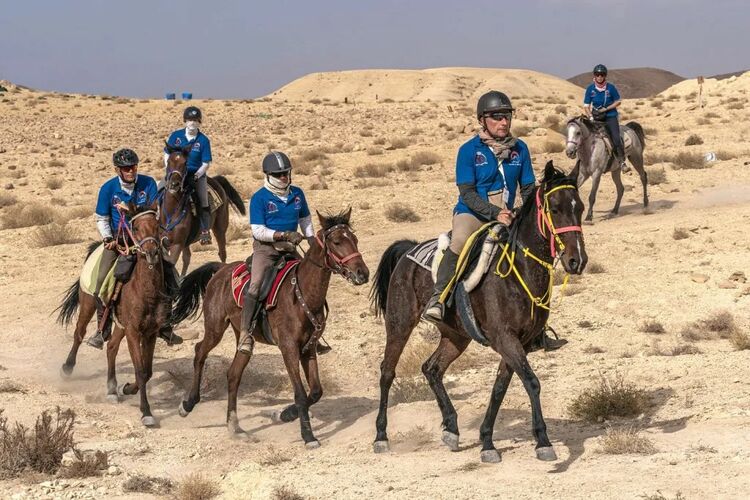
For the first time, the international equestrian adventure race known as The Gallops will be held in Central Asia, with the 2025 edition taking place around the scenic mountain lake of Son-Kul in Kyrgyzstan’s Naryn region. Scheduled for July 19-27, Gallops-2025 will begin in the village of Kyzart. Over five days, participants will cover more than 200 kilometers on horseback, navigating a route encircling Lake Son-Kul. This unique event, inspired by the spirit of the Paris-Dakar rally, combines elements of orienteering and endurance riding. While not a traditional competition, The Gallops tests participants’ stamina, solidarity, and self-discipline, making it a challenge of both physical and mental endurance. Organized in collaboration with local government authorities, Gallops-2025 is expected to attract around 100 riders, including professionals and VIPs from more than 15 countries. Participants will include public figures such as actors, athletes, members of royal families, and media personalities. According to the office of the Kyrgyz president’s plenipotentiary representative in the Naryn region, the event has already garnered significant attention from global media and social platforms, bolstering Kyrgyzstan’s profile as a destination for adventure tourism. Past editions of The Gallops were held in Oman (2014), Morocco (2018), India (2019), and Jordan (2021).

Bublik of Kazakhstan Wins a Grass Title Ahead of Wimbledon

Alexander Bublik wasn’t enjoying tennis. Last year, after a mediocre performance at Wimbledon, he thought about quitting the game. The months went by, and more losses piled up. His ranking sank as low as 82 in March this year after a career-high 17 in May of 2024. Now the 28-year-old Kazakhstani is on a roll that seems to surprise even him and it’s happening as the tennis world again converges on Wimbledon, which starts June 30. Once again, he’s confounding expectations about a player who has delighted crowds with talent, showmanship and an arsenal of trick shots but also disappointed some fans because of a perception that, at times, tennis wasn’t a top priority for him. On Sunday, after winning the Halle grass court tournament, a tune-up for this year’s Wimbledon, Bublik celebrated in a typically ebullient style, dueling with opponent Daniil Medvedev in a champagne fight that left both players drenched. Such antics might be the norm on race car podiums, but they don’t happen much in the tradition-heavy sport of tennis. If Bublik is pushing the limits of tennis etiquette, few people object right now. They would rather gush about his recent accomplishments. Early this month, he reached the quarterfinals at Roland Garros, his best performance in a major tournament, before falling to world No. 1 Jannik Sinner. He beat Sinner in the round of 16 on the way to the Terra Wortmann Open title in Halle, Germany, and his 6-3, 7-6(4) victory over Medvedev in the final was his first win in seven meetings with the Russian. Bublik’s ranking rises to no. 30 on Monday. “It’s tough to speak. I had such tough months since last Wimbledon to probably this summer,” Bublik said in an on-court interview after the final. “I was close to calling it quits after Wimbledon, because I was not enjoying it anymore. "I promised my coach that I would stay there and keep practising, and after Wimbledon we will make a decision about whether I need to take a couple of months off before trying to come back. Now this is happening. I don’t know. Quarters at the French, winner here. I have no words.” Things were so grim earlier this year that Bublik’s coach, Artem Suprunov, suggested they take a road trip to Las Vegas ahead of a Phoenix challenger, a tournament on the lower rung of professional tennis. The break somehow helped the struggling player, who made it to the final in Phoenix before gaining momentum heading into the summer. Bublik, who also won the Halle tournament in 2023, was born in Russia and became a citizen of Kazakhstan in 2016 after promises of support from the tennis federation there. He has said he hates clay but then had that spectacular run at the French Open. He said he is relaxed about diet and ate a kebab before the final on Sunday. The plan now is to “stay human” and balanced and prepare for the next weeks of competition, said Bublik,...

Kazakhstani Chess Prodigy to Represent France at Age 8

At just eight years old, Iskander Zhakupov has earned a spot on the French national youth chess team. This fall, the Kazakhstani citizen will represent France at the World Championship in Almaty, Kazakhstan, and the European Championship in Budva, Montenegro. In France, non-citizen children can compete internationally under the national flag if they attend school in the country and are part of a chess club. For adults, however, citizenship is required. Iskander was born in 2017 and is growing up to be an active and inquisitive boy. He enjoys soccer, playing guitar, solving Rubik’s Cubes, and studying math. In preschool, he was even awarded the title “Math Student of the Year.” Although both of his parents are citizens of the Republic of Kazakhstan, they currently live and work in France. His mother, Marzhan Kamardina, told The Times of Central Asia that his passion for chess began at the age of three, during the COVID-19 pandemic. At the time, his older brother was taking online chess lessons with a coach, and Iskander became fascinated while watching him play. “In the summer of 2021, we happened to visit a science museum,” his mother recalled. “As part of a chess promotion exhibit, there were tables set up for casual play. The organizers were amazed to learn that Iskander was only four years old. By then, he already knew so much. It was the first outside confirmation of his abilities and a real discovery for us.” Iskander soon began competing in online tournaments. During one hosted by a Kazakhstani chess school, a referee noted his use of a wide range of openings, including unconventional ones. Unlike Kazakhstan, France lacks a formal ranking system, so Iskander earns his titles through online qualifiers. He reached the equivalent of a second-level rank six months ago and will need to compete in an in-person tournament in Kazakhstan to advance to the first level. Iskander’s first major tournament took place in 2021, when he entered the qualifying round of the French under-8 championship at just four years old, competing against children three or four years older. He competed in seven games, winning four, drawing one, and earning 4.5 points, which was enough to advance to the regional Ile-de-France Championship. As the youngest player to qualify, he received a special prize. At the time, he didn’t grasp the significance of the achievement. He was simply enjoying the game. By age seven, Iskander had taken second place in the Ile-de-France tournament. In 2025, he became the French under-8 champion. The 62nd French Junior Chess Championship was recently held in Vichy, drawing more than 1,800 young players from across the country. The under-8 and under-10 categories competed over five days, each playing nine intense rounds. In the final rounds, Iskander faced regional champions from all over France. He lost only one game, to a player who had earlier been defeated by someone Iskander had beaten. Both players finished with 8 points, and the outcome remained uncertain until the very end. Iskander had...

Opinion: What Uzbekistan’s FIFA World Cup Breakthrough Tells Us About State-Building

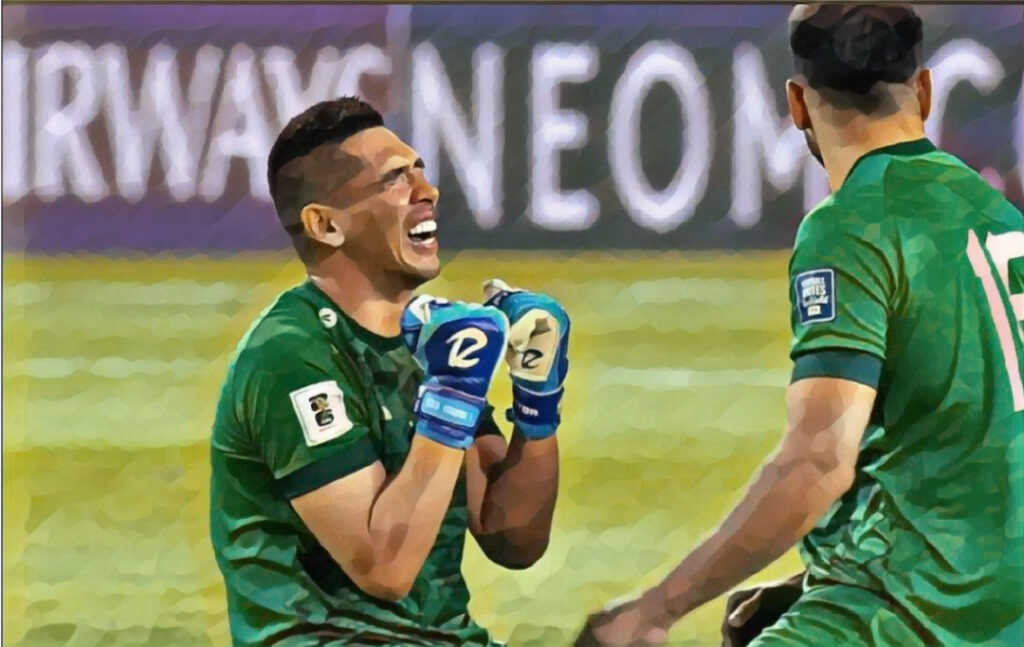
When Uzbekistan's goalkeeper Utkir Yusupov made those crucial saves against the UAE last night, securing his country's first-ever FIFA World Cup qualification, he was putting the finishing touches to a decade-long story about how nations build capacity, and what happens when they finally get it right. Uzbekistan's journey to the 2026 World Cup is not just a sports story. Go deeper, and you'll find something more interesting: a case study in institutional development. The Numbers Don't Lie Consider what Uzbekistan has pulled off in recent years. At Rio 2016, the country won 13 Olympic medals, placing 21st globally. In Tokyo, they obtained three gold medals despite disruptions caused by the pandemic. Uzbekistan achieved its best-ever performance at the Paris Olympics, securing 13 medals (8 gold, 2 silver, and 3 bronze), placing them 13th overall in the medal standings, first among post-Soviet states, and fourth among Asian nations overall. But the real story is the systematic nature of their success. Seven of those 13 Rio medals came in boxing alone, with three golds. At the 2023 World Boxing Championships in Tashkent, Uzbek fighters received five gold medals, the tournament's best overall performance. Boxers also dominated the Paris Olympics, bringing five gold medals to the national team’s account. Uzbekistan’s youth football teams have been even more dominant: AFC U-23 champions in 2018, U-20 Asian Cup winners in 2023, and U-17 continental champions twice since 2012. This is not random. Big tournaments reward institutional capacity, not just individual talent. Success on this scale requires functional sports federations, coherent youth development systems, and the kind of long-term planning that only works when bureaucracies can actually implement policies rather than just announce them. Small Economy, Outsized Results What makes Uzbekistan's breakthrough particularly striking is the economic context. Uzbekistan is not Germany or Japan leveraging massive GDP advantages. Uzbekistan's sports budget doubled to roughly $230 million by 2025, serious money for the country, but pocket change compared to what traditional powers spend. Yet they're outperforming nations with far deeper pockets. Their junior teams dominate youth football rankings. Their boxers routinely defeat athletes from wealthier countries. That efficiency ratio, results per dollar invested, suggests something important is happening at the governance level. The government has built over a hundred new sports facilities while doubling coaches' salaries. President Mirziyoyev's Presidential Olympics program scouts talent across all regions, attracting the best prospects to national training centers. Athletes now receive meaningful incentives: houses, cars, and scholarships. This is a systematic investment with clear metrics and accountability. The Quiet Politics of Athletic Success Sports remain one of the few arenas where state effectiveness can reveal itself without the outsized intrusion of politics. You can't fake your way to consistent Olympic medals or sustained success in FIFA youth competitions. These achievements require multiple sectors - education, healthcare, and urban planning - to function in coordination. Uzbekistan's sporting surge coincides with broader signs of improved state capacity under Mirziyoyev's administration. The infrastructure investments are real. The youth development programs are producing measurable results....

Uzbekistan Qualify for the FIFA World Cup

On June 5, history was made in Uzbekistan as the national football team qualified for the 2026 FIFA World Cup. A nervy 0-0 draw against the United Arab Emirates in Abu Dhabi was enough to secure them a place at next year’s tournament in North America. It marks the first time that the 34-year-old nation will appear in the final stages of the competition. They become only the third nation from the former USSR, after Russia and Ukraine, and the first from Central Asia, to do so. A Night of Nerves The final hurdle was not an easy one. The Uzbeks faced an intimidating atmosphere even before kick-off, with long airport screening processes meaning over 100 fans were detained for between 7-9 hours at Sharjah airport. Then there was the weather, even at 8pm, the Al Nahyan Stadium in Abu Dhabi sweltered in 31-degree heat. Nevertheless, the team was helped by an Uzbek away support that did not cease all match. The away section was full well before kick-off, and the chants of “Oz-Bek-Is-Ton!”, accompanied by the pounding of drums, could be heard around the stadium. The Uzbeks, with just one loss in their nine-match qualifying campaign, have built their play around a solid defense. In six out of their nine qualifying matches, they did not concede a goal. The team’s star player, Manchester City’s Abdukodir Khusanov, has been the lynchpin of that formidable rearguard, but this is not a side of individuals. The whole team worked tenaciously for each other, and even when their protection was breached, the impressive Uktir Yusupov was on hand to make a few smart saves. Towards the end, the Uzbek fans and coaching staff were screaming at the referee to blow the final whistle after he added ten minutes of additional time. But when time was finally up, well-earned and long-awaited joy was plain to see on every face. Several players broke out sobbing. Celebrations The elation was shared not only by the players. The Uzbek media present in the stadium were seen jumping around the press box in delirium. Back home in Uzbekistan, where half the country had stayed up to watch the match, there was similar joy. “The feeling is indescribable. We’ve been waiting for this day for thirty-four years!” said Diyor Mirpolatov, a 19-year-old student from Tashkent told The Times of Central Asia. Xojiakbar Xamdamov, a graphic designer from Andijan, also could not hide his relief at finally making the tournament. “The failure had even become part of Uzbek pop culture,” he said. “It gets mentioned by standup comedians, in movies, on talk shows… now I think everything will change.” Mirpolotov says that he plans to go to the United States for the tournament: “I’m also going to apply as a volunteer for the World Cup, so I can get more access to matches.” His dream is to see his country play against Portugal. “It would be amazing for Cristiano Ronaldo to play against Uzbekistan,” he said. Xamadov is more circumspect. “Uzbekistan is one of those countries from...

Bublik Loses at Roland Garros After Run to Quarterfinals

Alexander Bublik’s impressive run at the French Open is over. The Russia-born tennis player from Kazakhstan was routed by top-ranked Jannick Sinner of Italy in the quarterfinals at Roland Garros on Wednesday. Sinner easily defeated Bublik 6-1, 7-5, 6-0, ending the match with a serve down the middle and then a crosscourt forehand winner. Still, Bublik smiled as he walked up to the net to shake hands and exchanged a few warm words with Sinner. Bublik’s run to the quarterfinals was his best performance in a major tournament despite his past declarations that he detested playing on clay.