


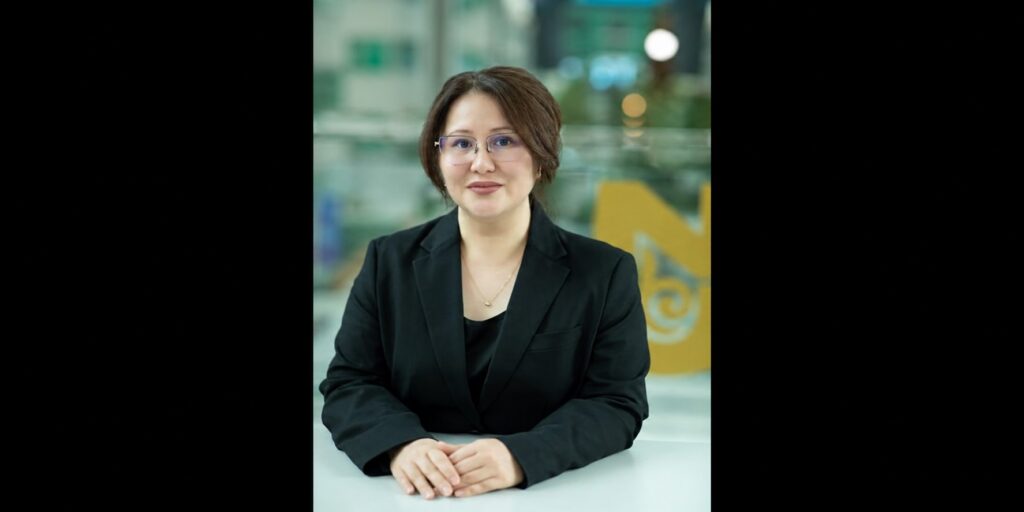
From Rural Classrooms to International Recognition: Advancing Teacher Education Research in Kazakhstan
Assel Sharimova’s academic path began in a rural school in Kazakhstan’s Akmola Region and later took her to the University of Nottingham and the University of Cambridge through the Bolashak International Scholarship program. She is now a postdoctoral scholar at Nazarbayev University’s Graduate School of Education. Before completing her PhD in Education at Cambridge in 2021, Sharimova worked at the Center of Excellence within the Nazarbayev Intellectual Schools system, where she contributed to teacher professional development programs and international collaboration. Her research examines teacher education in Central Asia, with particular attention to informal learning, virtual professional communities, and the idea of professional capital. That work earned her the 2026 Michael Fullan Emerging Scholar in Professional Capital and Community Award. In an interview with The Times of Central Asia, Sharimova discussed how teachers learn from one another, why professional communities matter, and what early-career STEM teachers in Kazakhstan experience during their first years in the classroom. Sharimova said her interest in teacher learning developed during her work at the Center of Excellence, where she was involved in a nationwide teacher professional development program. “Since obtaining my master’s degree, I have always been interested in how educators learn from one another and how professional communities can support meaningful and lasting improvements in education,” she said. Part of that work focused on sustaining professional learning beyond formal courses. Those questions later became central to her doctoral research at Cambridge, where she studied how teachers in Kazakhstan build professional relationships through virtual communities. During her PhD, Sharimova explored how teachers use peer exchange as a form of informal learning. She said the research contributes to international discussions about collaboration and professional networks in teacher development, especially as education becomes more digital. At Nazarbayev University, Sharimova has continued to work on teacher education and research capacity. From 2021 to 2024, she was involved in the Political Economy of Education Research Network, a multi-country project linking Nazarbayev University with the University of Cape Town, the University of Sussex, and Ulster University. Her role included supporting the Central Asia hub of the network, organizing academic events in Kazakhstan and Uzbekistan, contributing to research outputs, and mentoring selected researchers. Sharimova has also taught in the MSc in Educational Leadership program at Nazarbayev University. In 2024, she helped develop and teach courses on qualitative research for faculty members from several universities in Kazakhstan. “These courses created valuable spaces for knowledge exchange,” she said. Her current research focuses on early-career teachers, especially novice STEM teachers in Kazakhstan. The project examines how job demands and workplace resources affect their job satisfaction and early professional experiences. Sharimova is leading the study as principal investigator under Nazarbayev University’s Faculty Development Competitive Research Grants Program. As previously reported by The Times of Central Asia, Sharimova’s award was announced alongside student inventor Dana Kadyrbek’s success at the Cleantech Days Forum 2026.
