
• KGS/USD = 0.01144 0%
  • KZT/USD = 0.00205 0%
  • TJS/USD = 0.10760 0.28%
  • UZS/USD = 0.00008 0%
  • TMT/USD = 0.28612 0.42%
  • KGS/USD = 0.01144 0%
  • KZT/USD = 0.00205 0%
  • TJS/USD = 0.10760 0.28%
  • UZS/USD = 0.00008 0%
  • TMT/USD = 0.28612 0.42%
  • KGS/USD = 0.01144 0%
  • KZT/USD = 0.00205 0%
  • TJS/USD = 0.10760 0.28%
  • UZS/USD = 0.00008 0%
  • TMT/USD = 0.28612 0.42%
  • KGS/USD = 0.01144 0%
  • KZT/USD = 0.00205 0%
  • TJS/USD = 0.10760 0.28%
  • UZS/USD = 0.00008 0%
  • TMT/USD = 0.28612 0.42%
  • KGS/USD = 0.01144 0%
  • KZT/USD = 0.00205 0%
  • TJS/USD = 0.10760 0.28%
  • UZS/USD = 0.00008 0%
  • TMT/USD = 0.28612 0.42%
  • KGS/USD = 0.01144 0%
  • KZT/USD = 0.00205 0%
  • TJS/USD = 0.10760 0.28%
  • UZS/USD = 0.00008 0%
  • TMT/USD = 0.28612 0.42%
  • KGS/USD = 0.01144 0%
  • KZT/USD = 0.00205 0%
  • TJS/USD = 0.10760 0.28%
  • UZS/USD = 0.00008 0%
  • TMT/USD = 0.28612 0.42%
  • KGS/USD = 0.01144 0%
  • KZT/USD = 0.00205 0%
  • TJS/USD = 0.10760 0.28%
  • UZS/USD = 0.00008 0%
  • TMT/USD = 0.28612 0.42%

Viewing results 1 - 6 of 4

Kazakhstan’s Haunted Steppe: Myths, Cold War Ruins, and Unexplained Phenomena

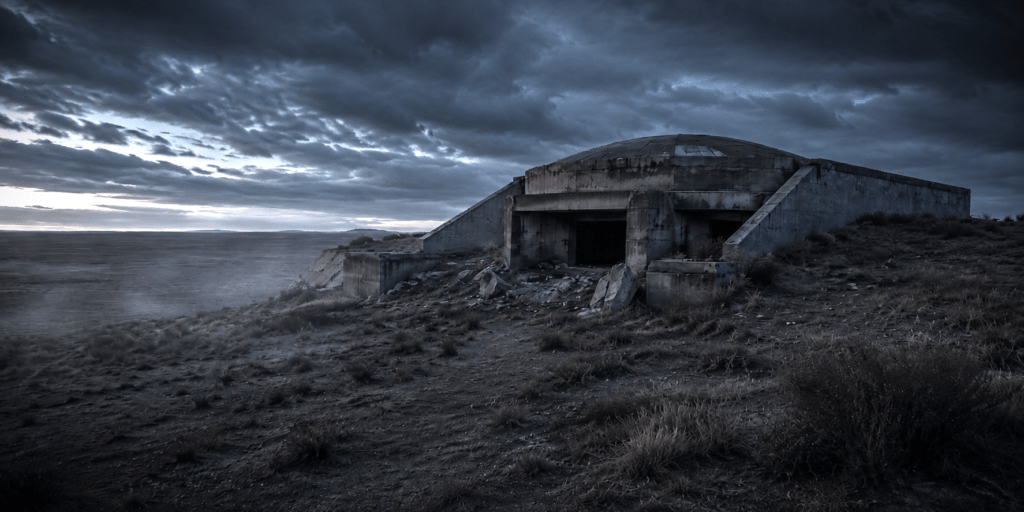
Kazakhstan’s vast steppes, deserts, mountains, and abandoned Soviet sites have produced a mythology of their own. Some stories are folklore. Others grew from real geography, ecological disaster, nuclear testing, secretive institutions, and the long shadow of the Cold War. That mix helps explain why tales of lost islands, strange stones, atomic ghosts, and unidentified flying objects still circulate across the country. The most interesting stories are not necessarily the ones that prove anything paranormal. They are the ones that show how history and landscape can turn into legend. You Will Go But Never Return One of Kazakhstan’s best-known mysterious places is Barsakelmes, whose name is usually translated from Kazakh as “You Will Go But Never Return.” The former island, once located in the Aral Sea, was less than 20 kilometers long, but it acquired an outsized reputation during the Soviet period. [caption id="attachment_49303" align="aligncenter" width="2560"] Barsakelmes[/caption] Today, Barsakelmes is no longer technically an island. The Aral Sea has largely dried up after one of the world’s major ecological disasters, and the surrounding landscape has changed almost beyond recognition. The island’s name did much of the work. So did Soviet-era popular culture. Russian science-fiction writer Sergei Lukyanenko, who was born in Kazakhstan, helped deepen its mystique through a story published in the Soviet magazine Tekhnika Molodezhi. In that fictional version, Barsakelmes became a deadly place linked to secret laboratories, biological experiments, and mutant soldiers. The confirmed history is less lurid, but still striking. Local accounts and researchers have linked the name to earlier tragedies, including stories of herders who died while trying to cross the frozen Aral Sea. Over time, those disappearances became part of the island’s reputation as a place from which people did not return. The mystery deepened in the 2000s, when archaeologists found burial grounds and remains of ancient settlements on the dried seabed near Barsakelmes. The finds, dated to the 11th-14th centuries, included religious structures and evidence of trade links that may have extended toward China. Some homes reportedly contained jars still filled with grain, suggesting that residents left suddenly. Whether they fled a flood, conflict, or another disaster is less certain. But it is easy to see how the physical evidence of abrupt abandonment fed older stories about a cursed landscape. Even the island’s natural features became part of the legend. Fishermen once avoided the area after seeing what they thought were huge bones along the shore. They were, in fact, large gypsum formations glinting in the sun. Today, Barsakelmes is also a protected area and a refuge for rare wildlife, showing how a place associated with loss can also become a site of recovery. The Stone Spheres of Mangystau Another of Kazakhstan’s strange landscapes lies on the Mangystau Peninsula in the west of the country, about 150 kilometers from Aktau. There, in a valley that resembles a Martian plain, hundreds of large stone spheres are scattered across the ground. Some are several meters in diameter. Visitors have compared them to giant balls, prehistoric eggs, or...


Grounding the Stars: Andrew McConnell’s Lens on Space and the Steppe

Award-winning photographer and filmmaker Andrew McConnell has dedicated his career to illuminating the world’s overlooked regions and underreported stories. He has a distinctive ability to examine major global issues and events from fresh, often unexpected perspectives. Ordinary people in extraordinary circumstances are the focus of McConnell’s lens. From conflict zones in the Democratic Republic of the Congo to the hidden lives of the Sahrawi people in Western Sahara, his work frequently highlights human endurance in challenging environments. His new book, Some Worlds Have Two Suns, takes a different direction. It explores the vast, remote Kazakh Steppe, where the sparse local population coexists with the high-tech world of space travel. The project began in 2014 after he filmed his documentary Gaza. While decompressing at home in Ireland, he watched a BBC documentary about a Soyuz spacecraft landing in the Kazakh Steppe. The stark contrast between destruction and human achievement struck him. “I turned to my parents and said, ‘I’m gonna go and see that.’” That moment sparked an eight-year journey documenting the Russian ground crews recovering astronauts and the communities living beneath these celestial homecomings. TCA: You visited the Kazakh Steppe multiple times to document the Soyuz landings. How many trips did you make and what were the challenges of reaching such a remote location? Andrew: I probably made a dozen. I would join the ground crew in Karaganda, which is not far from Astana, and from there they head out to the Steppe, and depending on whether it's winter or summer they have different vehicles for either one. In summer, the Steppe is fine to drive on, so they have four by fours and we head out and set up camp the day before the Soyuz arrives. They know the exact time the Soyuz will land, right down to the second, and it always goes to the same location, which is a group of tombs. You can see those in the book, the two horsemen beside these tombs. These are old nomadic burial tombs, maybe 300 years old, so that, initially, was very interesting to me… you know, what are these? The Steppe is this unending boundless void of nothingness, just flat grassland. At first, as a photographer, it was quite underwhelming because visually, how do you make that interesting? But here were these tombs in the middle of nowhere and it was instantly fascinating. That was always the base camp. I don’t know if that’s where Rocosmos aimed Soyuz, but that’s where it came into the atmosphere every time I saw it. It would enter the atmosphere above these tombs. The parachute deploys and then it depends on the wind because they can drift for 20 kilometers. A couple of times it was a windless day, and the Soyuz dropped within sight of these tombs. I had a fantasy that it would drop in the middle of it. [caption id="attachment_28250" align="aligncenter" width="2000"] Nomadic burial tombs, Soyuz landing zone, Kazakhstan, 2018; image: Andrew McConnell[/caption] TCA: What shifted your focus from the...