
• KGS/USD = 0.01144 0%
  • KZT/USD = 0.00212 0%
  • TJS/USD = 0.10767 0%
  • UZS/USD = 0.00008 0%
  • TMT/USD = 0.28571 0%
  • KGS/USD = 0.01144 0%
  • KZT/USD = 0.00212 0%
  • TJS/USD = 0.10767 0%
  • UZS/USD = 0.00008 0%
  • TMT/USD = 0.28571 0%
  • KGS/USD = 0.01144 0%
  • KZT/USD = 0.00212 0%
  • TJS/USD = 0.10767 0%
  • UZS/USD = 0.00008 0%
  • TMT/USD = 0.28571 0%
  • KGS/USD = 0.01144 0%
  • KZT/USD = 0.00212 0%
  • TJS/USD = 0.10767 0%
  • UZS/USD = 0.00008 0%
  • TMT/USD = 0.28571 0%
  • KGS/USD = 0.01144 0%
  • KZT/USD = 0.00212 0%
  • TJS/USD = 0.10767 0%
  • UZS/USD = 0.00008 0%
  • TMT/USD = 0.28571 0%
  • KGS/USD = 0.01144 0%
  • KZT/USD = 0.00212 0%
  • TJS/USD = 0.10767 0%
  • UZS/USD = 0.00008 0%
  • TMT/USD = 0.28571 0%
  • KGS/USD = 0.01144 0%
  • KZT/USD = 0.00212 0%
  • TJS/USD = 0.10767 0%
  • UZS/USD = 0.00008 0%
  • TMT/USD = 0.28571 0%
  • KGS/USD = 0.01144 0%
  • KZT/USD = 0.00212 0%
  • TJS/USD = 0.10767 0%
  • UZS/USD = 0.00008 0%
  • TMT/USD = 0.28571 0%

Viewing results 1 - 6 of 5

Kazakhstan’s Haunted Steppe: Myths, Cold War Ruins, and Unexplained Phenomena

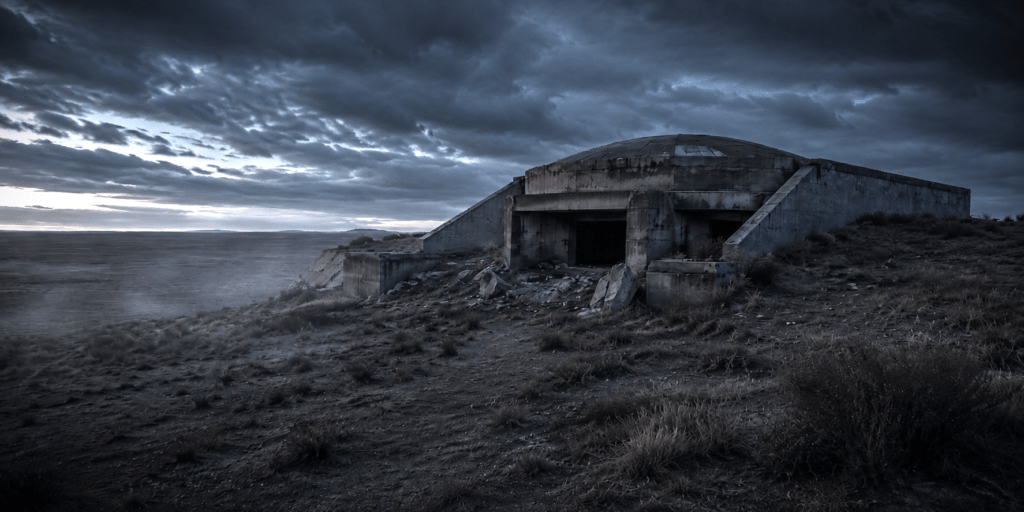
Kazakhstan’s vast steppes, deserts, mountains, and abandoned Soviet sites have produced a mythology of their own. Some stories are folklore. Others grew from real geography, ecological disaster, nuclear testing, secretive institutions, and the long shadow of the Cold War. That mix helps explain why tales of lost islands, strange stones, atomic ghosts, and unidentified flying objects still circulate across the country. The most interesting stories are not necessarily the ones that prove anything paranormal. They are the ones that show how history and landscape can turn into legend. You Will Go But Never Return One of Kazakhstan’s best-known mysterious places is Barsakelmes, whose name is usually translated from Kazakh as “You Will Go But Never Return.” The former island, once located in the Aral Sea, was less than 20 kilometers long, but it acquired an outsized reputation during the Soviet period. [caption id="attachment_49303" align="aligncenter" width="2560"] Barsakelmes[/caption] Today, Barsakelmes is no longer technically an island. The Aral Sea has largely dried up after one of the world’s major ecological disasters, and the surrounding landscape has changed almost beyond recognition. The island’s name did much of the work. So did Soviet-era popular culture. Russian science-fiction writer Sergei Lukyanenko, who was born in Kazakhstan, helped deepen its mystique through a story published in the Soviet magazine Tekhnika Molodezhi. In that fictional version, Barsakelmes became a deadly place linked to secret laboratories, biological experiments, and mutant soldiers. The confirmed history is less lurid, but still striking. Local accounts and researchers have linked the name to earlier tragedies, including stories of herders who died while trying to cross the frozen Aral Sea. Over time, those disappearances became part of the island’s reputation as a place from which people did not return. The mystery deepened in the 2000s, when archaeologists found burial grounds and remains of ancient settlements on the dried seabed near Barsakelmes. The finds, dated to the 11th-14th centuries, included religious structures and evidence of trade links that may have extended toward China. Some homes reportedly contained jars still filled with grain, suggesting that residents left suddenly. Whether they fled a flood, conflict, or another disaster is less certain. But it is easy to see how the physical evidence of abrupt abandonment fed older stories about a cursed landscape. Even the island’s natural features became part of the legend. Fishermen once avoided the area after seeing what they thought were huge bones along the shore. They were, in fact, large gypsum formations glinting in the sun. Today, Barsakelmes is also a protected area and a refuge for rare wildlife, showing how a place associated with loss can also become a site of recovery. The Stone Spheres of Mangystau Another of Kazakhstan’s strange landscapes lies on the Mangystau Peninsula in the west of the country, about 150 kilometers from Aktau. There, in a valley that resembles a Martian plain, hundreds of large stone spheres are scattered across the ground. Some are several meters in diameter. Visitors have compared them to giant balls, prehistoric eggs, or...

“Ergenekon Is Not Just a Myth, It’s a Cultural Bridge”: An Interview with Artist and Designer Emre Erdur

Today, comics and visual storytelling are increasingly going beyond entertainment. They are becoming part of a cultural dialogue, helping audiences reconnect with their roots. One such project is the graphic novel series The Legend of Ergenekon (Ergenekon Destanı), created by Turkish artist and designer Emre Erdur. The Legend of Ergenekon is a Turkic origin myth that tells of a people driven into a remote valley after defeat in battle, where they lived in isolation for centuries until a blacksmith forged a path through the surrounding mountains. Guided by a gray wolf, they emerged to reclaim their strength and expand across the steppe. In Central Asia, the story symbolizes resilience, unity, and renewal, often invoked as a metaphor for nations overcoming hardship to reassert independence and identity on the Eurasian crossroads. It resonates strongly in Kazakhstan, Kyrgyzstan, Turkmenistan, and Uzbekistan, where Turkic identity, language, and heritage are foundational. Born in Istanbul and trained as an architect at Mimar Sinan Fine Arts University, Emre Erdur worked for many years in the entertainment and design industries. Since 2019, however, he has dedicated himself to developing a multi-volume graphic novel series inspired by ancient Turkic history and mythology. His work was first presented at a festival in Taldykorgan. As part of his research, he visited the National Museum of Kazakhstan in Astana and collaborated with historian Assoc. Prof. Dr. Talgat Moldabay to ensure historical accuracy. [caption id="attachment_35647" align="aligncenter" width="1824"] Image: Emre Erdur[/caption] For Central Asia, Ergenekon Destanı is more than a creative project; it represents an effort to connect a shared heritage through the language of comics and popular culture. In an interview with The Times of Central Asia, Emre Erdur spoke about his inspiration, research, the role Kazakhstan plays in his work, and his plans for expanding this unique visual universe. TCA: You were born and educated in Turkey, yet you chose to dedicate yourself to wider ancient legends and Turkic history. When did you first feel drawn to this theme? Erdur: Yes, I was born in the westernmost corner of Turkic geography, but every individual in this world has cultural roots that reach out and nourish them. Naturally, as an artist, the desire to draw from and explore my own roots is an inner force. Although I was born and raised in Istanbul, you can find traces of our roots as far as Yakutia in Russia, Buryatia, Mongolia, the Altai, further south in East Turkestan, in the Gobi Desert, and even in Korea. None of these places feels separate from us; you can sense the connection. Of course, as a human being, every part of this world is valuable and fascinating; each region holds its own beauty and heritage. But there is also something called “national identity,” which is different from our individual identity. Our soul cannot be confined to this world; it knows no geography or race, it belongs beyond time and space. Yet during our lifetime on Earth, we do carry both national and individual identities, and defining them correctly...

Gods and Demons of Central Asia

In today's dynamic world, Central Asia is emerging as a trendsetter in fashion, culture, lifestyle, and worldview. The ancient Tengrian faith, deeply rooted in Central Asian mythology and superstitions, may soon resurface creatively among the region's people, though it is unlikely to be reinstated as an official religion. While some in Kazakhstan attempt to distance themselves from Abrahamic religions, Tengrism remains a vital part of the cultural heritage, featuring gods, demigods, and dark entities that shaped the beliefs of our ancestors during the pre-Islamic era.   [caption id="attachment_22010" align="aligncenter" width="167"] photo: pininterest: Tengri's domain[/caption]   Divine entities According to Tatar scientist and writer Gali Rahim, shamanism attributes significant roles to various spirits and deities. Among the Turkic peoples, the supreme deity is Tengri, the eternal blue sky. Rahim's lectures on “The Folklore of the Kazan Tatars,” presented at the East Pedagogical Institute in the 1920s, describe Tengri as the primary god in Turkic cosmology, with the earth and humanity emerging from the union of the sky and the earth. Umai, the goddess associated with motherhood and children, stands next in importance. Ancient Turkic inscriptions and symbolic artifacts, such as the stone carving discovered in 2012 in the Zhambyl district of Almaty, Kazakhstan, depict her as a protective figure for children. Teleut pagans represented her as a silver-haired, young woman who descended from heaven on a rainbow to guard children with a golden bow, and the Kyrgyz appealed for her help during childbirth and when children fell ill. Motifs dedicated to Umai by Shorian shamans, were positioned around cradles. Boys' cradles were pierced with an arrow,  girls' with a spindle, and wooden arrows were placed within the those of both. Another prominent character common to Turkic, Mongolian, and Altaic mythology is Erlik or Yerlik Khan. Ruler of the underworld, the horned deity presides over the realm of the dead from a palace of black mud or blue-black iron on the bank of the Toibodym, a river of human tears. A single horsehair bridge is guarded by monsters known as dyutpa whilst the palace is protected by Erlik’s sentries or elchi, brandishing pike poles known as karmak. His breath, carried by a tan, a light warm breeze, was believed to paralyze anyone who inhaled it, which is why the Khakas term for paralysis, tan sapkhany, literally means “wind blow.” Kudai (Khudai), also known as Ulgen, is another central deity who, alongside his brother Erlik, created the land, its vegetation, mountains, and seas. Kudai created man from clay, and Erlik gave him his soul. Kudai created a dog but it was Erlik who clothed it in hair. Whilst Kudai created the first animals, the horse, the sheep, and the cow, Erlik created the camel, the bear, the badger, and the mole. Kudai brought down lightning from the sky and commanded thunder. In a dispute over who was the mightiest creator, Kudai won. The brothers parted ways, and after producing nine sons, from whom the tribes of Kpchak, Mayman, Todosh, Tonjaan, Komdosh, Tyus, Togus,...