
• KGS/USD = 0.01144 0%
  • KZT/USD = 0.00202 0%
  • TJS/USD = 0.10431 0%
  • UZS/USD = 0.00008 0%
  • TMT/USD = 0.28490 0%
  • KGS/USD = 0.01144 0%
  • KZT/USD = 0.00202 0%
  • TJS/USD = 0.10431 0%
  • UZS/USD = 0.00008 0%
  • TMT/USD = 0.28490 0%
  • KGS/USD = 0.01144 0%
  • KZT/USD = 0.00202 0%
  • TJS/USD = 0.10431 0%
  • UZS/USD = 0.00008 0%
  • TMT/USD = 0.28490 0%
  • KGS/USD = 0.01144 0%
  • KZT/USD = 0.00202 0%
  • TJS/USD = 0.10431 0%
  • UZS/USD = 0.00008 0%
  • TMT/USD = 0.28490 0%
  • KGS/USD = 0.01144 0%
  • KZT/USD = 0.00202 0%
  • TJS/USD = 0.10431 0%
  • UZS/USD = 0.00008 0%
  • TMT/USD = 0.28490 0%
  • KGS/USD = 0.01144 0%
  • KZT/USD = 0.00202 0%
  • TJS/USD = 0.10431 0%
  • UZS/USD = 0.00008 0%
  • TMT/USD = 0.28490 0%
  • KGS/USD = 0.01144 0%
  • KZT/USD = 0.00202 0%
  • TJS/USD = 0.10431 0%
  • UZS/USD = 0.00008 0%
  • TMT/USD = 0.28490 0%
  • KGS/USD = 0.01144 0%
  • KZT/USD = 0.00202 0%
  • TJS/USD = 0.10431 0%
  • UZS/USD = 0.00008 0%
  • TMT/USD = 0.28490 0%

Viewing results 1 - 6 of 5

Almaty Scientists Develop Innovative Method to Extract Valuable Materials from Agricultural Waste

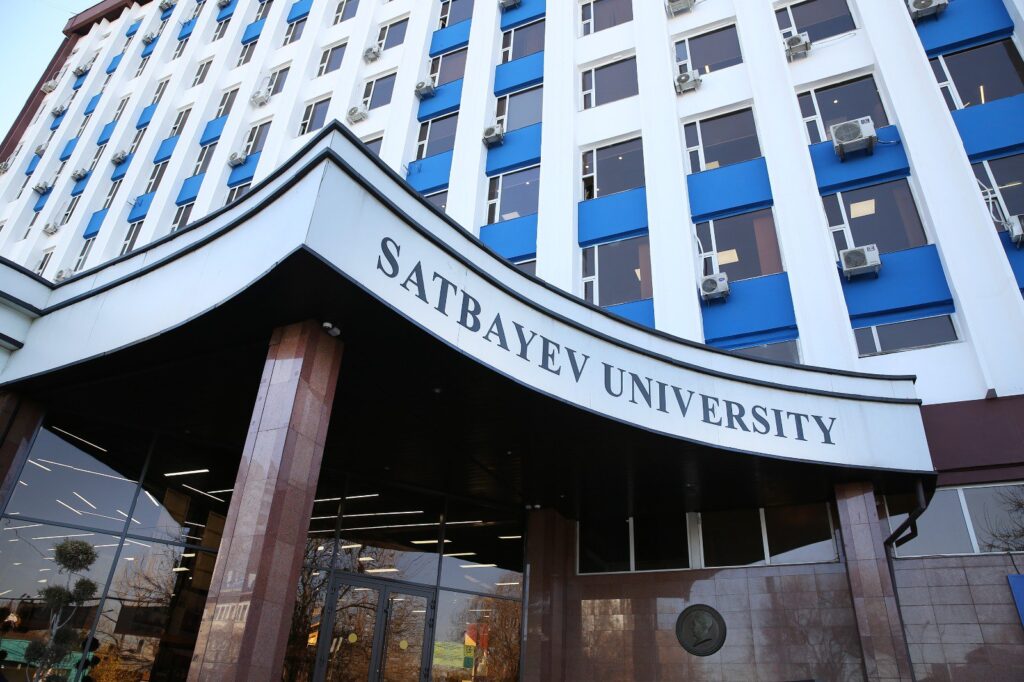
Researchers at Satbayev University in Almaty have unveiled an innovative technology that extracts high-value materials from sugar beet pulp, the primary byproduct of sugar production, accounting for up to 80% of all biomass. Under the guidance of Associate Professor Sana Kabdrakhmanova, postdoctoral researcher Faisal Kholiya and PhD student Meruert Imanbek employed advanced hydrothermal synthesis techniques to derive high-quality pectin suitable for use in the food and pharmaceutical industries, cellulose with a yield of approximately 35%, and photoluminescent carbon quantum dots ranging from 8 to 14 nanometres, all from sugar beet waste. The extracted materials have diverse applications, including product shelf-life extension technologies, drug delivery systems, modern diagnostic medicine, and various nanotechnology solutions. “Our project is a striking example of the transformation of agricultural waste into high-quality, premium materials,” said Kabdrakhmanova, who leads the project. The research was conducted at the International R&D Center for Advanced Functional Materials and Composites, part of the Department of Chemical Processes and Industrial Ecology at the Omirkhan Baikonurov Institute of Mining and Metallurgy at Satbayev University. The findings underscore the potential of agricultural waste processing as both a sustainable and economically viable approach. Particular attention has been given to the photoluminescent carbon quantum dots produced through the project. These nanoscale particles are used in medical diagnostics, biological sensors for cellular research, LED components in electronics, and nanodevices in photonics. As previously reported by The Times of Central Asia, Kazakh scientists are actively pursuing other innovative recycling technologies. One such project, led by the Kazakh Road Research Institute, involves developing methods to restore worn asphalt for reuse in road repair and construction.

Turkish Safi Holding Eyes Sugar Factory Investment in Kazakhstan

Turkish industrial conglomerate Safi Holding has expressed interest in developing a high-tech sugar processing facility in Kazakhstan, according to the country's Ministry of Agriculture. The announcement followed a meeting between Agriculture Minister Aidarbek Saparov and Safi Holding CEO Safi Atakan. The two sides discussed the proposed plant’s specifications, which include the capacity to process up to 1 million tons of sugar beets annually and produce approximately 140,000 tons of sugar. The estimated investment ranges from $150 million to $200 million. Potential sites for the factory are currently under consideration. According to the ministry, the key criteria for site selection include the availability of arable land for beet cultivation and proximity to necessary infrastructure. Safi Atakan praised Kazakhstan’s agro-industrial potential, particularly in sugar production. "Kazakhstan presents favorable conditions for expanding sugar processing operations," he noted. A similar initiative is underway by UAE-based Al Khaleej Sugar, one of the world’s largest sugar producers, which is planning a plant in southern Kazakhstan. Industry Gaps and Import Dependence Kazakhstan’s sugar sector is currently under strain due to limited processing capacity. There are four sugar factories in operation: AksuKant (Taldykorgan district), Koksu Sugar Factory (Almaty region), and the Merken and Taraz factories in the Zhambyl region. Of these, three process locally grown sugar beets, while the facility in Taraz handles imported cane sugar. Despite a record harvest of 1.2 million tons of sugar beets in 2024, only about 700,000 tons were processed, exposing significant inefficiencies in the processing chain. In 2023, Kazakhstan produced 243,000 tons of sugar, less than half of its domestic demand. The remainder was imported, primarily from Russia. However, reliance on imports has proven volatile. In the summer of 2022, Russia’s temporary export ban led to a spike in domestic sugar prices. In response, the Kazakh government imposed seasonal export restrictions, which have been extended through 2025, to stabilize local markets.

Kazakhstan’s Record Sugar Beet Harvest Exposes Processing Industry Failures

Kazakhstan’s sugar industry saw a record sugar beet harvest in 2024, but the processing sector was unprepared to handle the influx. The gap between agricultural production and industrial capacity has once again underscored systemic weaknesses in the sector. A detailed analysis by Energyprom.kz highlights these ongoing challenges. Record Harvest, Limited Processing According to the National Statistics Bureau, sugar beet cultivation reached an all-time high in 2024, with 25,000 hectares sown, a 34% increase from the previous year. Enhanced government support spurred the expansion: farmers received 25 tenge per kilogram of beets delivered for processing (up from 15 tenge), and transport subsidies were raised from 25 to 45 tenge per kilometer. These incentives encouraged investment in farm equipment and modern technologies, lifting average yields to 507 centners per hectare. This translated into a gross harvest of nearly 1.3 million tons of beets, 2.5 times more than in 2023. However, only slightly more than half of the crop was processed. Senators in Kazakhstan’s Parliament reported that just 58.3%, approximately 700,000 tons, was processed. The remainder was either left to rot or exported, primarily to Kyrgyzstan. The Ministry of Agriculture offered a slightly higher figure, reporting that 989,000 tons had been processed. Even so, this left hundreds of thousands of tons unutilized. Responding to parliamentary concerns, Prime Minister Olzhas Bektenov acknowledged the issue, citing “high credit burdens” on processing enterprises and “dumping” by neighboring countries as key obstacles. Aging Infrastructure and Unrealized Potential Kazakhstan currently has four operational sugar factories, but only three are equipped to process sugar beets. These facilities are in a state of significant disrepair: the Koksu plant is 93 years old, Merken is 91, and Taraz is 88. Although hopes had been pinned on modernizing the Taraz facility to process up to 600,000 tons annually, the planned upgrades did not materialize. As a result, sugar production dropped despite the record harvest. In 2024, Kazakhstan produced 164,400 tons of sugar, a 25% decrease from the previous year. Meanwhile, exports surged: 143,000 tons of sugar were exported, a 7.5-fold increase. Nonetheless, imports continue to dominate the domestic market, covering 74.1% of consumption. Crop Reductions and Financial Risks Facing processing bottlenecks, the Ministry of Agriculture has announced plans to scale back sugar beet cultivation. In 2025, the planted area will be reduced to 18,400 hectares, a 25% decrease. The Zhambyl region will see its sugar beet area halved, while Zhetysu will experience a 20% cut. The decision has drawn strong criticism from farmers and lawmakers. Many producers had invested heavily based on previous state projections, purchasing machinery and training personnel. “What will happen to farmers who took out loans, bought equipment, and are now faced with a revision of the state strategy? This could lead to mass bankruptcies and negate years of support for the industry,” senators warned in an appeal to the prime minister. Strategic Setback and Future Uncertainty Kazakhstan’s sugar industry development plan for 2022-2026 envisioned expanding cultivated areas to 38,000 hectares, boosting production to 1.8 million tons of beets...
