• KGS/USD = 0.01143 0%
  • KZT/USD = 0.00208 0%
  • TJS/USD = 0.10438 -0.1%
  • UZS/USD = 0.00008 0%
  • TMT/USD = 0.28579 0%
  • KGS/USD = 0.01143 0%
  • KZT/USD = 0.00208 0%
  • TJS/USD = 0.10438 -0.1%
  • UZS/USD = 0.00008 0%
  • TMT/USD = 0.28579 0%
  • KGS/USD = 0.01143 0%
  • KZT/USD = 0.00208 0%
  • TJS/USD = 0.10438 -0.1%
  • UZS/USD = 0.00008 0%
  • TMT/USD = 0.28579 0%
  • KGS/USD = 0.01143 0%
  • KZT/USD = 0.00208 0%
  • TJS/USD = 0.10438 -0.1%
  • UZS/USD = 0.00008 0%
  • TMT/USD = 0.28579 0%
  • KGS/USD = 0.01143 0%
  • KZT/USD = 0.00208 0%
  • TJS/USD = 0.10438 -0.1%
  • UZS/USD = 0.00008 0%
  • TMT/USD = 0.28579 0%
  • KGS/USD = 0.01143 0%
  • KZT/USD = 0.00208 0%
  • TJS/USD = 0.10438 -0.1%
  • UZS/USD = 0.00008 0%
  • TMT/USD = 0.28579 0%
  • KGS/USD = 0.01143 0%
  • KZT/USD = 0.00208 0%
  • TJS/USD = 0.10438 -0.1%
  • UZS/USD = 0.00008 0%
  • TMT/USD = 0.28579 0%
  • KGS/USD = 0.01143 0%
  • KZT/USD = 0.00208 0%
  • TJS/USD = 0.10438 -0.1%
  • UZS/USD = 0.00008 0%
  • TMT/USD = 0.28579 0%

Viewing results 1 - 6 of 1027

ADB Forecasts Steady Economic Growth for Tajikistan Through 2026

The Asian Development Bank (ADB) projects that Tajikistan will sustain strong economic growth over the next two years, according to the bank’s Asian Development Outlook 2025 released in April. Robust Growth Ahead Tajikistan’s gross domestic product is forecast to grow by 7.4% in 2025 and 6.8% in 2026. This growth is expected to be fueled by significant investments in the energy and industrial sectors, solid domestic demand, and an increasingly dynamic private sector. While these figures mark a slight decline from the impressive 8.4% GDP growth recorded in 2024, one of the highest in the region, the ADB highlights the need for deeper structural reforms. In particular, digital transformation and the expansion of e-governance are deemed critical to ensuring long-term, sustainable development. Digital Transformation: Opportunities and Hurdles ADB’s Resident Representative in Tajikistan, Ko Sakamoto, emphasized the strategic importance of digitalization. “We welcome the government’s prioritization of digital transformation as a key driver of development. We stand ready to support efforts to overcome persistent barriers, including a lack of investment,” he said. Despite widespread mobile phone usage, Tajikistan ranks 139th globally in mobile internet speed. However, digital engagement is on the rise: in the first half of 2024, the number of registered digital wallets hit 10.4 million, and non-cash transactions rose 16.2% year-on-year. ADB experts recommend that Tajikistan focus on developing a robust digital infrastructure to broaden access to public services. The widespread integration of digital technologies in governance and business is seen as vital to industrial modernization and improving overall quality of life. Inflation, meanwhile, is projected at 5.0% in 2025 and 5.8% in 2026. Key inflationary pressures include rising consumer lending, salary increases for public sector employees, and higher utility tariffs. Continued Partnership and Support The Asian Development Bank, a major multilateral financial institution supporting sustainable and inclusive development across Asia and the Pacific, has been working with Tajikistan since 1998. Over that time, the country has received more than $2.7 billion in assistance, including $2.2 billion in grants. These funds have supported vital infrastructure projects in transportation and energy, as well as climate resilience and social development programs. Established in 1966, ADB has 69 member countries, 49 of which are from the region. The bank continues to be one of Tajikistan’s principal development partners, offering innovative financing tools and strategic cooperation to enhance economic sustainability and improve livelihoods.
Kyrgyzstan and Tajikistan Move Closer to Electricity Exports to South Asia

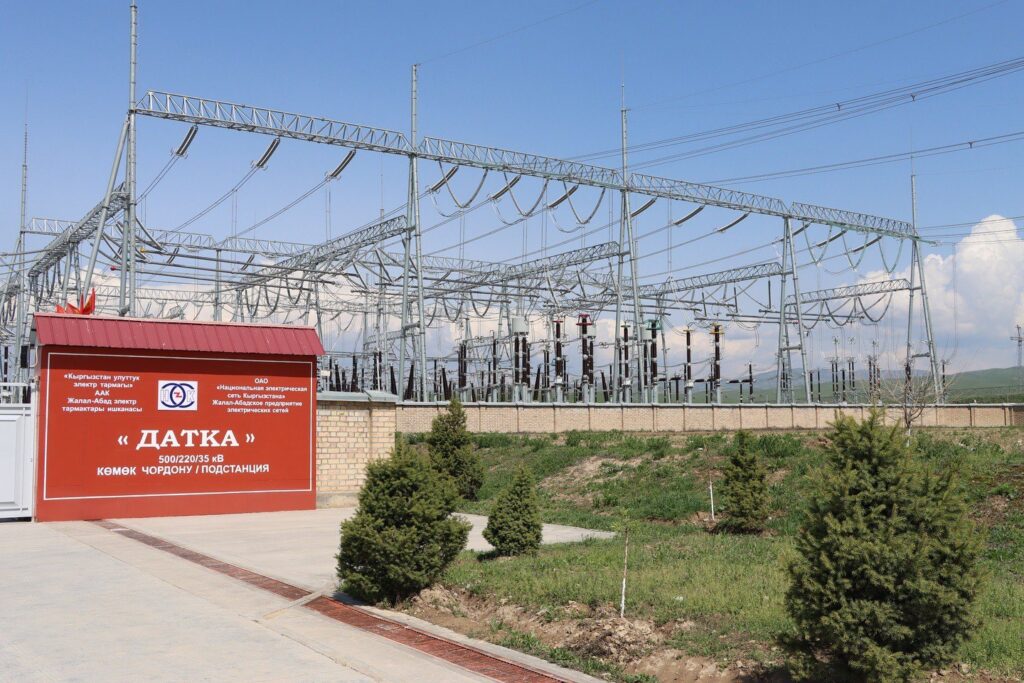
Kyrgyzstan and Tajikistan have officially launched the 500 kV Datka-Sughd overhead power transmission line, a key component of the CASA-1000 (Central Asia-South Asia) electricity transmission project. The initiative is designed to export surplus summer electricity from the two Central Asian countries to Afghanistan and Pakistan. The 485-kilometer line, which connects the Datka substation in Kyrgyzstan with the Sughd substation in Tajikistan, was inaugurated on March 31 during Kyrgyz President Sadyr Japarov’s visit to the Tajik city of Khujand. Tajik President Emomali Rahmon also attended the ceremony. The new line enables bidirectional power flows, significantly enhancing the resilience and stability of Central Asia’s power grid. According to Kyrgyzstan’s Ministry of Energy, both Kyrgyzstan and Tajikistan have completed their respective infrastructure components of the CASA-1000 project. Project Progress and Timeline In Pakistan, construction is expected to be completed by August 2025. In Afghanistan, where work had stalled, construction has now resumed. Over 95% of the necessary materials have already been delivered to the country. Full completion of the Afghan section and the start of commercial operations are expected in 2027. The CASA-1000 project, with a total cost exceeding $1.2 billion, is financed by the World Bank, the European Investment Bank, the European Bank for Reconstruction and Development, the Islamic Development Bank, and other international partners. The Kyrgyz and Tajik sections alone accounted for approximately $544 million, or 45.3% of the total project budget. Once fully operational, CASA-1000 will have the capacity to transmit up to 11 billion kilowatt-hours of electricity per year. Economic and Regional Impact Tajikistan and Kyrgyzstan are expected to jointly export up to 5 billion kilowatt-hours of green electricity annually to Pakistan, roughly 5% of Pakistan’s total electricity consumption. The projected revenue from these exports is over $250 million per year for the two countries. The successful implementation of CASA-1000 not only promises economic benefits for Central Asia but also marks a significant step in regional energy cooperation, renewable energy deployment, and cross-border infrastructure integration.

Tajikistan’s Green Deal: EBRD Launches Sustainability Pilot Projects

On April 1, the European Bank for Reconstruction and Development (EBRD) inaugurated two demonstration sites under the Tajikistan Green Economy Financing Facility (GEFF II) in the town of Bokhtar. The initiative promotes innovation in sustainable energy and agriculture, backed by funding from South Korea, Austria, and the Green Climate Fund. The total program budget is $50 million. Bringing Energy Efficiency to Life The first site, located at the MoDO Khumo branch in Bokhtar, features a hybrid solar photovoltaic system combining solar panels with energy storage. This technology ensures a stable power supply even during periods of low solar activity. Real-time data on electricity generation and consumption is displayed in the customer area, helping to raise public awareness of sustainable energy practices. The second site, at the Tanzila dekhkan farm in Vakhsh district, showcases how green technologies can boost crop yields and reduce environmental impact. The installation includes: Drip irrigation systems that save up to 70% of water; Solar panels for off-grid electricity; Biogas units using organic waste; Vertical farming in compact spaces. These solutions aim to enhance agricultural productivity and improve farmers' incomes. Strategic Development with the EBRD GEFF II also prioritizes gender equality, offering targeted support to women entrepreneurs seeking green financing for sustainable business ventures. The demonstration sites form part of the EBRD’s broader strategy to promote sustainable development across Tajikistan. Additional pilot locations are planned to showcase further environmentally friendly technologies. EBRD’s Broader Footprint in Tajikistan Established in 1991, the EBRD provides financial and technical support to nearly 40 countries for economic and structural reforms. In Tajikistan, the bank remains a key investor, having committed over €1 billion across 183 projects. Notable EBRD-supported initiatives include: Dushanbe Infrastructure Modernization - €28.45 million to improve roads and a bridge over the Varzob River; Dangara-Guliston Road Upgrade - €38 million for roadworks and infrastructure for electric vehicles; CLIMADAPT - $10 million to help farmers and businesses adopt climate-resilient technologies; Kayrakkum Hydroelectric Plant Modernization - $88 million to boost energy efficiency and support climate adaptation. These investments are helping Tajikistan build climate resilience, modernize infrastructure, and create sustainable pathways for regional development.

Tajikistan to Chronicle Soccer Legacy with New Museum and Landmark Book

A museum dedicated to the history of Tajik soccer will be inaugurated in a new stadium currently under construction in Dushanbe. The project was initiated by Rustami Emomali, Mayor of Dushanbe and President of the Tajikistan Football Federation​. A People's Archive of Soccer Heritage The Tajikistan Football Federation has called on fans, athletes, and sports veterans to contribute memorabilia related to the country's soccer history. Sought-after items include match jerseys, medals, trophies, certificates, books, and any other artifacts that reflect the evolution of soccer in Tajikistan. “The owners of valuable items and objects, as well as the authors of significant materials, will be recognized and encouraged,” the federation said in a public appeal. In parallel with the museum, the federation is preparing to publish The History of Tajik Soccer, the first comprehensive volume covering all major milestones in the sport’s national development. From the First Matches to the Soviet Leagues Soccer began to gain popularity in Tajikistan in the early 1920s. In 1936, the Tajikistan Football Federation was formally established, and a year later, the first championship of the Tajik SSR took place. Dinamo, a club from Stalinobod (now Dushanbe), emerged as the inaugural champion. In 1947, Dinamo debuted in the USSR championship, marking the beginning of Tajikistan’s participation in Soviet leagues. A defining moment came in 1989 when Dushanbe's Pamir club competed in the Supreme League of the Soviet Union, a peak achievement during the Soviet soccer era that remains a point of pride for the country. A New Era After Independence With the dissolution of the Soviet Union in 1991, Tajik soccer entered a new chapter. The Tajikistan Football Federation became a member of FIFA and the Asian Football Confederation in 1994, enabling the country to participate in global and regional competitions. Today, Tajikistan is investing in soccer infrastructure, focusing on youth training and international performance. The upcoming museum and book aim to celebrate the sport’s rich past while inspiring future generations of players and fans.

Tajik Authorities Urge Migrants in Russia to Legalize Status Ahead of Deadline

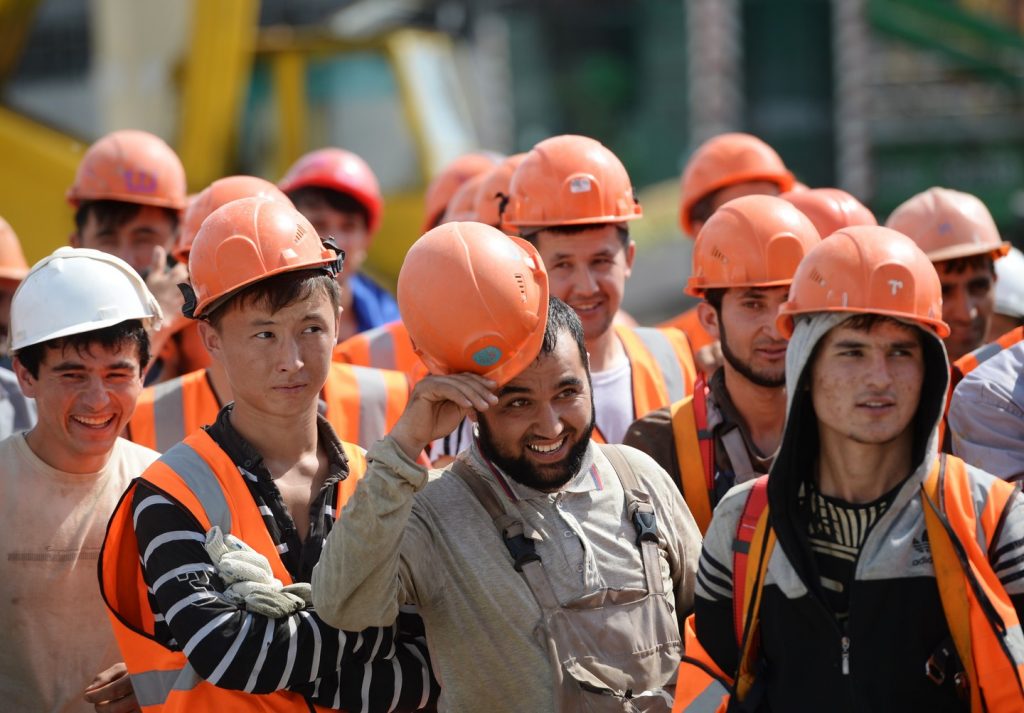
Tajik authorities are urging citizens working in Russia to legalize their status before the April 30 deadline, as new Russian immigration regulations come into force. The Ministry of Internal Affairs of Tajikistan has reminded labor migrants to update their documents to remain employed legally. “Foreign citizens in the Russian Federation who are not registered at their place of residence, do not possess a valid work patent, or have failed to make monthly payments, as well as those listed in the register of controlled persons, can legalize their documents without leaving Russia,” the ministry stated. Starting June 30, Russia will implement a digital profile system for migrants. Russian Prime Minister Mikhail Mishustin announced that the new system will replace the current paper-based work patent with a digital profile containing a unique identifier. Authorities say this transition is aimed at improving administrative efficiency and reducing fraud. “To ensure a smooth transition, all necessary preparations are being made,” Mishustin said. In addition to the digital transition, Russia began testing a new border control system in December 2024. Migrants entering via Moscow airports are now required to submit biometric data, enabling authorities to track entries and identify individuals banned from entering the country. In February 2025, Russian authorities activated a national register of controlled persons. The list includes over 640,000 foreign nationals residing in Russia without proper documentation. Those listed must legalize their stay by April 30 or face potential deportation. The new rules also affect migrant families. Since February, children of migrants must pass a Russian language proficiency test. If they fail, they are required to attend a three-month language course at their parents’ expense. Noncompliance may trigger investigations into the family’s living conditions and result in penalties.

EU Pledges Steady Support for Tajikistan Ahead of Historic Central Asia Summit

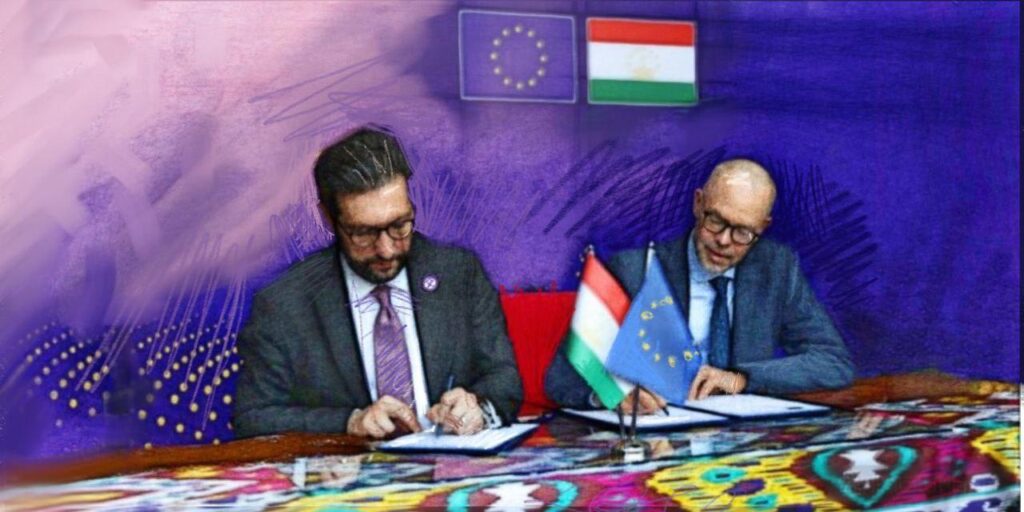
The European Union will maintain its current level of assistance to Tajikistan despite the recent suspension of U.S. funding through USAID, EU Ambassador to Tajikistan Raimundas Karoblis has confirmed. He emphasized that European and American aid programs operate independently and that EU support will remain unaffected. “Aid from the EU will continue and will not be reduced,” Karoblis stated. He added that the EU's assistance framework for Tajikistan is already set through 2027 and cannot be revised before then. Discussions about increased support may take place after that period.   EU and Central Asia: Toward a Historic Summit On March 27, Ashgabat will host the 20th meeting of foreign ministers from the European Union and Central Asia. The key objective of this gathering is to prepare for the first-ever EU-Central Asia Summit, scheduled for April 3-4 in Samarkand. The summit will bring together the President of the European Council, the head of the European Commission, and the leaders of all five Central Asian states. According to the EU Delegation in Tajikistan, the summit will mark a new milestone in EU-Central Asia relations, reflecting the EU’s deepening political engagement with the region. Financial Assistance and Strategic Priorities Between 2021 and 2027, the EU has committed more than €550 million in aid to Central Asia, with €142 million allocated to Tajikistan. The focus areas include building an inclusive green economy, investing in human capital, and ensuring sustainable management of natural resources. Under its Global Gateway initiative, the EU is working to develop smart and sustainable connectivity across transport, digital infrastructure, energy, and education. A key initiative is the Trans-Caspian Transport Corridor, to which the EU has allocated more than €88 million. Other efforts target enhanced digital and energy integration in the region. In the strategic domain of critical raw materials, the EU has earmarked €16 million to support local value chains and promote sustainable investments. Additionally, through the European Fund for Sustainable Development Plus (EFSD+), €30 million in guarantees have been allocated for renewable energy and raw material extraction projects. Security, Education, and Youth Engagement The EU plays an active role in regional security initiatives. Its BOMCA program supports border management and the fight against transnational crime, while the CADAP program focuses on drug use prevention. In Tajikistan specifically, the EU, in partnership with the OSCE, is implementing a project to strengthen the capacity of border guards along the Tajik-Afghan frontier. The EU also contributes to counter-terrorism efforts and collaborates with the government on related initiatives. Education and youth empowerment are additional EU priorities. From 2013 to 2027, €95 million has been directed toward reforming Tajikistan’s education sector. The Erasmus+ program received €73 million for 2021-2027, enabling students from Central Asia to study at European universities. Youth employment is also being addressed through the €10 million DARYA program, and the recently launched €4.5 million Regional Civil Society Fund (as of September 2024) is aimed at strengthening civic engagement. Karoblis reaffirmed the EU’s long-term commitment to Tajikistan, noting that assistance will remain consistent,...